
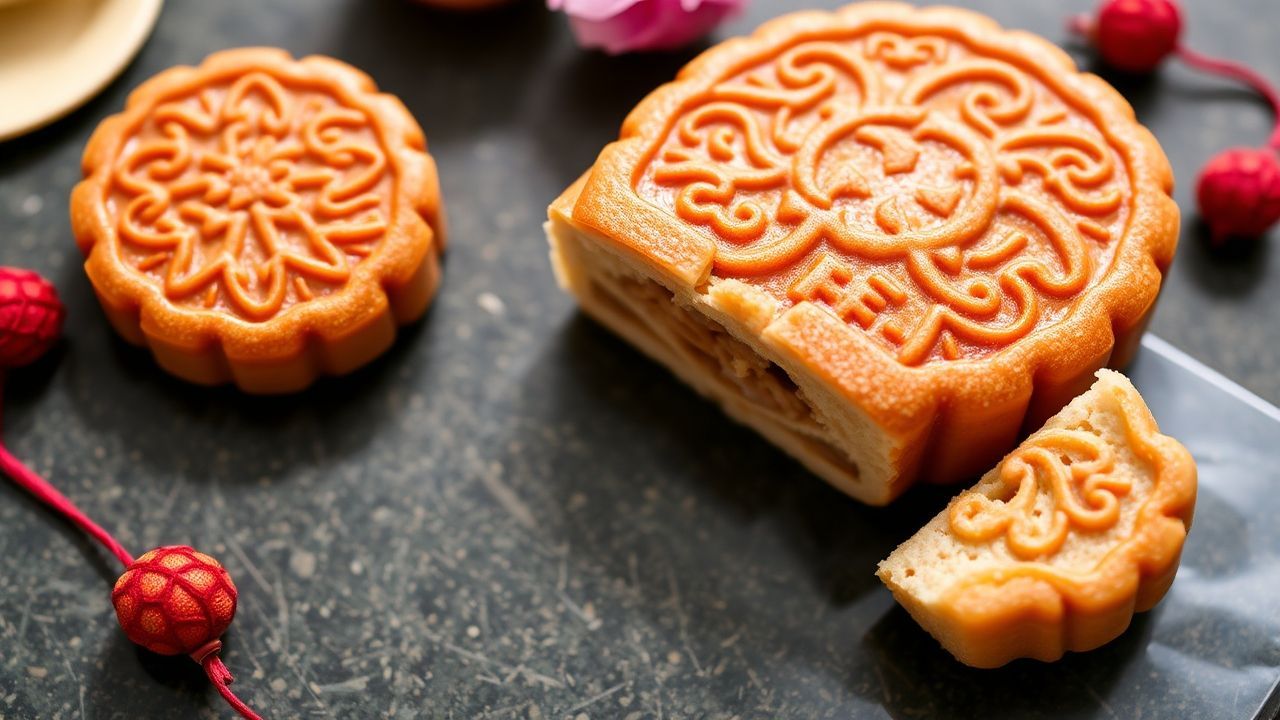
Lotus seed mooncakes sit at the heart of the Mid-Autumn Festival. These classic pastries pair a tender, golden crust with a smooth lotus seed paste that tastes refined yet comforting. If you want a dessert with real cultural weight, this is the one.
- What Makes Classic Lotus Seed Mooncakes Timeless?
- Prep and Cook Times for Classic Lotus Seed Mooncakes
- Yield and Difficulty
- Ingredients for Classic Lotus Seed Mooncakes
- Instructions: How to Make Classic Lotus Seed Mooncakes
- 1) Cook the Lotus Seed Paste
- 2) Add Oil Until the Paste Holds Shape
- 3) Make the Dough
- 4) Portion and Assemble
- 5) Mold and Bake
- 6) Cool and Rest for Best Texture
- Chef’s Notes and Tips for Success
- Savoring Classic Lotus Seed Mooncakes with Tea and Festive Moments
- Top Recommendations for Classic Lotus Seed Mooncake Brands and Where to Find Them
- FAQ: Classic Lotus Seed Mooncakes
At a Glance
- Classic lotus seed mooncakes use a sweet, cooked filling and a syrup-based dough.
- Traditional timing matters: the mooncake needs resting time to improve texture.
- A quality paste should be silky, not grainy, for a clean flavor.
- Pair them with oolong or jasmine tea to balance sweetness.
In this guide, I’ll show you how to make classic lotus seed mooncakes step by step. You’ll learn how the dough develops, how to cook lotus seed paste until it holds shape, and how to bake for that glossy, springy finish. I’ll also cover common mistakes and how to store your batch for peak eating days.
What Makes Classic Lotus Seed Mooncakes Timeless?
Classic lotus seed mooncakes stay popular because they balance sweetness, aroma, and texture. Lotus seed paste brings a gentle, nutty flavor, while the syrup dough bakes into a thin crust with a warm golden tone. That combination feels elegant, yet it still tastes comforting at home.
The Mid-Autumn Festival centers on reunion and the full moon, so mooncakes became part of the shared ritual. For background on the holiday’s cultural setting, see Mid-Autumn Festival. For how the full moon appears in folklore and symbolism, you can also reference Moon.
Lotus Seed Paste: Flavor, Texture, and Meaning
Lotus seeds carry cultural meanings tied to purity and growth. The paste becomes the “center” of the mooncake experience, so its texture must feel smooth and creamy. When the paste cooks long enough, it holds shape during molding and bakes into a rich, cohesive filling.
Lotus flowers also show up often in Asian art and symbolism. If you want a quick reference on lotus meaning, read Lotus. That symbolism helps explain why lotus seed paste feels more than just filling—it connects the dessert to the festival’s mood.
Some classic versions include salted egg yolk, which adds depth and a savory finish. If you prefer fully vegetarian flavor, you can skip it and lean on the natural richness of well-cooked lotus paste.
Prep and Cook Times for Classic Lotus Seed Mooncakes
Plan for hands-on prep plus cooling and resting. The total timeline often stretches over two days because the mooncakes improve as they rest. That rest also helps the crust soften into the classic chew.
- Preparation: 45 minutes
- Cooking: 40 minutes
- Total: 1 hour 25 minutes (plus resting)
Best workflow: Cook the lotus paste first, cool it fully, then make dough, assemble, bake, and rest. This order reduces stress and keeps your filling easy to portion.
Yield and Difficulty
This recipe makes 8 classic lotus seed mooncakes, about 100g each. Portioning matters because dough and filling must balance for a neat wrap and a clean mold release.
Difficulty: Medium. You’ll need steady dough handling and careful paste molding. Once you master the first two mooncakes, the rest becomes straightforward.
Ingredients for Classic Lotus Seed Mooncakes
Use a neutral vegetable oil and a syrup that dissolves smoothly. For consistent results, weigh all ingredients and keep your filling cool during assembly. This is how you avoid sticky dough and messy seals.
Below are the components for dough, lotus seed paste, and optional salted egg yolk centers.
Dough
- 200g all-purpose flour, sifted
- 150g golden syrup (light maltose syrup works well)
- 50g vegetable oil (neutral flavor)
- 1/2 teaspoon alkaline water (lye water)
Lotus Seed Paste Filling
- 400g lotus seeds, soaked overnight and cooked until tender
- 150g granulated sugar
- 80g vegetable oil
- 1/2 teaspoon vanilla extract (optional)
Assembling and Finishing
- 8 salted egg yolks (optional)
- Vegetable oil for brushing
Instructions: How to Make Classic Lotus Seed Mooncakes
Work in stages. You’ll get the cleanest results when each part cools before you assemble. Keep your workspace lightly dusted with flour so dough stays manageable.
Follow these steps in order for a smooth paste, even bake, and a finished mooncake with a glossy crust.
1) Cook the Lotus Seed Paste
- Drain and blend: Drain soaked lotus seeds and blend until fine.
- Cook with sugar: Transfer to a saucepan over low heat, add sugar, and stir until dissolved.
2) Add Oil Until the Paste Holds Shape
- Stir in vegetable oil: Pour oil slowly while stirring to create a smooth, shiny paste.
- Cook to thickness: Continue until the paste thickens and holds its shape.
- Cool fully: Remove from heat and let the paste cool completely.
Expert Insight:
3) Make the Dough
- Mix syrup base: In a bowl, combine golden syrup, vegetable oil, and alkaline water.
- Add flour: Add sifted flour and mix until a dough forms.
- Knead lightly: Knead on a floured surface until smooth but not sticky.
- Rest: Wrap and rest for 30 minutes.
Pro-Caution:
4) Portion and Assemble
- Portion dough and filling: Divide into 8 equal portions (about 40g dough to 70g filling each).
- Flatten dough: Form a thin disc, then wrap around lotus seed paste.
- Optional yolk: If using, encase half a salted egg yolk in the center.
- Seal edges: Press gently to remove gaps so filling doesn’t leak.
Clean seals help your mooncakes bake evenly. When you press gaps out at assembly time, you also reduce cracking during baking.
5) Mold and Bake
- Preheat oven: Heat to 180°C (350°F).
- Mold: Press into a lightly floured mold, then place on a parchment-lined baking sheet.
- Initial bake: Bake for 10 minutes.
- Brush: Remove and brush lightly with vegetable oil for a glossy crust.
- Final bake: Bake another 20–25 minutes until golden brown.
To understand why baking color and texture change, you can review food browning concepts like Maillard reaction. It helps explain the deeper crust color once the mooncake bakes longer.
6) Cool and Rest for Best Texture
- Cool completely: Let mooncakes rest before handling.
- Rest 24 hours: Place in an airtight container for at least 24 hours.
- Serve: Serve after resting for improved softness and flavor depth.
This resting step often makes the crust feel more tender. The filling also settles, so each bite tastes more cohesive.
Chef’s Notes and Tips for Success
Small adjustments improve consistency. When you treat paste texture, sealing, and baking time as key variables, your results get closer to bakery-style classic lotus seed mooncakes.
Use these tips as a checklist before your next batch.
- Lotus seed paste texture: For a silkier finish, strain blended lotus seeds through a fine sieve before cooking.
- Oil quality: Use neutral vegetable oil so the lotus flavor stays clear.
- Resting dough: Don’t skip resting; it relaxes gluten for easier molding.
- Egg yolk options: If you keep it vegetarian, omit salted yolks or try sweet chestnut paste.
- Storage: Store at room temperature up to 5 days or refrigerate up to 2 weeks in an airtight container.
Savoring Classic Lotus Seed Mooncakes with Tea and Festive Moments
Tea pairing makes sweetness feel lighter. A fragrant cup of oolong tea or jasmine green tea helps cut through the rich paste. That contrast keeps each bite tasting fresh instead of heavy.
For background on tea types, you can reference oolong tea and jasmine tea. The key idea stays simple: choose tea with aroma and slight bitterness to balance sugar.
During Mid-Autumn celebrations, sharing mooncakes expresses gratitude and unity. The dessert works as a ritual food, not only as a sweet treat. When you serve mooncakes warm or at room temperature, flavors show more clearly.
Top Recommendations for Classic Lotus Seed Mooncake Brands and Where to Find Them
If you want to compare your homemade classic lotus seed mooncakes with store-bought examples, look for consistent crust color and smooth filling. Many well-known brands focus on refined paste texture and stable molding details.
Try reputable Asian grocery stores and trusted online retailers for seasonal stock. When shopping, check that the crust has a clear imprint, and the lotus seed paste looks velvety instead of dry. This signals better cooking and smoother blending.
Quality cues also include balanced sweetness. If the filling tastes overly sugary, the flavor can feel flat. If it tastes under-sweet, the lotus character may dominate too strongly for classic preferences.
| Nutrient | Per Serving (1 Mooncake) |
|---|---|
| Calories | 420 kcal |
| Protein | 7 g |
| Carbohydrates | 54 g |
| Fat | 19 g |
FAQ: Classic Lotus Seed Mooncakes
If you still have questions, use these quick answers to guide your next bake. I kept them focused on filling texture, baking, and serving.
1) What makes classic lotus seed mooncakes a timeless favorite?
They combine a subtly sweet lotus seed paste with a thin, tender crust. The filling feels creamy, while the baked dough brings a gentle chew. Together, they match the festival mood of warmth and reunion.
2) Why does lotus seed paste texture matter?
Texture decides whether the filling feels elegant or rough. Proper cooking reduces moisture and makes the paste hold shape during molding. That same cooking also improves the creamy finish you get after resting.
3) How are classic lotus seed mooncakes traditionally made?
Traditionally, lotus seeds get soaked, cooked until soft, then ground into a paste. Bakers cook the paste with sugar and oil until thick, wrap it with syrup-based dough, mold it, and bake. Resting time after baking helps the crust soften and the flavors settle.
4) Are there variations besides classic lotus seed?
Yes. Many bakers add salted egg yolk, swap fillings, or adjust sweetness levels. You can also vary the paste smoothness and aroma by changing cooking time and blending technique.
5) How should I store classic lotus seed mooncakes for best taste?
Store them in an airtight container. Keep them at room temperature for up to 5 days, or refrigerate up to 2 weeks. For best eating, bring them back to room temperature before serving so the crust and filling taste balanced.
Discovering classic lotus seed mooncakes feels like stepping into an age-old celebration. Each bite carries craft, patience, and a calm sweetness designed for sharing. Bake your own batch, rest it well, and enjoy that timeless flavor with the people you value.
See also: lotus seed mooncakes