
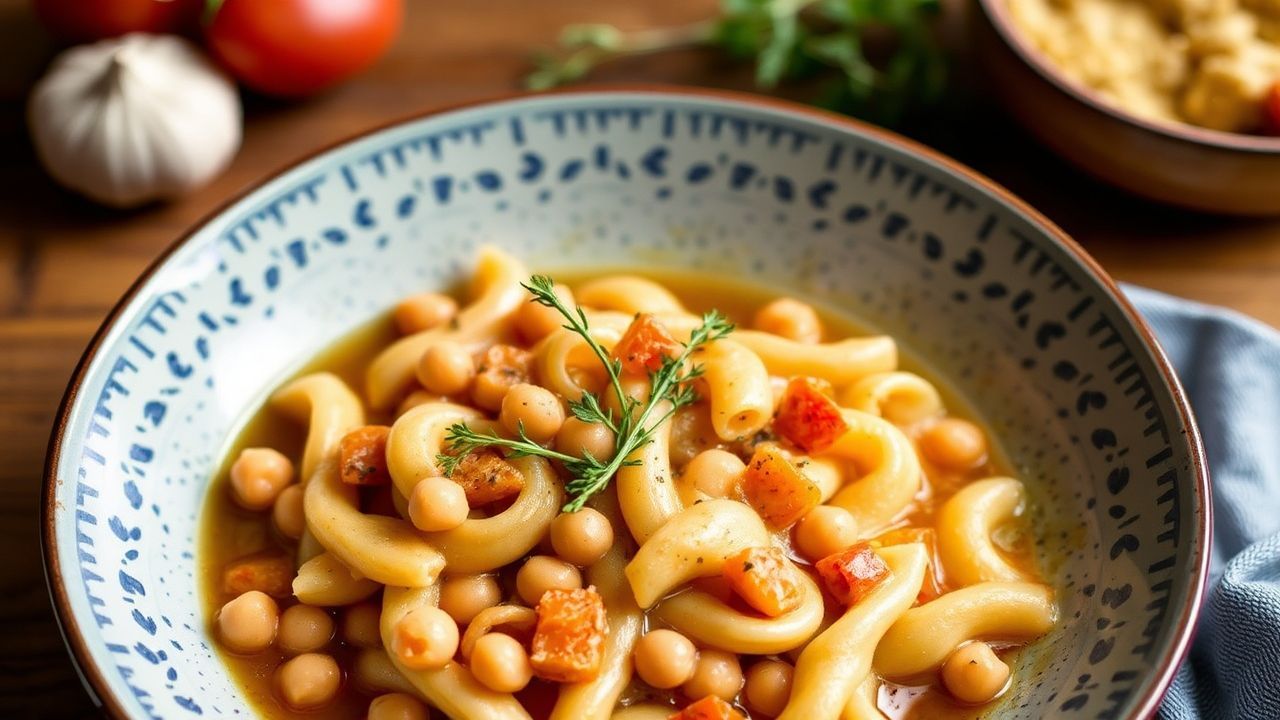
One-Pot Pasta e Ceci brings together chickpeas, pasta, garlic, and herbs in a single pot for a thick, satisfying soup. This recipe focuses on steady simmering and smart timing so the pasta stays tender without turning mushy.
Comfort food doesn’t need complexity. With the right pasta size and a simple flavor base, you get a hearty bowl that tastes like Italian home cooking.
- One pot, less cleanup—everything cooks together.
- Best texture comes from small pasta shapes.
- Flavor builds in layers from soffritto to simmer.
- Easy swaps for vegan and gluten-free needs.
People often call it “hearty chickpea soup,” but the real magic comes from starch. As pasta cooks in the broth, it naturally thickens the dish into something spoon-thick and rich.
Why One-Pot Pasta e Ceci Works
One-Pot Pasta e Ceci centers on a classic Italian idea: combine legumes and pasta for a filling meal. Chickpeas provide fiber and protein, while pasta adds body and comfort.
In Italian cooking, this pairing also makes practical sense. You stretch pantry staples into a full dinner, which matters when you want both flavor and value.
For background on chickpeas, see chickpeas and how they’re used in Mediterranean cooking. For the broader legume category, legumes explains why they behave well in soups and stews.
The Origins and Charm of Pasta e Ceci
Pasta e ceci is a well-known Southern Italian comfort dish. Cooks in regions like Abruzzo and Puglia relied on legumes because they store well and cook into creamy textures.
The dish also reflects how Italian home cooking builds flavor with aromatics. You start with olive oil, then add onion and garlic, then simmer slowly so the broth tastes rounded instead of sharp.
If you want context on Italian food culture, Italian cuisine gives helpful background. For how Italian pasta shapes differ in cooking, pasta explains why shape affects texture.
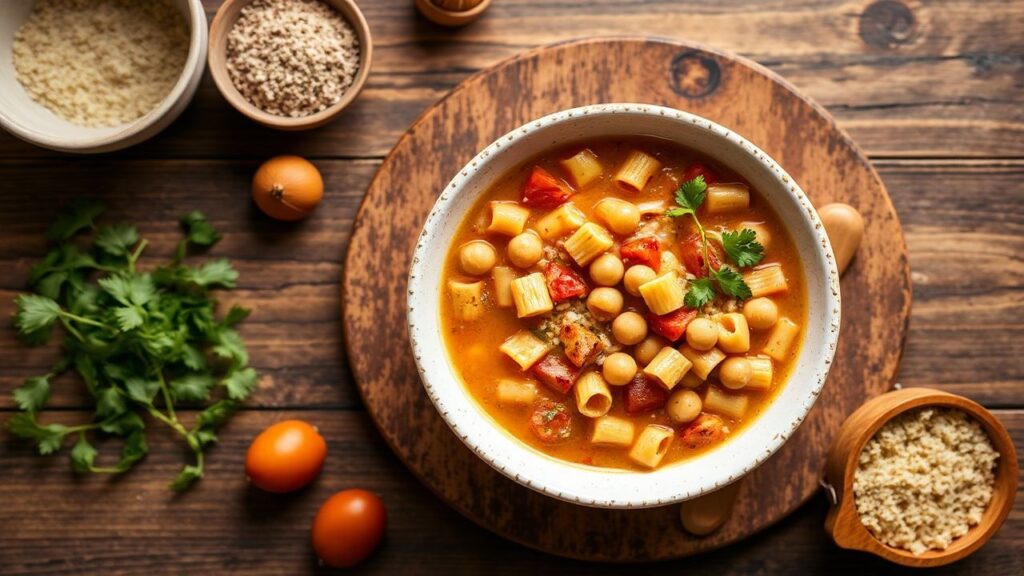
Choosing Chickpeas and Pasta for Optimal Texture
Texture starts with ingredients. For the most reliable result, choose firm chickpeas that hold their shape. Canned chickpeas work great because they’re already cooked, which keeps your schedule simple.
If you use dried chickpeas, soak overnight and cook until tender before adding them to the soup. This step protects the pasta from overcooking and keeps the chickpeas from becoming grainy.
For guidance on chickpea biology and nutrition basics, chickpea remains the best general reference. For how cooking methods affect texture, stew explains why simmering thickens sauces naturally.
Pasta Shape Matters More Than You Think
Pick small to medium pasta shapes like ditalini, orzo, or small shells. These sizes nestle among chickpeas and cook evenly in the broth.
Starch from small pasta shapes thickens the soup faster. As a result, you get a creamy mouthfeel without adding flour or extra dairy.
Step-by-Step Guide to Build Flavor in One Pot
This recipe uses a simple flow: soffritto, warming aromatics, simmering broth, then pasta. Follow the order carefully so each component hits the right moment.
Keep the heat moderate. A gentle simmer helps the sauce thicken while preventing the pasta from breaking down.
Ingredients That Create a Balanced Broth
Use extra virgin olive oil for the base. Add garlic and onion until softened, then bring in herbs and spices for aroma.
Tomatoes add acidity, which brightens chickpeas. Vegetable broth carries savory flavor and helps the soup taste cohesive.
Cooking Steps
- Warm the olive oil in a heavy-bottomed pot over medium heat until it shimmers. Add minced garlic and diced onion, then sauté until translucent, about 5 minutes. This step builds your savory foundation.
- Add rosemary (fresh or dried) and red pepper flakes. Cook for 1 minute, then stir to coat everything in fragrant oil.
- Add chickpeas to the pot. Stir for 2–3 minutes so they warm through and pick up the aromatic base.
- Add diced canned tomatoes and vegetable broth. Stir well and bring the mixture to a gentle simmer.
- Stir in the pasta and cook uncovered, stirring often. Cook until al dente (about 7–9 minutes), depending on pasta size.
- Season with salt and freshly ground black pepper. Finish with a small drizzle of extra virgin olive oil and serve right away.
Tips and Variations to Elevate One-Pot Pasta e Ceci
You can customize the soup without losing its core character. Small changes in aromatics and texture control make a big difference.
Start with one variation, test it, then keep what works for your kitchen. This approach prevents overhauling a recipe that already performs well.
Flavor Boost Ideas
- More umami: Stir in finely chopped sun-dried tomatoes during the soffritto step.
- Herb swaps: Use fresh thyme or sage instead of rosemary for a different herbal profile.
- Smoky heat: Add smoked paprika or a small splash of chili oil.
Texture Options
- Velvety thickness: Mash about a quarter of chickpeas against the pot’s side while simmering. This thickens the broth naturally.
- Make-ahead behavior: If the soup thickens as it cools, loosen it with extra broth when reheating.
Diet-Friendly Substitutions
- Vegan: The recipe already fits a vegan diet if your broth contains no animal ingredients.
- Gluten-free: Use gluten-free pasta that holds shape well during simmering.
Watch how long pasta sits in the hot broth. Even if the soup looks thick right away, pasta continues absorbing liquid after you turn off the heat.
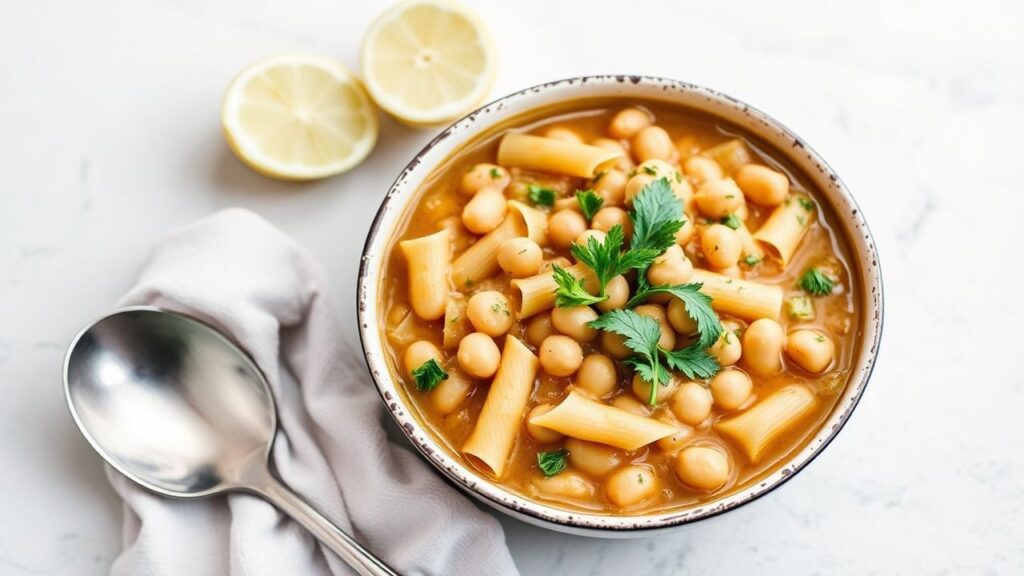
Prep, Cook, Yield, and Difficulty
This recipe is built for weeknights. You can plan around a simple 35-minute window from start to finish.
The steps also scale well if you cook for more people. Just keep the same ratio of broth to pasta so the soup thickens evenly.
Prep and Cook Time
- Preparation: 10 minutes
- Cooking: 25 minutes
- Total Time: 35 minutes
Yield
Serves: 4 hearty bowls, ideal for family dinners or cozy gatherings.
If you have leftovers, the soup reheats well because chickpeas and pasta settle into a thicker texture overnight.
Difficulty level
Easy: Minimal prep, one-pot cooking, and no special tools required.
Even if you’re new to soups, you can follow the timing cues to get consistently good results.
Ingredients
- 3 tablespoons extra virgin olive oil
- 4 cloves garlic, finely minced
- 1 medium yellow onion, finely diced
- 1 teaspoon fresh rosemary, chopped (or 1/2 teaspoon dried)
- 1/4 teaspoon red pepper flakes (optional)
- 2 cups cooked chickpeas, drained and rinsed (or 1 can, 15 oz)
- 1 cup small pasta (ditalini, orzo, or small shells)
- 1 cup diced canned tomatoes (preferably San Marzano)
- 5 cups low-sodium vegetable broth
- Salt and freshly ground black pepper, to taste
- Fresh parsley, chopped for garnish
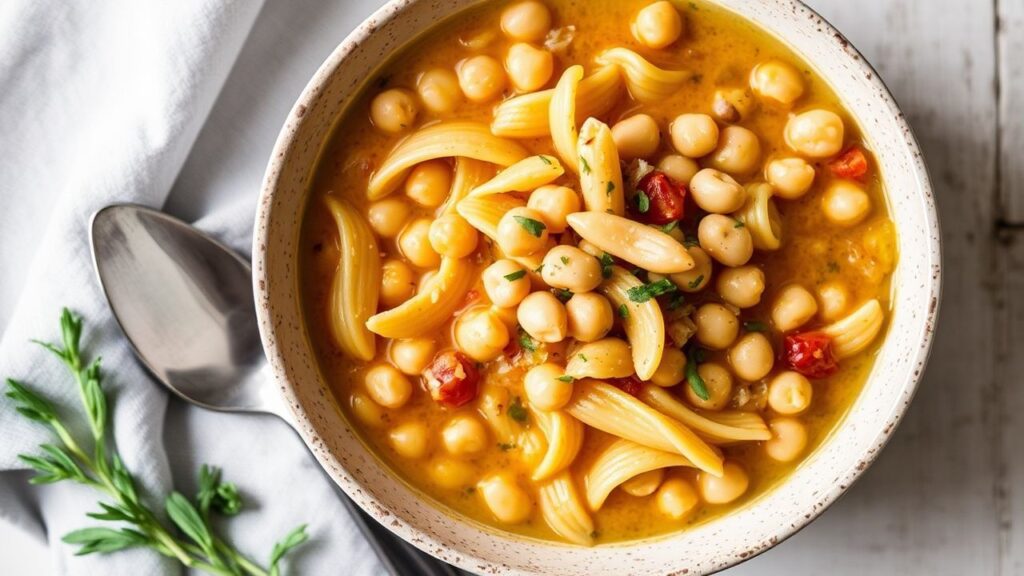
Instructions
- Warm the olive oil in a large heavy-bottomed pot over medium heat until shimmering. Add garlic and onion and sauté until soft and translucent, about 5 minutes.
- Stir in rosemary and red pepper flakes. Cook for 1 minute until fragrant. Add chickpeas and stir to coat.
- Add diced tomatoes and vegetable broth. Stir, then bring to a gentle simmer.
- Once simmering, add pasta and cook uncovered, stirring occasionally, until al dente, about 7–9 minutes.
- Season with salt and pepper. Turn off heat and drizzle with a little extra virgin olive oil for richness.
- Ladle into bowls and garnish with parsley. Serve immediately with crusty bread if desired.
Chef’s Notes
One-Pot Pasta e Ceci tastes best when you respect the timing. If you add pasta too early or cook it too long, the soup loses that clean al dente bite.
If you use dried chickpeas, cook them until tender first. Then proceed with the recipe so you control texture and prevent overcooking.
For general cooking fundamentals, simmering helps explain why gentle heat improves stew-like flavor.
Serving Suggestions
Serve One-Pot Pasta e Ceci in deep bowls. The thicker broth clings to pasta best when you eat it hot.
For a simple upgrade, add a drizzle of olive oil and a pinch of black pepper right before serving.
- Pair with crusty bread or garlic-rubbed crostini for dipping.
- Add a side salad with lemony dressing to balance rich broth.
- Top with chopped parsley and vegan Parmesan-style garnish if you like a salty finish.
Nutritional Snapshot
This estimate fits a typical bowl size with the ingredient amounts listed. If you change brands or pasta types, calories will shift.
Use this as a planning guide, not a strict medical number.
| Nutrient | Per Serving |
|---|---|
| Calories | 320 kcal |
| Protein | 14 g |
| Carbohydrates | 45 g |
| Fat | 8 g |
For more one-pot dinner ideas, explore one-pot Italian dinners. You can also browse soups for similar simmer-based recipes and vegetarian dinner ideas for extra legume meals that feel hearty.
FAQ
What exactly is One-Pot Pasta e Ceci?
It’s an Italian comfort dish that combines pasta and chickpeas in a savory broth. The pasta cooks inside the same pot, which helps thicken the soup naturally.
You get a hearty, spoonable texture with classic flavors like garlic, olive oil, and herbs.
Should I use canned or dried chickpeas?
Canned chickpeas save time and still deliver a great result for one-pot cooking. Drain and rinse them so the soup tastes clean.
Dried chickpeas work well too, but you must soak and cook them until tender first to protect the pasta timing.
What pasta shapes work best?
Choose small shapes such as ditalini, orzo, or small shells. These sizes cook evenly and spread through the broth without dominating the texture.
Also check package cook time so you can hit al dente within the simmer window.
How do I keep the pasta from getting mushy?
Cook the pasta for the minimum time needed to reach al dente. Then turn off the heat and serve right away.
If you plan to eat later, store and reheat gently with extra broth.
Can I make this recipe vegan and gluten-free?
Yes. Use vegetable broth that contains no animal ingredients and choose a vegan-friendly pasta option.
For gluten-free, pick gluten-free pasta designed to hold shape during simmering.
See also: One-Pot Pasta e Ceci