

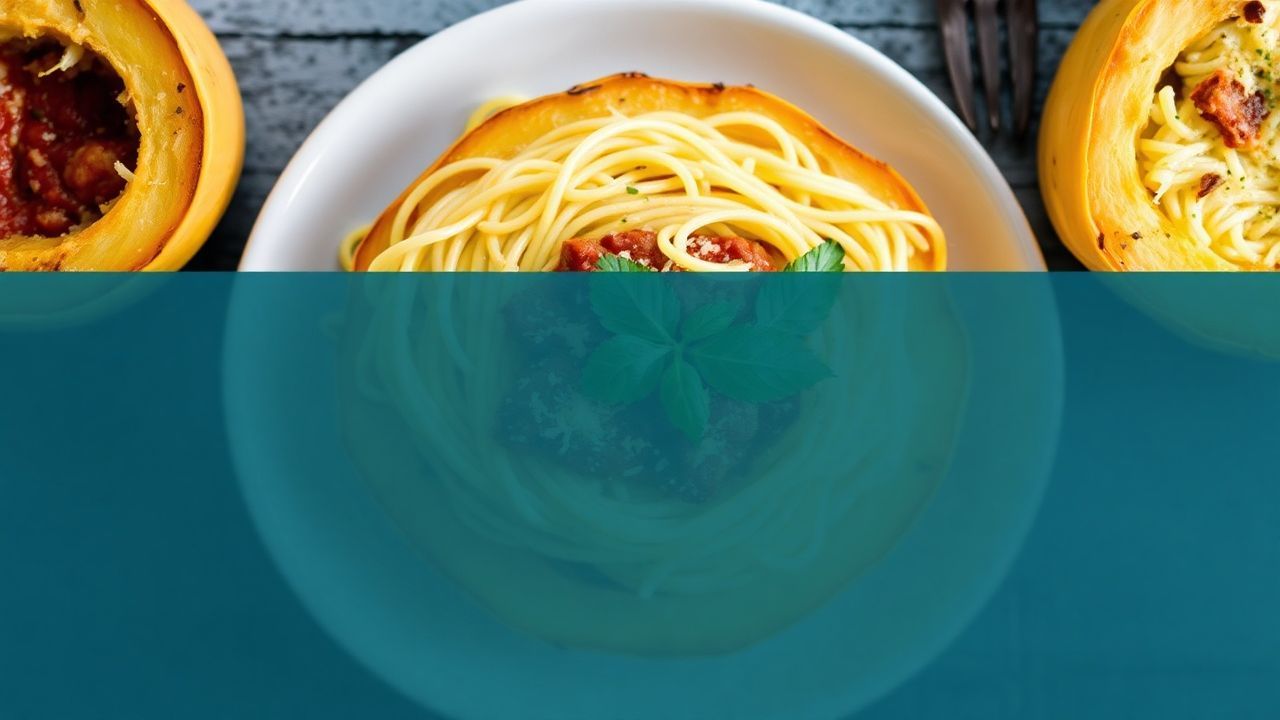
Spaghetti squash bakes into tender, noodle-like strands that work beautifully with marinara sauce. With the right timing and a simple shredding method, you get the texture people crave in comfort food—without traditional pasta.
- What Makes Spaghetti Squash Work So Well with Marinara?
- Prep, Cook Time, Yield, and Difficulty
- Ingredients for Baked Spaghetti Squash and Marinara Sauce
- 7 Steps to Perfect Baked Spaghetti Squash with Marinara Sauce
- Step 1: Choose a Firm Spaghetti Squash
- Step 2: Cut and Prepare
- Step 3: Roast Cut-Side Down
- Step 4: Build the Marinara Base
- Step 5: Simmer Tomatoes with Herbs
- Step 6: Shred with Care
- Step 7: Combine and Serve
- Tips for Success (Texture, Timing, and Meal Prep)
- Serving Suggestions That Make the Bowl Feel Complete
- Nutritional Information (Per Serving Estimate)
- FAQ
- Bake cut-side down to help the strands stay silky and intact.
- Simmer marinara 20–25 minutes so it clings to the strands.
- Cool briefly, then shred for springy noodles instead of mush.
- Salt and pepper at two stages for deeper flavor.
Mastering baked spaghetti squash with marinara sauce turns a winter squash into a filling meal for weeknights and meal prep. It’s naturally low in carbs, gluten-free, and easy to customize with herbs, cheese, or extra vegetables.
Below you’ll find a clear process you can repeat. You’ll also learn how to pick the right squash, avoid watery strands, and build a marinara that tastes bright, rich, and balanced.
7 Steps to Perfect Baked Spaghetti Squash with Marinara Sauce (Restaurant-Style Results)
What Makes Spaghetti Squash Work So Well with Marinara?
Spaghetti squash gets its name from how the flesh separates after baking. The strands behave like pasta because they soak up sauce while still holding some texture.
When you pair it with marinara, the acid in tomatoes sharpens the squash’s mild sweetness. This contrast also helps you avoid a bland bowl, especially when you season the squash and the sauce.
If you want a quick science-friendly guide, roasting uses dry heat to soften plant fibers. See roasting for how heat changes food texture.
Flavor Balance: Sweet Squash vs. Tangy Tomatoes
Marinara tastes best when it has both tomato tang and enough fat and salt to round it out. Olive oil carries flavor and helps the sauce coat the strands evenly.
For reference on tomato chemistry, acidity and flavor compounds matter in cooked sauces. You can explore tomato sauce to understand typical sauce ingredients and simmering goals.
Prep, Cook Time, Yield, and Difficulty
This recipe fits busy schedules and still delivers a plated, “made-from-scratch” feel. Plan about an hour total, including roasting and simmering.
You can scale it up for meal prep or down for two people. The yield below matches a standard family dinner.
- Preparation: 15 minutes
- Cooking: 45 minutes
- Total Time: 1 hour
Yield: Serves 4 hearty portions.
Difficulty Level: Easy to Medium—ideal for cooks who want vegetable-forward results with reliable technique.
Ingredients for Baked Spaghetti Squash and Marinara Sauce
Use simple pantry items for the marinara. Keep the squash ingredients light so the sauce flavor stays in charge.
Fresh basil adds aroma at the end. Parmesan brings savory depth, but it stays optional if you prefer a dairy-free bowl.
- 1 medium spaghetti squash (about 3 pounds, firm, bright yellow skin)
- 2 tablespoons olive oil, divided
- 1 medium yellow onion, finely chopped
- 4 cloves garlic, minced
- 1 (28-ounce) can whole peeled tomatoes, preferably San Marzano
- 1 teaspoon dried oregano
- 1 teaspoon dried basil
- 1/2 teaspoon red pepper flakes (optional)
- Salt and black pepper, to taste
- Fresh basil leaves, for garnish
- Grated Parmesan, for serving (optional)
Note on tomato choice: whole peeled tomatoes usually break down smoothly and create a sauce with better body. If you want background, read tomato.
7 Steps to Perfect Baked Spaghetti Squash with Marinara Sauce
You’ll follow seven repeatable steps. Each one builds texture and flavor, so your final bowl tastes balanced, not watery or flat.
Keep your heat steady and season at the right moments. That’s where most home cooks get consistent results.
Step 1: Choose a Firm Spaghetti Squash
Select a squash that feels heavy for its size. Look for a firm body with no soft spots or deep bruises.
Matte skin often signals ripeness, while overly glossy skin can mean it’s less ready. For general squash traits, see squash.
Step 2: Cut and Prepare
Cut the squash lengthwise with a sharp serrated knife. Scoop out seeds and stringy membranes until the cavity feels clean.
Remove the loose strands so they don’t burn in the oven. Then rub the halves lightly with oil and season with salt and pepper.
Step 3: Roast Cut-Side Down
Preheat the oven to 400°F (200°C). Place the squash halves cut-side down on a parchment-lined sheet.
Roast for about 40–45 minutes until the flesh turns tender and yields to a fork. Baking cut-side down helps the edges steam gently instead of drying out.
Step 4: Build the Marinara Base
While the squash roasts, heat 1 tablespoon olive oil in a skillet over medium heat. Add onion and cook until translucent and lightly golden, about 6–7 minutes.
Add garlic and cook for about 1 minute. Stir constantly so the garlic stays fragrant, not browned.
Step 5: Simmer Tomatoes with Herbs
Crush the canned tomatoes by hand and add them to the skillet. Stir in oregano, basil, and red pepper flakes if you want heat.
Simmer gently for 20–25 minutes, stirring occasionally. As it reduces, the sauce thickens and clings better to squash noodles.
Tomato sauce flavor improves when simmer time lets water evaporate and flavors meld. If you want culinary science context, explore simmering.
Step 6: Shred with Care
Remove the squash and let it cool for 5–10 minutes. Cooling makes the strands easier to scrape without breaking into mush.
Use a fork to scrape the flesh into spaghetti-like strands. Stop when you reach the softer, stringy interior and keep the strands as intact as possible.
Step 7: Combine and Serve
Gently toss the squash strands with marinara. Add just enough sauce so the noodles look glossy but not flooded.
Finish with fresh basil and Parmesan if desired. Serve immediately for the best texture and aroma.
Tips for Success (Texture, Timing, and Meal Prep)
Small adjustments make a noticeable difference. If you’ve ever had watery squash, these fixes will help right away.
Use these guidelines to protect the strand structure and keep flavors lively from first bite to last.
- Pick weight over size: heavier squashes often hold more moisture for stringier strands.
- Don’t over-roast: too long in the oven can turn the texture mushy.
- Cool before shredding: a short rest helps strands stay springy.
- Thicken the sauce: reduce marinara until it coats a spoon.
- Assemble at the end: mix squash and sauce right before serving to reduce moisture.
Even with great technique, every oven behaves slightly differently. Check tenderness early and adjust by 3–5 minutes.
Serving Suggestions That Make the Bowl Feel Complete
Spaghetti squash with marinara works as a main dish or a hearty side. Pair it with fresh, crunchy elements to balance the warm, soft noodles.
You can also turn it into a “lighter lasagna” style meal by topping with extra cheese and broiling briefly.
Fast Pairings
Try it with a crisp salad dressed in lemon vinaigrette. Add garlic bread or focaccia if you want a classic Italian table.
For protein, serve alongside grilled chicken, sautéed shrimp, or roasted chickpeas. If you want background on how herbs support aroma in cooking, see cuisine as a broad reference point.
Make It Your Way
Stir in sautéed spinach or mushrooms before serving. Add a drizzle of extra virgin olive oil right at the end for brightness.
If you enjoy richer flavor, finish with a tiny splash of balsamic vinegar in the simmer’s final minutes. Balance it by tasting and adjusting salt.
Nutritional Information (Per Serving Estimate)
This estimate assumes one-fourth of the recipe and uses moderate marinara reduction with a light Parmesan garnish. Actual values vary based on squash size and oil amounts.
Still, the overall profile stays consistent: a balanced bowl with carbs from squash and satisfying flavor from tomatoes, herbs, and olive oil.
| Nutrient | Per Serving |
|---|---|
| calories | 190 kcal |
| Protein | 6 g |
| carbohydrates | 28 g |
| Fat | 6 g |
If you’re tracking dietary needs, remember that squash counts as a vegetable and marinara ingredients drive sodium and fat. For general nutrition framing, see nutrition.
FAQ
How do I prevent watery spaghetti squash?
Roast until the flesh is tender, then cool briefly before shredding. Also simmer the marinara until thick, and combine squash and sauce right before serving.
Should I bake the squash whole or cut it in half?
Cutting it in half cooks more evenly and helps you manage tenderness. Whole baking can lock in moisture, but it usually takes longer and may produce uneven texture.
What oven temperature works best for spaghetti squash?
400°F (200°C) gives reliable results for most ovens. If your squash browns too quickly, reduce by 25°F and add a few minutes.
Can I make marinara ahead of time?
Yes. Cook the sauce, cool it, and refrigerate for up to a week. Reheat gently on the stove, then toss with freshly shredded squash.
Is this recipe gluten-free and keto-friendly?
It’s gluten-free by default since spaghetti squash replaces pasta. It can fit low-carb plans in portion-controlled servings, but keto strictness depends on your daily carb target.
See also: Baked spaghetti squash