
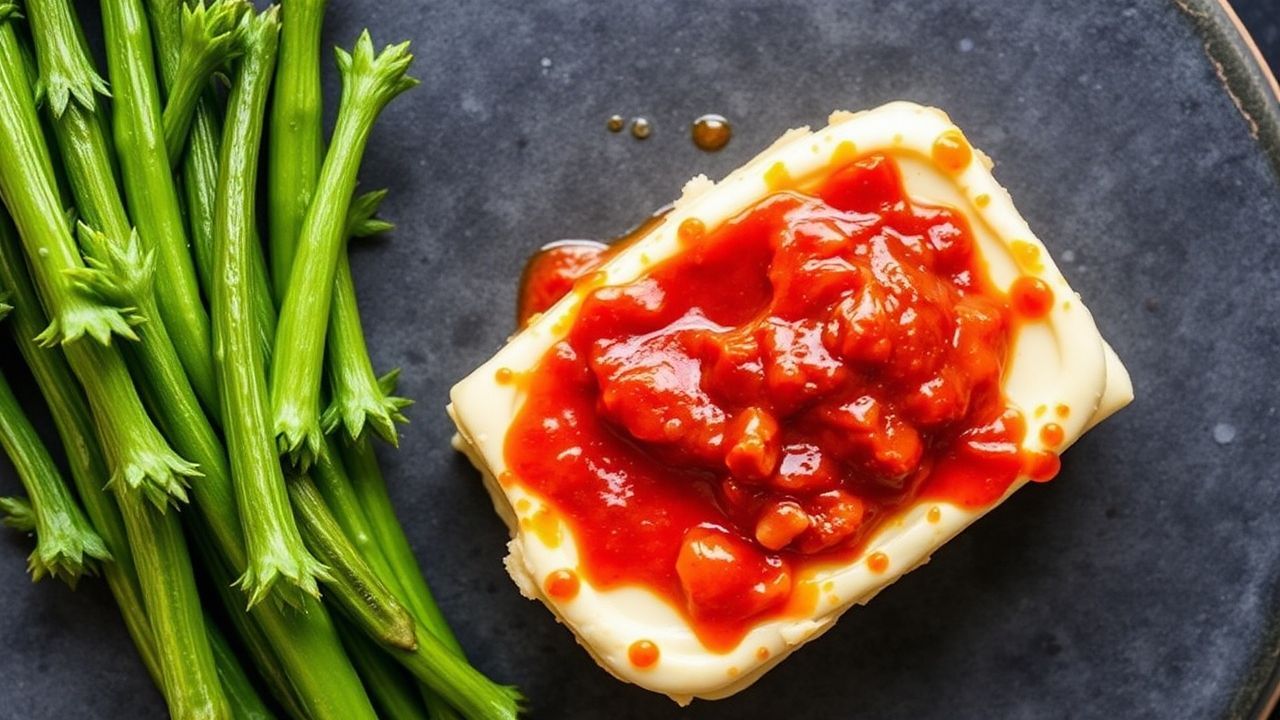
Steak tastes better when the finishing fat does more than melt. This gochujang-spiced compound butter blends Korean fermented chili paste with softened butter for a glossy, savory heat that clings to the meat.
- Gochujang-Spiced Compound Butter: What It Does to Steak
- Prep and Cook Times
- Yield and Difficulty
- Ingredients for Gochujang-Spiced Compound Butter
- Instructions
- Pro-Caution: Don’t add gochujang too early
- Q&A
- What exactly is gochujang?
- How do I adjust the heat level?
- Can I make the compound butter ahead of time?
- Which steak cuts work best?
- What’s the best way to serve it?
- Concluding Remarks
At a Glance
- Build flavor fast: mix, shape, chill, then slice on hot steak.
- Balanced heat: gochujang adds spice plus sweet-umami depth.
- Better sear payoff: butter melting at the end boosts aroma and moisture.
- Make ahead: it stores well in the fridge or freezer.
A compound butter works because it combines aromatics and flavor compounds into one spreadable fat. When you spoon it on a hot steak, it melts quickly and forms a quick sauce on the surface.
Gochujang brings fermentation flavors that taste both savory and slightly sweet. It also carries heat, so you can dial intensity by adjusting the amount you stir in, then re-check the mix before chilling.
Gochujang-Spiced Compound Butter: What It Does to Steak
This gochujang-spiced compound butter gives steak three wins at once: umami depth, spicy-sweet warmth, and a rich buttery finish. As the butter melts, it helps distribute those flavors evenly across the crust you worked so hard to build.
Gochujang is a fermented condiment, so it contains complex savory notes that feel “rounded” instead of sharp. For a quick background on its style, see gochujang.
Prep and Cook Times
Plan for a short active window, then let the butter firm up. The chill step matters because it keeps slices clean and helps the flavor set.
- Readiness: 15 minutes
- Chilling: 1 hour (or until firm)
- Steak cook: 10–15 minutes (thickness and doneness vary)
- Resting steak: 5 minutes before topping
Yield and Difficulty
This recipe makes enough gochujang-spiced compound butter for about 4 steaks. You will get roughly 8 tablespoons, depending on how thick you slice the log.
Difficulty stays in the easy-to-medium range. You only need basic mixing, careful chilling, and a reliable sear or grill routine.
Ingredients for Gochujang-Spiced Compound Butter
Use softened butter so everything blends into one smooth, spreadable log. If your butter feels cold or grainy, the mix will not stay creamy when you slice it.
For the flavor base, gochujang pairs well with garlic, sesame, and a small amount of sweetener. You can explore sesame’s role in flavor in sesame oil.
- 1/2 cup (1 stick) unsalted butter, softened
- 2 tablespoons gochujang
- 1 teaspoon honey (balances heat)
- 1 clove garlic, finely minced
- 1 teaspoon toasted sesame oil
- 1 teaspoon soy sauce or tamari (for gluten-free)
- 1 teaspoon finely chopped scallions (optional)
- Pinch of sea salt
- Freshly ground black pepper, to taste
Instructions
Set out butter first, then mix with intention. You will get the best texture when the butter stays soft enough to blend, not melted.
For steak technique context, especially crust development and heat control, you may also review steak basics.
- Soften the butter: Leave it at room temperature for about 30 minutes until it yields under a finger.
- Mix the flavor base: In a bowl, combine softened butter, gochujang, honey, garlic, sesame oil, and soy sauce. Stir until smooth and uniform.
- Add freshness and seasoning: Fold in scallions, then add sea salt and black pepper. Mix gently so the butter stays silky.
- Shape the compound butter: Transfer to parchment paper. Roll into a tight log about 1.5 inches wide.
- Chill: Wrap and refrigerate at least 1 hour until firm.
- Cook the steak: Pan-sear or grill your preferred cut to your desired doneness. Rest 5 minutes after cooking.
- Slice and top: Slice 1–2 tablespoons per steak and place on the hot surface. Let it melt and coat the crust.
[TIP]Expert Insight: Match the butter dose to your crust
If you build a thick, well-browned crust, use the smaller amount at first. You still get flavor, but you avoid overwhelming crisp edges with too much melted fat.
Also, slice the butter while cold. Clean slices stay even and melt at a consistent pace on the steak.
Tips for Success
Want a smokier profile? Add a small amount of smoked paprika or a few drops of liquid smoke. Start light, then adjust next time because smoke can dominate fast.
If you want more heat, increase gochujang gradually. A teaspoon at a time keeps the balance, especially because honey helps smooth the edge.
[WARNING]Pro-Caution: Don’t add gochujang too early
Gochujang can burn if you cook it too long on high heat. Keep the butter topping for the final moments after resting, so the flavors melt into the steak rather than char.
When you sear, control the pan temperature and avoid direct cooking of the butter. Slice and top only once the steak comes off the heat.
Make Ahead, Storage, and Freezing
You can make gochujang-spiced compound butter up to a week ahead. Keep it tightly wrapped in the fridge to prevent fridge odors from mixing into the log.
For longer storage, freeze the log. Portioning before freezing helps you grab exactly what you need, then soften slightly before slicing.
Serving Suggestions That Keep the Flavor Balanced
Serve the steak with a dollop right before plating. The butter should melt in seconds and form a glossy coating on the surface.
Pair it with sides that cut richness. Roasted potatoes with thyme, grilled asparagus, or a crisp salad with citrus vinaigrette work well because they add brightness and texture.
Q&A
Here are common questions cooks ask when they first try gochujang-spiced compound butter. Answers focus on flavor balance, storage, and how to adjust heat.
If you want to fine-tune further, taste the butter mix before chilling. Butter flavors intensify slightly once cold and then bloom again when it melts.
What exactly is gochujang?
Gochujang is a Korean fermented chili paste with savory, sweet, and spicy notes. It brings umami depth that pairs naturally with butter.
How do I adjust the heat level?
Start with the base amount (2 tablespoons). For mild heat, reduce by 1 tablespoon. For more kick, add small increments and taste the mix.
Can I make the compound butter ahead of time?
Yes. Refrigerate up to about a week, or freeze for longer storage. Wrap tightly so it stays fresh and slices cleanly.
Which steak cuts work best?
Ribeye, strip steak, and filet mignon all work well because they handle heat and have enough flavor to stand up to gochujang. Choose the cut based on your preference for marbling and tenderness.
What’s the best way to serve it?
Rest the steak for 5 minutes, then slice and place the butter on top. Let it melt on the surface, then serve right away for the best texture.
For more on the broader fermented flavor profile that supports umami, you can also check fermentation.
Concluding Remarks
Turn a simple steak night into a restaurant-style plate with one fast upgrade. This gochujang-spiced compound butter adds fiery Korean flavor, smooth richness, and a quick sauce effect every time.
Once you learn how much to top with and when to melt it, you will repeat the results with confidence. Make a log ahead, slice on warm steak, and enjoy the savory heat in every bite.
See also: gochujang-spiced compound butter