
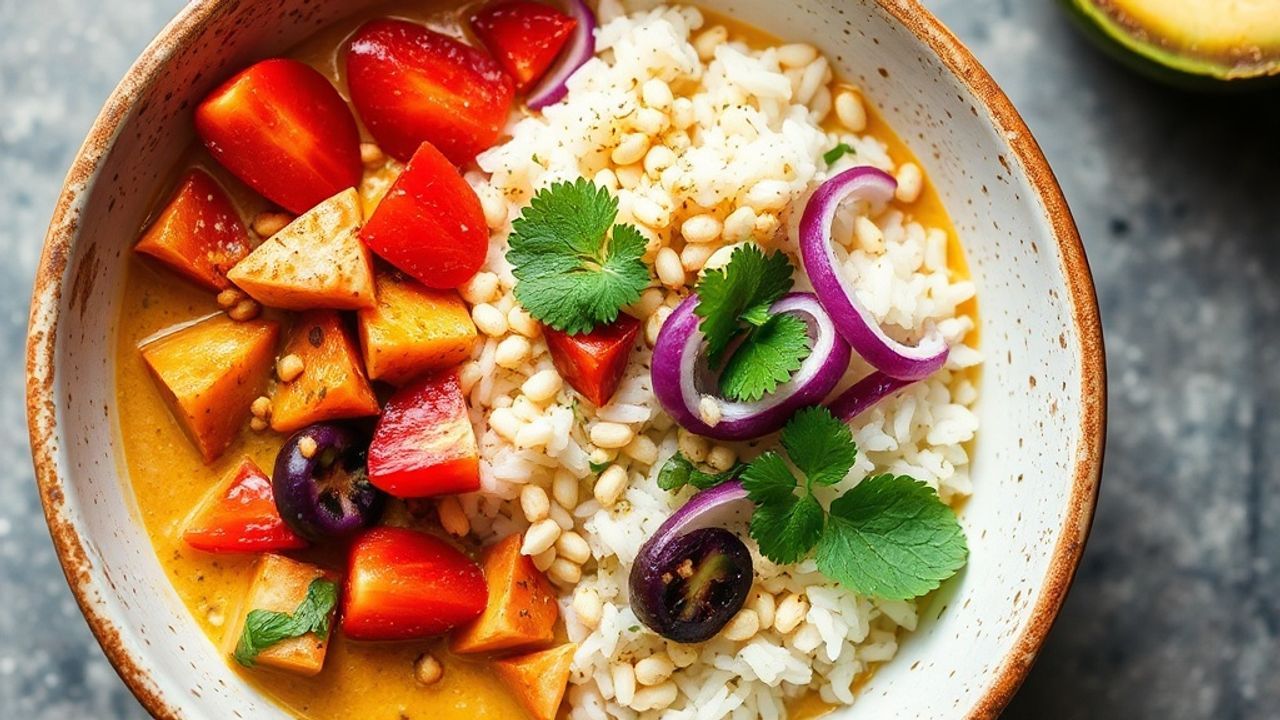
Coconut Curry rice bowls bring bright tropical flavor to a weeknight meal with creamy coconut milk, fragrant red curry, and crisp fresh produce. This vegan Coconut Curry recipe balances sweet notes from sweet potato and lime with savory soy or tamari to deliver texture and depth in every bite.
- Coconut Curry Prep and Cook Time
- Coconut Curry Yield and Difficulty
- Coconut Curry Essential Ingredients
- Step-by-Step Coconut Curry Guide
- Tips for Customizing Your Coconut Curry Rice Bowl
- Chef’s Notes on Perfecting Coconut Curry
- Serving Suggestions for Coconut Curry Rice Bowls
- Nutrition and Make-Ahead Notes for Coconut Curry
- FAQ
- Bright, balanced flavors from coconut milk, red curry paste, and lime.
- Simple technique: sauté aromatics, simmer veg in coconut, assemble bowls.
- Make-ahead friendly: Curry flavors deepen overnight for efficient meal prep.
- Customizable protein and toppings to suit preferences and dietary needs.
Coconut Curry Prep and Cook Time
Readiness Time: 15 minutes. Cook Time: 30 minutes. These times apply when you use prepped vegetables and canned coconut milk.
Total time is about 45 minutes for home cooks managing rice and curry simultaneously. Use a rice cooker for hands-off rice and free up stove space for the curry.
Coconut Curry Yield and Difficulty
This recipe yields 4 generous servings, ideal for family dinners or meal prep. Difficulty rates as Easy to Medium and suits cooks familiar with basic sautée and simmer techniques.
Flavor control is key: taste and adjust salt, lime, and sweetness during final minutes. That approach ensures consistent results and efficient use of pantry staples.
Coconut Curry Essential Ingredients
Use quality aromatics and a full-fat coconut milk for a luscious sauce. For starch, jasmine or basmati rice pairs well; jasmine emphasizes fragrance while basmati offers a light, separate grain texture.
Key items include rice, coconut oil, onion, garlic, ginger, red curry paste, coconut milk, sweet potato, bell pepper, snap peas, chickpeas, lime, tamari or soy sauce, and optional maple syrup for balance. For ingredient context, see coconut milk, curry, and jasmine rice.
- 1 ½ cups jasmine or basmati rice, rinsed and drained
- 1 tbsp coconut oil, for sautéing
- 1 small yellow onion, finely chopped
- 3 cloves garlic, minced
- 1-inch fresh ginger, grated
- 2 tbsp red curry paste
- 1 can (14 oz) full-fat coconut milk
- 1 medium sweet potato, peeled and diced (sweet potato)
- 1 red bell pepper, sliced thin
- 1 cup snap peas, trimmed
- 1 cup canned chickpeas, drained and rinsed (chickpea)
- Juice of 1 lime
- 2 tbsp soy sauce or tamari (for gluten-free)
- Fresh cilantro, chopped for garnish
- 1 tbsp maple syrup (optional, to balance heat)
- Salt and freshly cracked black pepper, to taste
Step-by-Step Coconut Curry Guide
Follow an efficient sequence to keep flavors bright: cook rice first, then sauté aromatics, bloom the curry paste, add coconut milk and root vegetables, and finish with tender veg and legumes.
Work with heat control — medium for sautéing, low to simmer — and stir periodically to prevent sticking and ensure even cooking of the sweet potato.
- Cook the rice: Combine rinsed rice with 3 cups water and a pinch of salt. Bring to a boil, reduce to low, cover, and simmer 15 minutes, then steam 10 minutes off heat.
- Sauté aromatics: Heat coconut oil over medium. Sauté onion 5 minutes until translucent, then add garlic and ginger and cook 1 minute to release oils.
- Add curry paste: Stir in red curry paste and toast 1–2 minutes to deepen flavor.
- Add coconut milk and sweet potato: Pour in coconut milk, add diced sweet potato, and bring to a gentle simmer. Cook 10 minutes, partially covered.
- Add remaining veg and chickpeas: Add bell pepper, snap peas, and chickpeas; simmer uncovered 8–10 minutes until vegetables are tender-crisp and sauce thickens slightly.
- Finish and season: Stir in soy/tamari, lime juice, and maple syrup. Adjust salt and pepper to taste. Add sliced chili for heat if desired.
- Assemble bowls: Fluff rice and divide among bowls. Ladle Coconut Curry over rice and garnish with cilantro and toasted coconut or nuts.
Tips for Customizing Your Coconut Curry Rice Bowl
Textural contrast elevates each bite. Add crushed peanuts, roasted cashews, or toasted coconut flakes for crunch and mouthfeel.
Fresh toppings like avocado, mango chunks, or shredded cabbage enhance brightness and visual appeal. Adjust heat with sriracha or fresh chili to match tolerance.
- Protein options: Pan-fried tofu or tempeh cubes absorb sauce and add satiety.
- Veg swaps: Use butternut squash, pumpkin, or seasonal greens based on availability.
- Sauce thinness: Add vegetable broth to loosen the curry for saucier bowls.
Chef’s Notes on Perfecting Coconut Curry
Use full-fat coconut milk for mouthfeel; light coconut milk often yields a thin sauce that lacks body. If you prefer lower fat, finish with a spoon of coconut cream for richness without extra volume.
Check your curry paste ingredients if you need to keep the dish vegan and gluten-free. Some pastes include shrimp paste or fish sauce; choose a certified vegan paste or blend toasted spices and chili into a homemade paste.
Serving Suggestions for Coconut Curry Rice Bowls
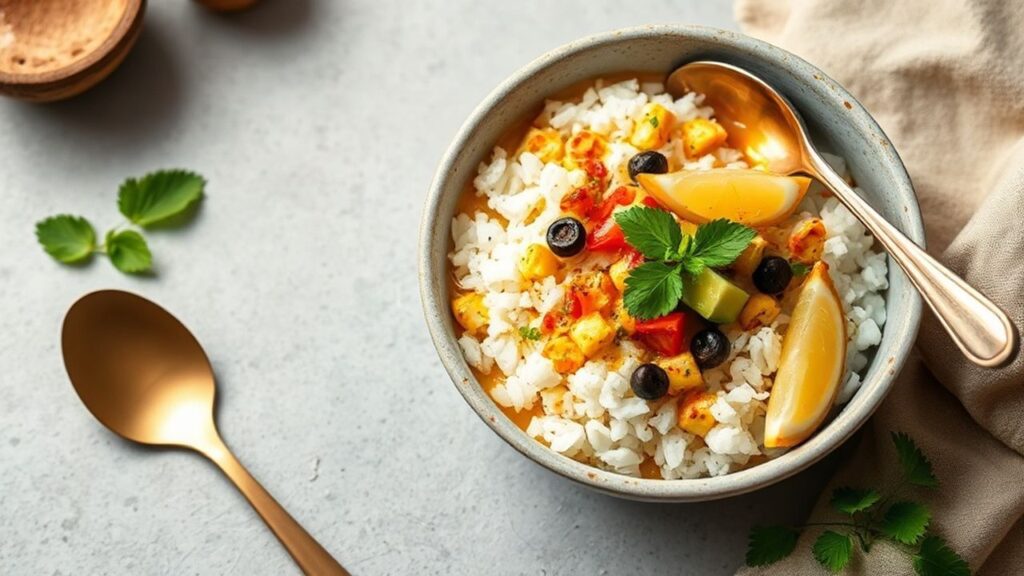
Serve piping hot with lime wedges and a small side salad for contrast. A bright cucumber salad or pickled slaw cuts the curry’s richness and refreshes the palate.
For presentation, use shallow bowls and arrange toppings in sections: cilantro, nuts, avocado, and a drizzle of vegan yogurt or cashew cream make the bowls visually appealing and balanced on texture.
Nutrition and Make-Ahead Notes for Coconut Curry
A typical serving provides balanced macronutrients: carbohydrates from rice and sweet potato, plant protein from chickpeas or tofu, and healthy fats from coconut milk. This combination supports sustained energy and satiety.
Store cooked curry in an airtight container for up to 3 days; flavors intensify. Reheat gently and add a splash of coconut milk or water if the sauce tightens in the fridge.
| nutrient | Per Serving |
|---|---|
| Calories | 420 kcal |
| Protein | 10 g |
| Carbohydrates | 65 g |
| Fat | 13 g |
FAQ
How can I make this Coconut Curry gluten-free?
Use tamari instead of soy sauce and verify your red curry paste is free of fish or shrimp ingredients. Many commercial pastes are labeled vegan and gluten-free.
Can I prep this Coconut Curry ahead of time?
Yes. Cook the curry up to three days in advance. Reheat gently and add a splash of coconut milk to restore sauce texture before serving over fresh rice.
What rice pairs best with Coconut Curry?
Jasmine rice offers a fragrant, slightly sticky accompaniment, while basmati provides light, separate grains. Choose jasmine for traditional Southeast Asian profiles or basmati for a lighter mouthfeel.
How do I increase protein in the Coconut Curry?
Add pan-fried tofu or tempeh, increase chickpeas, or stir in cooked lentils. Pressing tofu before pan-frying improves texture and sauce adhesion.
Is there a low-fat version of this Coconut Curry?
Use light coconut milk and finish with a spoonful of coconut cream to add richness without the same calorie density. Alternatively, decrease coconut milk and substitute part broth for a lighter sauce.
Enjoy these Tropical Vegan Coconut Curry rice bowls as a flexible, flavorful template you can refine to taste and seasonality. The recipe rewards small adjustments that amplify texture, balance, and aroma.
See also: Coconut Curry