

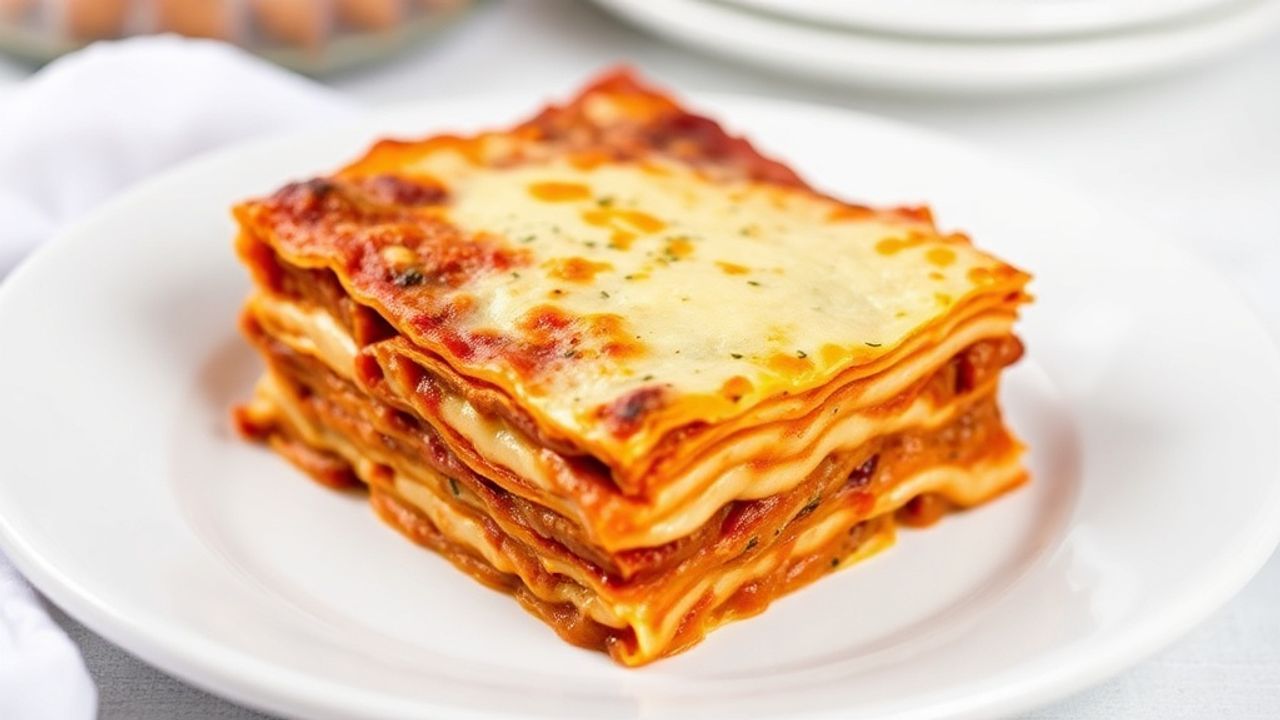
Classic lasagna delivers layered comfort: tender pasta, savory ragù, creamy cheese, and a browned, bubbling top. This best classic lasagna recipe explains ingredient choices and techniques that produce reliable, restaurant-quality results at home.
- Mastering Classic Lasagna: Ingredients and Why They Matter
- Mastering the Rich and Creamy Cheese Blend for Classic Lasagna
- Building the Sauce: Meat, Tomatoes, and Technique for Classic Lasagna
- Step by Step Planning for Layered Perfection in Classic Lasagna
- Tips and Tricks for Baking Classic Lasagna to Golden Perfection
- Recipe Details: Prep, Cook Time, Yield and Difficulty for Classic Lasagna
- Serving Suggestions for Classic Lasagna
- Nutritional Snapshot
- FAQ
- What makes a lasagna truly classic?
- Can I use store-bought pasta sheets or make my own?
- Is béchamel necessary, or can I use ricotta?
- How do I prevent a watery lasagna?
- Can I make lasagna ahead of time?
- Future Outlook for Your Classic Lasagna
- Key takeaway: Balance moisture and structure to avoid soggy layers.
- Key takeaway: Use a seasoned cheese blend and well-reduced sauce for deep flavor.
- Key takeaway: Rest the lasagna after baking for perfect slices.
Mastering Classic Lasagna: Ingredients and Why They Matter
Choosing the right components drives the final texture and taste of classic lasagna. Quality tomatoes, correctly seasoned meat, and fresh cheeses give clear, measurable improvements in flavor and mouthfeel.
For a quick primer on lasagna’s culinary background, review the traditional preparations on Lasagne. Understanding tradition helps you decide where to be faithful and where to adapt.
Mastering the Rich and Creamy Cheese Blend for Classic Lasagna
The cheese blend shapes both flavor and structure. Combine whole milk ricotta with shredded mozzarella and a portion of Parmigiano-Reggiano for salt, umami, and melting performance.
Drain ricotta briefly in a fine-mesh sieve to reduce excess moisture, then bind with a beaten egg and a few pinches of salt and freshly cracked black pepper. Freshly grate Parmigiano-Reggiano rather than using pre-grated cheese to preserve melting quality and aroma; read more on Parmigiano-Reggiano.
Building the Sauce: Meat, Tomatoes, and Technique for Classic Lasagna
A focused, simmered ragù brings depth. Start with a soffritto, brown meats to develop fond, then deglaze and simmer with crushed San Marzano-style tomatoes until the sauce reduces and concentrates.
For tomato origin and varieties that have a naturally balanced acidity and sugar, consider reading about San Marzano tomato. Reduce the sauce until it coats the back of a spoon; that thickness prevents a watery bake.
Step by Step Planning for Layered Perfection in Classic Lasagna
Organization before assembly saves time and prevents mistakes. Prepare components—sauce, cheese mix, and pasta—so layering moves quickly and evenly.
Follow a consistent layer order: a thin sauce base, pasta, cheese blend, sauce, and a scattering of shredded mozzarella. Repeat until the pan is nearly full and finish with sauce plus a dense layer of mozzarella and grated Parmigiano-Reggiano.
- Prepare the sauce: Sauté onions, carrots, and celery until soft, brown ground beef and pork or sausage, deglaze with wine, then add tomatoes and simmer for 45–90 minutes depending on time.
- Simmer and reduce: Taste and finish sauce with salt, pepper, and torn basil leaves near the end; a well-reduced sauce limits excess liquid.
- Cheese filling: Mix ricotta, egg, grated Parmigiano-Reggiano, chopped parsley, and a touch of nutmeg if desired.
- Pasta: Use no-boil sheets according to package directions or boil regular noodles to al dente and cool them flat to avoid sticking.
- Assemble: Spread a thin sauce layer, add sheets, cheese, sauce, and mozzarella; repeat and finish with sauce and cheeses.
- Bake: Cover and bake at 375°F (190°C) for 25–30 minutes, uncover and bake 15–25 minutes until the top is browned and bubbly.
- Rest: Let rest at least 15 minutes before slicing for clean portions that hold together.
Tips and Tricks for Baking Classic Lasagna to Golden Perfection
Oven placement and foil technique affect browning and moisture retention. Place the rack slightly below center for even heat, tent foil for most of the bake, then remove it to brown the top.
Use a thermometer: internal temperature around 165°F (74°C) indicates thorough reheating; visual cues of bubbling and a golden surface are also reliable. Quick broiling for 90–180 seconds can enhance browning but monitor closely.
Recipe Details: Prep, Cook Time, Yield and Difficulty for Classic Lasagna
Prep Time: 35–45 minutes of active work depending on whether you make fresh pasta. Mise en place reduces stress during assembly and supports even layers.
Cook Time: 50–75 minutes including initial covered baking and uncovered finishing. Yield: Serves 8; Difficulty: Medium—appropriate for cooks comfortable with multi-stage recipes.
Ingredients
Here is a clear, tested ingredient list for the best classic lasagna recipe. Quantities are scaled for an approximately 9×13-inch baking dish.
- 1 lb ground beef (80/20)
- 1/2 lb Italian sausage, casings removed
- 2 tbsp olive oil
- 1 medium onion, finely chopped
- 2 medium carrots and 1 celery stalk, finely diced
- 4 cloves garlic, minced
- 28 oz crushed tomatoes (preferably San Marzano-style)
- 1/2 cup dry red wine (optional)
- 12 lasagna sheets (no-boil or boiled al dente)
- 15 oz whole-milk ricotta
- 2 cups shredded mozzarella, divided
- 1/2 cup freshly grated Parmigiano-Reggiano, divided
- 1 large egg
- Salt, freshly cracked black pepper, chopped parsley, and dried oregano
Chef’s Notes
Drain ricotta briefly to reduce water content and whisk in the egg for structure. Fresh herbs accelerate aroma; add them late in the cooking process for brightness.
For a lighter version, swap part of the ricotta for strained cottage cheese or use thinly sliced zucchini for a low-carb layer. Freeze leftovers in portions for up to three months; thaw overnight and reheat covered at 350°F until warm throughout.
Serving Suggestions for Classic Lasagna
Pair the lasagna with a bright salad dressed in a tangy vinaigrette to cut through the richness. A simple accompaniment of roasted vegetables or garlic-rubbed crusty bread works equally well.
Consider finishing with a scattering of chopped fresh basil and a light dusting of Parmigiano-Reggiano to add aroma and color just before serving. For background on the cheeses used, review the ricotta page at Ricotta.
Nutritional Snapshot
Portion control is important: a generous serving typically contains roughly 450–550 kcal depending on meat and cheese ratios. Adjusting cheese amounts and using leaner meats reduces calories and fat content predictably.
Use the table below as a general guide and adjust ingredient selections to meet dietary goals.
| Nutritional Info (per serving) | Calories | Protein | Carbs | Fat |
|---|---|---|---|---|
| Classic Lasagna | 480 kcal | 32 g | 35 g | 21 g |
FAQ
What makes a lasagna truly classic?
A classic lasagna pairs a slowly reduced meat sauce with a creamy cheese component and layered pasta. The hallmark is balance: each element complements the others without overwhelming the dish.
Can I use store-bought pasta sheets or make my own?
Either works. No-boil sheets save time; fresh pasta improves texture. If using fresh dough, roll thin and handle gently to keep sheets supple.
Is béchamel necessary, or can I use ricotta?
Both approaches are traditional. Béchamel adds silk and neutrality; ricotta contributes tang and texture. Some preparations combine them for maximum richness.
How do I prevent a watery lasagna?
Keep sauce reduced, drain cheeses where possible, and avoid over-saucing layers. Let the baked lasagna rest so juices redistribute and the structure firms up before cutting.
Can I make lasagna ahead of time?
Yes. Assemble and refrigerate overnight, then bake when ready; resting overnight improves flavor melding. For longer storage, freeze assembled portions and defrost in the refrigerator before baking.
Future Outlook for Your Classic Lasagna
Mastering the steps in this best classic lasagna recipe builds reproducible results and confidence. With practice, you can adapt proteins, herbs, and cheeses to suit dietary needs while preserving the essential technique.
Apply the measured approach here—quality ingredients, reduced sauce, proper cheese management, and resting—and you will produce a consistently excellent classic lasagna suitable for weeknight dinners or special gatherings. Buon appetito!
See also: classic lasagna