
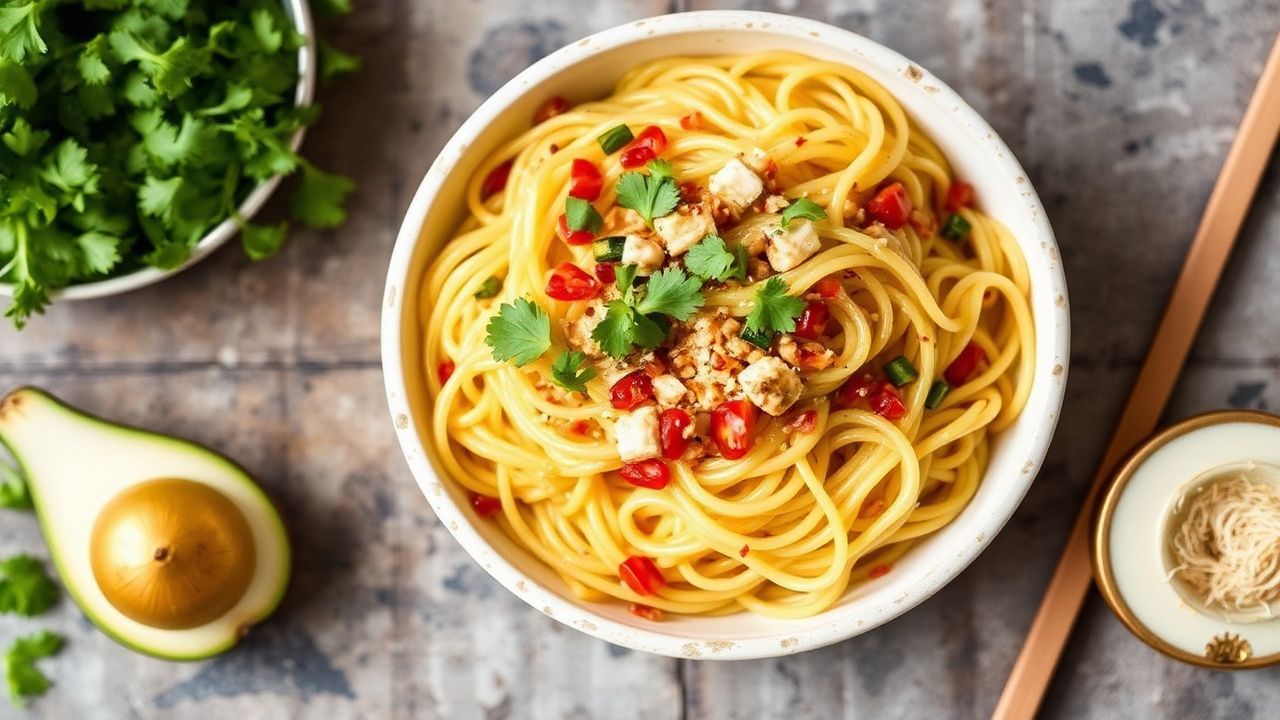
Spaghetti squash chow mein delivers the classic stir-fry comfort you want, but with a lighter base. Instead of wheat noodles, you shred roasted spaghetti squash into noodle-like strands and toss them in a savory sauce with crisp vegetables.
You get a gluten-free, lower-carb alternative that still tastes bold and satisfying. With the right roast time and quick stir-fry, the strands stay tender without turning watery.
At a Glance: Spaghetti Squash Chow Mein Delight
- Noodle swap: roasted spaghetti squash strands replace wheat noodles.
- Better texture: roast, cool slightly, then pat dry before cooking.
- Flavor control: sesame oil + ginger + garlic build aroma fast.
- Diet-friendly: naturally gluten-free when you use tamari.
Exploring the Unique Appeal of Spaghetti Squash in Chow Mein
Spaghetti squash forms long, stringy strands when you roast and shred it. That natural structure helps it mimic chow mein noodles, especially when you keep the pieces intact during cooking. For background on this vegetable’s identity, see spaghetti squash.
Flavor stays approachable because squash soaks up sauce. When you use aromatic seasonings like ginger and garlic, you lift the taste without needing heavy flour-based thickeners. If you want to understand the sauce style, review chow mein and its typical seasoning profile.
Mastering Texture Balance for Spaghetti Squash Chow Mein
The main risk is overcooking. Spaghetti squash softens quickly if you simmer it, so you roast it until fork-tender, then warm it briefly in the stir-fry. For guidance on roasting technique and moisture control, refer to roasting.
Next, manage surface moisture. After shredding, pat the strands dry with paper towels so they don’t steam in the pan. Use high heat for a short toss to keep vegetables crisp-tender and strands distinct.
Why “Fork-Tender” Matters
Roast until the flesh gives way to a fork but still holds its shape. This stage creates strands that bend and tangle like noodles rather than collapsing. If you cook beyond that window, the strands break apart and release extra liquid during tossing.
After roasting, let the squash cool just enough to handle. Cooling also reduces condensation, which helps your final dish stay glossy instead of watery.
Flavor Infusions that Elevate Chow Mein
Build flavor in layers. Start with sesame oil, then bloom garlic and ginger for about a minute. This quick heat triggers aroma and keeps the sauce clean rather than harsh.
Use tamari or soy sauce for salty depth, then add rice vinegar for a gentle tang. For more on soy-based condiments, see soy sauce.
Essential Tips for Selecting and Preparing Spaghetti Squash
Choose a firm, medium spaghetti squash with a hard rind. Avoid soft spots and deep bruises, since those signs suggest uneven texture after roasting. For quick produce selection logic, you can also reference vegetables in general terms of fresh quality indicators.
Use a sharp knife to halve the squash safely. Cut lengthwise, scoop out seeds, and plan for a clean shredding step once roasted.
- Pick firmness: bright yellow skin with no soft areas.
- Roast cut-side down: improves browning and helps reduce extra moisture.
- Shred with a fork: create long strands; keep them intact.
- Pat dry: remove surface moisture for a noodle-like bite.
- Optional speed: microwave halves to soften, then roast briefly if needed.
Pro-Caution on Moisture
After shredding, spread the strands in a single layer if possible. Then pat dry again if they look wet or glossy.
Prep and Cook Time
- Prep Time: 20 minutes
- Cook Time: 25 minutes
- Total Time: 45 minutes
Yield
This recipe makes serves 4 as a main dish with side salad or soup. If you serve it alongside steamed greens, you may stretch it for 5.
Plan leftovers for up to 2 days. Reheat gently so the strands warm without over-softening.
Difficulty Level
Easy to medium. The only “technical” step is controlling roast doneness and pan moisture. Once you nail that, the rest runs like any fast stir-fry.
If you prefer repeat success, measure sauce liquids and chop vegetables before you roast the squash.
Ingredients
- 1 medium spaghetti squash (about 3 pounds), halved and seeded
- 2 tablespoons sesame oil, divided
- 3 cloves garlic, minced
- 1 tablespoon fresh ginger, finely grated
- 1 red bell pepper, thinly sliced
- 1 cup snap peas, trimmed and halved
- 3 scallions, sliced thinly (white and green parts separated)
- 1/4 cup low-sodium tamari or soy sauce
- 1 tablespoon rice vinegar
- 1 teaspoon toasted sesame seeds
- 1/2 teaspoon crushed red pepper flakes (optional)
- 1/2 cup shredded carrot
- Fresh cilantro, for garnish
Instructions
- Preheat your oven to 400°F (200°C). Place the halved spaghetti squash cut-side down on a parchment-lined baking sheet.
- Roast 35–40 minutes, until tender and easily shredded. Cool until you can handle it, then scrape the strands into a bowl. Pat the strands dry.
- Heat 1 tablespoon sesame oil in a large wok or skillet over medium-high heat. Add garlic, ginger, and the white parts of scallions. Sauté 60 seconds until fragrant.
- Add bell pepper, snap peas, and carrots. Stir-fry 3–4 minutes, aiming for crisp-tender vegetables and bright color.
- Toss in the spaghetti squash strands and pour in tamari, rice vinegar, and the remaining sesame oil. Stir constantly and warm about 2–3 minutes. Stop while strands still feel intact.
- Finish with red pepper flakes (if using), sliced green scallion parts, and toasted sesame seeds. Toss once to distribute evenly.
- Serve immediately with cilantro on top. Garnish the plate so the dish looks as good as it tastes.
Tips for Success with Spaghetti Squash Chow Mein Delight
Toast sesame seeds separately for a deeper nutty aroma. Add them at the end so they stay fragrant and don’t burn. If you keep the pan too hot for too long, aromatics can turn bitter, so add them early and stir often.
For extra protein, stir in firm tofu cubes during the vegetable step. Cook until the edges brown lightly, then proceed with the sauce and squash.
- Use a wide pan for even cooking and less steaming.
- Pre-shred strands earlier in the day if you refrigerate them uncovered.
- Choose gluten-free by using tamari instead of regular soy sauce.
- Adjust tamari to taste; sodium levels vary by brand.
Serving Suggestions
Serve spaghetti squash chow mein hot, right after tossing. The texture stays best when the strands haven’t sat in sauce for long. For meal pairing ideas and balance, you can also reference stir-fry technique and typical serving styles.
Pair it with a cucumber salad or a simple miso-style soup. If you want a crunch contrast, add shredded cabbage on the side or garnish with extra scallions and cilantro.
| Nutrient | Per Serving |
|---|---|
| Calories | 210 kcal |
| Protein | 5 g |
| Carbohydrates | 28 g |
| Fat | 9 g |
FAQ
Can I use frozen vegetables or pre-cut mixes?
Yes. Thaw them first so you don’t add too much water to the pan. Pat vegetables dry and stir-fry at high heat for the shortest time needed to keep them crisp-tender.
Why is my spaghetti squash chow mein watery?
Usually the strands released moisture because they weren’t patted dry or they simmered too long. Roast until fork-tender, shred, pat dry, and warm only briefly after adding sauce.
How do I keep the strands from breaking apart?
Handle them gently after shredding and avoid heavy stirring. Also warm at medium-high and keep the total squash cooking time short.
Is this recipe truly gluten-free?
It can be. Use tamari labeled gluten-free and check labels on any sauces. If you add tofu or toppings, verify they also meet your gluten-free needs.
Can I meal-prep spaghetti squash chow mein?
Yes, prepare the squash and chop vegetables ahead. Cook the stir-fry fresh or reheat gently so the strands stay distinct and the vegetables keep their bite.
See also: Spaghetti Squash Chow Mein