
Best Wholesome Turkey Meatloaf with Zesty Tangy Glaze Twist
turkey meatloaf that balances lean protein, bright acidity, and a sticky caramelized glaze makes for a reliable weeknight winner. This approach prioritizes moisture management, flavor layering, and simple technique to produce consistent, juicy slices every time.
- Wholesome Ingredients That Elevate Your Turkey Meatloaf
- Ingredients
- Prep and Cook Time
- Mastering the Perfect Texture for Moist and Flavorful Turkey Meatloaf
- Crafting the Zesty Tangy Glaze to Brighten Every Bite
- Serving Suggestions and Pairings for a Memorable Meal
- Nutrition, Yield, and Make-Ahead Notes
- Tips for Success
- Common Variations and Customizations
- FAQ
- Can I use leaner or fattier ground turkey?
- How do I keep slices from falling apart?
- Is the glaze safe with honey when baking?
- Can I freeze turkey meatloaf?
- What are good side dishes for this turkey meatloaf?
- Concluding Remarks
- Key takeaway: Use a binder and gentle mixing to retain moisture in turkey meatloaf.
- Key takeaway: A twice-brushed zesty glaze creates a glossy, flavorful crust.
- Key takeaway: Roast at steady heat and rest before slicing for even doneness.
- Key takeaway: Thermometry is the most reliable indicator of doneness for poultry loaves.
Wholesome Ingredients That Elevate Your Turkey Meatloaf
Choosing the right components sets professional results. Ground turkey performs best when paired with small additional fats and moisture — grated vegetables, plain yogurt, and a single egg provide texture, binding, and juiciness without excess fat.
Use fresh herbs and restrained spices to lift the flavor profile without masking the meat. For background on meatloaf as a dish see meatloaf and for nutritional context refer to protein (nutrient).
Ingredients
Below is a practical ingredient list sized for six servings; quantities and sensible swaps are included so you can adapt for dietary needs. Measure ingredients by weight where precision matters: lean poultry varies and weight control produces predictable texture.
Include a simple glaze built from pantry staples and balance acidity, sweetness, and smoke. If you prefer whole-grain binders or gluten-free options, substitute oats for panko and adjust moisture by a tablespoon at a time.
- 1 ½ lbs ground turkey (93% lean preferred)
- 1 cup finely diced yellow onion
- ½ cup shredded carrot
- ½ cup finely diced celery
- 2 cloves garlic, minced
- ½ cup panko breadcrumbs or oats for gluten-free
- ⅓ cup plain Greek yogurt
- 1 large egg
- 2 tbsp fresh parsley, chopped
- 1 tsp fresh thyme, chopped
- 1 tsp Dijon mustard
- 1 tsp Worcestershire-style seasoning
- ½ tsp smoked paprika
- Salt and black pepper to taste
- 2 tbsp olive oil (for sautéing)
- Glaze: ⅓ cup ketchup, 2 tbsp apple cider vinegar, 1 tbsp honey, 1 tsp hot sauce (optional), 1 tsp smoked paprika
Prep and Cook Time
Efficiency matters for weekly meal rotation. Plan for short sautéing of aromatics, a single bake step, and a brief resting window to make slicing practical and to keep juices locked in the loaf.
Use a digital instant-read thermometer to confirm safety and prevent overcooking; target temperature is 165°F (74°C). Accurate timing reduces guesswork and saves flavor and texture.
- Readiness: 20 minutes
- Cooking: 55 minutes (40 min, glaze, then 15 min)
- Total Time: 1 hour 15 minutes
Mastering the Perfect Texture for Moist and Flavorful Turkey Meatloaf
Texture hinges on binder ratio and mixing technique. Combine ingredients gently; excessive handling compresses the protein matrix and yields a dense crumb, while under-mixing creates dry pockets and uneven seasoning.
Choose panko or old-fashioned oats to absorb juices without becoming pasty. For spice background, see the entry on paprika, which pairs naturally with smoked elements and tomato-based glazes.
- Preheat oven to 375°F (190°C). Grease a loaf pan or line with parchment for easy release.
- Sauté onion, carrot, and celery in olive oil until softened, about 5 minutes. Cool slightly before adding to meat to avoid premature coagulation.
- Mix ground turkey, cooled veggies, garlic, panko, Greek yogurt, egg, herbs, mustard, seasoning, salt, and pepper gently until combined.
- Shape into a compact loaf and place in pan. A compact shape yields even cooking and less surface dryness.
- Glaze and bake: Brush half the glaze on, bake 40 minutes, brush again and finish until internal temperature reads 165°F (74°C).
- Rest 10 minutes before slicing to let juices redistribute for cleaner, moister slices.
Crafting the Zesty Tangy Glaze to Brighten Every Bite
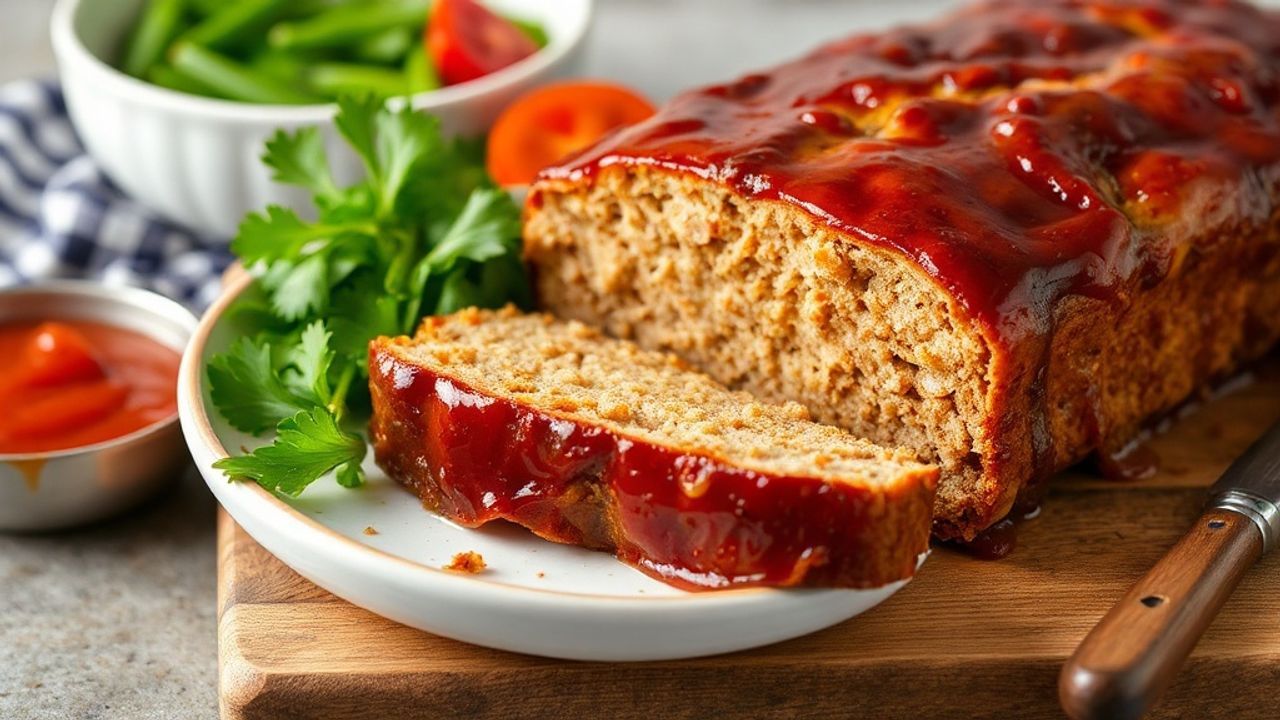
The glaze provides a contrasting layer: vinegar supplies brightness, honey adds controlled sweetness, and smoked paprika ties the glaze to the loaf�s spice profile. Brushing twice yields a glossy, slightly caramelized finish without burning the sugars.
Prefer apple cider vinegar for a fruitier lift; for more on vinegar varieties consult vinegar. Adjust acid and sweet ratios to taste, and reserve a small scoop of glaze for serving if you like a wet presentation.
Serving Suggestions and Pairings for a Memorable Meal
Pair the savory-tangy loaf with creamy or crisp sides to balance texture and flavor. Mashed sweet potatoes or whipped cauliflower offer smooth contrast while roasted root vegetables bring caramelized notes.
For quick meal ideas, link the sliced loaf to a weekly plan and sides for efficient reheating; see internal resources like turkey meatloaf recipes and meal planning guides for pairing templates and batch-cook schedules.
Nutrition, Yield, and Make-Ahead Notes
This recipe yields six generous portions and supports protein-focused plates while keeping calories moderate. Per-serving values depend on exact ingredients and portioning; use the table below as a practical baseline for menu planning.
Make-ahead works well: assemble the loaf, cover, and refrigerate up to 24 hours before baking, or bake, slice, and freeze for up to three months. Thaw overnight and reheat gently to preserve moisture.
| Nutrient | Per Serving |
|---|---|
| Calories | 320 kcal |
| Protein | 35 g |
| Carbohydrates | 12 g |
| Fat | 10 g |
Tips for Success
Small technique choices yield reliably moist results. Keep ingredients near room temperature, mix briefly, and monitor internal temperature rather than judging doneness by color alone.
Adjust binders and moisture when changing protein ratios; a higher-fat blend requires less added fat, while very lean turkey needs added moisture such as yogurt or grated vegetables. Track changes on your first trial to replicate results reliably.
Glazing timing matters: apply the first coat at mid-bake so sugars set, then add the final coat in the last 10–15 minutes for shine without burning. Watch ovens closely; sugar content and oven hotspots change finish time by minutes.
When reheating, use gentle oven heat (275–300°F) covered with foil to warm slices without drying them. A light brush of leftover glaze before service refreshes surface flavor and appearance.
Common Variations and Customizations
Swap proteins to suit preference: ground chicken or a mix with a small percentage of ground beef will change fat content and mouthfeel. Adjust binders proportionally when altering protein ratios to maintain structure and moisture.
Flavor tweaks are straightforward and reliable. Add grated ginger for warmth, a splash of citrus for bright lift, or swap honey for maple syrup for a deeper caramel tone in the glaze.
FAQ
The following answers address frequent, practical questions about preparing turkey meatloaf with a zesty glaze. Each response focuses on technique and substitutions to help home cooks replicate consistent results.
These answers reflect tested, practical methods that balance food-safety, texture control, and flavor clarity for efficient weeknight cooking.
Can I use leaner or fattier ground turkey?
Yes. Leaner turkey (93% or higher) benefits from added moisture such as Greek yogurt, grated vegetables, or a small drizzle of olive oil mixed in. Fattier blends cook more forgivingly but may shrink more and release extra fat.
How do I keep slices from falling apart?
Use appropriate binders: egg, panko or oats, and a small dairy component like Greek yogurt. Avoid overmixing and allow the loaf to rest 10 minutes before slicing to stabilize juices and structure.
Is the glaze safe with honey when baking?
Yes. Honey caramelizes at oven temperatures and is safe in cooking. Apply glaze mid-bake and finish at the end to achieve a glossy finish without burning delicate sugars.
Can I freeze turkey meatloaf?
Absolutely. Portion the loaf after it has cooled, wrap tightly, and freeze up to three months. Thaw overnight in the refrigerator and reheat gently to maintain moisture and texture.
What are good side dishes for this turkey meatloaf?
Pair with creamy mashed sweet potatoes, garlic roasted potatoes, or a crisp green salad for texture contrast. Roasted Brussels sprouts or sautéed green beans with toasted almonds add complementary earthiness and crunch.
Concluding Remarks
This method prioritizes moisture, balanced flavor, and practical technique for both weeknight meals and small entertaining. Targeted binders and a zesty glaze let a lean protein deliver indulgent-sounding results without excess fat.
Make modest swaps to suit dietary needs, rely on thermometry and resting, and you will produce consistent, satisfying turkey meatloaf. Enjoy a wholesome, efficient dish that scales for meal prep and family dinners.
See also: best side dishes | meal prep recipes
See also: turkey meatloaf