
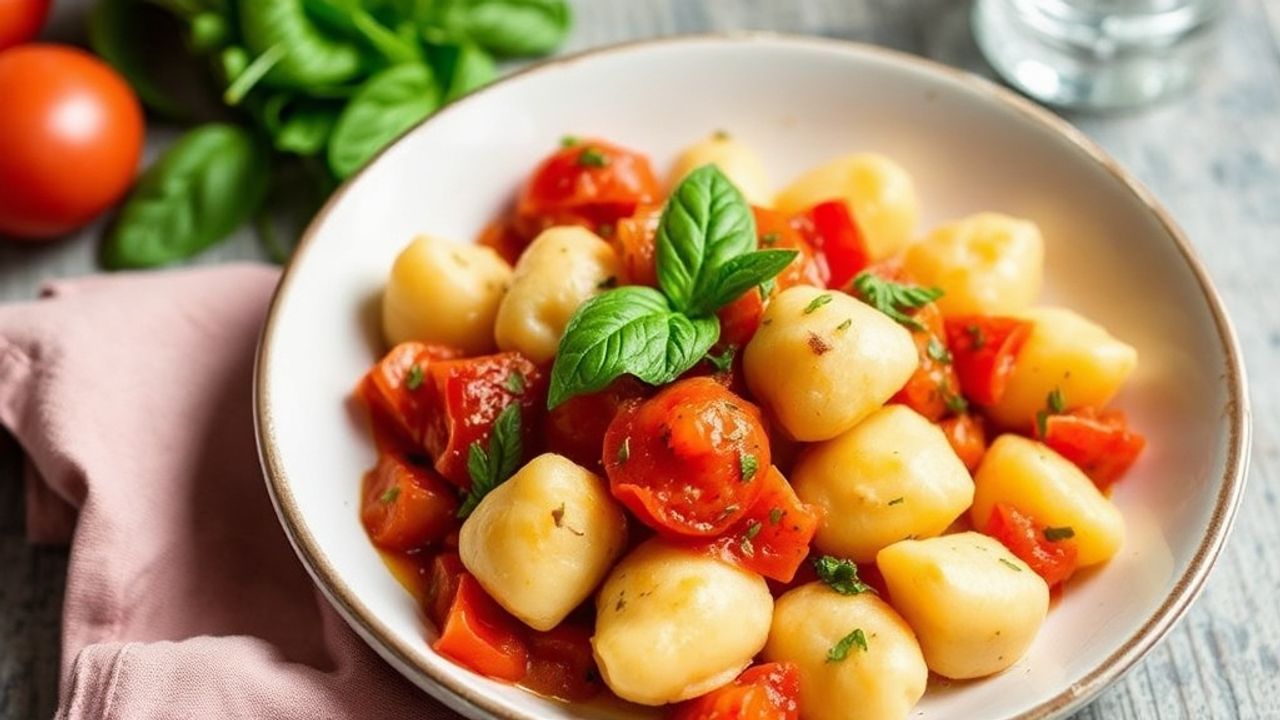
Potato gnocchi deliver a soft, melt-in-your-mouth texture that lifts a simple sauce into something memorable. Use high-starch potatoes and handle the dough lightly to avoid dense, gummy results.
- Why Potato Gnocchi Works
- Key Principles and Scientific Rationale
- Prep and Cook Time
- Yield, Difficulty, and Scaling
- Ingredients for Potato Gnocchi and Tomato-Basil Sauce
- Equipment and Key Techniques
- Step-by-Step Instructions
- Chef’s Tips for Consistent Results
- Serving Suggestions & Creative Twists
- Nutritional Snapshot
- Relevant Culinary Context
- Choosing Tomatoes for Sauce
- FAQ
- Quick wins: Choose Russets and use a ricer for an even, light base.
- Sauce timing: Add torn basil at the last moment to keep its aroma vibrant.
- Texture tip: Minimal flour and minimal kneading preserve pillowy structure.
- Batch cook: Freeze uncooked gnocchi on a tray for fast weeknight meals.
Why Potato Gnocchi Works
Gnocchi rely on a balance of starch, moisture, and a binder to form soft, pillowy dumplings. When you control potato dryness and limit flour, the dough puffs instead of becoming dense.
Starchy varieties concentrate dry matter, so you add less flour and avoid gluten overdevelopment. That practical principle drives professional results in both home and restaurant kitchens.
Key Principles and Scientific Rationale
Starch content sets hydration needs: high starch means lower water proportion and less flour for binding. This reduces gluten formation and keeps gnocchi tender.
Temperature matters: work while potatoes are warm but not hot, so steam escapes and the binder integrates evenly. Gentle handling preserves texture and prevents chewiness.
Prep and Cook Time
Preparation: Expect 30–40 minutes of active work for a standard four-person batch, including cooling and shaping. These steps reward measured technique more than speed.
Cooking: Boil gnocchi 2–3 minutes per batch after they float and simmer the tomato-basil sauce about 8–12 minutes. Plan roughly 50 minutes total for sauce and pasta together.
Yield, Difficulty, and Scaling
This recipe serves 4 as a main course when paired with a bright tomato-basil sauce. The technique rates as moderate—novices succeed by following weight and handling guidance.
To scale, weigh potatoes and flour proportionally. Small variations in weight change hydration significantly, so use a scale for repeatable results.
Ingredients for Potato Gnocchi and Tomato-Basil Sauce
Prep mise en place: cook potatoes, measure flour by weight, mince garlic, and tear basil. Organized steps reduce mistakes and speed the process.
Typical ingredients for four people include Russet potatoes, all-purpose flour, one egg, sea salt, crushed tomatoes, garlic, olive oil, and fresh basil. Adjust salt and sugar lightly to taste.
Equipment and Key Techniques
Use a potato ricer or fine-mesh sieve to remove lumps and create a dry, uniform base. A ricer prevents pockets of moisture that force extra flour into the dough.
Keep a clean, cool work surface and add flour gradually. Overworking develops gluten; stop kneading once the dough holds together to maintain a light crumb.
See related equipment recommendations on our potato ricer guide and consult our texture control page for extra technique notes.
Step-by-Step Instructions
1. Cook the potatoes: Place whole, peeled Russets in salted water and simmer until fork-tender, about 25–30 minutes. Drain and cool until warm so steam escapes when you rice them.
2. Rice or mash: Rice potatoes while warm directly onto a clean surface to let steam dissipate quickly. Even, lump-free potato prevents sticky dough and the need for excess flour.
3. Add egg and salt: Make a shallow well in the riced potato and add the beaten egg and salt, folding gently. The egg binds with little flour, maintaining a softer bite.
4. Incorporate flour: Sprinkle flour in stages and combine with minimal kneading until a soft, cohesive dough forms. Stop when the dough holds shape to avoid toughness.
5. Shape the gnocchi: Divide dough into quarters, roll into 3/4-inch ropes, and cut into 1-inch pieces. Press with a fork or board for ridges that trap sauce and create pleasing texture.
6. Cook and finish: Boil salted water, cook gnocchi in batches until they float, then transfer to a warm tray. Simmer crushed tomatoes with garlic, finish with torn basil, and toss gently with cooked gnocchi.
Chef’s Tips for Consistent Results
Choose starchy potatoes. Russets have the right dry-matter ratio, so you use less flour and keep gnocchi airy. Measure by weight for consistency.
Work cool and fast. Keep surfaces cool and avoid overhandling; excessive kneading builds gluten and yields dense dumplings. Freeze portions if you need batch prep time.
Ridging helps sauce cling. Fork ridges increase surface area and yield a more flavorful bite with every forkful. Use a gnocchi board or fork and be consistent in size for even cooking.
Freeze leftover uncooked gnocchi on a parchment-lined tray, then transfer to bags once solid. Cook from frozen; they will float a little longer and retain shape and texture.
Serving Suggestions & Creative Twists
The tomato-basil pairing balances the starch with bright acidity and aromatic herb. For contrast, brown gnocchi in butter and sage for a nutty finish or add sautéed mushrooms for umami depth.
Use contrasting textures like toasted pine nuts or crisp pancetta to lift the plate. Finish with a flake of sea salt and a drizzle of high-quality extra virgin olive oil for aroma and gloss.
Pairing Notes
Serve gnocchi with a light white wine or sparkling water with lemon to cut richness and refresh the palate. A small, crisp salad complements the dish without overpowering it.
Garnish with torn basil and a dusting of aged cheese for both visual and aromatic lift. Simple accents emphasize the soft texture and sauce balance.
Nutritional Snapshot
Approximate nutrition per serving depends on portion size and ingredients. Use this snapshot for menu planning and adjust for dietary needs.
Typical values: ~420 kcal, 10 g protein, 75 g carbohydrates, and 6 g fat per serving. These figures vary with added cheese, oil, or protein accompaniments.
Relevant Culinary Context
Potatoes anchor many regional dumplings; their starch content drives specific techniques and texture. For foundational information on the tuber, consult the Potato overview.
Basil provides aromatic lift and is central to many Mediterranean sauces. For botanical and culinary background, see the Basil entry. Gnocchi history and regional variants are summarized in the Gnocchi article.
Choosing Tomatoes for Sauce
Quality canned tomatoes influence flavor and texture; use canned crushed tomatoes with balanced acidity and flesh. Ripe fresh tomatoes work but require longer reduction.
For context on tomato varieties and their use in sauces, refer to the Tomato resource. Experiment but favor fuller-flavored tomatoes for quick sauces.
FAQ
What makes potato gnocchi pillowy rather than gummy?
Pillow softness comes from using high-starch potatoes, removing excess moisture, and adding only the flour needed to hold shape. Gentle handling limits gluten development so the final product stays tender.
Can I make potato gnocchi ahead of time?
Yes. Freeze uncooked pieces on a tray then transfer to airtight bags. Cook from frozen; frozen gnocchi hold shape better than refrigerated ones that can become sticky.
Is the tomato-basil sauce truly easy to make?
Yes. Sauté garlic in olive oil, add crushed tomatoes, simmer briefly, and finish with torn basil seconds before serving. Good tomatoes and correct timing keep flavors bright with minimal effort.
How do I adjust for dietary restrictions?
Swap all-purpose flour for a tested gluten-free blend and omit the egg or use a commercial egg replacer to make a vegan dough. The tomato-basil sauce is naturally gluten-free and vegan.
Why press ridges on gnocchi?
Ridging increases surface area and creates channels that trap sauce, improving flavor delivery per bite. A simple fork or gnocchi board provides consistent ridges for each piece.
See also: potato gnocchi
See also: Potato Gnocchi