
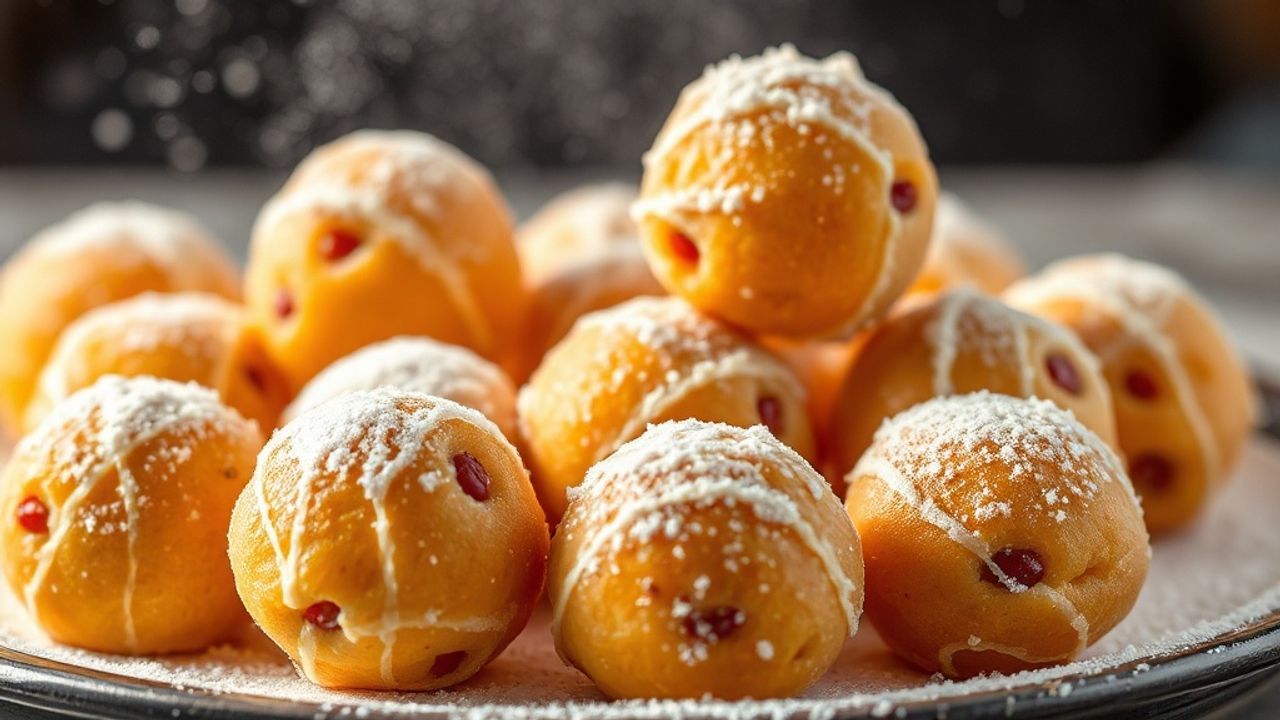
Oliebollen arrive with winter markets, steam, and a cloud of powdered sugar. They are the Netherlands’ classic fried treat and a reliable test of frying and fermentation technique.
- At a glance: Oliebollen are yeast-leavened fried balls served for year-end celebrations.
- Texture target: golden, crisp exterior with an airy, fruit-studded crumb.
- Key controls: oil temperature, dough hydration, and fermentation timing.
- Serving: dust generously with powdered sugar; re-crisp in a hot oven if needed.
Oliebollen: Origins and Cultural Role
Oliebollen have deep roots in Dutch food history and appear in early records describing fried dough served at winter festivals. These round fritters connect to seafaring and rural trade, and they now function as a seasonal staple across the Netherlands.
Their role during year-end events links them to broader Dutch culinary traditions. For cultural context, consult the Oliebol entry and the Dutch cuisine article for background on regional festival foods.
Ingredients and Technical Foundation for Oliebollen
Precise ingredient ratios produce repeatable results. Base formula control—flour, milk, eggs, salt, sugar, and active yeast—dictates texture and frying behavior.
Small changes in hydration or protein affect crumb and oil uptake. Also, the choice of yeast and proofing schedule shapes flavor and oven-like crumb inside the fried shell.
Yeast and Fermentation Control
Use active dry or instant yeast and target liquid at 40–43°C (104–109°F) when you activate active dry yeast. Too-hot liquid kills the yeast; too-cool liquid delays proofing and yields dense oliebollen.
For more flavor and better gas retention, perform a two-stage proof: a warm primary rise followed by a slow cold proof in the refrigerator. This approach yields deeper fermentation notes and a stronger, more open crumb.
Fruits, Spice, and Moisture Management
Raisins or currants are traditional; soak briefly in warm water, drain, and pat dry before folding in. Overly wet fruit injects excess moisture and collapses bubble structure during frying.
Dice fresh apple small so it cooks through in the oil but does not flood the batter. Add light spice, such as a pinch of cinnamon, to enhance perceived sweetness without masking the classic profile.
Flour and Batter Consistency
All-purpose flour with moderate protein (10–11.5%) balances tenderness and structure. The batter should be thicker than pancake batter yet still drop slowly from a spoon.
Adjust with small additions of milk or flour to maintain a dropping consistency. Mix gently and avoid overworking to preserve entrained gas for an airy crumb.
Step-by-Step Classic Oliebollen Recipe
Follow a clear workflow to produce about 20 medium oliebollen. Control temperature and timing; these two variables determine a golden crust and a tender interior.
Start with warm milk and active yeast, whisk in eggs, then fold into sifted flour with salt until a thick, dropping batter forms. Rest and proof as detailed below for best results.
Mixing and First Rise
Fold in drained raisins and finely diced apple, cover the bowl, and proof in a warm, draft-free spot for 60–90 minutes until doubled. Use gentle strokes while incorporating fruit to preserve gas pockets.
If you prefer deeper flavor, refrigerate the dough overnight after a brief initial rise, then bring it back to room temperature before frying. This improves flavor while retaining dough strength.
Frying Technique
Heat neutral oil to 175–190°C (350–375°F) and use a reliable thermometer for accuracy. Stable temperature minimizes oil absorption and produces even color across batches.
Form oliebollen with two spoons or an ice-cream scoop, dropping heaping portions into hot oil without crowding. Fry 3–4 minutes, turning once, until evenly golden; drain on paper and dust immediately with powdered sugar.
For technical reference on the frying process, review the frying overview at deep frying. Proper oil management maintains texture and safety.
Practical Tips and Troubleshooting
Measure temperatures and times rather than guessing. Slight underproofing yields dense centers; overproofing can cause collapse during frying.
Maintain oil temperature between batches and skim debris to keep color consistent. A clean frying medium improves both texture and flavor.
Serving, Variations, and Presentation
Serve oliebollen hot and dust them generously with powdered sugar for the classic finish. Offer warm vanilla custard or lightly whipped cream as a complement to the fried richness.
Modern variations include chocolate chips, speculaas spice blends, or savory versions with herbs and cheese. Keep frying technique identical; change only the mix-ins to preserve texture.
Where to Experience Oliebollen
Street stalls and winter fairs offer the most authentic tasting experience; seasonal competitions in Dutch cities highlight regional tweaks. Search local market vendors who fry to order and dust at the point of sale for the freshest product.
If you want more recipes or variations, check internal resources on oliebollen at our oliebollen tag and compare techniques in related yeast doughnut recipes. Traveling? Look for vendors who cook fresh and serve immediately for best texture.
To understand holiday timing and social context, consult the New Year’s Eve article. Oliebollen remain tied to year-end gatherings and public celebrations.
FAQ
How are oliebollen different from other doughnuts?
Oliebollen are spherical, fruit-studded, and yeast-leavened rather than ring-shaped or jelly-filled. Their dropping-batter consistency and inclusion of raisins or apple provide a distinct texture.
Can I make oliebollen without yeast?
Yeast gives classic rise and fermentation flavor; chemical leaveners produce a different crumb and shorter shelf life. If you must use baking powder, test a small batch and expect textural differences.
What is the ideal oil temperature for frying oliebollen?
Maintain oil between 175–190°C (350–375°F). Use a thermometer and adjust heat between batches to keep the temperature steady for golden color and fully cooked centers.
How do I store or reheat leftover oliebollen?
Store in a loose container at room temperature for up to one day; freeze for longer storage after an initial single-layer flash freeze. Reheat in a 180°C (350°F) oven for 5–7 minutes to restore crunch without drying.
Are there gluten-free oliebollen options?
Yes. Use certified gluten-free all-purpose flour blends and expect changes in texture due to different protein networks. Adjust hydration and proofing times and test small batches to refine technique.
See also: oliebollen and yeast doughnut recipes for variations and step photos.
See also: Oliebollen