

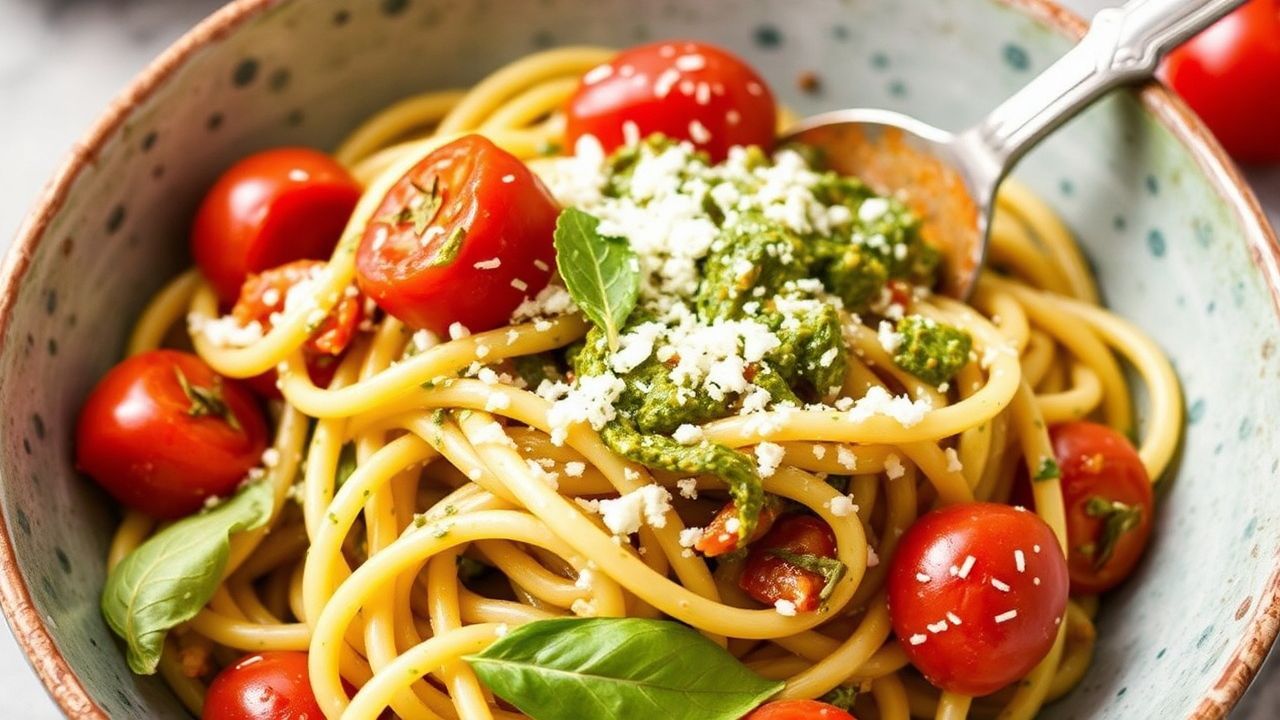
When you want 20-minute pesto pasta with cherry tomatoes, you need two things: bold flavor and a simple process. This recipe brings together fragrant basil pesto and juicy tomatoes so you get a restaurant-style meal fast. The sauce sticks well to al dente pasta, so every forkful tastes balanced and bright.
At a Glance
- Time: 20 minutes total from boiling to serving.
- Flavor: basil-forward pesto plus sweet-tang cherry tomatoes.
- Texture: al dente pasta and silky sauce from starchy pasta water.
- Flex: easy swaps for nuts, cheese, and even dairy-free pesto.
Use ripe cherry tomatoes and fresh basil to make the flavors pop. If you keep your pasta water handy, you also control the sauce thickness without extra cream. That small step helps this dish feel rich while staying quick.
20-Minute Pesto Pasta with Cherry Tomatoes
Why This Quick Pesto Pasta Works
This 20-minute pesto pasta with cherry tomatoes works because it combines two high-impact ingredients. Basil pesto delivers herb depth, while tomatoes add natural sweetness and acidity. Together, they create a balanced sauce that tastes complex even with minimal cooking.
Timing matters here. You cook pasta to al dente, then toss it with pesto and a splash of reserved pasta water. That method helps the sauce cling to the pasta instead of pooling at the bottom.
Prep and Cook Time
Most of the work happens while the pasta boils. You prep the tomatoes, toast the nuts (if using), and blend the pesto ingredients quickly. Then you toss everything together with controlled heat so the sauce stays smooth.
- Planning: 10 minutes
- Cooking: 10 minutes
- Total Time: 20 minutes
Yield: Serves 4 generous portions for dinner or lunch. If you like leftovers, this recipe reheats well when you loosen it with a teaspoon of pasta water.
Difficulty Level
This is an easy recipe. You do not need advanced knife skills or special equipment beyond a food processor (or a blender). Even if you use store-bought pesto, the method stays the same.
Pesto is traditionally based on basil, olive oil, nuts, and cheese, though variations exist. Cherry tomatoes bring a modern twist by adding bright color and quick sweetness with minimal extra steps.
Ingredients
Gather fresh basil and ripe cherry tomatoes first, then measure the rest. When ingredients feel room-temperature, they blend and emulsify more smoothly. That helps the pesto coat pasta evenly.
Below is a classic-style ingredient list that keeps the recipe reliable and fast.
- 10 oz (280g) spaghetti or your favorite pasta
- 2 cups fresh basil leaves, packed, washed and patted dry
- 1/2 cup extra-virgin olive oil
- 1/3 cup pine nuts, toasted (or swap with walnuts)
- 1/2 cup freshly grated Parmesan cheese
- 2 garlic cloves, peeled and minced
- 1 pint cherry tomatoes, halved
- Salt and freshly ground black pepper, to taste
- 1 tablespoon fresh lemon juice
- Optional: chili flakes for a mild kick
Ingredient Notes for Better Results
Choose basil leaves without bruises and dark spots. For tomatoes, look for firm, glossy skins and even color so they hold their shape when you toss them. If tomatoes look soft, they may collapse and turn watery.
If you use pine nuts, toast them lightly until fragrant. Toasting takes only a few minutes and boosts nut flavor without adding extra time to the meal.
Instructions
Follow these steps in order so your sauce stays silky and your pasta stays al dente. Work quickly, but do not rush the boiling time—pasta timing drives the final texture.
Keep your heat medium for tomatoes and low for tossing, so pesto does not break.
- Prepare basil and cherry tomatoes. Pat basil dry to prevent watery pesto. Halve cherry tomatoes and set them aside.
- Toast pine nuts. Toast in a dry skillet over medium heat for 3–4 minutes, stirring often. Pull them off heat as soon as they look golden.
- Make the pesto. Blend basil, toasted nuts, garlic, Parmesan, lemon juice, and a pinch of salt. While blending, slowly drizzle in olive oil until smooth and creamy. Adjust salt and add chili flakes if you like heat.
- Cook the pasta. Boil salted water until active. Cook pasta until just al dente (1–2 minutes less than package time). Taste one piece to confirm a firm center.
- Reserve pasta water. Before draining, scoop out about 1 cup starchy pasta water. Set it aside right near the stove.
- Toss pasta with pesto. Drain pasta and return to the pot over low heat. Add pesto and a splash of reserved pasta water, then toss until glossy.
- Fold in cherry tomatoes. Add halved tomatoes and toss gently. Let them warm through without overcooking, so they keep their fresh bite.
- Final seasoning and serve. Taste and adjust with salt and pepper. Serve right away with extra Parmesan and a drizzle of olive oil.
Heat Control Tip
Pesto contains oil and cheese, and both can react to high heat. Toss on low heat so the sauce emulsifies instead of turning greasy or grainy. If the sauce looks thick, add pasta water one tablespoon at a time.
For reference on pasta types and textures, see spaghetti and general pasta behavior on al dente.
Tips for Success
Small improvements make a big difference in a quick pasta. Focus on texture first: dry basil, al dente pasta, and gentle tomato warming. Then focus on flavor balance: salt, lemon, and olive oil all work together.
- Basil selection: Use basil the same day if possible. Older leaves can taste bitter.
- Pesto variation: Swap pine nuts with walnuts or almonds for a different flavor profile.
- Make-ahead: Refrigerate pesto up to 48 hours in an airtight container. Stir in a little olive oil before using.
- Reserve pasta water: Keep it close for quick sauce adjustment.
- Tomato upgrade: Roast cherry tomatoes for extra depth, then fold them in at the end.
Optional: Roasted Cherry Tomato Shortcut
If you want deeper tomato flavor, roast halved cherry tomatoes. Roast at 400°F (200°C) for about 10 minutes with olive oil and a pinch of salt, then add them to the finished pasta.
This approach works especially well if your tomatoes are less sweet. Roasting drives off some water and concentrates flavor without slowing the overall cook time too much.
Pro-Caution for Common Mistakes
Also avoid adding cold pesto right after draining pasta. Let the pasta sit on low heat for a few moments so the sauce emulsifies. If your pesto seems too thick, loosen it with pasta water before adding tomatoes.
Serving Suggestions
Serve in shallow bowls so you see the green pesto and red tomato contrast. A quick garnish adds aroma and a more “finished” look. Keep portions balanced, so tomatoes spread through the pasta rather than sitting on top.
Top with fresh basil sprigs, extra Parmesan, and toasted pine nuts for crunch. Finish with a light drizzle of extra-virgin olive oil for shine and depth.
For pairing ideas, a simple salad works well because it brings crisp acidity that matches lemon in the pesto. You can also serve with salad greens and a vinaigrette to keep the meal fresh.
Nutrition Snapshot
Nutrition varies by brand of pesto and cheese, plus how much oil you add. Use this as a practical estimate for planning meals. If you want a lighter version, reduce pesto oil and use less Parmesan.
| Nutrition | Per Serving |
|---|---|
| Calories | 460 kcal |
| Protein | 15 g |
| Carbohydrates | 52 g |
| Fat | 18 g |
If you track dietary needs, remember that pesto includes fats and nuts, while pasta adds carbohydrates. For broader diet context, see carbohydrates and dietary fats.
The Way Forward
Once you master this method, you can reuse it with other fresh toppings. The key stays the same: al dente pasta, pesto emulsified with pasta water, and gentle finishing with vegetables. That approach gives you consistent results in a short time.
Next time you shop, buy extra basil and a pint of cherry tomatoes. When you keep ingredients ready, you can turn dinner into a quick routine instead of a last-minute scramble.
FAQ
How do I keep pesto from turning bitter or dull?
Use fresh basil, dry it well, and avoid cooking pesto at high heat. Lemon juice and a proper pinch of salt brighten the flavor. If basil leaves look old or bruised, swap them for new leaves.
Can I make the pesto ahead of time?
Yes. Store pesto in an airtight container in the fridge for up to 48 hours. Before using, stir it well and add a small splash of olive oil if it thickened.
What pasta shapes work best for pesto and tomatoes?
Shapes that hold sauce work especially well, like penne, fusilli, and farfalle. However, spaghetti also works when you toss thoroughly and keep sauce consistency glossy with pasta water.
Can I make this dairy-free or vegan?
Absolutely. Use a vegan pesto that replaces Parmesan with nutritional yeast or blended nuts, and choose pasta without egg ingredients if you need strict vegan. Tomatoes and basil still deliver bright flavor and body.
How should I store and reheat leftovers?
Store leftovers in an airtight container in the fridge for up to 2 days. Reheat gently and add a spoonful of olive oil or pasta water to restore the sauce. Warm until just heated through, then serve right away.
See also: pesto pasta