

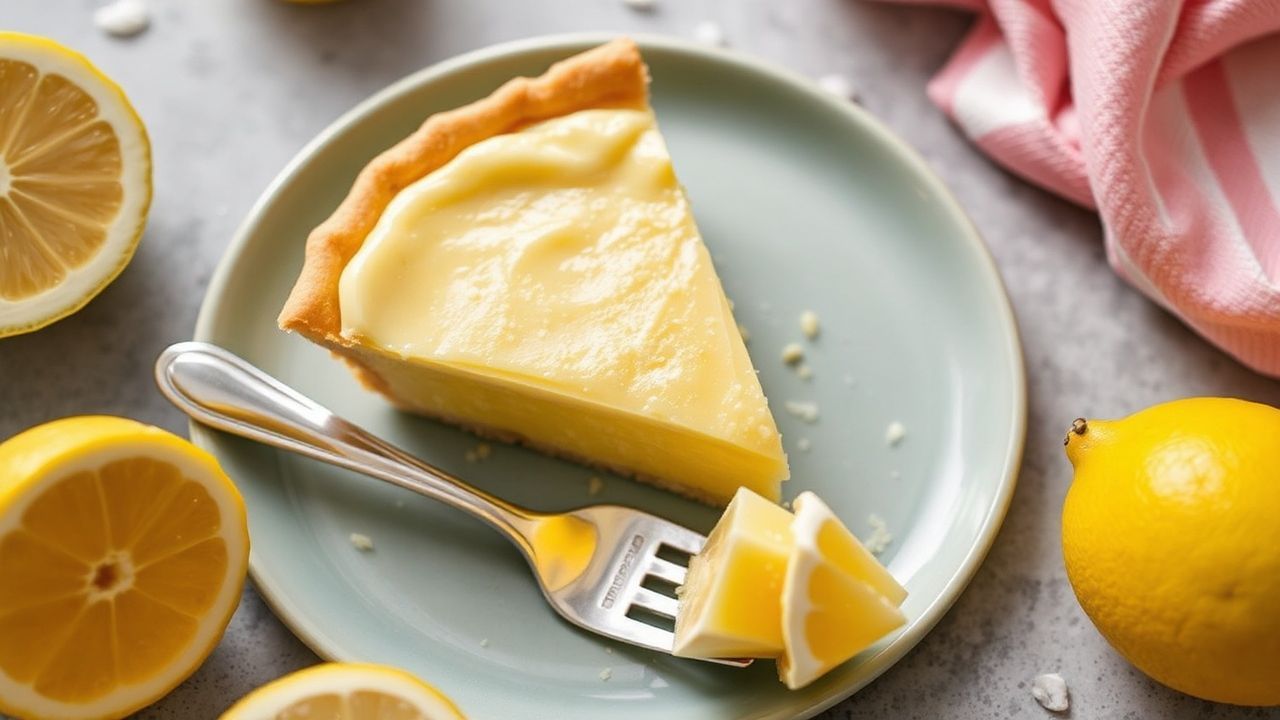
There’s real magic in the balance of sweet and tart that wakes up the senses. This lemon chess pie pairs a creamy custard filling with a bright lemon finish, all wrapped in a buttery, flaky crust. Expect a dessert that feels both comforting and lively in every bite.
- Prep and Cook Time
- Yield
- Difficulty Level
- Ingredients
- Instructions
- Tips for success: Mastering the Perfect Tangy Filling Balance
- Choosing the Ideal Crust for a Flaky Finish
- Expert tips for Baking and Presentation
- Q&A
- What makes Lemon Chess Pie different from other lemon desserts?
- Where did Lemon Chess Pie originate?
- What ingredients are essential for authentic lemon flavor?
- How should the texture of Lemon Chess Pie feel?
- How do I get the best slices every time?
- In Retrospect
- Lemon chess pie gets its bold flavor from fresh lemon juice and zest.
- The filling should set with a slight jiggle for a smooth, sliceable texture.
- A thin, sturdy crust helps prevent sogginess under the custard.
- Proper cooling and chilling improve flavor and clean slicing.
Enter a radiant twist on a Southern classic: lemon chess pie. It turns pantry staples into a glossy, golden center that tastes like sunshine—then settles into a tender, custard-like slice. If you love lemon desserts, this one stands out for its dense, velvety filling and its signature tang.
In the sections below, you’ll learn what drives the texture, which small choices matter most, and how to bake with confidence. You’ll also get practical timing guidance and success tips so your pie bakes evenly from crust to center.
Zesty Delight is more than a “once in a while” dessert. It’s a classic from the American South, known for a simple filling that bakes up rich and custardy. For a clear explanation of the dessert family this belongs to, see pie and how custard-style fillings behave during baking.
At its core, lemon chess pie relies on a few essentials: eggs for structure, sugar for sweetness, and lemon for brightness. The crust adds a crisp, buttery contrast that makes each forkful feel complete. For a helpful background on how custard sets, review custard.
Prep and Cook Time
Plan your schedule so the pie can cool fully. Custard fillings continue to firm up after they come out of the oven, so rushing cooling often leads to messy slices.
Use the timing below as a baseline. Your oven may run hot or cool, so keep an eye on the center jiggle as a doneness cue.
- Planning: 20 minutes
- Cooking: 45-50 minutes
- Cooling: 1 hour
Yield
This lemon chess pie recipe makes enough for a family-style dessert. You’ll get 8 generous slices, with extra richness in the center.
If you’re serving guests, plan to chill the pie briefly. Chilling makes the custard more stable and improves portion clean-cut lines.

Difficulty Level
Difficulty stays Medium because the filling needs attention while mixing and during bake time. You don’t need advanced baking skills, but you do need careful timing.
The key is gentle handling—whisk thoroughly for a smooth custard base, then bake until the edges set while the center still jiggles slightly.
Ingredients
Choose fresh lemon juice and zest for the best flavor punch. Lemon zest holds aromatic oils, which strongly affects the final taste even when the juice volume stays the same.
For a quick chemistry refresher on why citrus flavor stays vivid, check lemon. The bright aroma comes from compounds concentrated in the peel.
- 1 pre-made 9-inch pie crust (or homemade, unbaked)
- 1 ½ cups granulated sugar
- 3 large eggs, room temperature
- ½ cup unsalted butter, melted and slightly cooled
- ¼ cup fresh lemon juice (about 2 lemons)
- 2 tablespoons whole milk or half-and-half
- 1 tablespoon lemon zest
- 2 tablespoons all-purpose flour, sifted
- 1 teaspoon vanilla extract
- Pinch of salt
Instructions
Start with a properly prepared crust. Heat control matters, so preheat fully before the pie goes in.
Then focus on texture: mix until smooth, pour evenly, and bake to a set edge with a soft center jiggle. That’s what gives lemon chess pie its classic, custardy cut.
- Preheat the oven to 350°F (175°C). Gently press your pie crust into a 9-inch pie dish and crimp the edges. Set aside.
- In a large bowl, whisk together sugar, eggs, and salt until the mixture thickens slightly and looks smoother, about 3 minutes.
- Stir in the flour carefully. This helps stabilize the custard so it slices cleanly instead of turning runny.
- Slowly add the melted butter, whisking continuously. This keeps the batter glossy and helps prevent grainy spots.
- Combine lemon juice, zest, milk, and vanilla in a small bowl. Then whisk this into the main filling until fully combined.
- Pour the tangy filling into the prepared pie crust. Smooth the top lightly with a spatula.
- Bake for 45-50 minutes, or until the edges look set and the center jiggles gently like soft gelatin.
- Cool at room temperature for at least 1 hour before slicing. The custard firms as it cools.
Tips for success: Mastering the Perfect Tangy Filling Balance
Small choices control the final balance of lemon brightness and buttery sweetness. Follow these tips to keep the flavor lively and the texture stable.
Also remember: lemon chess pie tastes best after full cooling, because the filling settles and flavors blend.
- Use fresh lemon juice and zest: Fresh citrus gives sharper aroma and cleaner tang than bottled juice.
- Don’t overbake: Overbaking drives the custard toward dryness and cracks as proteins tighten.
- Use room-temperature eggs and dairy: Warmer ingredients blend more smoothly and reduce curdling risk.
- Blind-bake when needed: If your crust tends to brown fast or your oven runs humid, par-bake for 7 minutes.
- Balance sugar carefully: Too little sugar can taste harsh, while too much dulls lemon brightness.
If you want to understand why egg proteins matter, see egg and how heat affects proteins during baking. That knowledge makes your timing decisions feel more predictable.
Choosing the Ideal Crust for a Flaky Finish
The crust needs structure to hold a dense filling. A thin, sturdy base resists sogginess and keeps the bottom from turning soft.
Use a buttery, flaky pie crust made with cold fat for best layering. If you bake your own crust, keep ingredients cold and handle the dough lightly to protect those flaky layers.
For more on what makes pastry “flaky,” review pastry. Flakiness comes from trapped steam during baking and the separation of fat layers.
If your crust browns too quickly, shield the edges with foil near the 30-minute mark. This protects color while the custard finishes setting.
Expert tips for Baking and Presentation
Presentation improves when the pie cools and when you slice cleanly. Use a sharp knife and wipe it between cuts for tidy edges.
For visual appeal, keep toppings simple so the lemon filling stays the star.
- Use a glass pie dish: It helps you monitor browning and heat progress.
- Rotate halfway through: This evens out hot spots so the crust bakes uniformly.
- Let the pie cool completely: If you chill after cooling, wait until the filling reaches room temp first.
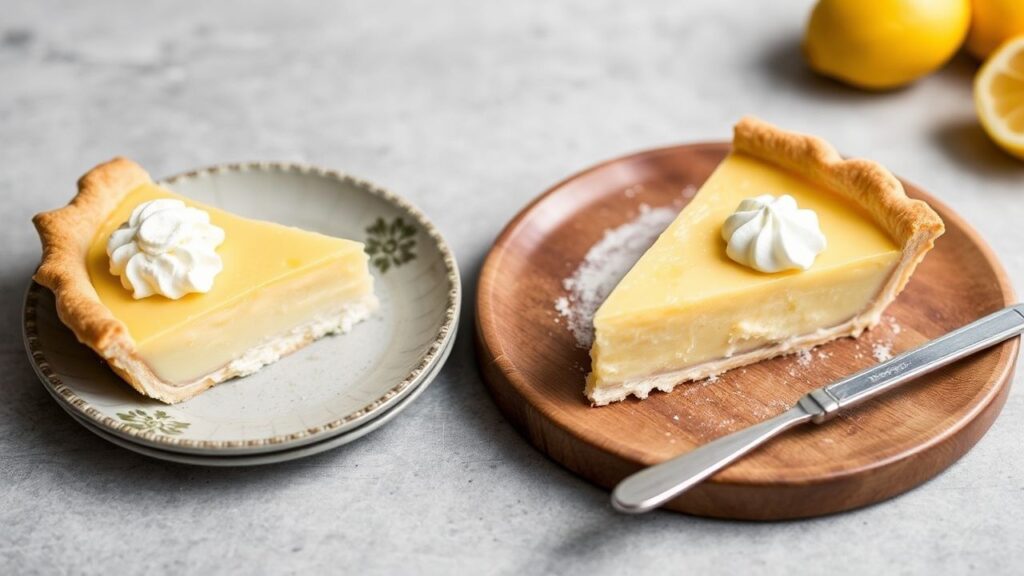
- Garnish ideas: Add whipped cream, a thin lemon wheel, or finely chopped mint for brightness.
| Nutrient | Per Serving |
|---|---|
| Calories | 320 |
| Protein | 4g |
| carbohydrates | 45g |
| Fat | 12g |
If you enjoy Southern desserts, learn the broader context of custard pies and regional baking traditions by checking Southern United States. It helps explain why simple, filling-rich desserts became staples.
For a deeper look at pie history and variety, you can also explore history of pie. Use it as background, then rely on the practical baking steps in this recipe for results you can taste today.
Q&A
Questions come up often with lemon chess pie because the filling looks “soft” when you pull it from the oven. That’s normal, and it turns into the right custard texture as it cools.
Use the answers below to troubleshoot common issues and refine your next bake.
What makes Lemon Chess Pie different from other lemon desserts?
Lemon chess pie stands out because it bakes into a dense, custard-like filling rather than a fluffy mousse or meringue-topped texture. The filling holds shape while still tasting creamy and rich.
It also uses a simpler ingredient set than many lemon tarts, which makes the lemon flavor feel bold and direct.
Where did Lemon Chess Pie originate?
Lemon chess pie is associated with the Southern United States, where chess pie became a well-loved category of custard pies. Regional households used pantry ingredients to create filling-heavy desserts.
You can connect that tradition to broader pie culture by reading pie on Wikipedia.
What ingredients are essential for authentic lemon flavor?
The essentials are fresh lemon juice, lemon zest, eggs, sugar, and fat. Zest provides aroma, while juice delivers the bright tang that defines the flavor.
For additional context on citrus properties, review citrus.
How should the texture of Lemon Chess Pie feel?
After cooling, the filling should feel firm enough to slice while still looking glossy and creamy. When you bake, the center should jiggle gently rather than ripple like raw batter.
That jiggle is a doneness signal tied to custard setting as egg proteins coagulate.
How do I get the best slices every time?
Cool fully, then chill if you want ultra-clean slices. Use a sharp knife and wipe it between cuts so the custard doesn’t smear.
If you struggle with cracking, bake a little less next time and rely on the jiggle cue rather than time alone.
In Retrospect
As the final slice of lemon chess pie melts on your tongue, you notice what makes it special. You get a sweet-tart punch, a silky custard center, and a crust that adds crisp, buttery contrast.
This pie earns its place on modern tables because the method stays simple and the results stay memorable. When you bake with the jiggle cue and cool fully, you turn basic ingredients into a Southern zesty classic.
Whether you’re an experienced baker or you want a confident first custard pie, lemon chess pie rewards careful mixing and smart timing. Make it once, then adjust your lemon intensity next time to match your taste.
See also: Lemon chess pie