
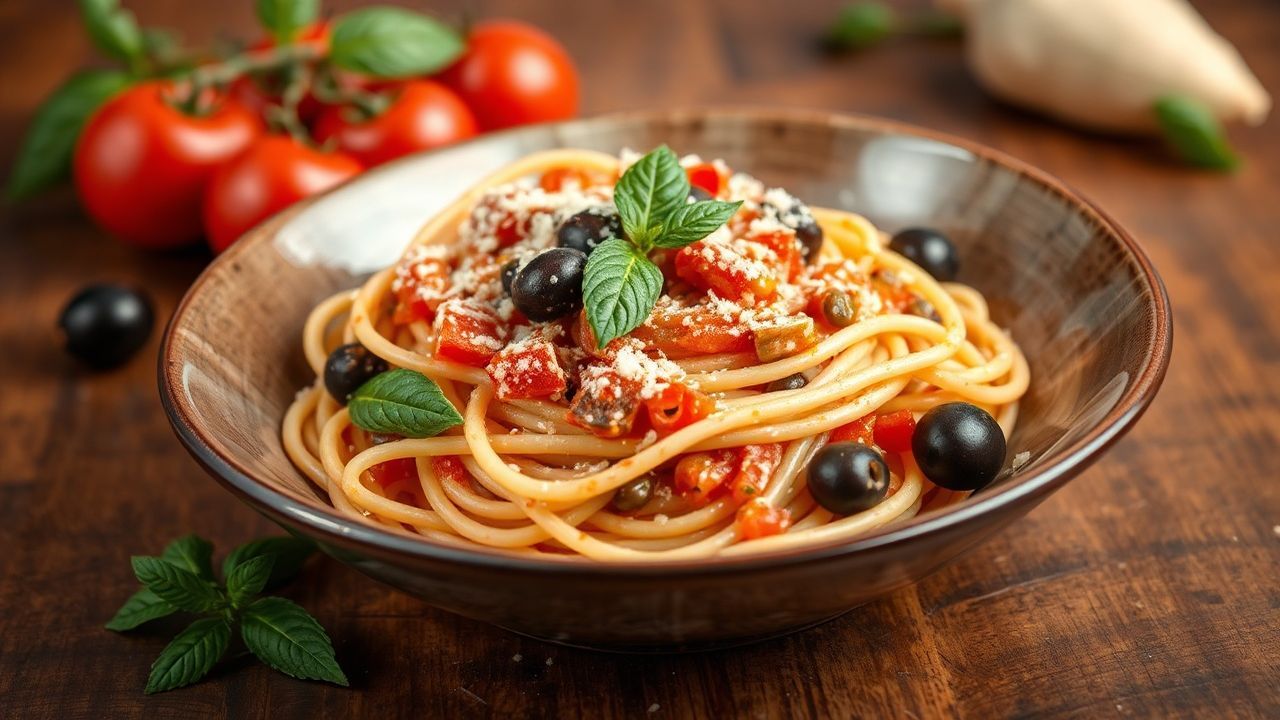
Pasta Puttanesca delivers bold, briny flavor in one fast skillet. Anchovies and olives bring deep umami, while capers and tomatoes add bright tang. The result feels intense but stays simple to cook with pantry staples.
- The Origins and History Behind Pasta Puttanesca
- Prep and Cook Time
- Yield
- Difficulty Level
- Key Ingredients That Define Its Bold Flavors
- Step by Step Guide to Crafting the Perfect Sauce
- Tips for Pairing Pasta Puttanesca with Wine and Sides
- Chef’s Notes and Tips for Success
- Serving Suggestions
- FAQ
- What exactly is Pasta Puttanesca?
- Where does the name puttanesca come from?
- Why do anchovies matter in the sauce?
- How can I prevent the sauce from becoming too salty?
- What pasta shape works best with Puttanesca?
- Can Pasta Puttanesca be made vegetarian?
- Wrapping Up
At a Glance: Pasta Puttanesca Key Takeaways
- Flavor engine: anchovies + olives + capers.
- Best texture: toss pasta with reserved pasta water.
- Timing: the sauce simmers fast and thickens naturally.
- Salt control: taste before adding any extra salt.
In Italian home cooking, this style of sauce stands out for its punchy balance. It leans on salinity, then cuts through with acidity from tomatoes. That contrast keeps each bite lively, not heavy.
Many cooks associate the dish with Naples and southern Italian pantry habits. Across Italy, families adapt it to what they have on hand. You’ll still recognize the same signature profile: savory, briny, tangy, and lightly spicy.
The Origins and History Behind Pasta Puttanesca
Pasta Puttanesca is a modern Italian classic with strong Neapolitan ties. Recipes became widely known in the mid-to-late 20th century, when quick, flavorful sauces gained popularity. The name reflects a colorful cultural story, but the cooking logic stays practical and pantry-driven.
Traditionally, the sauce uses ingredients that store well. Anchovies, olives, and capers keep their flavor without fresh sourcing. As a result, cooks could build a full, complex sauce even on busy days.
The taste also aligns with Mediterranean food patterns. It echoes classic briny pairings found in regional seafood and cured-ingredient cooking. If you want background on the salty umami backbone, see umami on Wikipedia.
Prep and Cook Time
Prep time: 10 minutes. You can chop, measure, and set up while the water heats.
Cook time: 20 minutes. A gentle simmer helps the sauce thicken and meld.
- Prep Time: 10 minutes
- Cook Time: 20 minutes
- Total Time: 30 minutes
Yield
This recipe makes enough for 4 servings. Each portion should coat pasta well, not pool in watery sauce.
If you cook for two, scale down the anchovies and olives first. Then adjust tomatoes so the sauce stays thick enough to cling to pasta.
Difficulty Level
Easy. You build the sauce in one pan and finish by tossing pasta. With a few taste checks, you’ll get the classic briny balance.
Even first-time cooks succeed because the method relies on simple sautéing and simmering, not complex technique. If you want guidance on classic pasta water use, review starch and how it affects sauces.
Key Ingredients That Define Its Bold Flavors
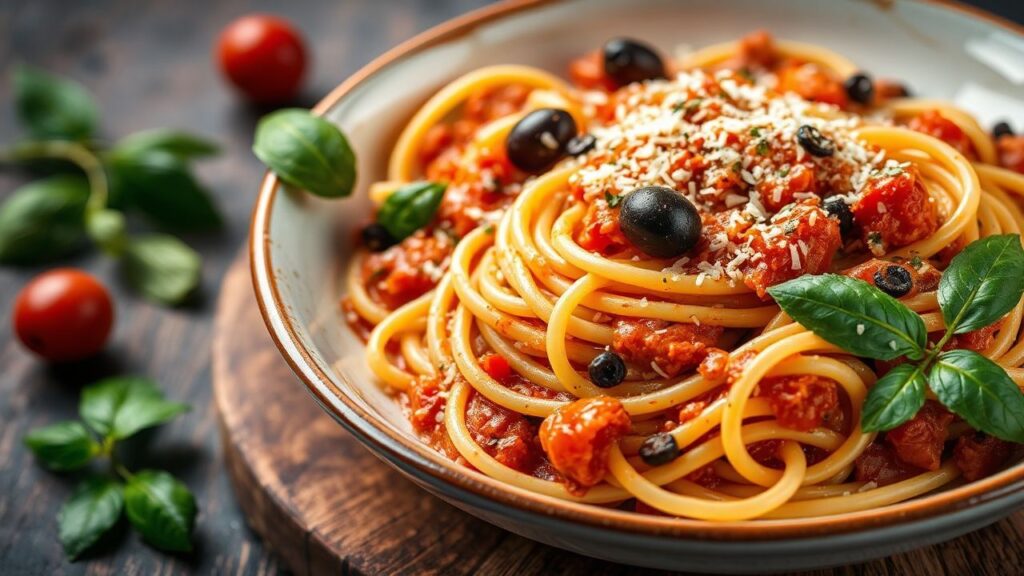
Every ingredient here supports a specific job in the flavor system. Anchovies dissolve and deepen the sauce. Olives add oily salt and a faint bitterness that rounds the sweetness of tomatoes.
Capers bring sharp, briny bursts. Garlic adds savory aroma, while red pepper flakes add a gentle heat that keeps the sauce from tasting flat.
- 6 anchovy fillets (packed in oil), finely chopped
- 1/3 cup black olives, pitted and roughly chopped (Gaeta or Kalamata)
- 2 tablespoons capers, rinsed
- 1 large can (28 oz) crushed tomatoes or quality passata
- 4 cloves garlic, minced
- 1/2 teaspoon red pepper flakes, adjust to taste
- 1/4 cup extra-virgin olive oil
- Fresh parsley, finely chopped for garnish
- Salt and black pepper, to taste
- Fresh spaghetti or preferred pasta (about 400 grams)
Why salt stays balanced in Pasta Puttanesca
Anchovies, olives, and capers all carry sodium. Because they overlap, it’s easy to oversalt if you add extra salt too early. Instead, rinse capers, chop everything small, and taste at the simmer stage.
This salty profile uses the same concept behind cured foods: salting preserves flavor and concentrates taste. In puttanesca, the goal is not “more salt,” but “more integration.”
Step by Step Guide to Crafting the Perfect Sauce
Cook the sauce in stages so each ingredient releases flavor. Start with oil and garlic, then dissolve anchovies, then build from olives and capers. Finish by simmering just long enough to thicken.
Finally, toss pasta with reserved pasta water. This step turns a sharp tomato sauce into a silky coating that clings to every strand.
- Heat olive oil in a wide skillet over medium heat until shimmering.
- Sauté garlic and red pepper flakes for about 1 minute. Stir often and avoid browning.
- Add chopped anchovies and stir until they dissolve into the oil. This forms the deep savory base.
- Stir in olives and capers, then cook 2–3 minutes. Let the edges lightly toast for more aroma.
- Pour in crushed tomatoes and bring to a gentle simmer. Reduce heat and cook uncovered 10–15 minutes.
- Season carefully with black pepper. Taste for salt near the end since anchovies and olives are already salty.
- Cook pasta in salted boiling water until al dente.
- Reserve pasta water before draining, then toss pasta into the sauce.
- Add pasta water little by little until the sauce turns glossy and coats evenly.
- Finish with chopped parsley. Serve right away for best texture.
If you want the method behind this coating effect, it helps to understand pasta starch behavior. Pasta water carries starch that helps emulsify oil and tomato for a cohesive sauce.
Tips for Pairing Pasta Puttanesca with Wine and Sides
Pasta Puttanesca pairs best with wines that handle salt and acidity. Choose a dry white with crisp structure, so the briny notes don’t taste flat.
For example, an Assyrtiko or Vermentino style often works well because they show citrusy tension. You can also use Assyrtiko as a reference point for how high-acid whites behave with salty foods.
Side dishes that balance brine
For sides, go fresh and simple. A lemony arugula salad adds peppery bite and bright acidity, which helps cut through the oily anchovy richness.
Crusty bread also works because it soaks up sauce without stealing flavor. Roasted zucchini or eggplant adds earthy sweetness, which softens the briny edge.
Chef’s Notes and Tips for Success
Great puttanesca depends on timing. If you cook tomatoes too long, the sauce can lose brightness. If you don’t simmer enough, it may stay thin and separate.
Use these notes to dial in consistency and taste. They focus on texture, salt balance, and flexible ingredient choices.
- Ingredient substitutions: If anchovies are unavailable, use anchovy paste sparingly. Don’t skip umami entirely—otherwise the sauce loses its signature depth.
- Balancing saltiness: Taste before adding salt. Olives and capers vary by brand, so adjust based on your specific jar.
- Make-ahead tip: The sauce often tastes better after resting. Flavors meld as it cools, then reheat gently.
- Pasta choices: Spaghetti or linguine cling best. Buco-shaped pasta like rigatoni can also work, but the sauce must be thick enough to grip.
- Heat control: Red pepper flakes add warmth. Start low and build slowly, since the sauce already feels assertive.
- Storage: Refrigerate leftovers in a sealed container up to 3 days. Reheat with a splash of water to restore sheen.
For general guidance on storing cooked pasta sauces, it helps to follow safe cooling practices. You can review food safety basics on Food safety to understand temperature and storage principles.
Serving Suggestions
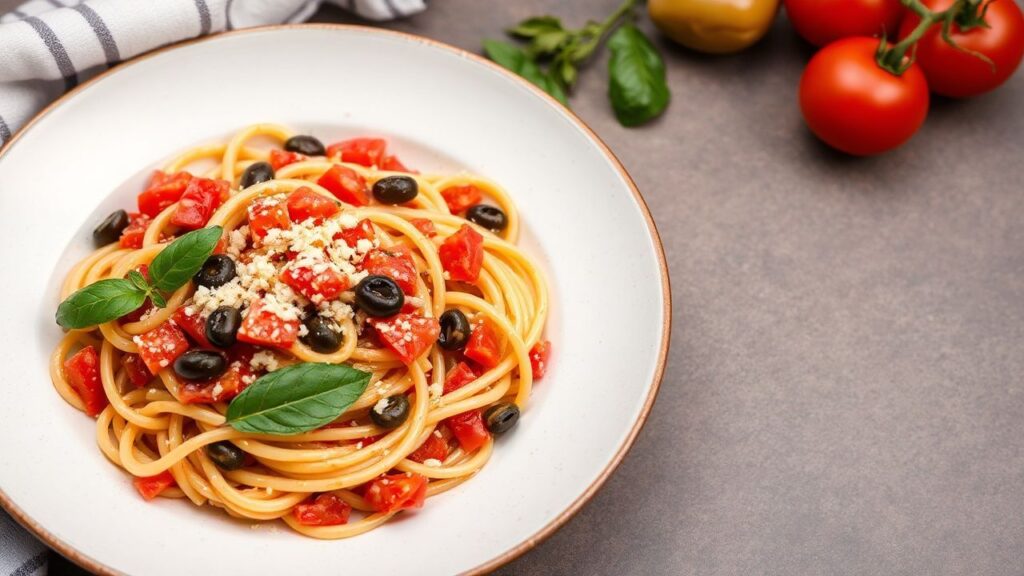
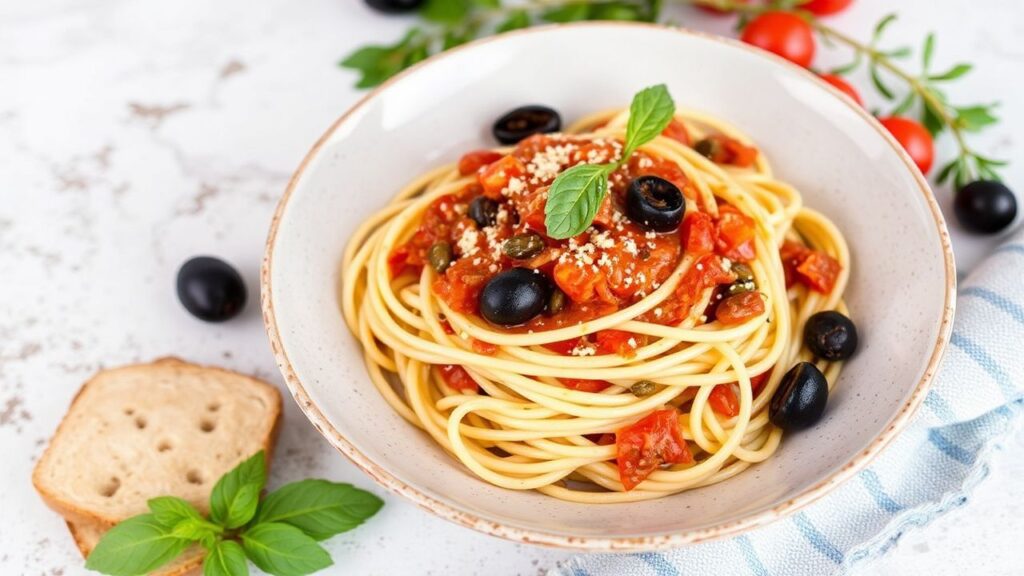
Plate the pasta and finish with chopped parsley. Add a few whole olives and capers on top for visible texture and a stronger aroma on the first forkful.
Just before serving, drizzle a little extra-virgin olive oil. That final fat layer boosts mouthfeel and makes the tomato taste rounder.
If you want a fresh lift, sprinkle lemon zest lightly. Use microgreens if you enjoy a modern garnish, but keep the flavor restrained so the sauce stays central.
| nutrient | Per Serving |
|---|---|
| Calories | 420 kcal |
| protein | 18 g |
| Carbohydrates | 65 g |
| Fat | 10 g |
FAQ
Below are quick answers to common questions cooks ask when making Pasta Puttanesca. Use them to troubleshoot taste, texture, and ingredient swaps.
Because olives, anchovies, and capers vary by brand, small adjustments often decide whether the sauce tastes perfectly balanced or too salty.
What exactly is Pasta Puttanesca?
Pasta Puttanesca is a pasta dish with a bold tomato-based sauce flavored by anchovies, olives, and capers. Garlic and olive oil round out the aroma, while pepper flakes can add gentle heat. The sauce tastes briny, tangy, and savory.
You can think of it as a “pantry umami” sauce where salt-cured ingredients bring depth. It’s built for speed, yet the flavors feel layered.
Where does the name puttanesca come from?
The term “puttanesca” is commonly explained through Italian slang and folklore. Many sources link the name to a fast, no-frills dish made with pantry staples. The exact origin story varies, but the cooking method stays consistent.
If you want language background, you can explore Italian language for how regional terms evolve. For the sauce, focus on the ingredients and method—they define it more than the legend.
Why do anchovies matter in the sauce?
Anchovies dissolve into the oil as they heat. That process spreads umami through the sauce instead of leaving distinct fish pieces. The result is savory depth that boosts tomatoes and balances olives.
Even cooks who don’t love fish often accept the flavor once it blends fully. For theory on savory taste, see umami.
How can I prevent the sauce from becoming too salty?
Use rinsed capers and taste the sauce near the end. Avoid adding salt until you’ve checked the balance with pasta water. Also, keep anchovy quantity controlled.
Many jars differ in brine strength, so adjust based on your product. If needed, simmer a bit longer to thicken while pasta water helps mellow the edge.
What pasta shape works best with Puttanesca?
Spaghetti and linguine work well because their surface holds tomato sauce evenly. That said, short pasta or rigatoni can also work if the sauce is thick enough.
Choose a shape you can toss comfortably. The real key is the toss: reserved pasta water helps the sauce coat every piece.
Can Pasta Puttanesca be made vegetarian?
Yes, but you must replace the umami role anchovies provide. Use extra olives and capers, and consider adding mushrooms for savory depth. Sun-dried tomatoes also support a richer tomato profile.
Vegetarian versions still taste “briny-tangy” even without fish. For background on vegetarian approaches, you can review vegetarian diet to understand common substitution strategies.
Wrapping Up
Pasta Puttanesca delivers a fearless, briny sauce that depends on real pantry ingredients. Anchovies deepen the flavor, olives and capers add salt-bite, and tomatoes bring tangy body.
If you keep the simmer short, rinse capers, and toss with pasta water, you’ll get a glossy sauce that tastes bold without tasting harsh. Serve it right away for the best balance and texture.
See also: Pasta Puttanesca