

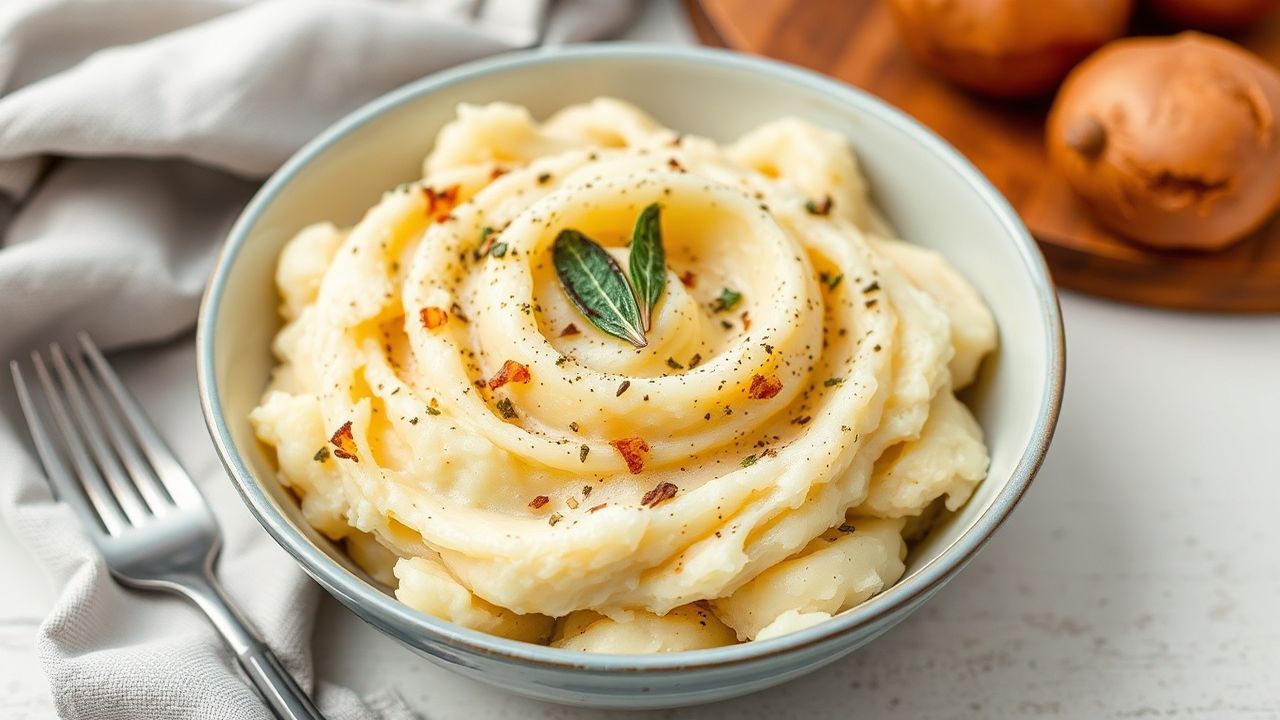
Warm, creamy mashed potatoes already feel like home. This version adds a rich, nutty finish with brown butter and a crunchy herb topping with crispy sage. The result tastes richer, looks restaurant-ready, and still stays comfort-food simple.
- Brown Butter Mashed Potatoes: Why This Combo Works
- Equipment and Prep for Fluffy, Creamy Texture
- Ingredients for Best Mashed Potatoes with Brown Butter & Crispy Sage
- Step-by-Step Instructions
- Tips for Success (and Common Mistakes)
- Serving Suggestions and Pairings
- Nutritional Snapshot
- Make-Ahead and Reheating Notes
- FAQ
At a Glance
- Brown butter adds nutty, caramel notes that deepen potato flavor.
- Crispy sage brings crunch and a clean herbal aroma.
- Cook potatoes evenly, then steam to remove excess water for a creamy texture.
- Fold in warm dairy slowly to keep the mash smooth without gluey starch.
Mashed potatoes with brown butter and crispy sage work best when you control moisture and don’t rush the final steps. Start by cooking your potatoes until fork-tender. Then steam off water, warm your dairy, and brown the butter until it turns golden and fragrant.
If you want a side dish that holds up under a main course, this method helps. Brown butter brings depth without adding heaviness. Sage adds contrast, so each bite feels balanced instead of one-note.
Brown Butter Mashed Potatoes: Why This Combo Works
The key flavor shift comes from browning butter. When butter heats, milk solids toast and develop a nutty aroma and amber color. That flavor blends naturally with the mild sweetness of Yukon Gold potatoes.
You can learn the science behind this at browning reactions. You can also connect it to the way dairy proteins and sugars behave during heating. This helps you time butter correctly and avoid a bitter finish.
Sage supports the whole dish because it tastes earthy and slightly peppery when crisped. Frying sage briefly keeps it bright and crisp, not dull. For a quick reference on herbs, see sage.
Pairing the two creates a “rich + fresh” balance. The butter brings warmth and aroma. The sage adds snap and a cleaner herbal note that cuts through creaminess.
Equipment and Prep for Fluffy, Creamy Texture
You don’t need special gear, but the right tools improve texture. Use a large pot for even cooking. Use a potato masher or, for extra smoothness, a potato ricer.
For the smoothest mash, steam and remove moisture first. Excess water turns mashed potatoes loose and can make them taste watery. If you want a general guide to starch behavior, review starch and how heat changes texture.
Also pre-warm the milk and cream. Cold dairy cools the pot and slows mixing. Warm dairy blends faster, so you avoid overworking the potatoes.
Plan your timing. Potatoes cook first, then you brown butter while you finish mashing. Finally, crisp sage right before serving for best crunch.
Ingredients for Best Mashed Potatoes with Brown Butter & Crispy Sage
Use Yukon Gold for a buttery taste and creamy consistency. They mash easily and hold flavor well even after you add browned butter. For background on potato varieties, check potato.
Keep sage dry. Water on the leaves steams them instead of crisping. That’s the difference between delicate crunch and chewy bits.
Ingredients
- 3 pounds Yukon Gold potatoes, peeled and cut into even chunks
- 6 tablespoons unsalted butter, divided
- 12 fresh sage leaves, washed and patted dry
- 1 cup whole milk, warmed
- 1/2 cup heavy cream, warmed
- 2 cloves garlic, peeled and smashed
- Salt and freshly ground black pepper, to taste
- Optional: a pinch of freshly grated nutmeg
Step-by-Step Instructions
Follow these steps closely. Each one supports texture: even cooking, moisture control, and gentle mixing. When you do that, mashed potatoes turn creamy instead of pasty.
1) Cook the potatoes: Place potatoes and smashed garlic in a large pot of cold salted water. Bring to a boil and simmer until fork-tender, about 15-20 minutes.
2) Drain and steam: Drain thoroughly. Return the pot to low heat for 1 minute to evaporate surface moisture. This step makes the mash thicker and smoother.
3) Fry the sage: Melt 2 tablespoons butter in a small skillet over medium heat. Add sage leaves and sauté gently until crisp and fragrant, about 3-4 minutes. Remove leaves to paper towels and keep the skillet for browned butter.
4) Brown the remaining butter: Increase heat to medium-high. Swirl the remaining 4 tablespoons butter and stir constantly. Watch for golden-brown milk solids and a nutty aroma, about 3-5 minutes. Remove from heat immediately.
5) Mash: Mash potatoes and garlic until smooth. If you want a silkier texture, use a ricer for uniform consistency.
6) Add dairy and butter: Slowly mix in warm milk and cream. Pour in the browned butter, including the browned bits. Season with salt, pepper, and a pinch of nutmeg if using.
7) Fold in sage: Chop a portion of crispy sage and fold it into the mash. Reserve a few leaves for topping.
8) Serve: Transfer to a warmed bowl. Drizzle with a bit of extra browned butter. Finish with whole crispy sage leaves for crunch and color.
Tips for Success (and Common Mistakes)
Texture depends on timing and heat control. If you rush the moisture step, your mash can loosen. If you overheat butter, it can taste burnt.
Choose the right potatoes for creamy results. Yukon Gold stays tender and develops a natural buttery flavor that works with browned butter.
Dry the leaves before frying. Pat sage well. If leaves look wet, add 10-20 seconds of extra skillet heating before you start timing.
Watch butter color, not just time. Butter browns faster at higher heat. You want toasted milk solids and a nutty smell, not dark brown and bitter notes.
Expert Insight
When you incorporate dairy, keep it slow. Fast pouring can cool the pot unevenly and makes mixing harder. Stir gently until smooth, then stop.
For a deeper look at how heat changes fats and flavors, see lipids. Butter contains milk fats that release aroma as they heat. That’s why controlled browning matters.
Pro-Caution
Also note that sage can burn if you keep it in too long. Fry in short bursts and remove as soon as crisp. The topping should crack when you bite it, not taste smoky.
Serving Suggestions and Pairings
These mashed potatoes shine with roasts and comfort mains. The sage crunch pairs well with poultry because it adds texture without overpowering herbs and pan drippings.
They also work for vegetarian meals. Try them alongside roasted mushrooms or a mushroom ragout. The nutty butter flavor matches the deep, savory notes of browned vegetables.
For a quick guide to how mushrooms develop flavor when heated, browse mushroom cooking. That helps you choose cooking styles that echo the toasted-butter effect.
If you want an extra layer, add a light sprinkle of flaky salt right before serving. It boosts perceived flavor and makes the butter taste brighter.
Nutritional Snapshot
Nutrition can vary by brands and portion size, but here’s a useful estimate per serving. These mashed potatoes include butter, dairy, and potatoes, so calories come largely from fat and carbs.
Estimated per serving: 280 kcal, 4 g protein, 30 g carbs, 15 g fat.
Make-Ahead and Reheating Notes
You can prep earlier in the day and reheat gently. That keeps the texture more stable than reheating at high heat. For best results, store mashed potatoes covered, then rewarm slowly.
Reheat on low heat with a splash of warm milk or cream. Stir often until smooth. Fry sage fresh right before serving so it stays crisp.
FAQ
Can I use Russet potatoes instead of Yukon Gold?
Yes, but the texture changes. Russets become fluffier and more starchy, so the mash may feel lighter and less buttery. Yukon Gold gives a naturally richer flavor that matches browned butter.
How do I keep mashed potatoes from turning gluey?
Avoid overmixing after the potatoes soften. Mix just until smooth, and stop once the dairy and butter blend in. Also steam off excess water so you need less mixing to reach the right consistency.
What if my brown butter tastes bitter?
It means the butter solids darkened too far. In that case, start again for the best flavor. Brown butter should taste nutty and warm, not scorched.
How can I make crispy sage without frying in lots of butter?
You can crisp sage in a thin layer of butter. Keep the heat medium and watch closely. Sage cooks quickly; remove it as soon as it becomes crisp and fragrant.
Can I fry sage ahead of time?
Best results come from frying sage right before serving. If you must prep early, keep crisp sage loosely covered and avoid sealing it in moisture.
See also: Mashed Potatoes