

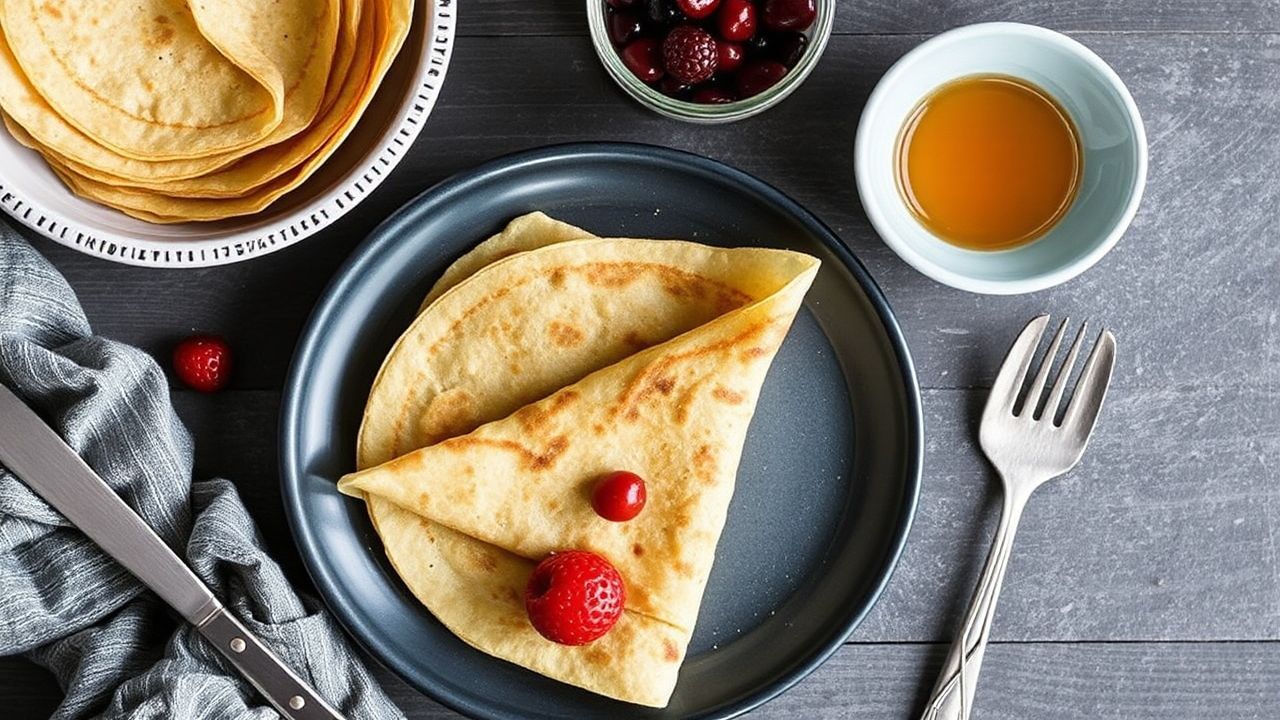
Palatschinken are ultra-thin, Central European crepes known for their lacy edges and rollable texture. If you want crepes that stretch across a pan, then fold or roll cleanly, you need the right batter consistency and a hot cooking surface. In this guide, you’ll learn how to make Palatschinken with reliable results.
- Batter targets: thinner than pancake batter, like light cream.
- Resting matters: 30 minutes improves elasticity and tenderness.
- Heat control: medium heat sets edges fast without burning.
- Flip smart: short cook time keeps the crepe flexible.
These crepes show up across Austria and neighboring regions, where families often treat thin crepes as a standard for sweet and savory meals. The method looks simple, but small shifts in batter hydration, egg structure, and pan temperature change the final texture fast. For background on the region and technique, see Austria and Austrian cuisine.
You can use the same base batter for jam-filled classics, or for fillings like quark, fruit, mushrooms, and greens. The goal stays the same: a crepe that cooks quickly, stays tender, and bends without cracking. When you master Palatschinken, you get a versatile foundation for dozens of flavor combinations.
What Makes Palatschinken Different?
Palatschinken lean toward “rollable thinness.” They cook fast, hold together better than many very delicate crepes, and support both folded and rolled fillings. Compared with thicker pancakes, they use a thinner batter and shorter cook time to prevent tough chew.
That sturdier feel comes from a balanced batter: enough egg and gluten development to create flexibility, but not so much flour that the crepe turns rubbery. If you want to understand how wheat flour forms structure, review gluten basics. If you’re curious about dairy’s role in batter smoothness, milk explains why hydration and proteins matter.
Origins and regional influence
Palatschinken appear in multiple Central European kitchens, with regional naming and subtle batter tweaks. Many traditions treat crepes as seasonal staples, which explains why you’ll see both sweet fruit fillings and hearty savory versions.
To connect this style to broader European food culture, explore Central European cuisine. That context helps you understand why these crepes pair so well with pantry-friendly fillings like jam, nuts, quark, and mushrooms.
Prep and Cook Time
Plan for a short active window and a longer resting step. Resting lets the flour fully hydrate, which improves tenderness and makes the batter easier to spread thinly.
Follow the timing below for consistent results, especially if you bake multiple crepes. If you rush the rest, you’ll often see bubbles, uneven thickness, or crepes that tear when you fold.
- Preparation: 15 minutes
- Resting Batter: 30 minutes
- Cooking: 15 minutes
- Total Time: 60 minutes
Yield
This recipe yields about 8 thin Palatschinken, which typically serves 4–6 people depending on filling portions. If you plan a larger brunch spread, you can double the batter.
For best texture, cook crepes in one batch and fill them right after cooking. Crepes dry out when exposed to air, so keep them stacked and covered.
Approximate servings: 4–6
Difficulty Level
Medium difficulty. The technique demands attention, not advanced skills. You need to spread batter quickly and learn when the edges set.
Once you do the first 1–2 crepes, you’ll feel the right pour amount and swirl speed. If your first few are uneven, adjust the batter thickness and pan heat before you continue.
Ingredients
- 1 cup all-purpose flour, sifted
- 1 1/4 cups whole milk, room temperature
- 2 large eggs, beaten
- 2 tbsp granulated sugar
- 1 pinch fine sea salt
- 2 tbsp melted unsalted butter, plus extra for the pan
- 1 tsp vanilla extract (optional)
Instructions
Use a whisk and a bowl large enough to pour smoothly. A smooth batter matters because lumps block thin spreading and create thicker, gummy spots.
Keep milk at room temperature so the butter blends easily and the batter flows evenly. Cold dairy can thicken the fat and lead to streaks.
- Combine dry ingredients: Whisk flour, sugar, and salt until evenly distributed.
- Incorporate wet ingredients: Pour in milk gradually while whisking to prevent lumps. Add beaten eggs (and vanilla if using) and whisk until smooth.
- Add melted butter: Whisk in melted butter gently. The batter should look fluid and glossy.
- Rest the batter: Cover and refrigerate for at least 30 minutes. This step improves hydration and helps the crepes cook with better flexibility.
- Heat your pan: Use non-stick or a well-seasoned crepe pan. Heat over medium heat, then lightly brush with melted butter.
- Pour and swirl: Pour about 1/4 cup batter into the center. Immediately tilt and swirl to spread into a thin, even layer.
- Cook and flip: Cook 1–2 minutes until edges lift slightly and the underside turns golden. Flip gently and cook 30 seconds to 1 minute.
- Stack and keep warm: Place cooked crepes on a warm plate and cover loosely with foil. Repeat, brushing lightly between crepes.
For an ingredient reference on why eggs improve structure, see egg (food). For batter science on hydration, bread is a useful general read on flour hydration principles, though crepes use a different method.
Tips for Success
Most Palatschinken issues come from three causes: batter thickness, pan heat, and timing. Fix those early and you’ll improve every crepe after it.
Use the first crepe as feedback. If it tears, it likely needs slightly more resting time or a touch more liquid. If it burns, reduce heat and lighten the butter.
- Consistency is key: Batter should be thinner than pancake batter. Aim for a pourable flow similar to heavy cream.
- Avoid overmixing: Whisk only until smooth. Excess mixing can tighten batter and affect tenderness.
- Resting makes the difference: Don’t skip the 30 minutes. It improves texture and spread.
- Prevent sticking: Keep the pan hot but not smoking. Add a thin butter coat only when needed.
- Quick corrections: If thick, add a splash of milk. If too thin, whisk in a small amount of flour, then rest 5–10 minutes.
- Stack correctly: Cover crepes so moisture stays trapped and flexibility improves.
Even a great batter fails if the pan is wrong. A crepe cooks in moments, so heat swings show up immediately. Use the medium setting as your baseline, then adjust after the first flip.
Filling Ideas That Match the Crepe
Sweet fillings pair best with a lightly sweetened batter. Classic options include apricot jam, raspberry preserves, and vanilla quark or cream cheese mixtures.
For savory versions, use sautéed mushrooms, garlic-forward greens, or a ricotta-and-herb blend. The thin crepe supports flavors, so keep fillings moist and evenly spread.
Serving Suggestions
Fold crepes into quarters for a clean, plated look. Dust lightly with powdered sugar, then add a spoon of fresh cream or sour cream for balance.
For rolls, spread filling thinly and roll gently. Serve immediately so the texture stays supple and the filling warms through without soaking the edges.
- Classic elegance: Fold quarters, dust with powdered sugar, top with cream and lemon.
- Rustic charm: Roll with fruit preserves and toasted nuts, drizzle with honey.
- Savory twist: Fill with sautéed mushrooms and spinach, then finish with crumbled feta.
- Garnish ideas: Use fresh herbs, edible flowers, or toasted seeds for color and crunch.
Q&A
If you still feel unsure after the steps above, the answers below focus on the most common sticking points: thickness, tearing, and storage. Use these fixes to get back on track quickly.
As you cook more crepes, you’ll notice your batter pour and pan heat become consistent. That repetition builds skill fast, even for home cooks.
Are Palatschinken the same as French crepes?
They’re similar in method, but Palatschinken usually target a rollable thinness with a batter that sets quickly and stays flexible. Many French crepes aim for ultra-delicate texture, while Palatschinken often support heartier fillings and folding.
Both styles benefit from resting and controlled heat. The difference mostly shows up in batter balance and cooking time.
Why do my Palatschinken tear when I fold them?
Most tearing comes from overcooking or a batter that’s too thick. If the crepe dries out, it loses pliability and cracks when you bend it.
Also check heat. If the pan runs too cool, you’ll stretch a crepe that isn’t fully set yet. Medium heat usually prevents that problem.
How thin should the batter be?
Batter should flow easily and spread into a wafer-thin layer. If it mounds in the pan, add a splash of milk. If it looks watery and won’t cover evenly, add a small amount of flour.
Use the first crepe to calibrate. Small adjustments after the rest step make a big difference.
Can I make Palatschinken ahead of time?
Yes. Stack cooled crepes with parchment paper between layers, then refrigerate. Reheat in a pan briefly to restore softness before filling.
For longer storage, freeze stacked crepes with parchment between each one, then thaw in the fridge overnight.
What are the best fillings for beginners?
Begin with jam, sweet quark, or vanilla cream cheese. These fillings spread smoothly and don’t require precise cooking.
For savory practice, choose simple cooked fillings like sautéed mushrooms or creamed spinach. Keep fillings moist and distribute them evenly.
See also: Palatschinken