

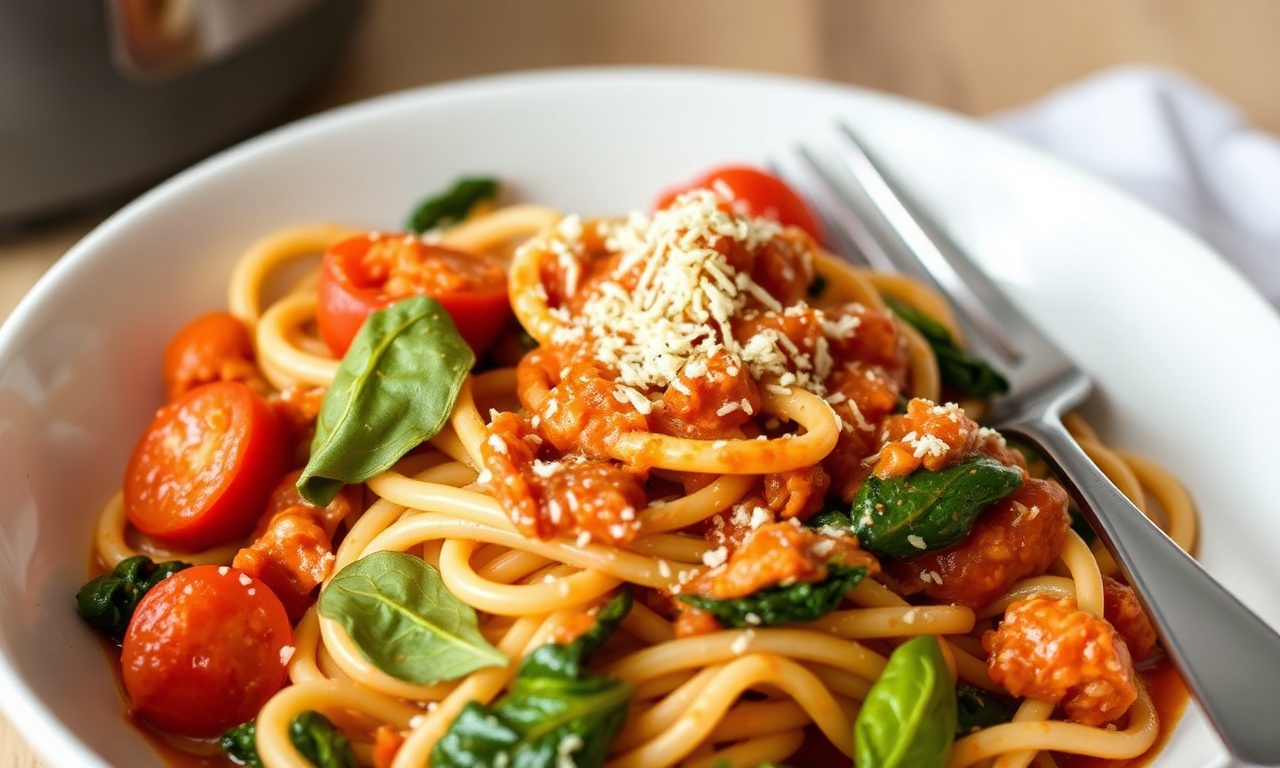
If you want weeknight comfort that still feels restaurant-level, creamy one-pot tomato spinach pasta delivers. It cooks in a single pot, so the sauce uses pasta starch to turn silky and glossy without extra fuss.
- One-Pot Creamy Tomato Spinach Pasta That Tastes Like a Restaurant Plate
- The Science of “Creamy” Without Overcomplicating
- Ingredients That Produce a Silky Sauce (and Solid Weeknight Results)
- Step-by-Step Recipe: Creamy Tomato Spinach Pasta in One Pot
- Master the One-Pot Technique (So It Stays Creamy Every Time)
- Prevent sticking and bottom scorching
- Get the liquid level right
- Texture targets: what “done” looks like
- Flavor Boosters: Herbs, Heat, and Cheese Without the Mess
- Serving Ideas That Make It Feel Like a Real Meal
- Make-Ahead and Leftovers (Without Losing Creaminess)
- Variations Using the Same Method
- FAQ
- One pot: cook pasta in the sauce for natural creaminess.
- Starch thickens: pasta starch + tomatoes create a clingy, smooth coating.
- Spinach timing: add near al dente to keep flavor bright.
- Dairy finish: add half-and-half on low for a stable texture.
One-Pot Creamy Tomato Spinach Pasta That Tastes Like a Restaurant Plate
This creamy one-pot tomato spinach pasta builds flavor in layers. You sauté aromatics, simmer tomatoes and broth, then cook the pasta directly in that liquid.
As the noodles cook, they release starch. That starch thickens the sauce into a smooth emulsion that clings to every bend, so each bite feels rich and cohesive.
- Cook pasta in the sauce to create natural creaminess from starch.
- Simmer gently so the sauce stays silky (not grainy).
- Add spinach near the end for tender greens and bright flavor.
- Finish with Parmesan and stir until glossy for best texture.
The Science of “Creamy” Without Overcomplicating
People often assume creamy pasta needs lots of cream. For creamy one-pot tomato spinach pasta, the main job comes from pasta starch plus fat and tomato solids.
Crushed tomatoes reduce as the pot simmers. At the same time, the pasta releases starch into the cooking liquid, which thickens the sauce and helps it coat pasta smoothly.
Why one-pot cooking changes everything
When you boil pasta separately, some starch washes away and you lose that thickening power. With one-pot cooking, starch stays in the same liquid that becomes your sauce.
This method also keeps timing simple. You manage simmer heat and liquid level, then finish with dairy and cheese once the pasta hits al dente.
If you want a deeper look at how thickening works, review starch on Wikipedia.
Tomato acidity and balance
Tomatoes add acidity, which keeps flavor from tasting flat. In creamy one-pot tomato spinach pasta, acidity works best when you season well and add dairy at the right moment.
Under-seasoning can make tomato flavor feel sharp. A little salt and a controlled dairy finish round everything out without turning the sauce heavy or sweet.
For tomato basics and compounds, see tomato on Wikipedia.
Ingredients That Produce a Silky Sauce (and Solid Weeknight Results)
Choose ingredients that hold up under simmering. Crushed tomatoes break down evenly, and short pasta shapes capture sauce well, which boosts that creamy feel per bite.
Spinach needs a quick finish. If you simmer it too long, it can lose its bite and turn the sauce darker than you want.
Core ingredients for 4 servings
Pasta: 12 oz (340 g) penne or fusilli.
Olive oil: 1 tbsp.
Onion: 1 small, finely diced.
Garlic: 4 cloves, minced.
Crushed tomatoes: 1 can (14 oz).
Low-sodium vegetable broth: about 2 cups.
Baby spinach: about 3 cups, roughly chopped.
Cheese: 1/2 to 1 cup freshly grated Parmesan (to taste).
Creaminess: 3/4 to 1 cup half-and-half or light cream.
Italian seasoning: 1 tsp (dried).
Seasoning: salt and black pepper.
If you want helpful context on pasta behavior, check pasta.
What to buy (and what to avoid)
Pick crushed tomatoes you enjoy right away. Some brands taste sharp or overly sweet, and the sauce can’t fully fix that even with herbs and salt.
For spinach, use fresh baby spinach when you can. Frozen spinach works too, but you must thaw and squeeze it dry, or extra water will thin the sauce.
Step-by-Step Recipe: Creamy Tomato Spinach Pasta in One Pot
This method takes about 30 minutes and makes enough sauce to coat pasta evenly. You sauté aromatics, simmer the tomato-broth base, cook pasta in the same pot, then finish with spinach and dairy.
Use a wide, heavy-bottom pot. A Dutch oven or large sauté pan heats evenly and helps the sauce reduce without scorching.
Timing plan (so you don’t overthink it)
Prep: ~10 minutes.
Simmer + pasta: ~15–18 minutes.
Finish: ~2–5 minutes.
Total: ~30 minutes.
Stir often early. Then stir a bit lighter as the sauce thickens and you add spinach and dairy.
Instructions
1) Heat 1 tbsp olive oil over medium heat. Add diced onion and sauté 4 minutes until soft and translucent.
2) Add minced garlic and cook 60 seconds. Stir constantly to prevent bitterness from burnt garlic.
3) Add crushed tomatoes, 2 cups vegetable broth, and dried Italian seasoning. Stir well, then bring to a steady boil.
4) Add uncooked penne or fusilli directly to the pot. Spread pasta so most pieces sit under liquid. If it looks too tight, add 2–4 tbsp extra broth or water.
5) Reduce to a gentle simmer, uncovered. Cook 10–12 minutes, stirring every 2–3 minutes. Aim for active bubbling, not a hard boil.
6) When pasta looks nearly al dente, stir in chopped spinach. Cook 2 minutes until wilted and bright green.
7) Lower heat to low. Stir in half-and-half and then Parmesan. Keep stirring 3–5 minutes until the sauce turns creamy and coats pasta.
8) Taste and season with salt and black pepper. Rest 2 minutes, then serve with extra Parmesan if desired.
If the sauce thickens faster than expected, add a few tablespoons of broth and stir. You want a saucy consistency—more fluid than “pasta with sauce,” less watery than “soup.”
For the emulsions that help sauces stay smooth, see emulsion on Wikipedia.
Also, cook pasta slightly under at the 10–12 minute mark. The final 3–5 minutes with dairy will finish texture without over-softening the noodles.
Master the One-Pot Technique (So It Stays Creamy Every Time)
One-pot pasta works because heat, liquid, and starch timing line up. Your job isn’t micromanaging every second; it’s keeping the pot in the right “zone.”
That zone means gentle simmering and regular stirring. It keeps starch suspended and prevents tomato from scorching at the bottom.
Prevent sticking and bottom scorching
Stir every 2–3 minutes in the first half of cooking. This breaks up starch settling at the bottom and keeps the sauce evenly thick.
Use medium heat to start. Then reduce right after pasta enters the pot. If your burner runs strong, use a lower flame or move the pot to a lower burner.
Get the liquid level right
Pasta absorbs liquid while it cooks. That’s normal. Still, you need enough broth in the first 8–10 minutes so the noodles hydrate rather than steam dry.
If the pot looks dry before pasta turns close to al dente, add broth a few tablespoons at a time. This keeps starch concentration balanced and helps the sauce go creamy instead of thick and clumpy.
Texture targets: what “done” looks like
The sauce should coat pasta like glossy paint. If it looks watery, simmer 1–2 minutes longer while stirring.
If it looks too thick, loosen with broth and stir until smooth. Pasta thickens as it sits, so a short rest matters for final consistency.
Flavor Boosters: Herbs, Heat, and Cheese Without the Mess
Tomato pasta tastes best when you treat seasoning like a process. Build flavor early with aromatics and herbs, then brighten at the end.
In creamy one-pot tomato spinach pasta, Parmesan gives umami and helps thicken. Optional heat adds contrast, but you should control it so tomatoes stay in front.
Herb timing that actually matters
Add dried Italian herbs with tomatoes and broth. Heat pulls aroma into the liquid as it simmers.
Then finish with extra black pepper and Parmesan for depth. If you use fresh basil, stir a few leaves in after you remove from heat.
For basil timing and flavor behavior, see basil on Wikipedia.
Spice level control
Crushed red pepper flakes spread evenly through a simmering sauce. Start with a pinch while sautéing onions or garlic, then taste after adding tomatoes.
If you skip red pepper flakes, you can still add warmth with black pepper and extra garlic. Keep it noticeable, not burning.
Cheese upgrades (optional)
Parmesan gives a classic savory backbone. Some cooks add a small amount of Pecorino Romano for sharper flavor and a more assertive finish.
Keep total cheese moderate. Too much can make the sauce overly thick, so loosen with a splash of broth while stirring if needed.
Serving Ideas That Make It Feel Like a Real Meal
This pasta tastes rich, so pair it with something that brings crunch or brightness. That contrast keeps tomato flavor lively instead of heavy.
Serve in shallow bowls. The wider surface area helps sauce cling and spreads the creamy texture across every bite.
Quick pairings
Salad: lemony arugula or mixed greens to cut richness.
Bread: garlic bread or toasted baguette for dipping.
Vegetables: steamed broccoli or roasted zucchini for color and nutrition.
For more protein, stir in cooked chicken or chickpeas during the dairy-finishing step. Keep protein already cooked so you don’t change pasta timing.
Presentation that takes 30 seconds
Top with extra Parmesan and a drizzle of olive oil. Add a few spinach leaves or a pinch of basil for a fresh look.
Then crack black pepper over the top. It improves aroma at serving time and makes the dish look intentional.
Make-Ahead and Leftovers (Without Losing Creaminess)
Leftovers thicken because starch keeps absorbing liquid. That change is normal, and it fixes easily when you reheat.
Store in an airtight container in the fridge for up to 2 days. Use low heat when reheating and add moisture to restore sauce texture.
Reheat the right way
Reheat on the stove over low heat. Add 2–4 tbsp broth or water per serving and stir until smooth and glossy.
Microwaving works too, but stir between bursts. High heat can over-thicken and make spinach taste dull.
Refresh flavors the next day
If the dish tastes flat after storage, add a squeeze of lemon juice. Lemon brightens flavor without adding extra salt.
If you want extra green, stir in fresh spinach at the end. It warms quickly and keeps color vibrant.
Variations Using the Same Method
Keep the one-pot technique and swap ingredients. The method relies on pasta starch and gentle simmering, so it adapts well to other vegetables and protein add-ins.
Change one variable at a time. That way, you can troubleshoot fast if texture or timing shifts.
Vegetable swaps
Kale, zucchini, and bell pepper work when you add them at the right moment. Firmer vegetables need earlier cooking; delicate ones go near the end.
Zucchini benefits from sautéing slightly earlier with onions. Kale needs more simmer time, while bell pepper can go in with tomatoes.
For general leafy-green background, see spinach on Wikipedia.
Lighter or dairy-free options
For a lighter sauce, use less cream and rely more on Parmesan and pasta starch. If it seems thin, simmer 1–2 minutes longer and stir.
For dairy-free, skip Parmesan and cream. Use nutritional yeast for a cheesy note and add a touch more broth to prevent separation. Texture changes, but you can still get a creamy coating from starch.
Extra protein ideas
Rotisserie chicken, white beans, or lentils work well. Stir cooked protein into the pot during the finish stage so it stays tender.
If you use beans, drain and rinse well. This reduces excess liquid and keeps sauce flavor clean.
FAQ
Can I make this pasta without half-and-half?
Yes. Use less cream or skip it. Rely on pasta starch and Parmesan for thickness, then simmer 1–2 minutes longer if the sauce feels thin.
Next time, you can also reduce the broth slightly so starch concentrates during cooking.
What pasta shapes work best for one-pot creamy sauce?
Penne and fusilli work especially well because their ridges and curves trap sauce. Short pasta generally releases starch effectively while holding onto the tomato base.
Very thin pasta can overcook fast in the same timing window, so watch it closely.
Why isn’t my sauce creamy?
Most often, you need more starch release. Stir more during the first half of simmering and keep heat at a gentle bubble instead of a hard boil.
Also check liquid level. Too much liquid keeps sauce thin even after dairy and cheese.
Can I use fresh tomatoes instead of canned?
You can, but fresh tomatoes need longer cooking to break down and reduce into a sauce. Canned crushed tomatoes keep acidity and texture more consistent for easy one-pot timing.
If you use fresh, simmer longer and taste as you go to reach the same thickness.
How long do leftovers keep, and how do I reheat?
Store leftovers up to 2 days in the fridge. Reheat gently on the stove with 2–4 tbsp broth or water per serving, then stir until the sauce turns glossy again.
Add lemon juice for brightness if the flavor feels muted after storage.
See also: creamy pasta