
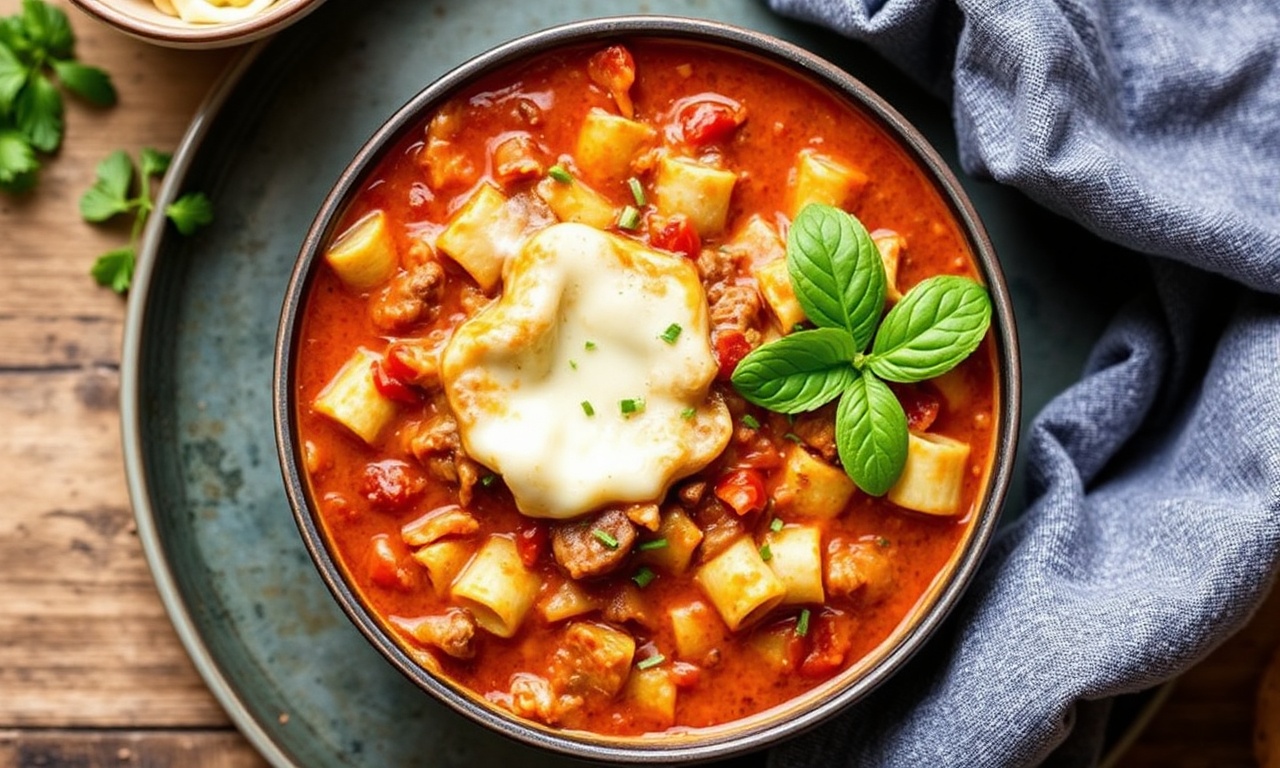
Lasagna usually asks for time—layering, baking, and dishes. This 20-minute skillet lasagna soup gives you the same cozy, Italian-inspired flavors with far less effort. You get a rich tomato base, tender pasta, and creamy cheese pockets, all cooked in one pan.
- Why This Skillet Lasagna Soup Works (And Why It Tastes Like Lasagna)
- Ingredients That Create “Lasagna” Flavor in a Soup
- Equipment and Timing: How to Hit 20 Minutes
- Step-by-Step: 20-Minute Skillet Lasagna Soup Recipe
- 1) Brown the meat (and build flavor)
- 2) Sauté onion and garlic
- 3) Simmer noodles in the tomato broth
- 4) Wilt spinach and add ricotta
- 5) Rest, serve, and finish
- Expert-Level Tips for Customizing the Flavor
- Make it vegetarian
- Boost nutrition without slowing down
- Turn up the heat (or keep it mild)
- Add a “baked lasagna” topping
- Nutrient Profile and Portion Guidance
- Storage, Reheating, and Freezer Strategy
- Serving Ideas That Match the Flavor
- FAQ
- Ready in ~20 minutes using one skillet and simple pantry ingredients.
- Classic lasagna taste through fire-roasted tomatoes, Italian herbs, and ricotta.
- Weeknight-friendly cleanup with minimal prep and no oven step.
- Easy customization for gluten-free, vegetarian, or extra veggies.
Why This Skillet Lasagna Soup Works (And Why It Tastes Like Lasagna)
Traditional lasagna depends on texture contrasts: noodles, meat sauce, and creamy cheese. This soup rebuilds those same contrasts using a clever shortcut—pasta cooks directly in the seasoned tomato broth.
When the noodles simmer, they absorb flavor from the tomatoes and herbs. Meanwhile, ricotta warms gently at the end, creating creamy pockets without curdling. If you enjoy how lasagna tastes on day one, you’ll love this version’s balance of savory, tangy, and comforting richness.
For flavor depth, fire-roasted crushed tomatoes help mimic the charred notes you often get from baked sauces. If you want to understand tomato flavor chemistry, the basics of tomato variety and processing can explain why some sauces taste brighter than others.
Ingredients That Create “Lasagna” Flavor in a Soup
You don’t need specialty ingredients to make this taste right. Choose ingredients that pull their weight: good tomato products, a reliable pasta shape, and cheese that melts into a creamy finish.
Core ingredients
Lean ground beef (or Italian sausage) builds the savory backbone. Leaner meat keeps the soup from turning greasy, which also helps the tomato flavors stay in front.
Crushed fire-roasted tomatoes bring sweetness and smoky depth. The roasting step adds complexity, which matters even when you’re cooking fast.
Low-sodium beef broth rounds out the sauce and helps cook the pasta evenly. When you control salt with broth, you can season at the end for a cleaner taste.
Cheese and pasta for the right texture
Ricotta creates the creamy, mildly tangy flavor people associate with lasagna. You add it after the noodles soften so the cheese warms without turning grainy.
Whole wheat lasagna noodles (chopped) work well because their starch thickens the broth as they cook. If you can’t find them, use similar flat noodles and chop them for even cooking.
For reference on why pasta cooks and thickens sauces, it helps to know how pasta behaves in liquid—starch release is the key that makes soup feel hearty.
Aromatics and herbs
Garlic and onion provide the foundation. Sauté them until fragrant so they taste sweet and mellow rather than sharp.
Italian herbs (oregano, basil, thyme) deliver classic notes. Add them early enough to bloom in fat, then adjust at the end so the flavor stays bright.
If you want a science-friendly view of how herbs contribute aroma, explore herbs and their common volatile compounds. It explains why a quick simmer can still taste “slow-cooked.”
Equipment and Timing: How to Hit 20 Minutes
This recipe works on schedule. If you start with cold ingredients and a cluttered prep area, you’ll lose time fast.
Use a large skillet or deep sauté pan with a lid. A wide pan helps liquid evaporate evenly, which helps noodles cook without turning mushy.
Prep you can do in parallel
While the meat browns, chop onion and garlic, measure broth, and chop noodles. You don’t need perfect knife skills—bite-size pieces cook more consistently.
Spinach goes in near the end. That timing keeps it bright and prevents the texture from going soft and stringy.
Cook time breakdown
You’ll spend about 5 minutes browning meat. Next you sauté aromatics and build the sauce for 3–4 minutes.
The noodles simmer for about 8–10 minutes. Finally, you stir in spinach and ricotta for the last 2–3 minutes.
Step-by-Step: 20-Minute Skillet Lasagna Soup Recipe
Follow these steps in order. Each one sets up the next step so you keep texture and flavor even at high speed.
1) Brown the meat (and build flavor)
Heat 1 tablespoon olive oil over medium-high heat. Add ground beef and break it up with a spatula.
Cook until the meat loses its pink color, about 5 minutes. If there’s excess fat, drain carefully to keep the soup light.
2) Sauté onion and garlic
Add diced onion and cook until translucent, about 3 minutes. Then stir in minced garlic and cook 30–60 seconds until fragrant.
Stir continuously so garlic doesn’t burn. Burnt garlic turns bitter and can overpower the tomato base.
3) Simmer noodles in the tomato broth
Add chopped lasagna noodles, crushed fire-roasted tomatoes, and low-sodium beef broth. Sprinkle in Italian seasoning and a pinch of red pepper flakes.
Bring to a gentle boil, then reduce to a simmer. Cook uncovered, stirring occasionally, until noodles soften, about 8–10 minutes.
If you’re curious why simmering works for thick sauces, see how sauces often rely on controlled heat to combine flavors and textures.
4) Wilt spinach and add ricotta
Stir in fresh spinach and cook 1–2 minutes until wilted. Turn off the heat before adding ricotta to protect its texture.
Spoon in ricotta and stir gently until you see creamy streaks and small pockets. Taste and adjust salt and pepper.
5) Rest, serve, and finish
Rest the soup for 2 minutes. This brief pause lets starch thicken the broth slightly and improves overall flavor balance.
Serve hot with Parmesan, black pepper, and fresh basil if you have it. A drizzle of olive oil adds aroma right before eating.
Expert-Level Tips for Customizing the Flavor
Once you know the method, you can personalize it without losing the lasagna vibe. The key is protecting pasta texture and adding dairy at the right time.
Start with the sauce base, then adjust thickness with broth. Add vegetables that cook quickly, and choose proteins that brown fast.
Make it vegetarian
Swap ground beef for plant-based crumbles or mushrooms. For mushrooms, cook them until browned first—browning boosts savory depth.
Use vegetable broth instead of beef broth. Then add ricotta or use a plant-based ricotta alternative if you want a dairy-free version.
Boost nutrition without slowing down
Add chopped zucchini, carrots, or bell peppers in step 2. Cut them small so they soften during the noodle simmer.
Spinach also helps. It wilts quickly, so you get color and nutrients without extra cook time.
Turn up the heat (or keep it mild)
Add more crushed red pepper flakes if you like a spicy kick. For smoky heat, use smoked paprika—but add it early so it distributes through the sauce.
If you want mild flavor, skip spicy elements and rely on herbs. Often oregano and thyme provide enough warmth without heat.
Add a “baked lasagna” topping
For a more dramatic finish, ladle soup into oven-safe bowls. Top with mozzarella and broil briefly until bubbly.
This step takes only a few minutes, but it adds that browned cheese aroma you expect from baked comfort food.
Nutrient Profile and Portion Guidance
This skillet soup is filling because it combines protein, fiber, and starchy pasta in one pot. Lean beef keeps fat moderate, while whole wheat noodles add extra fiber.
A typical serving lands around 350 calories depending on meat choice, cheese amount, and noodle type. Adjustments like extra cheese or sausage can increase calories, but portion control stays simple.
If you want a broader view of how ingredients influence satiety, you can explore dietary fiber and how it supports fullness.
Storage, Reheating, and Freezer Strategy
Store leftovers in an airtight container. Let the soup cool first, then refrigerate within 2 hours.
It keeps well for up to 3 days in the fridge. When you reheat, add a splash of broth or water to loosen the sauce.
Reheat for the best texture
Warm on the stove over low to medium heat. Stir often so noodles rehydrate evenly.
Microwaving works too, but stir halfway through to prevent hot spots.
Freezing tips
Soups with pasta can soften more after freezing. If you plan to freeze, undercook the noodles slightly, then finish cooking when reheating.
For maximum texture, freeze portions and reheat gently. This reduces mushiness and preserves the creamy-ricotta pockets.
Serving Ideas That Match the Flavor
This soup already tastes complete, but the right sides make it feel restaurant-level. Choose items that add crunch or freshness.
Garlic bread works well because it soaks up sauce. A simple arugula salad with lemon helps cut through the richness.
Garnish checklist
Add Parmesan, basil, and black pepper right before serving. If you like heat, finish with a pinch of crushed red pepper flakes.
A drizzle of olive oil adds aroma. It also gives a smoother mouthfeel on the surface of the soup.
FAQ
Can I use gluten-free pasta in skillet lasagna soup?
Yes. Gluten-free pasta works, but it often softens faster. Simmer in smaller increments and taste early so you keep a tender-but-not-mushy texture.
What’s the best substitute for ricotta?
For a similar mild creaminess, try cottage cheese blended until smooth, or use a plant-based ricotta-style product. Add it off the boil so dairy stays creamy.
How do I prevent noodles from turning mushy?
Use chopped noodles for even cooking, simmer at a steady low simmer, and avoid vigorous boiling. Also, stop when noodles feel tender but still hold their shape.
Can I make this soup dairy-free?
Use dairy-free ricotta and skip Parmesan, or replace Parmesan with nutritional yeast. Keep heat low when adding dairy alternatives to maintain a creamy texture.
Is this recipe good for meal prep?
Yes. Refrigerate in portions and reheat with a splash of broth. If you freeze, slightly undercook the pasta first or combine cooked noodles fresh after thawing.
See also: lasagna soup