

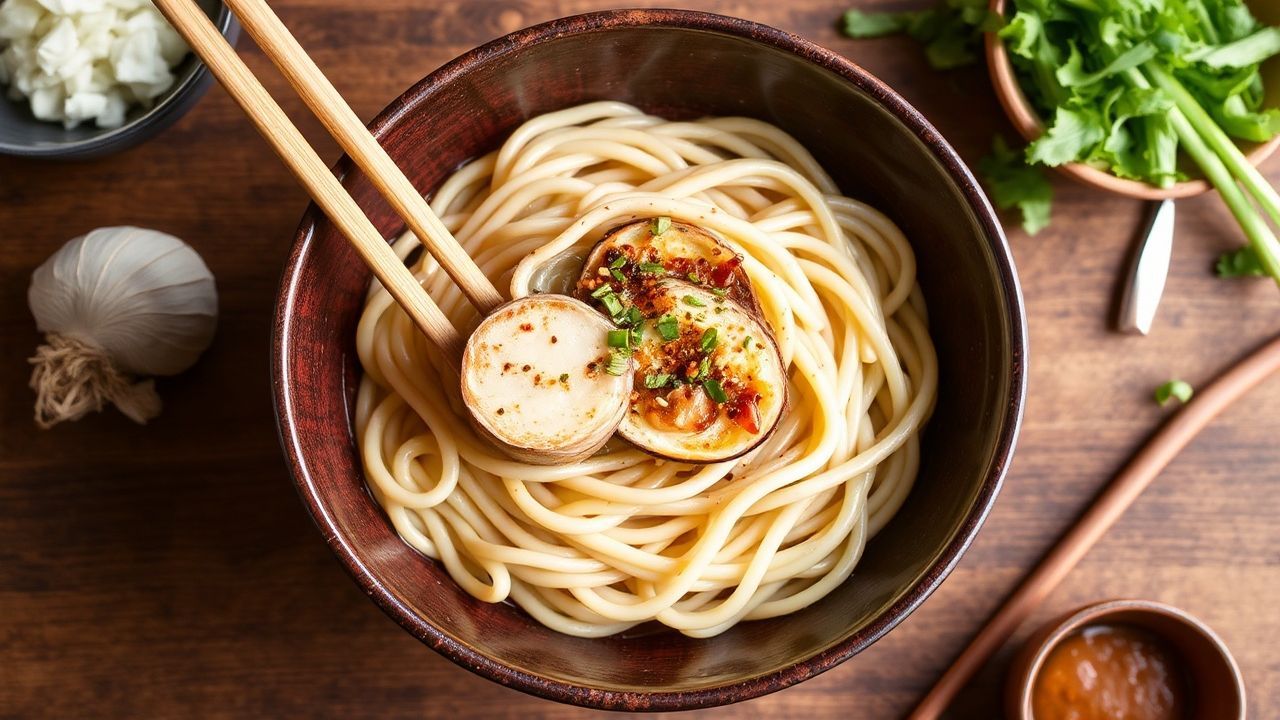
When dinner needs to happen fast, miso garlic butter udon delivers the kind of comfort that still feels special. This bowl comes together in about 15 minutes, thanks to quick-cooking udon and a sauce that thickens as it warms.
- 15-Minute Miso Garlic Butter Udon at a Glance
- Prep and Cook Time
- Yield and Difficulty
- Ingredients
- How the Sauce Works (Miso + Garlic Butter)
- Step-by-Step Guide
- Tips for Balancing Miso Garlic Butter Flavor
- Creative Variations
- Optional Short-Form Instructions
- Chef’s Notes for Best Results
- Serving Suggestions
- Q&A: Miso Garlic Butter Udon
- What makes miso garlic butter udon quick?
- Can I use a different type of miso?
- How do I prevent the sauce from tasting too salty?
- Should I boil miso in the skillet?
- Fresh, frozen, or dried udon—what’s best?
- To Wrap It Up
- FAQ
- Time target: 15 minutes from start to finish.
- Flavor base: white miso + garlic + butter.
- Texture control: noodle water makes the sauce cling.
- Buildable heat: optional chili for balance.
To get that silky, glossy finish, you only need a few pantry items. Then you follow one simple sequence: cook udon, sauté garlic, warm the miso sauce, and toss until every strand shines.
Miso garlic butter udon tastes rich because butter and miso work together. Butter adds roundness, while miso brings deep umami from fermented ingredients. For more background on fermentation and flavor development, see miso.
15-Minute Miso Garlic Butter Udon at a Glance
This recipe hits the sweet spot between speed and satisfaction. You get chewy udon, a savory sauce, and a clean finish from scallions.
Also, the method scales well for two or more servings. If you meal-prep, you can reheat gently using a splash of water to restore the sauce.
Prep and Cook Time
You can plan this meal without stress. Start the noodles first, then work on the sauce while they cook.
Keep your heat moderate for garlic and miso. That way, the sauce stays smooth and the flavor stays bright.
- Preparation: 5 minutes
- Cooking: 10 minutes
- Total Time: 15 minutes
Yield and Difficulty
This recipe makes 2 generous servings. It also works well for lunch leftovers.
Difficulty: Easy. Even if you cook rarely, the steps remain simple and repeatable.
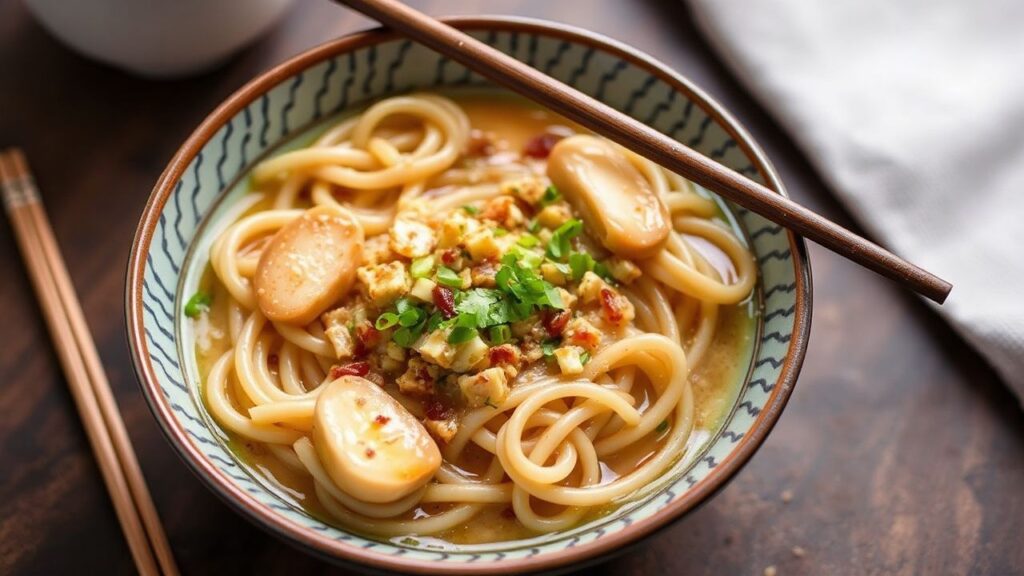
Ingredients
Use fresh or frozen udon for the best speed and chew. If you choose dried, you’ll need a longer cook and you may want extra noodle water.
For flavor accuracy, stick to the balance: miso for umami, soy for salt depth, and butter for richness. Then finish with scallions and sesame.
- 200g fresh or frozen udon noodles, thawed if frozen
- 2 tbsp unsalted butter
- 4 cloves garlic, minced
- 2 tbsp white miso paste
- 1 tbsp soy sauce, preferably low sodium
- 1 tsp sesame oil
- 1 tsp mirin (optional, for gentle sweetness)
- 2 scallions, thinly sliced (green parts only)
- 1 tsp toasted sesame seeds
- Pinch of red pepper flakes (optional, for heat)
- Water, for boiling, plus extra noodle water for sauce
How the Sauce Works (Miso + Garlic Butter)
The sauce works because miso dissolves and blends into warm fat. White miso tastes milder than darker varieties, so it pairs well with butter without overpowering the noodles.
If you want a deeper umami reference, you can also explore umami. The salty-savoriness in miso helps the noodles taste fuller, even with minimal ingredients.
Why Noodle Water Matters
Starchy noodle water acts like a natural emulsifier. When you add it gradually, the sauce turns glossy instead of greasy.
This technique stays consistent across noodle types. For a general science view of starch and cooking, review starch.
Step-by-Step Guide
Follow this order for the cleanest flavor. It keeps garlic fragrant, keeps miso smooth, and prevents overcooked noodles.
When you toss the udon, stir often. That motion helps sauce cling to the noodles and evenly coats each bite.
- Boil the noodles. Bring a large pot of water to a rolling boil. Cook udon according to package directions (fresh often 2–3 minutes; dried usually longer). Stir once or twice to prevent clumps.
- Reserve noodle water. Drain the noodles, but keep about 1/4 cup of cooking water. Set it aside for thinning and for gloss.
- Sauté garlic in butter. Melt butter in a large skillet over medium heat. Add minced garlic and sauté until fragrant and just lightly golden, about 2 minutes. Keep heat moderate to avoid bitter garlic.
- Warm the miso mixture. Reduce heat to low. Stir in miso, soy sauce, sesame oil, and mirin (if using). Warm gently until combined. Don’t boil aggressively.
- Toss noodles to coat. Add drained udon to the skillet. Toss well, then add noodle water a splash at a time until the sauce looks glossy and clings to noodles.
- Finish quickly. Cook 1–2 minutes, stirring frequently. Then remove from heat and top with scallions and sesame seeds.
For clarity on why gentle heat works, consider how proteins and aromatic compounds behave when heated. Garlic can turn sharper with high heat, while miso tastes best when warmed, not boiled hard.
Tips for Balancing Miso Garlic Butter Flavor
Start with less miso than you think you need, then adjust after tasting. White miso varies by brand, and salt levels can change.
Also, manage butter temperature. Melt it fully, but avoid browning unless you enjoy a deeper nutty note.
Salt and Sweet Balance
Soy sauce adds salt depth, so taste as you combine. If the bowl feels too salty, add more noodle water and a small extra splash of mirin.
For a reliable sweet finish, use mirin lightly. It rounds flavor without turning the dish sugary.
Heat Without Overpowering
A pinch of red pepper flakes works best at the end of the sauce step. This timing keeps spice present but not dominant.
If you want more heat, add it gradually. The goal stays balance, not burn.
Creative Variations
You can personalize miso garlic butter udon without changing the core technique. Keep the toss-and-gloss method, then swap add-ins based on what you have.
These variations also help stretch the meal for family dinners.
- Vegetables: Toss in baby spinach, sliced mushrooms, or quick-cooked carrots during the sauce warming step.
- Protein boost: Add pan-seared tofu cubes, or top with a soft-boiled egg for extra richness.
- Crunch factor: Add toasted nori strips or crushed sesame for texture contrast.
- Umami enhancement: Stir in a small pinch of dashi powder if you eat it, or add extra sautéed mushrooms for a vegetarian-friendly depth.
- Herbal twist: Swap scallions for basil or Thai basil when you want a fresh green aroma.
Optional Short-Form Instructions
If you prefer a quick checklist, use this version. It matches the same method, just fewer words.
Read it once, then cook step by step while the noodles boil.
- Cook udon: Boil as directed, drain, and reserve noodle water.
- Sauté: Melt butter, then sauté garlic until fragrant.
- Mix sauce: Warm miso, soy sauce, sesame oil, and mirin into the butter.
- Toss: Add noodles, toss, and thin with noodle water.
- Finish: Stir 1–2 minutes, then serve with scallions and sesame.
Chef’s Notes for Best Results
For an even silkier texture, whisk miso with warm water before adding it to the pan. That step improves blending and prevents concentrated miso clumps.
Also, keep garlic time tight. When garlic turns brown too quickly, it shifts from sweet aroma to bitterness.
Noodle Choice and Texture
Fresh or frozen udon keeps a chewy bite with minimal effort. Dried udon also works, but you must track the boil carefully so the strands don’t turn soft.
If you need a reference for how cooking affects starch foods, see noodle.
Reheating Leftovers
This dish tastes best fresh, but leftovers still work. Reheat in a skillet on low with a splash of water or broth to loosen the sauce.
Stir often while reheating. That motion helps the sauce re-emulsify and prevents dry noodles.
Serving Suggestions
Serve udon in warm bowls. A warm bowl helps the sauce stay glossy and keeps miso’s aroma noticeable.
Top with scallions and sesame seeds for color and crunch. For a lighter contrast, add cucumber salad or steamed edamame on the side.
| Nutrient | Per Serving |
|---|---|
| Calories | 420 kcal |
| Protein | 12 g |
| Carbohydrates | 55 g |
| Fat | 15 g |
For extra variety across meals, pair this bowl with simple sides you can repeat. That keeps weeknight cooking smooth.
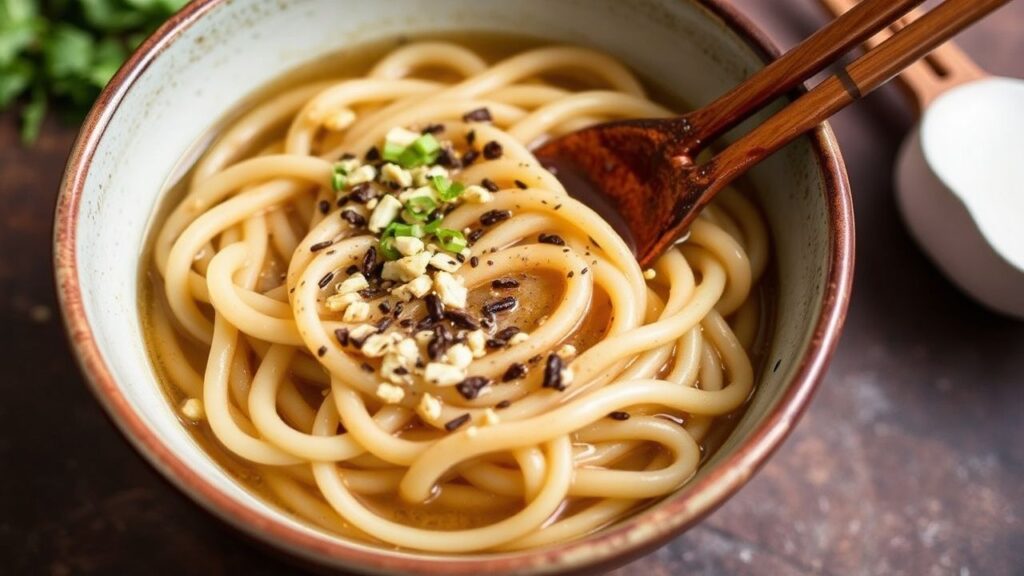
Q&A: Miso Garlic Butter Udon
You’ll find answers to common questions right here. Use these tips to troubleshoot flavor, timing, and texture.
Most issues come from heat level or miso handling. Once you control those, the recipe becomes very consistent.
What makes miso garlic butter udon quick?
Udon cooks fast, and the sauce builds while the noodles boil. Because the sauce warms quickly, you don’t need long simmering.
Also, you can prep garlic and scallions in advance. That reduces last-minute steps.
Can I use a different type of miso?
Yes, but flavor changes. White miso stays mild, so it pairs well with butter. Red or mixed miso tastes stronger and may require a small reduction.
Always taste and adjust after the noodles join the sauce.
How do I prevent the sauce from tasting too salty?
Start with 2 tablespoons miso, then taste. Miso brands differ in saltiness, and soy sauce adds more sodium.
If it’s too salty, thin with noodle water and add a little mirin or a small extra splash of butter.
Should I boil miso in the skillet?
No. Warm it gently over low heat. Boiling can mute the flavor and make the sauce less smooth.
Once combined, toss noodles right away so everything heats evenly.
Fresh, frozen, or dried udon—what’s best?
Fresh or frozen works best for a chewy, fast outcome. Dried udon works too, but it takes longer and you must watch texture closely.
If using dried, reserve more noodle water so the sauce reaches the right thickness.
To Wrap It Up
miso garlic butter udon gives you rich umami in a short window. You get chewy noodles, a glossy sauce, and a balanced finish from scallions.
Once you nail the noodle water step and keep heat gentle, you’ll make this bowl again and again.
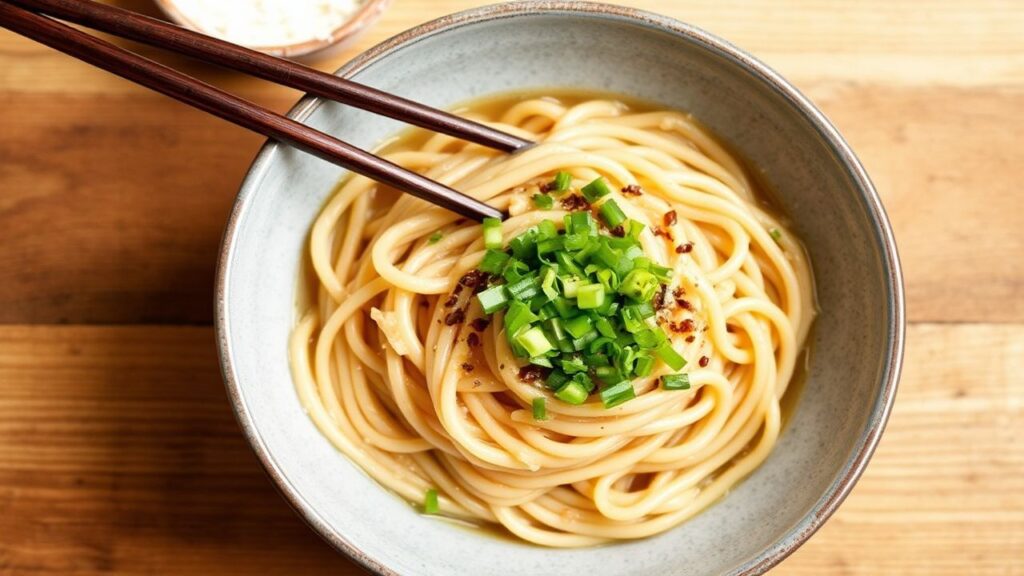
FAQ
Quick answers for repeat success. Use them when you cook the next batch.
If you adjust one thing, adjust heat and miso handling first. Then fine-tune salt with noodle water.
Can I make this vegan?
You can. Swap butter with plant-based butter or a neutral oil, then use a vegan miso paste and keep the soy sauce vegan as well.
Warm the miso gently and use noodle water for the glossy finish.
What garnish works best?
Scallions and toasted sesame seeds fit the flavor profile and add freshness. Add red pepper flakes if you like heat.
For extra aroma, sprinkle a small amount of toasted nori or furikake-style seasoning.
Why does my sauce look greasy?
Grease usually comes from skipping noodle water or tossing too briefly. Add starchy noodle water a little at a time while tossing.
Also, keep the heat moderate so butter emulsifies smoothly.
Can I add mushrooms?
Yes. Sauté sliced mushrooms briefly in butter before garlic, or add them during the sauce step so they stay tender.
Mushrooms increase savory depth and pair naturally with miso.
How long can leftovers last?
Store leftovers in a sealed container in the fridge for up to 2 days. Reheat on low with a splash of water or broth.
Stir often so the noodles don’t dry out.
See also: miso garlic butter udon