
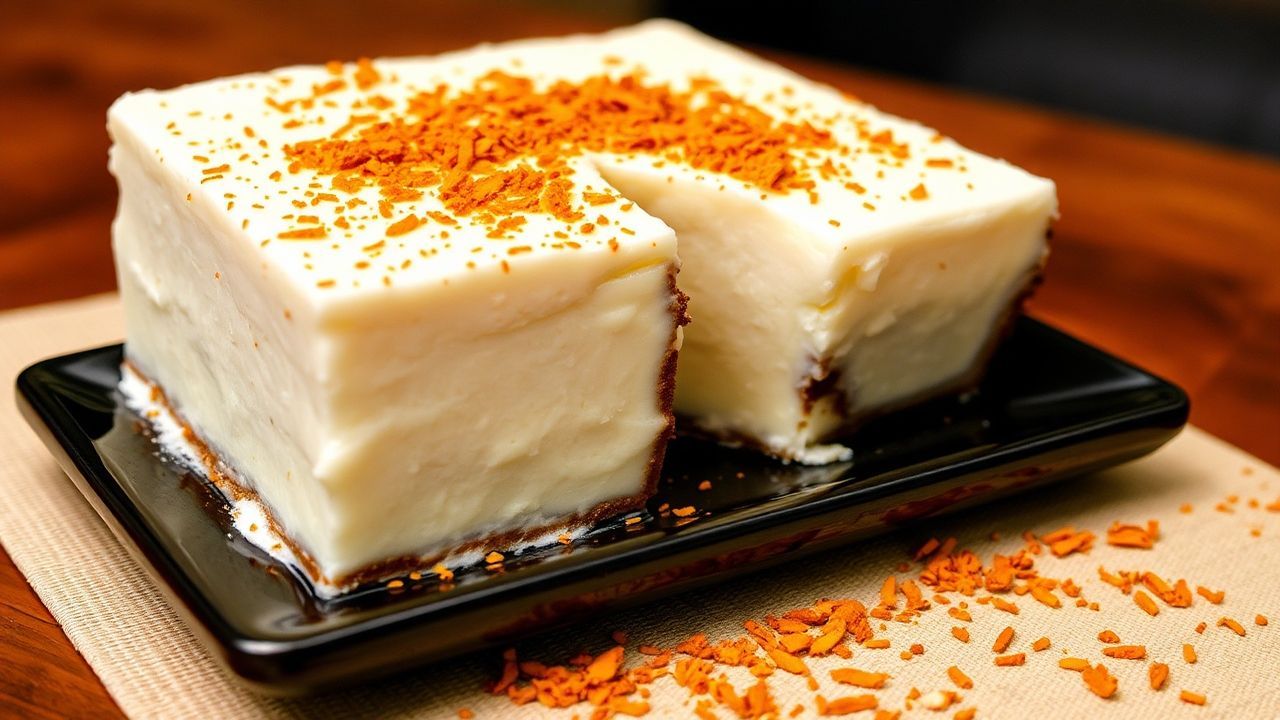
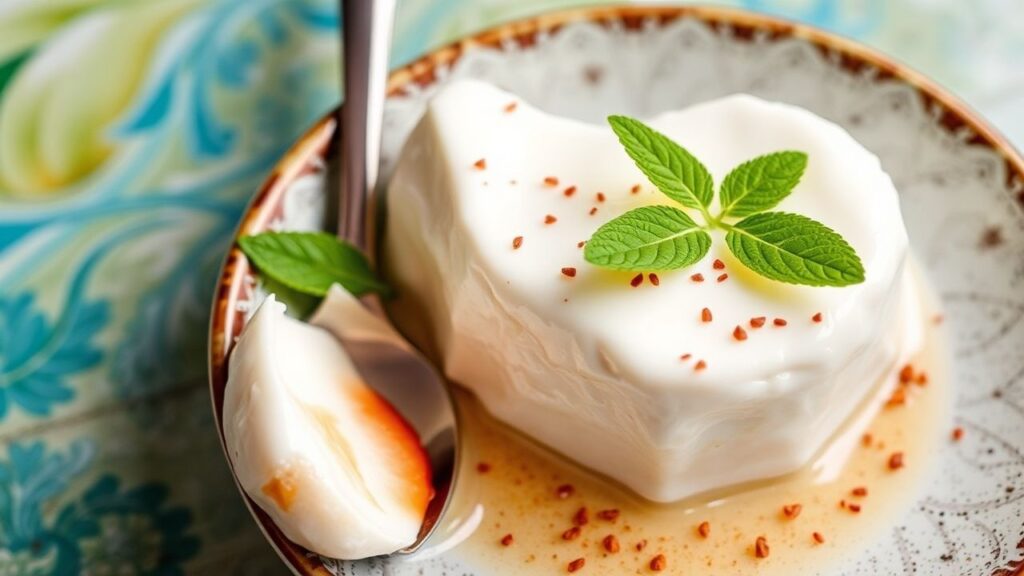
Maja Blanca is one of the most loved Filipino coconut desserts. It delivers a smooth, custard-like bite, a gentle sweetness, and an unmistakable tropical aroma from coconut milk. In Filipino homes, this creamy Filipino coconut delight often shows up at holidays, family gatherings, and fiesta tables.
- Origins and Cultural Significance of Maja Blanca in Filipino Cuisine
- Prep and Cook Time
- Yield
- Difficulty Level
- Key Ingredients and Techniques for Achieving Perfect Creaminess
- Ingredients
- Instructions
- Creative Variations to Elevate the Classic Maja Blanca Experience
- Tips for Serving and Pairing Maja Blanca to Impress Your Guests
- Q&A
- What is Maja Blanca?
- Why does my Maja Blanca turn lumpy?
- How long should I chill Maja Blanca?
- Can I make Maja Blanca without dairy?
- What toppings work best?
- To Conclude
At a Glance
- Texture tip: dissolve cornstarch well, then stir constantly while cooking.
- Flavor base: coconut milk plus sugar creates the classic, comforting taste.
- Optional add-ins: sweet corn and shredded young coconut boost aroma and bite.
- Serving goal: chill until fully set for clean slices.
Maja Blanca is a traditional Filipino dessert made with coconut milk, sugar, and cornstarch. Over time, cooks refined it into a pudding-style treat that feels both simple and special. You will see it served during celebrations because it scales well for groups.
Most recipes follow the same core method: warm the coconut mixture, thicken it with a cornstarch slurry, then cool it until firm. Some versions also include sweet corn kernels for a light pop of texture. If you want a classic finish, garnish with toasted coconut or latik.
Origins and Cultural Significance of Maja Blanca in Filipino Cuisine
Maja Blanca traces its roots to Spanish colonial influence on Filipino desserts. Many Filipino sweets adapted European pudding and custard ideas, then shifted the flavor profile toward local ingredients like coconut milk. You can see this broader pattern in how many Philippine desserts blend foreign techniques with native pantry staples.
Coconut also plays a cultural role across the archipelago, from everyday cooking to festive dishes. That connection helps explain why Maja Blanca feels “homey” to many families. For readers who want historical context on Spanish rule and culinary exchange, see Spanish colonialism in the Philippines.
Why It Appears on Holiday and Fiesta Tables
When families plan a menu for gatherings, they prefer desserts that hold shape and serve neatly. Maja Blanca meets that need because chilling sets the texture for easy slicing. Its creamy base also pairs well with other Filipino favorites on the table.
Because it uses widely available ingredients, many cooks can make it in large batches. Coconut milk, cornstarch, and sugar are pantry-friendly, so home cooks often treat it like a reliable centerpiece dessert. For background on coconut as a key ingredient, you can refer to coconut.
Prep and Cook Time
Good planning matters with thickened desserts. Maja Blanca needs active attention while it thickens, then extra time to cool and set. If you follow the timeline below, you will get a smooth result with clean slices.
- Preparation Time: 10 minutes
- Cooking Time: 15 minutes
- Total Time: 25 minutes + chilling time
Yield
This recipe yields a batch that works for a small group. If you are serving a larger crowd, you can scale it up using the same ratios. For accuracy, measure coconut milk and cornstarch carefully.
Serves: 6 to 8 people
Difficulty Level
Maja Blanca ranks as easy to medium because it involves a thickening step. Once the mixture thickens, the remaining steps focus on cooling and garnishing. You do not need advanced baking skills, but you do need steady stirring.
Best for: home cooks who want a classic Filipino dessert with predictable results.
Key Ingredients and Techniques for Achieving Perfect Creaminess
The signature creaminess comes from two decisions: how you thicken and how you heat. Coconut milk provides the rich flavor and aroma, while cornstarch creates the smooth pudding texture. When you stir correctly, you avoid lumps and get an even set.
Start by dissolving cornstarch in water before heating. This slurry step helps the starch disperse evenly. If you add cornstarch directly to hot liquid, it often forms clumps that do not fully dissolve.
How Coconut Milk and Cornstarch Work Together
Coconut milk contains fat that gives a velvety mouthfeel. Cornstarch thickens as it cooks, then stabilizes as it cools. That is why Maja Blanca turns from a liquid mixture into a sliceable dessert after chilling.
If you want a deeper food-science view on starch thickening, read about starch. Understanding starch behavior helps you choose the right heat level and timing for consistent results.
Sweet Corn and Young Coconut for Texture
Sweet corn adds small bursts of sweetness and gentle bite. Shredded young coconut (optional) adds aroma and a slightly chewy texture. Together, these mix-ins make the dessert feel more festive while still staying true to the classic profile.
When you fold in mix-ins, do it after the mixture thickens. This prevents overcooking and helps maintain a pleasing texture. For readers interested in corn varieties used in cooking, see maize.
Ingredients
Use fresh or well-sealed canned coconut milk for the best texture. Full-fat coconut milk usually produces a richer mouthfeel than reduced-fat options. Also, measure cornstarch and water for the slurry; accuracy improves consistency.
- 4 cups coconut milk (fresh or canned, full-fat)
- 1 cup granulated sugar
- 3/4 cup cornstarch, dissolved in 1 cup water
- 1 cup sweet corn kernels (fresh or canned, drained)
- 1/2 cup shredded young coconut (optional)
- 1/4 tsp salt
- 1/4 cup toasted desiccated coconut or latik (caramelized coconut curds) for garnish
Instructions
Follow these steps in order for the smoothest, most stable set. Stir while cooking and keep the heat controlled. After thickening, cool the mixture properly before chilling.
- Combine the coconut milk and sugar in a medium saucepan. Heat over medium-low and stir until the sugar dissolves.
- Add the cornstarch slurry slowly while stirring. Keep the mixture moving to prevent lumps.
- Cook and stir continuously with a wooden spoon or heatproof spatula. The mixture should thicken in about 5 to 8 minutes.
- Fold in the corn and young coconut once thickened. Stir gently until evenly distributed.
- Transfer to a greased dish or mold and smooth the surface.
- Cool at room temperature for about 15 minutes, then chill in the refrigerator for at least 2 hours until fully set.
- Garnish before serving with toasted desiccated coconut or latik.
Creative Variations to Elevate the Classic Maja Blanca Experience
You can customize Maja Blanca without losing its core identity. The thick coconut base stays the same, then you adjust flavor and texture with additions. If you want bolder color, you can introduce ube, or for tropical freshness you can add mango.
Because this dessert sets firmly after chilling, choose add-ins that hold up well. Fresh fruits work best when used carefully so moisture does not thin the set. If you add fruit puree, reduce liquid or use a thicker prepared jam style.
Ube or Mango Swirls
For a vibrant twist, layer ube halaya in the bottom before pouring in the coconut mixture. This creates a marbled look and a distinct, earthy sweetness. For mango lovers, fold in diced ripe mango after thickening, then chill to set.
Ube is a purple yam widely used in Filipino sweets, so the flavor feels culturally natural. If you want more context on this ingredient, read about ube.
Latik, Caramel, and Nutty Toppings
Latik adds toasted coconut aroma and a caramelized depth that complements the creamy base. You can also add a thin caramel ribbon on top just before serving for visual contrast. For crunch, sprinkle chopped roasted nuts like cashews.
If you love caramel flavors, consider a small amount so it does not overpower coconut. For general background on caramelization and sugar browning, see caramelization.
Tips for Serving and Pairing Maja Blanca to Impress Your Guests
Serving technique affects how “premium” the dessert looks. Chill the dessert long enough so it cuts cleanly. For best slices, use a lightly greased knife and wipe it between cuts.
Presentation matters because Maja Blanca is naturally pale and creamy. Add toasted coconut on top for texture and color, and arrange slices on a tray with spacing. Simple garnishes make the dessert feel celebration-ready.
Best Pairings for a Balanced Dessert Plate
Because Maja Blanca tastes rich and gently sweet, pair it with beverages that bring brightness. Hot Filipino coffee or espresso works well since coffee’s bitterness balances coconut sweetness. For a refreshing option, serve with calamansi juice.
If you want to build a full Filipino dessert spread, place Maja Blanca alongside other coconut or rice-based sweets. This lets guests compare textures across the table while keeping the theme cohesive.
Make-Ahead and Storage
Maja Blanca tastes best after it fully sets, so making it a day ahead often improves convenience. Store covered in the refrigerator to prevent strong fridge odors from affecting flavor. Keep it chilled until serving for stable texture.
When you plan ahead, time your chilling so guests eat it within a few days. If the dessert sits too long, garnish texture can soften, so add toasted coconut closer to serving time.
| Nutrient | Per serving |
|---|---|
| Calories | 220 kcal |
| Protein | 2 g |
| Carbohydrates | 38 g |
| Fat | 6 g |
Q&A
What is Maja Blanca?
Maja Blanca is a Filipino coconut dessert made with coconut milk, sugar, and cornstarch. It cooks into a smooth, pudding-like consistency, then firms up after chilling. Many versions include sweet corn for texture and optional young coconut for extra aroma.
It belongs to the broader family of Filipino custard-style sweets, but its coconut-forward flavor gives it a distinct identity. For general context on milk-based custards and cooking thickness, you may find custard helpful.
Why does my Maja Blanca turn lumpy?
Lumps usually happen when cornstarch does not disperse well before heating. To fix this, always dissolve cornstarch in water first, then pour it in slowly while stirring. Also, stir continuously during cooking so the mixture thickens evenly.
If you see lumps early, lower heat and keep stirring. In many cases, steady mixing helps the starch hydrate fully. Starting with a good cornstarch slurry remains the most reliable solution.
How long should I chill Maja Blanca?
Chill for at least 2 hours for a set that cuts cleanly. If you want sharper edges, chill longer, especially if your dish is thicker. Temperature control helps cornstarch fully gel.
For best results, let it cool briefly at room temperature first, then refrigerate. That step reduces condensation on the surface and supports even setting.
Can I make Maja Blanca without dairy?
Traditional Maja Blanca typically uses coconut milk rather than cow’s milk, so it is naturally dairy-free. If a variation uses sweetened condensed milk, check the label because some versions contain dairy. You can replace dairy-based sweeteners with coconut-based alternatives to keep it plant-friendly.
For broader information on coconut as a dairy substitute, see coconut milk.
What toppings work best?
Toasted desiccated coconut or latik provides crunch and caramelized aroma. You can also add roasted nuts for texture and a nutty finish. Keep toppings light and add them close to serving.
This strategy helps preserve contrast: creamy base plus toasted crunch. It also keeps the top from becoming soft after long refrigeration.
To Conclude
Maja Blanca delivers comfort, culture, and a reliable pudding texture in one dessert. When you use a cornstarch slurry, cook with gentle heat, and chill long enough, you get the smooth results that make this dish a repeat favorite.
Whether you keep it classic with corn and toasted coconut or you add ube or mango, the core pleasure stays the same. Make your next batch with confidence, then serve chilled slices that look as good as they taste.
See also: Maja Blanca