

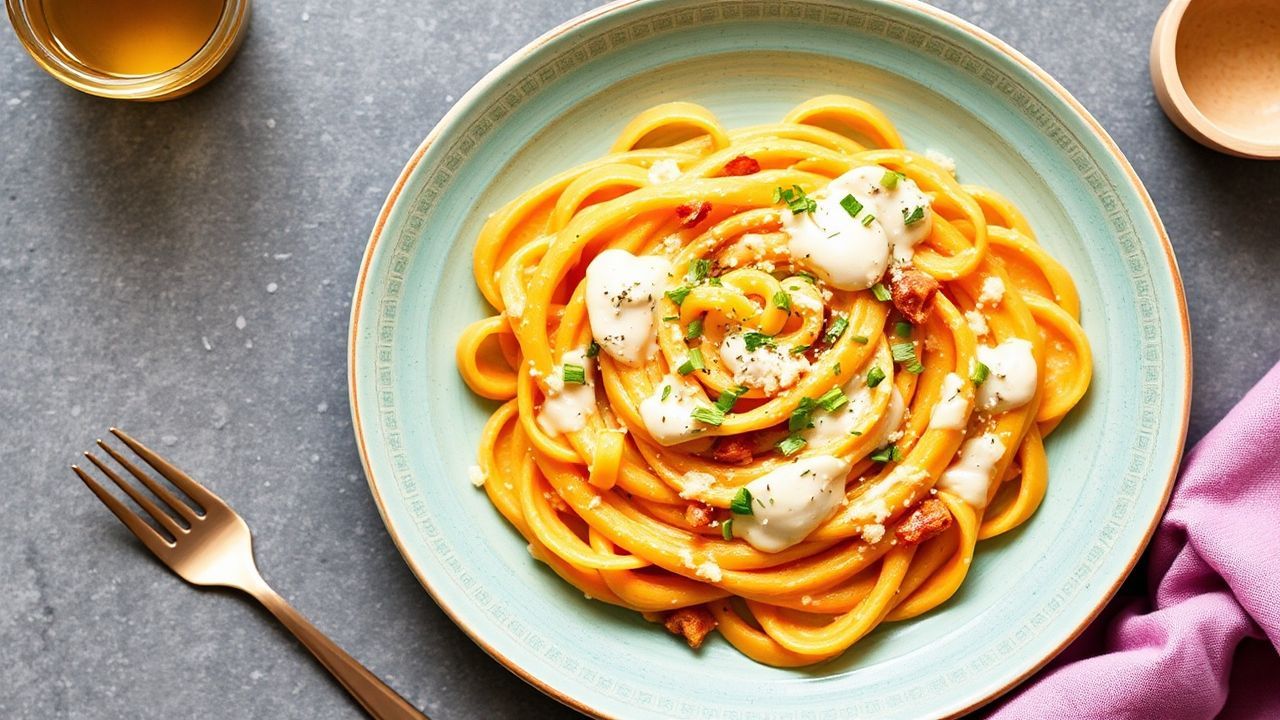
Sweet potato “pasta” Alfredo gives you the same cozy, creamy feeling as traditional fettuccine—yet it swaps wheat noodles for tender spiralized sweet potato. The key is treating the strands like vegetables: cook fast, keep bite, then toss with a stable Alfredo-style sauce.
- Why Sweet Potato Works as “Pasta” for Alfredo
- The Alfredo Sauce Method That Stays Smooth
- Ingredients: What to Use for “Fettuccine-Style” Creaminess
- Step-by-Step: 35 Minutes to Creamy Sweet Potato Alfredo
- 1) Spiralize and prep
- 2) Sauté the “pasta”
- 3) Make the Alfredo base (roux + milk)
- 4) Melt Parmesan safely
- 5) Toss and serve immediately
- Perfect Texture: Timing Rules You Can Actually Use
- Flavor Boosts: Make It Feel Like a Date-Night Plate
- Make-Ahead and Meal Prep Options
- Gluten-Free and Vegetarian: What This Recipe Does (and Doesn’t) Change
- FAQ
At a Glance
- Gluten-free base: spiralized sweet potato replaces wheat pasta completely.
- Silky sauce physics: a simple roux thickens milk, then Parmesan finishes off-heat.
- Best texture: a short sauté “sets” the strands so they don’t turn watery.
- Timing wins: sauce and noodles meet right before serving.
Why Sweet Potato Works as “Pasta” for Alfredo
Sweet potatoes hold sauce in a way that feels pasta-like because they contain natural starch. When you cook the strands and reduce surface moisture, the starch and heat help the sauce cling instead of sliding off.
Also, their mild sweetness balances the salty, nutty flavor of Parmesan. That contrast keeps Alfredo from tasting flat or overly heavy, especially when you add garlic and a tiny pinch of nutmeg.
Texture goal: tender, not mushy
Traditional pasta has a gluten network that stays springy. Sweet potato doesn’t—so you must control exposure to heat and timing after cooking.
Your target is “bendy ribbons.” They should yield slightly under a fork but still hold shape when you lift a strand.
Moisture control is the real secret
Raw sweet potatoes contain water. If you skip the quick sauté, the noodles release moisture into the sauce and thin it.
A short skillet cook dries the surface and firms the bite. If you want a deeper science reference for starch behavior, see starch.
The Alfredo Sauce Method That Stays Smooth
Most Alfredo failures come from heat and cheese handling. Parmesan can seize when you simmer too hard or add it to aggressively boiling sauce.
This method builds a stable creamy base first, then melts cheese gently. It mirrors classic sauce logic: fat + thickener + warm liquid, then finishing.
Build the base with a roux
Whisking in flour creates a roux that thickens milk as it heats. This stabilizes the sauce so it coats sweet potato ribbons instead of pooling.
If you want a clear overview of the technique, read about roux on Wikipedia.
Finish with Parmesan off-heat
Parmesan melts cleanly when the sauce stays hot but not boiling. Turning off the heat for the cheese step reduces graininess and keeps fat from separating.
Because Parmesan is a hard, aged cheese, it behaves like a meltable ingredient when handled carefully. For background on cheese types and aging, see Parmesan cheese.
Once Parmesan melts, stop. You want glossy, uniform cream—not separated fat. If your sauce thickens while you wait, loosen it with a splash of warm milk and whisk until smooth.
Garlic also needs attention. Keep it at medium-low so it turns fragrant, not browned. Browning shifts flavor from sweet-garlic to bitter-garlic.
Ingredients: What to Use for “Fettuccine-Style” Creaminess
You don’t need many ingredients, but you do need the right ones. Choose high-quality Parmesan and a milk that you expect to thicken.
Below is a formula that works for most home kitchens and delivers a creamy, clingy Alfredo feel.
Core ingredient list (serves 3–4)
Sweet potato noodles
- 3 large sweet potatoes (about 1.5–2 lb total), peeled and spiralized
- 1 tbsp olive oil (for sautéing)
Alfredo sauce
- 2 tbsp unsalted butter
- 4 cloves garlic, finely minced
- 2 tbsp all-purpose flour
- 2 cups whole milk (or unsweetened almond milk)
- 1 cup freshly grated Parmesan
- Salt + black pepper
- 1/4 tsp nutmeg (optional)
- Chopped fresh parsley (2 tbsp), for garnish
Ingredient notes that prevent common problems
Freshly grated Parmesan melts smoother than pre-shredded versions. Pre-shredded cheese often includes anti-caking agents that can slightly change melt behavior.
If you use milk alternatives, pick one that you’ve used before for sauces. Plant milks vary a lot in fat and thickening response.
For a clear look at how emulsions and fat-water mixing relate to creamy sauces, see emulsion.
Expert Insight: Spiralize the sweet potatoes, then sauté them briefly before you make (or finish) the sauce. This “sets” the surface and reduces free moisture, so the Alfredo clings instead of thinning.[/TIP]
That timing also makes your workflow smoother. While the sauce thickens, the noodles stay crisp enough to hold a glossy coat once you toss.
Another small win: mince garlic finely. Large chunks heat unevenly, and you risk uneven bitterness or burnt edges.
Step-by-Step: 35 Minutes to Creamy Sweet Potato Alfredo
Follow the order closely. Cook noodles first, build the sauce second, then toss at the last moment so texture stays springy.
Keep heat moderate. Medium heat works for sautéing; medium-low works for the roux and garlic so dairy stays stable.
1) Spiralize and prep
Spiralize peeled sweet potatoes into uniform ribbons. If you don’t have a spiralizer, use a julienne peeler to create thin matchstick strips.
Set noodles aside and keep the strands relatively dry. Wet noodles steam more in the pan.
2) Sauté the “pasta”
Heat olive oil in a large skillet over medium heat. Add noodles gently and toss for about 4–6 minutes.
Look for a slight change: they should soften at the edges but still feel firm in the center.
3) Make the Alfredo base (roux + milk)
In a separate saucepan, melt butter over medium-low heat. Add minced garlic and cook for 60–90 seconds until fragrant.
Whisk in flour and cook for about 1–2 minutes. You want the raw flour taste to cook off.
Pour in milk slowly while whisking. Keep whisking until the sauce thickens and gently bubbles, about 5–7 minutes.
4) Melt Parmesan safely
Remove the saucepan from heat. Stir in Parmesan gradually, whisking until smooth and glossy.
Season with salt, black pepper, and nutmeg if you like.
5) Toss and serve immediately
Transfer sautéed sweet potato noodles into the sauce. Toss until every ribbon looks coated.
Serve right away. Alfredo clings best when the strands are still warm and just cooked.
Perfect Texture: Timing Rules You Can Actually Use
Sweet potato noodles cook faster than dry wheat pasta. If you leave them too long in hot sauce, they soften and release moisture.
So, use timing as a control tool, not a guess.
How to know your noodles are done
If noodles bend and still hold shape, you nailed it. If they break easily, you overcooked on the first sauté.
If noodles still taste raw after sautéing, cook 1–2 minutes longer. Don’t fix it by simmering in sauce.
How to fix sauce thickness fast
If sauce feels too thick, whisk in warm milk 1 tbsp at a time. Stir until glossy again.
If sauce feels thin, keep it warm off-boil and reduce gently for 1–2 minutes while whisking.
Warm vs. hot: keep it stable
High heat can separate dairy fats. Use low-to-medium heat for warming and turn off heat before cheese.
For reheating, rewarm noodles separately if possible, then toss with fresh sauce or loosened sauce.
Flavor Boosts: Make It Feel Like a Date-Night Plate
Classic Alfredo relies on salt, garlic, and cheese. You can keep that vibe while adding one contrasting element for balance.
Because sweet potato tastes slightly sweet, contrast matters. It keeps the dish from tasting one-note.
Acid for balance
A squeeze of lemon brightens Parmesan richness. Add it right after tossing so it doesn’t dull.
If you want a quick reference on why acids lift flavors in cooking, see acid.
Crunch for contrast
Top with toasted pine nuts, walnuts, or even crisped breadcrumbs. The crunch offsets creamy texture and helps the dish feel more “restaurant.”
Keep the amount small so Alfredo stays glossy, not dry.
Umami add-ons (optional)
Sautéed mushrooms blend naturally with garlic and dairy. Cook them until their moisture evaporates so they don’t thin the sauce.
If you want background on umami as a flavor concept, read umami.
Make-Ahead and Meal Prep Options
This dish tastes best right after tossing. Still, you can prep parts ahead to reduce stress.
Think in components: noodles, sauce, then assembly.
Best make-ahead strategy
Cook the Alfredo sauce up to 24 hours ahead. Cool it, cover it, and refrigerate.
Rewarm gently with a splash of milk. Then sauté noodles fresh for best texture.
Freezer note (realistic)
Cream sauces sometimes separate after freezing and thawing. If you freeze, reheat slowly and whisk often.
For best quality, freeze cooked sweet potato noodles separately and sauce separately if you must.
Gluten-Free and Vegetarian: What This Recipe Does (and Doesn’t) Change
This recipe is naturally gluten-free in the sense that it uses no wheat noodles. It also stays vegetarian if you choose standard dairy-based Alfredo.
However, you still use flour for the roux. To keep it fully gluten-free, swap the flour with a 1:1 gluten-free baking blend.
Gluten-free flour choices
Not all gluten-free blends thicken the same way. Some are more starch-heavy and can produce a softer texture.
Test once if you’re new to a brand, then adjust milk by tablespoon amounts.
Vegetarian-by-default
No meat or broth makes this recipe easy for most vegetarian diets. Parmesan adds strong flavor so you don’t need chicken stock tricks.
If you want broader context on dietary labels and food categories, see vegetarianism.
FAQ
Can I use butternut squash or zucchini instead of sweet potato?
You can, but the result changes. Zucchini releases lots of water, and butternut squash takes longer to soften. Sweet potato gives the best balance of firm bite and sauce clinging.
Why does my Alfredo look grainy?
Usually the sauce overheated after adding Parmesan, or the cheese didn’t melt gradually. Turn off heat before cheese and stir until smooth. Use freshly grated Parmesan for best melt.
How do I keep the sweet potato noodles from turning watery?
Sauté the ribbons briefly in olive oil first. Also, toss with sauce right before serving. Don’t simmer noodles in the sauce for long.
What milk works best for Alfredo-style sauce?
Whole milk gives the creamiest, most predictable thickening. Unsweetened almond milk can work well too, but fat level varies, so you may need a slight adjustment with milk or heat time.
Is this recipe dairy-free?
Not in its base form, because Alfredo relies on butter, milk, and Parmesan. If you need dairy-free, use a dairy-free butter substitute, dairy-free milk, and a plant-based “Parmesan” style topping that melts well—then adjust seasonings to match the salty depth.
See also: sweet potato Alfredo