
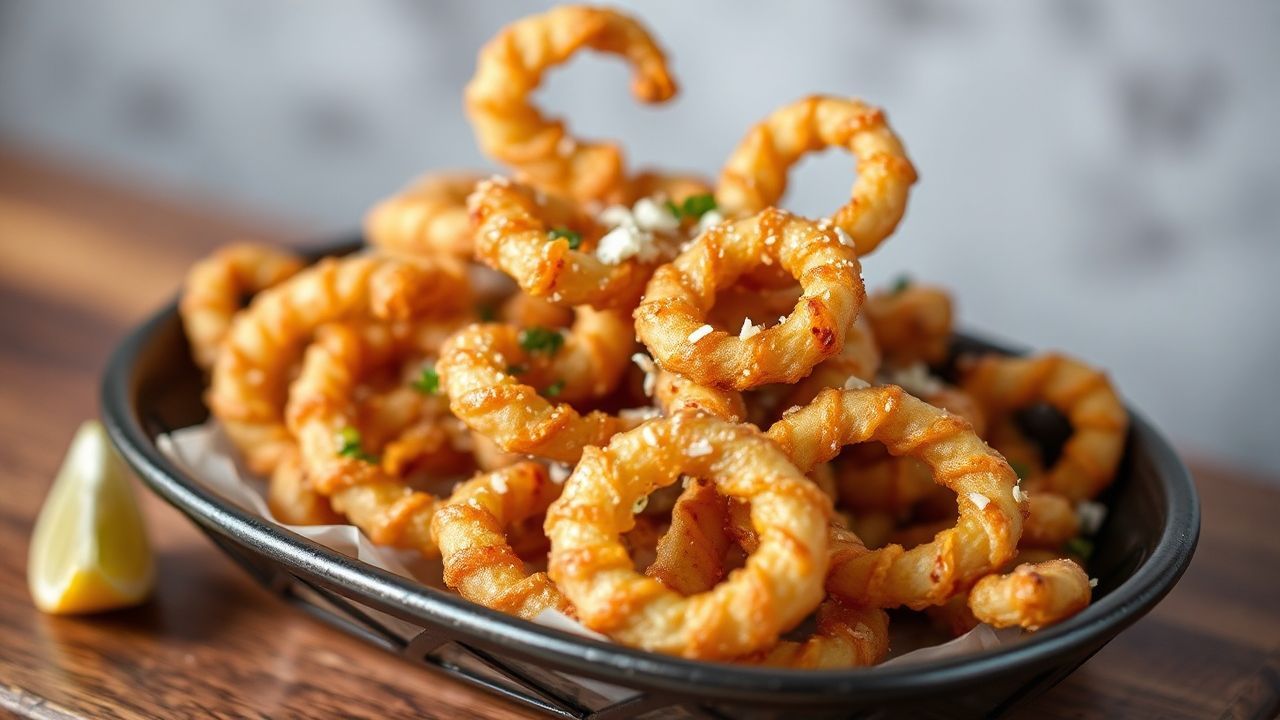
There’s real worldwide joy in the first crispy fried calamari crunch—the moment golden rings meet an eager palate. This simple appetizer depends on more than taste. It needs control of batter chemistry, oil heat, and timing.
- Prep and Cook Time
- Yield and Difficulty
- Ingredients for Crispy Fried Calamari
- Instructions: How to Get Crunchy, Golden Texture
- 1) Prepare the Calamari
- 2) Make the Batter
- 3) Heat the Oil to the Right Temperature
- 4) Batter and Fry in Small Batches
- 5) Drain and Season Immediately
- 6) Prepare the Dipping Sauce
- 7) Serve Right Away for Maximum Crunch
- Tips for Success (Crispy Fried Calamari)
- Why the Coating Turns Crunchy: The Science in Plain Terms
- Flavor Boosts: Dips, Garnishes, and Sides
- Nutritional Snapshot (Per 4 oz Serving)
- Q&A: Crispy Fried Calamari
- What makes crispy fried calamari so irresistible?
- Why do I get soggy fried calamari even when I fry it “hot”?
- Can I use frozen calamari for crispy fried calamari?
- What oil temperature should I aim for?
- How do I stop calamari from turning rubbery?
- Concluding Remarks
- Dry squid well to stop steam that ruins crispness.
- Cold batter helps create a lighter, crisp crust.
- Stable oil at 350°F/175°C keeps coating crisp, not greasy.
- Fry in small batches so temperature doesn’t collapse.
Behind every restaurant-style bite, there’s a clear process: build a thin, structured coating; fry fast at a predictable temperature; and serve immediately. If you follow the steps below, you’ll get rings that crackle on the outside and stay tender inside.
Use this guide whether you cook for family or you want repeatable results for parties. You’ll see what matters, why it matters, and how to fix common problems fast.
Prep and Cook Time
Good frying starts before the pan heats. Plan your prep so the batter stays cold and the oil reaches temperature before you coat.
Planning: 15 minutes
Cooking: 6–8 minutes
Total time: 21–23 minutes
Yield and Difficulty
This recipe makes enough for 4 servings as an appetizer or light entrée. You can scale it, but keep batch size steady for consistent texture.
Difficulty: Medium. You control crispness with temperature, moisture control, and timing.
Ingredients for Crispy Fried Calamari
Start with fresh, cleaned calamari rings when possible. Then build a coating that uses starch for crisp structure and flour for color and body.
For the science-friendly basics, use cornstarch and flour as your core. For tenderness, keep cooking quick and avoid overfrying.
- 1 lb fresh calamari rings, cleaned and patted dry
- 1 cup all-purpose flour, sifted
- 1/2 cup cornstarch
- 1 tsp baking powder
- 1 tsp smoked paprika
- 1 tsp sea salt, plus extra for finishing
- 1/2 tsp freshly cracked black pepper
- 1 cup cold sparkling water (for a light batter)
- Vegetable oil for frying (about 4 cups)
- Fresh lemon wedges, for serving
Dipping sauce: this bright, creamy dip pairs best when you keep it simple and balanced.
- 1/2 cup mayonnaise
- 1 tbsp fresh lemon juice
- 1 garlic clove, minced
- 1 tsp smoked paprika
- Pinch of cayenne (optional)
- Salt and pepper to taste
Instructions: How to Get Crunchy, Golden Texture
Follow these steps in order. The goal is to reduce moisture, build a thin coating, and fry at a steady heat.
When you manage each variable, the batter sets fast and forms that signature crunchy layer.
1) Prepare the Calamari
Rinse squid rings under cold water and pat them dry with paper towels. Moisture adds steam in the fryer, and steam softens batter into a coating that turns chewy.
If rings feel wet to the touch, pat again. Then keep them aside while you mix batter so the drying time works for you.
2) Make the Batter
In a bowl, whisk flour, cornstarch, baking powder, smoked paprika, salt, and pepper. Then add cold sparkling water gradually and whisk until the batter coats the back of a spoon.
Keep batter chilled until frying. Carbonation from sparkling water supports early texture formation, and baking powder helps lift the coating as it hits oil.
3) Heat the Oil to the Right Temperature
Pour oil into a heavy pot or deep fryer and heat to 350°F (175°C). Use a thermometer for accuracy because small temperature swings change texture fast.
Oil at the right range helps the coating set quickly, so you get a crisp exterior instead of a greasy one. For background on cooking temperatures and frying behavior, see frying on Wikipedia.
4) Batter and Fry in Small Batches
Coat calamari rings in batter a few handfuls at a time. Let excess batter drip back into the bowl so the coating stays thin and crisp.
Fry 2–3 minutes per batch until golden and crisp. Overcrowding drops oil temperature and increases oil absorption, which kills crunch.
TIP
💡 Expert Insight
Expert Insight: For the crispiest results, aim for a thin batter layer—thick batter traps moisture and delays crisp setting. If your batter seems too thick, whisk in 1–2 tablespoons more cold sparkling water.
5) Drain and Season Immediately
Lift rings with a slotted spoon and drain on a wire rack if you have one. Avoid piling on paper towels only; air flow helps the coating firm up.
Sprinkle extra sea salt right away while the coating is still hot. This small step boosts flavor without affecting texture.
6) Prepare the Dipping Sauce
Whisk mayonnaise, lemon juice, garlic, smoked paprika, and cayenne. Add salt and pepper to taste, then taste once more for balance.
Keep sauce chilled until serving. Cooling the dip firms its texture and sharpens the lemon flavor against fried richness.
7) Serve Right Away for Maximum Crunch
Plate immediately with lemon wedges. Crispy coatings soften as steam moves through the crust, so serve fast after frying.
Offer small batches to guests as you cook, especially for parties. That timing alone often makes the biggest difference in crunch quality.
Pro-Caution
⚠️ Pro-Caution
Pro-Caution: Don’t rest battered rings on a counter while you wait for the oil to heat. Batter can warm and thicken on the squid surface, and the crust may end up less crisp.
Tips for Success (Crispy Fried Calamari)
Small changes produce big texture shifts. Use the checklist below to troubleshoot your next batch.
Each tip targets a known failure mode: sogginess, oiliness, uneven browning, or rubbery squid.
- Dry thoroughly: Pat squid until it feels dry, not tacky.
- Chilled batter matters: Cold batter holds bubbles longer and fries faster.
- Monitor oil temperature: Too cool = greasy; too hot = burnt coating.
- Small batches: Fry in limited amounts so heat stays stable.
- Customize dips: Swap some mayo for Greek yogurt if you want a tangier dip.
- Make-ahead sauce: Mix sauce up to 24 hours ahead and keep chilled.
Why the Coating Turns Crunchy: The Science in Plain Terms
Crunch comes from structure plus quick setting. Your flour and starch build a light framework that hardens when it contacts hot oil.
For more on starch behavior, review starch and how it changes with heat. That same principle explains why cornstarch improves snap in fried coatings.
Temperature and Timing: The Crisp Window
Squid cooks fast. Overcooking turns it tough because proteins tighten as heat continues. Keep frying time tight so the outside crisps while the inside stays tender.
Also, oil temperature sets the pace for batter dehydration. Stable heat helps the coating set quickly, so less oil soaks in. If you want more general background on heat transfer, see thermal conductivity.
Why Dryness Is Non-Negotiable
Water inside the squid and on its surface becomes steam in the fryer. Steam disrupts the coating’s ability to harden into a crisp shell.
That’s why drying matters more than most home cooks expect. You’ll see the difference within minutes: drier rings brown faster and stay crisp longer.
Flavor Boosts: Dips, Garnishes, and Sides
Crispy fried calamari tastes best when you pair it with bright and savory flavors. Lemon cuts richness, and smoked paprika builds a warm, roasted note.
Serve with lemon wedges plus a dip that matches your spice level. That contrast makes each bite feel lighter even though the coating is rich.
Classic Pairings That Work
Lemon aioli or a garlic mayo keeps flavor creamy and balanced. For a tang-forward approach, add more lemon juice and a pinch of salt until the sauce tastes sharp.
If you prefer a Mediterranean direction, pair with a simple arugula salad or tzatziki. For a general reference on yogurt-based dips, see tzatziki.
Plating for Maximum Enjoyment
Use a platter that lets air reach the fried rings. Don’t stack high. Air exposure helps the coating stay crisp.
Garnish with parsley for color and lemon for aroma. That visual and flavor contrast improves perceived freshness and makes the dish feel “restaurant ready.”
Nutritional Snapshot (Per 4 oz Serving)
These values depend on oil type and absorption, but this gives a realistic baseline for planning.
For deeper nutrition context on fats and calories, see calories.
| nutrient | Per Serving (4 oz) |
|---|---|
| Calories | 320 kcal |
| Protein | 25 g |
| Carbohydrates | 18 g |
| Fat | 15 g |
Q&A: Crispy Fried Calamari
What makes crispy fried calamari so irresistible?
It’s the contrast: a thin, crisp crust outside and tender squid inside. That texture comes from starch structure plus fast frying at a steady oil temperature.
When you dry squid well and keep batter cold, you reduce steam and support a crunchy set.
Why do I get soggy fried calamari even when I fry it “hot”?
Soggy texture usually means moisture in the squid or coating. If squid rings feel wet, steam forms and softens the crust.
It can also happen if you overcrowd the pot. Crowding lowers oil temperature, which increases oil absorption and delays crisp setting.
Can I use frozen calamari for crispy fried calamari?
Yes, but thaw fully and dry extremely well. Frozen squid holds extra surface moisture, so you must pat thoroughly before battering.
Also, fry in smaller batches so the oil recovers quickly after each drop.
What oil temperature should I aim for?
Target 350°F (175°C) as your starting point. That range supports a fast crust set and keeps cook time short.
If your coating browns too fast, reduce heat slightly. If it stays pale, raise heat a few degrees.
How do I stop calamari from turning rubbery?
Cook in short bursts and remove rings as soon as they turn golden and crisp. Calamari cooks quickly; lingering in hot oil keeps tightening proteins.
Use a thermometer and batch size control so you don’t need long frying times to “make sure.”
Concluding Remarks
Crispy fried calamari is both craft and repeatable technique. You earn crunch by controlling moisture, keeping batter cold, and frying at a stable temperature.
Next time you cook, focus on the process rather than luck. Dry well, fry in small batches, and serve right away—then each bite should crackle, not soften.
See also: crispy fried calamari