
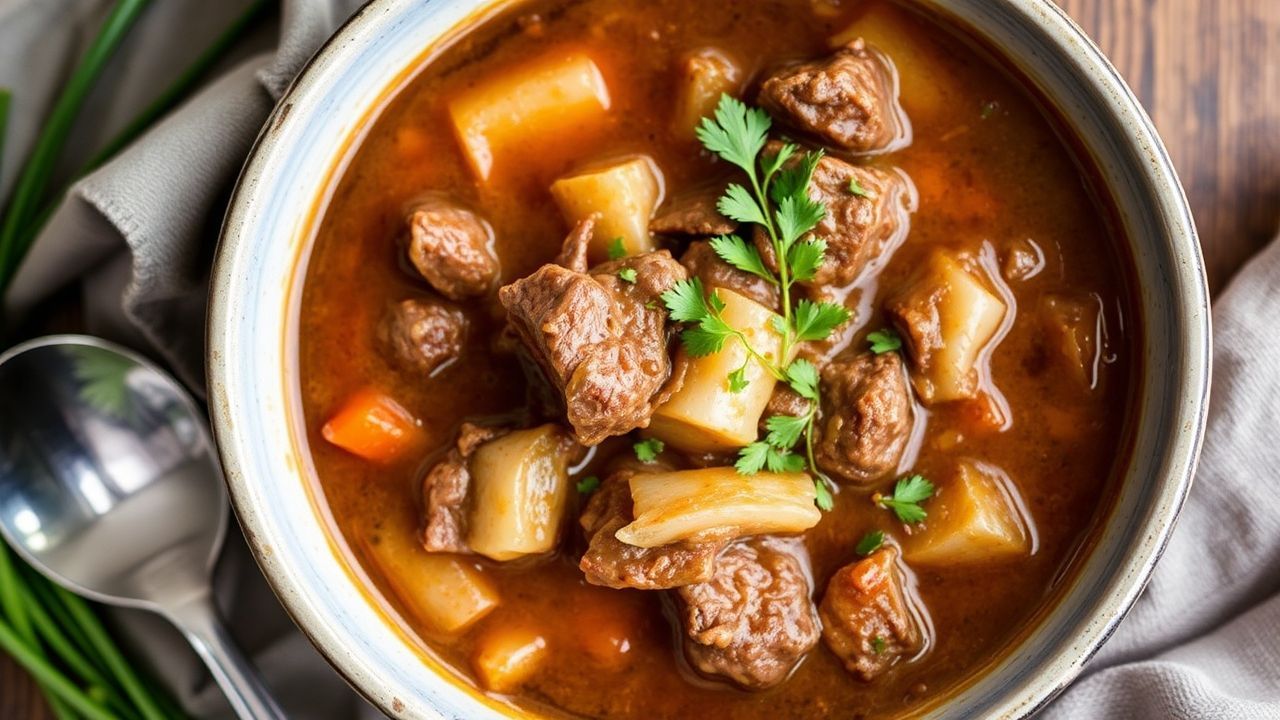
When you want comfort food that feels slow-cooked and deeply savory, hearty onion beef stew without beer delivers the same cozy satisfaction—minus the alcohol. Traditional versions often use beer for body and a slight bitterness. Here, you get a rich, rounded taste by leaning on caramelized onions, browned beef, and a carefully chosen non-beer liquid.
At a Glance
- Flavor depth without beer: caramelized onions + browned beef create natural complexity.
- Best swap: robust black tea mimics beer-like tannins in a more gentle way.
- Texture that holds: low simmer time breaks down chuck into tender slices.
- Optional thickening: flour, cornstarch slurry, or veggie puree works well.
This stew builds flavor in layers. First, you brown the beef for a deep crust. Next, you cook onions until they turn sweet, silky, and golden. Then you deglaze and simmer so the sauce clings to every bite.
If you care about taste and portion satisfaction, the method matters more than the ingredient list. You don’t need beer to create a bold stew. You need strong browning, steady heat, and a liquid that carries flavor.
Why Beer-Free Still Tastes Like “Real Stew”
Beer often adds malt sweetness, acidity, and tannins. When you skip it, the risk is a flat sauce. You can avoid that by replacing each job beer normally does.
For sweetness and body, use long caramelization of onions. For deglazing and browned-bit pickup, use hot tea or stock. For brightness, finish with a small amount of tomato paste and adjust with salt, not sugar. If you want background on how onions develop sweetness, see caramelization.
Also, beef stew gets its heart from collagen breakdown. Chuck contains connective tissue that melts during a long simmer. That’s why this recipe uses chuck and cooks patiently, which aligns with how stews are built around slow cooking.
What to Use Instead of Beer
Choose a non-alcoholic liquid that brings both flavor and a little tannic character. Robust black tea works because it contains natural compounds similar in “mouth feel” to some beer styles, while staying drink-friendly for kids and weekday meals.
You can also use low-sodium beef stock, then add depth with tomato paste and herbs. If you want to understand what makes tannins and tea-like bitterness feel balanced, review tannins. Use less and taste as you go, so the stew stays savory, not harsh.
Once you know the “why,” the “how” becomes simple. You’ll still brown meat, caramelize onions, and simmer low and slow. The stew will taste complete because you’re building the same flavor structure in a different way.
Ingredients for Hearty Onion Beef Stew Without Beer
This list focuses on what creates depth: browned beef, sweet onions, and a rich cooking liquid. Keep the onions fresh and slice them evenly for consistent caramelization.
For beef, chuck offers the best payoff because it breaks down into tender pieces. If you want a quick refresher on cuts, beef cuts helps explain why tougher cuts excel in long moist cooking.
- 2 lbs beef chuck, trimmed and cut into 1 ½-inch cubes
- 3 large yellow onions, thinly sliced
- 4 cloves garlic, minced
- 2 tablespoons tomato paste
- 4 cups beef stock, preferably homemade or low sodium
- 1 cup strong brewed black tea (beer alternative)
- 2 tablespoons olive oil
- 1 large carrot, peeled and diced
- 2 stalks celery, finely chopped
- 1 bay leaf
- 1 teaspoon dried thyme
- Salt and freshly ground black pepper, to taste
- 2 tablespoons all-purpose flour (optional, for thickening)
- Fresh parsley, chopped, for garnish
Pro Flavor Add-Ons (Optional)
If you like deeper savory notes, add a small splash of Worcestershire sauce during the final 15 minutes. Keep it modest so the stew tastes balanced, not salty.
For extra aroma, you can add a pinch of smoked paprika. If you want the science behind how spices change flavor perception, explore spices. Don’t overdo it; thyme and bay leaf already provide a classic backbone.
Prep and Cook Time
Plan for slow cooking. Most of the time comes from simmering, not hands-on work.
- Readiness: 20 minutes
- Cooking: 2 hours 15 minutes
- Total Time: 2 hours 35 minutes
This timing works well for dinner planning. It also improves flavor because the stew rests and thickens slightly as it cools.
Yield and Difficulty
This recipe makes enough for a family meal and leftovers. Leftovers taste even better the next day because flavors meld over time.
Yield: Serves 6 hearty portions. Difficulty: Medium—simple steps, but you must respect caramelization time and simmer time.
If you want more context on how flavors develop through time, see flavor. Time doesn’t magically add taste; it allows chemical reactions and seasoning distribution to reach a steady balance.
Instructions: Step-by-Step Beer-Free Method
Follow this order for the best results. Browning comes first, then caramelized onions, then deglazing, then slow simmering.
Because the stew depends on heat control, keep a Dutch oven or heavy pot ready. Heavy cookware helps distribute heat evenly and prevents scorching.
- Prepare the beef: Pat the beef cubes dry with paper towels. Season generously with salt and black pepper to support browning.
- Brown the beef: Heat 1 tablespoon olive oil in a large Dutch oven over medium-high heat. Sear beef in batches for 3-4 minutes per side, until deep golden crust forms. Transfer to a plate.
- Caramelize the onions: Reduce to medium heat. Add remaining olive oil and sliced onions. Cook 20-25 minutes, stirring often, until onions turn deep golden and soft.
- Build savory base: Stir in garlic and tomato paste. Cook 1-2 minutes until fragrant. If using flour for thickening, sprinkle it in and stir to coat.
- Deglaze with black tea: Pour in the hot brewed tea. Scrape the bottom to lift browned bits. Cook 1 minute to reduce slightly.
- Simmer to tenderness: Return beef to the pot. Add carrots, celery, bay leaf, and thyme. Pour in beef stock and bring to a gentle simmer. Cover and cook on low for 2 to 2½ hours, until beef is tender.
- Final seasoning and finish: Remove bay leaf. Taste and adjust salt and pepper. If you want extra richness, stir in a small knob of butter off heat.
💡 Expert Insight
Expert Insight: Carb Check for Thickening
[TIP]Expert Insight: If the stew looks thin after 2 hours, don’t rush to add more liquid. Let it simmer uncovered for 10-15 minutes, then whisk in a cornstarch slurry (1 tablespoon cornstarch + 2 tablespoons cold water). This thickens without dulling the onion sweetness.
[TIP]Expert Insight: If the stew looks thin after 2 hours, don’t rush to add more liquid. Let it simmer uncovered for 10-15 minutes, then whisk in a cornstarch slurry (1 tablespoon cornstarch + 2 tablespoons cold water). This thickens without dulling the onion sweetness.
Also, keep stirring gently near the edges. A thick stew can catch if the heat runs too high.
For thickening alternatives, you can puree some cooked carrots and stir them in. That approach thickens and adds natural sweetness.
Tips for Success (No Beer Needed)
Small changes decide whether the stew tastes rich or watery. Use these checks as you cook.
- Onion caramelization: Cook slowly. High heat can burn the edges before the onions turn sweet.
- Choose the right beef cut: Use chuck or stew meat with marbling. It breaks down into tender strands.
- Tea alternative: Use robust black tea like Assam-style. Avoid flavored or herbal tea blends.
- Make-ahead: Chill overnight, then reheat gently. The sauce thickens and flavors blend.
- Thickening options: Use flour, cornstarch slurry, or carrot puree. Pick one and test early.
If you want to understand why low-moist cooking works for tough cuts, review collagen. The breakdown of collagen contributes to that silky stew mouthfeel.
Serving Suggestions
Serve this hearty onion beef stew without beer hot, thick, and saucy. The best pairing lets the gravy shine.
Try it over creamy mashed potatoes or buttered egg noodles. For extra texture, add crusty bread on the side so you can scoop every last spoonful.
To balance richness, serve with pickled vegetables or a crisp green salad. If you’d like a quick guide on what “sour” and “acid” do to balance rich meals, see umami for savory balance principles.
Storage and Reheating
Store leftovers in a covered container in the fridge for up to 3-4 days. For longer storage, freeze in portions so you reheat only what you need.
Reheat on the stovetop over low heat. Stir often and add a splash of stock if the sauce thickened too much while cooling.
Nutritional Snapshot (Estimate)
Nutrition varies with beef fat level, oil amount, and thickening method. Use this as a practical estimate for meal planning.
| Nutrient | Per Serving |
|---|---|
| Calories | ~430 kcal |
| Protein | ~38 g |
| Carbohydrates | ~15 g |
| Fat | ~18 g |
FAQ: Hearty Onion Beef Stew Without Beer
What liquid can I use instead of beer in beef stew?
Use strong black tea for a beer-like tannic feel, or use low-sodium beef stock plus tomato paste for body. Then simmer low so the sauce thickens and tastes rounded.
Will the stew taste bitter if I use tea?
It won’t if you use robust black tea and keep the simmer gentle. Taste after simmering and adjust with salt. If it feels too intense, add a bit more stock and simmer 10 minutes.
How do caramelized onions change the flavor of stew?
Caramelized onions develop natural sweetness and deeper savory notes. Slow cooking breaks down onion sugars and adds a rounded flavor that replaces some beer-style complexity.
What’s the best cut of beef for this recipe?
Chuck is the top choice because it has enough connective tissue to break down during the long simmer. That breakdown creates tenderness and a thicker, more satisfying gravy.
How can I thicken the stew without flour?
Simmer uncovered to reduce first, then use a cornstarch slurry or stir in pureed cooked carrots. Both options thicken without making the gravy taste pasty.
See also: onion beef stew