

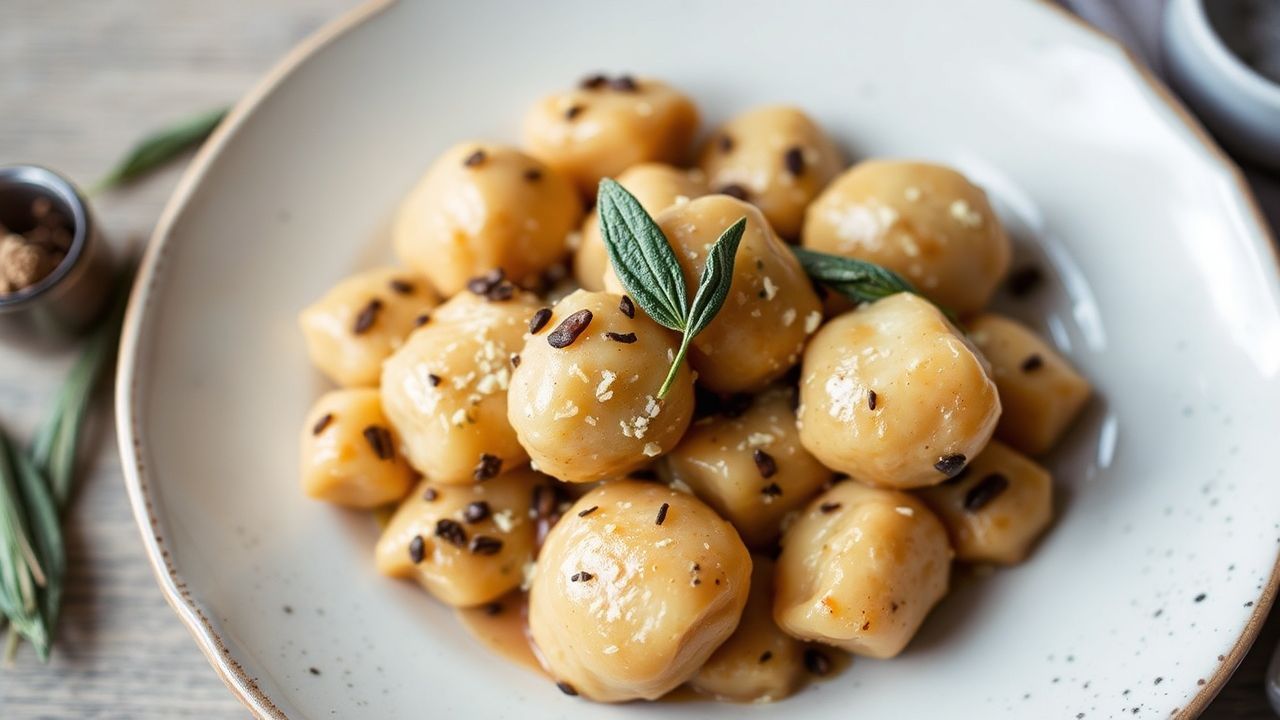
There’s something undeniably magical about the humble sweet potato transforming into pillowy, melt-in-your-mouth gnocchi. This fluffy homemade sweet potato gnocchi recipe pairs that natural sweetness with browned butter and fragrant sage for a warm, restaurant-style finish.
- Ingredients for Fluffy Sweet Potato Gnocchi
- Prep and Cook Time
- Roasting Sweet Potatoes for Pillowy Texture
- Make the Gnocchi Dough and Shape
- Boil and Toss: The Timing That Makes or Breaks It
- Sage Brown Butter Sauce (Nutty, Not Burnt)
- Tips for Success (Fluff, Shape, and Flavor)
- Serving Suggestions and Creative Twists
- Nutritional Snapshot
- FAQ
- What makes sweet potato gnocchi different from traditional potato gnocchi?
- How do I achieve perfectly fluffy homemade sweet potato gnocchi?
- Why is sage brown butter the ideal sauce?
- Can I prepare sweet potato gnocchi in advance?
- What’s the best way to prevent sticking while boiling?
- Concluding Remarks
At a Glance
- Roast, don’t boil to control moisture and keep gnocchi light.
- Use the right flour amount so the dough stays soft, not dense.
- Brown the butter gently for nutty flavor without bitterness.
- Cook fast: gnocchi float, then cook about 30 more seconds.
In the sections ahead, you’ll learn how to craft tender pillows from scratch. You’ll also get practical cues for texture, timing, and sauce pairing so your gnocchi hold their shape and taste luxurious.
Fluffy homemade sweet potato gnocchi in sage brown butter starts with selecting sweet potatoes with dry, sweet flesh. When you roast them thoroughly, you remove excess water and concentrate starch. That matters because gnocchi dough needs enough starch to bind, but not so much moisture that the dough turns heavy.
Use a dry, orange-fleshed variety when possible. Sweet potatoes differ in water content, and that difference shows up in your dough. For background on starch behavior in cooking, see starch.
Ingredients for Fluffy Sweet Potato Gnocchi
Gather your ingredients first so you can work with calm, steady timing. Gnocchi dough gets easier when you measure flour accurately and prepare your egg and seasonings before you start mashing.
Here’s what you need for about 4 servings (roughly 40 gnocchi pieces).
- 2 large sweet potatoes (about 2 pounds), peeled and cubed
- 1½ to 2 cups all-purpose flour, sifted, plus extra for dusting
- 1 large egg, beaten
- ½ teaspoon salt
For the sage brown butter sauce, use simple, high-flavor ingredients. Fresh herbs give you aroma, and unsalted butter lets you control salinity.
- 4 tablespoons unsalted butter
- 10 fresh sage leaves
- Freshly ground black pepper, to taste
Prep and Cook Time
Good gnocchi comes from good timing. Plan for roasting, cooling, shaping, and quick boiling so the dough stays cohesive.
- Preparation: 30 minutes
- Cook Time: 10 minutes
- Total Time: 40 minutes
Roasting Sweet Potatoes for Pillowy Texture
Roast the sweet potatoes at high heat so they dry out as they soften. Moisture control keeps your dough from becoming gummy and hard to shape.
Place the cubes on a parchment-lined baking sheet. Roast at 400°F (200°C) for 25–30 minutes until very tender. After roasting, the surface dries slightly and the inside becomes less watery.
Starch and moisture work together during cooking. If you want a clear science overview, read starch gelatinization.
Mash thoroughly, then cool completely
Mash until smooth with no large lumps. Then cool the mash fully before adding egg. If the mash stays hot, it can partially cook the egg and create uneven dough texture.
Cool until the mash feels warm to the touch, not hot. That simple step protects your structure.
Make the Gnocchi Dough and Shape
Build the dough gently. You want a soft mixture that holds together when pressed but still feels tender in your hands.
Stir the beaten egg and salt into the cooled sweet potato mash. Add flour gradually, then knead just until the dough forms. Stop when it feels slightly sticky but manageable.
How much flour is enough?
Flour absorbs moisture and adds structure. Too little flour makes gnocchi spread, and too much flour can create dense bites.
Work in small increments. If your dough sticks heavily to your hands, add flour 1 tablespoon at a time. If it feels dry and crumbly, you can fix it by using a small amount of mashed potato or a lighter hand during mixing next time.
Ridges help sauce cling
Divide the dough into four portions. Roll each into a rope about ¾ inch thick, then cut into 1-inch pieces.
Roll each piece gently over a fork or gnocchi board to form ridges. Those grooves trap sage brown butter so every bite tastes fully coated.
Boil and Toss: The Timing That Makes or Breaks It
Boil gnocchi in well-salted water. Use a large pot so the water stays at a steady simmer when you add the pieces.
Drop gnocchi in batches and stir gently right after adding. When they float, cook about 30 more seconds, then transfer them to a warm plate or straight into the skillet with sauce.
Floating occurs because the dumplings heat and trap steam and gas. For a useful reference on bubbles and phase changes, see boiling point.
Sage Brown Butter Sauce (Nutty, Not Burnt)
Sage brown butter gives this dish its signature depth. It’s a simple sauce, but browning butter requires focus because the window from golden to burnt is short.
Melt butter in a skillet over medium heat. Add sage leaves and cook until the butter turns golden and smells nutty, about 3–4 minutes. Swirl the pan as it browns so the solids color evenly.
Season at the end
Season with black pepper after browning. Pepper sharpens aroma and makes the butter taste more vivid.
Toss the boiled gnocchi in the skillet until coated. Spoon extra sauce over the top, then serve immediately for the best texture.
Tips for Success (Fluff, Shape, and Flavor)
These details prevent common gnocchi problems like stickiness, gummy centers, and bland flavor.
Follow them closely, and your gnocchi will feel tender while still holding their shape in the sauce.
- Dry sweet potatoes are key: Avoid boiling because it adds water. Roast to reduce moisture and concentrate flavor.
- Flour adjustment: Your dough should feel barely sticky. Add flour slowly to keep gnocchi light.
- Work gently: Over-kneading can make dumplings chewy. Knead only until smooth and cohesive.
- Make ahead: Freeze uncooked gnocchi on a parchment-lined tray, then transfer to a bag. Cook from frozen with about 1 extra minute.
If you want optional depth, stir a small amount of finely grated Parmesan into the dough. Use it sparingly so the dough stays manageable.
Pairing ideas that taste “complete”
This gnocchi stands up to bold sides without losing its delicate texture. Choose sauces and toppings that balance fat and brightness.
Try sautéed mushrooms, roasted Brussels sprouts, or caramelized shallots. Finish with a squeeze of lemon zest or a drizzle of olive oil to lift the browned butter notes.
Serving Suggestions and Creative Twists
Serve your fluffy gnocchi with extra sage leaves and a light dusting of cheese if you like. Toasted nuts add crunch and contrast to the tender dumplings.
If you like a deeper herbal flavor, add a few extra sage leaves to the pan at the end and toss for 20–30 seconds. That keeps the herb bright.
For a quick reference on butter’s flavor components and why browning changes taste, see Maillard reaction.
Nutritional Snapshot
Nutrient values vary by sweet potato size, flour amount, and how much butter you use for tossing. Use this as a baseline for your planning.
| Nutrient | Per Serving (4 Servings) |
|---|---|
| Calories | 320 |
| Protein | 6g |
| Carbohydrates | 45g |
| Fat | 10g |
FAQ
If you’ve made gnocchi before, you know that small choices change the outcome. These answers focus on the most common questions for sweet potato gnocchi and sage brown butter.
What makes sweet potato gnocchi different from traditional potato gnocchi?
Sweet potato gnocchi has a naturally sweet, earthy flavor and a softer, creamier bite. Because sweet potatoes often hold different moisture and starch profiles than white potatoes, the dough behaves a bit differently during shaping and boiling.
That difference is why roasting and flour adjustment matter. With good moisture control, you get a tender dumpling that still holds ridges for sauce.
How do I achieve perfectly fluffy homemade sweet potato gnocchi?
Roast until very tender, cool completely, then add flour gradually. Aim for a dough that holds shape but stays soft and slightly tacky.
Also keep handling gentle. When you knead minimally and shape without pressing too hard, the dough stays light and cooks quickly.
Why is sage brown butter the ideal sauce?
Sage brown butter brings nutty, warm flavor and aromatic herbal notes. The browned butter solids add depth, while sage adds a savory fragrance that matches the gnocchi’s natural sweetness.
If your butter smells sharp or burnt, lower the heat next time. Browning should taste nutty, not bitter.
Can I prepare sweet potato gnocchi in advance?
Yes. Shape the gnocchi, then refrigerate for up to 24 hours if you plan to boil soon. For longer storage, freeze them in a single layer first, then transfer to a sealed bag.
Cook from frozen by adding a minute to the boiling time. Stir gently so they don’t stick together.
What’s the best way to prevent sticking while boiling?
Use a large pot with plenty of water. Add gnocchi in batches so the water returns to a steady simmer quickly.
Stir right after adding the dumplings, and cook until they float plus about 30 seconds. Then transfer immediately and toss with sauce.
Concluding Remarks
When the browned butter melts over each fluffy dumpling, the dish turns into something special. Sweet potato gnocchi stays tender, and the sage adds perfume with every forkful.
With careful moisture control, gentle dough handling, and a quick toss in hot sauce, you get restaurant-level results at home. Make this once, then refine your flour amount and timing until it matches your kitchen perfectly.
For extra background on vegetable cooking and water loss, see vegetables.
See also: sweet potato gnocchi