

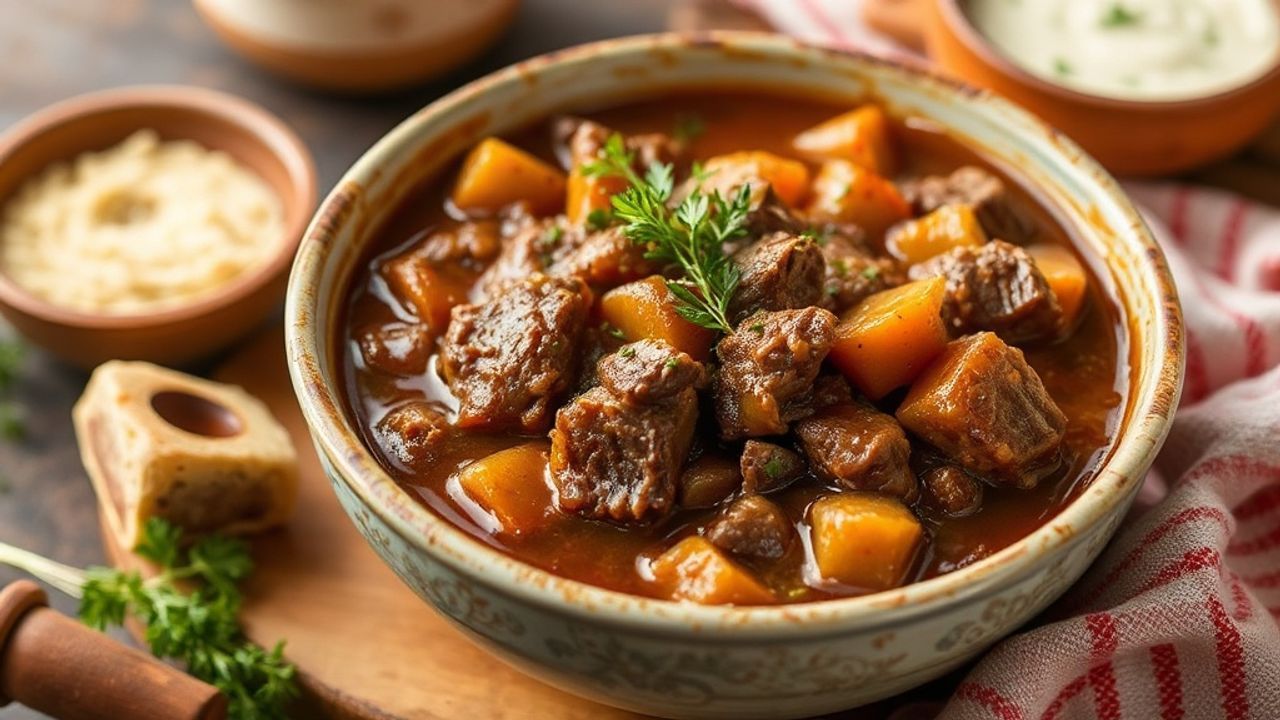
beef stew offers concentrated flavor from long, low heat and simple ingredients. A properly made beef stew delivers tender meat, a glossy sauce, and vegetables that hold their texture. This recipe explains professional techniques, timing, and small adjustments that yield consistent results every time.
- Key takeaway: Use well-marbled chuck and brown in batches for maximum flavor.
- Technique focus: Slow simmering at low heat converts collagen to gelatin for body.
- Finish smart: Add potatoes late or use a slurry to control thickness precisely.
Prep and Cook Time for beef stew
Plan at least 3 to 4 hours for a classic slow-simmered beef stew. Active prep is short; most time is hands-off while collagen breaks down.
Readiness tasks take around 20 minutes. The cooking window varies: 2.5 to 3.5 hours on the stove or 6–8 hours in a low-temperature slow cooker.
Yield and Difficulty: beef stew essentials
This recipe yields about six generous portions. It sits at a medium skill level: basic knife work, searing technique, and heat management matter most.
For reference, consult the general technique on stew to understand why low-and-slow methods produce superior texture.
Ingredients for Beef Stew
Assemble ingredients before you begin. Use quality beef, good stock, and aromatics to build depth; these elements transform during the simmer.
Ingredients (serves 6):
- 2 lbs beef chuck roast, cut into 1½-inch cubes
- 1½ cups all-purpose flour, seasoned with salt and black pepper
- 3 tbsp olive oil
- 1 large onion, diced
- 3 cloves garlic, minced
- 3 medium carrots, thick rounds
- 3 celery stalks, sliced
- 4 cups beef broth, low sodium recommended
- 1 cup dry red wine (optional)
- 2 cups Yukon Gold potatoes, peeled and cubed
- 2 bay leaves
- 1 tbsp tomato paste
- 1 tsp dried thyme or 2 tsp fresh
- 1 tsp dried rosemary, finely chopped
- Salt and freshly ground black pepper, to taste
- Chopped flat-leaf parsley, for garnish
Step-by-step Instructions for beef stew
1. Prepare the beef
Pat cubes dry to encourage browning. Toss in seasoned flour and shake off excess to avoid a gummy crust.
Dry meat browns more efficiently and builds the fond that flavors the sauce.
2. Brown the beef
Heat 2 tbsp oil in a heavy Dutch oven until shimmering. Sear beef in batches on medium-high heat until deeply browned on all sides.
Do not overcrowd the pan; crowded meat will steam instead of caramelize, losing flavor.
3. Sauté vegetables and aromatics
Lower heat to medium and add remaining oil if needed. Cook onion, carrot, and celery until softened and lightly caramelized, about 7 minutes.
Add garlic for the final minute to avoid bitterness. Caramelized vegetables add natural sweetness and complexity.
4. Build flavor
Stir in tomato paste and coat the vegetables; cook 2 minutes to remove raw acidity. Deglaze with red wine or a splash of broth, scraping the fond.
Reduce the liquid by half when using wine; this concentrates flavor without excess alcohol. This step is essential for a glossy, balanced sauce.
5. Combine and simmer
Return the beef to the pot with beef broth, potatoes, bay leaves, thyme, and rosemary. Bring to a gentle boil, then reduce to a slow simmer.
Cover the pot with the lid slightly ajar and maintain a gentle bubble for 2.5–3 hours. Check every 45 minutes and stir gently to prevent sticking.
6. Thicken and finish
If you prefer a thicker sauce, make a slurry of 1 tbsp cornstarch and 2 tbsp cold water, then whisk into simmering stew. Cook 3–5 minutes until glossy.
Alternatively, remove some cooked vegetables, mash them, and return to the pot for natural thickening without added starch.
Technique Notes and Pro Tips for beef stew
Choose beef with visible marbling; connective tissue converts to gelatin during long cooking and yields a rich mouthfeel. Chuck roast is the professional go-to.
Layering steps—sear, sauté vegetables, deglaze—creates multiple sources of flavor. Each layer contributes to the final depth rather than relying on heavy seasoning alone.
Consult the background on beef for why different cuts behave differently under prolonged heat. That context helps you select substitutions intelligently.
Tools and Alternatives
Use a heavy-bottomed Dutch oven for even heat. A slow cooker or pressure cooker are valid alternatives when time or hands-free cooking is required.
For slow-cooker adaptations, sear meat and sauté aromatics first, then transfer to the cooker. For pressure-cooker recipes, reduce liquid and follow appliance timing guidelines for tough cuts.
For a primer on low-temperature equipment, see the slow cooker entry.
Tips for Success with beef stew
Brown meat in batches and caramelize the mirepoix for a natural sweetness. Mirepoix—onion, carrot, celery—forms the aromatic backbone of the stew.
Find more on the classic vegetable base at the mirepoix page. Proper caramelization takes time but rewards with layered flavor.
Make-ahead advantage: stew often improves after a night in the fridge. Reheat gently over low heat to restore texture and sheen. Store in airtight containers and freeze portions for up to three months.
Serving Suggestions for beef stew
Serve beef stew in wide, shallow bowls to cool slightly and highlight the sauce. Garnish with chopped parsley for freshness and color contrast.
Pair with creamy mashed potatoes, buttered noodles, or a crusty loaf. For lighter balance, add a crisp salad with acid-driven vinaigrette to cut richness.
Nutrition Snapshot
Estimated per serving: approximately 450 kcal, 38 g protein, 28 g carbohydrates, and 18 g fat. Values vary by cut of beef and additions like butter or oil.
To lower calories, trim fat before searing and use lower-sodium broth. Replace potatoes with root vegetables for variation in starch and fiber.
Related recipes and internal resources
Explore additional techniques on our site: check slow-cooking guides for timing adjustments and pressure-cooker conversions at /recipes/slow-cooking.
Learn more about beef selection and butchery fundamentals at /recipes/beef-basics. These internal pages expand on practical skills referenced above.
FAQ
How do I get perfectly tender beef every time?
Use a tough, well-marbled cut and cook low and slow. Sear first to lock in flavor, then simmer at a gentle bubble until fork-tender. Patience converts collagen into gelatin, producing tenderness and body.
Can I skip the wine in beef stew?
Yes. Replace wine with additional beef broth and a splash of vinegar if you want acidity. Wine contributes complexity but is not essential for a successful stew.
When should I add potatoes so they don’t turn to mush?
Add potatoes in the last 45–60 minutes of cooking for tender but intact cubes. If you want the stew thicker, add potatoes earlier so they break down and release starch.
Can I finish beef stew ahead of time?
Absolutely. Refrigerate overnight to let flavors marry. Reheat gently over low heat and adjust seasoning before serving to freshen the profile.
Is beef stew suitable for freezing?
Yes. Cool completely, portion into airtight containers, and freeze up to three months. Thaw overnight in the refrigerator and reheat slowly to preserve texture.
See also: beef stew
- Prep and Cook Time for beef stew
- Yield and Difficulty: beef stew essentials
- Ingredients for Beef Stew
- Step-by-step Instructions for beef stew
- 1. Prepare the beef
- 2. Brown the beef
- 3. Sauté vegetables and aromatics
- 4. Build flavor
- 5. Combine and simmer
- 6. Thicken and finish
- Technique Notes and Pro Tips for beef stew
- Tools and Alternatives
- Tips for Success with beef stew
- Serving Suggestions for beef stew
- Nutrition Snapshot
- Related recipes and internal resources
- FAQ