

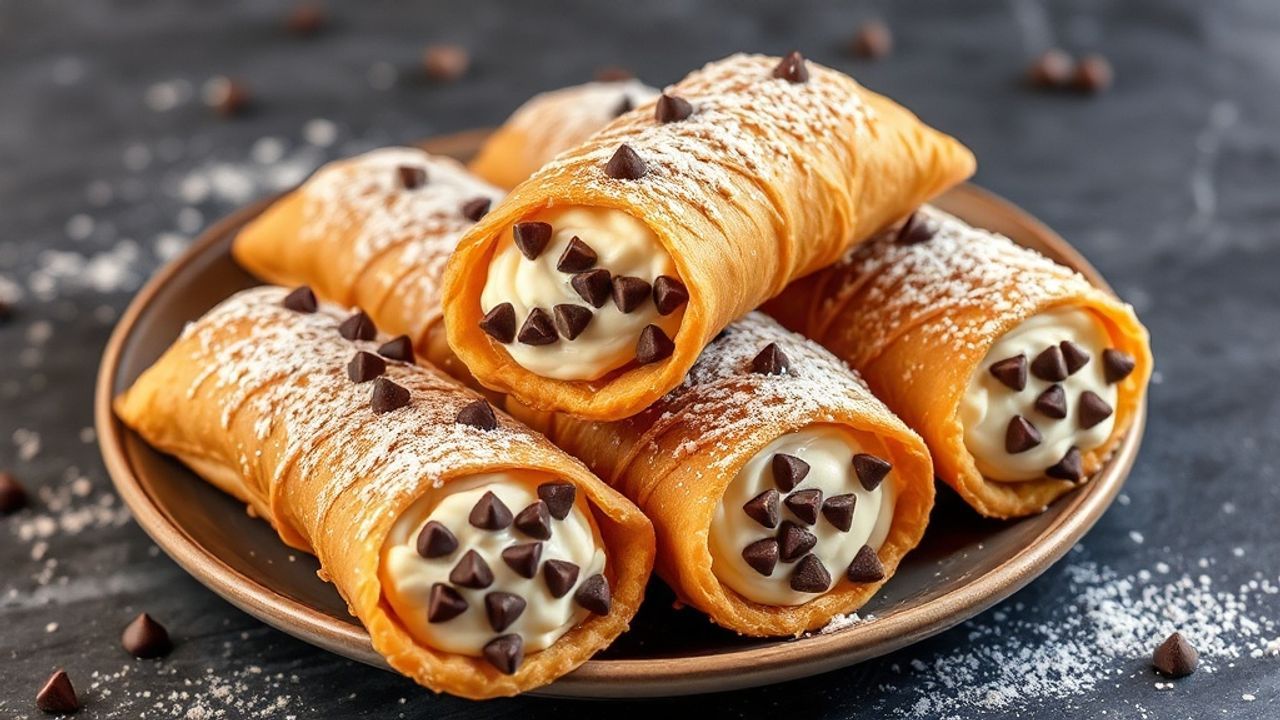
Decadent Cannoli with Ricotta and Chocolate Chips Delight
There is something undeniably magical about a well-made cannoli: a crisp, golden shell that gives way to a luscious ricotta filling studded with chocolate chips. Mastering cannoli improves texture control, frying technique, and flavor balance so every bite stays crunchy and creamy.
- Prep and Cook Time for Cannoli
- Yield and Difficulty for Cannoli
- Ingredients for Cannoli
- Instructions for Cannoli
- Chef’s Notes and Tips for Cannoli
- Serving Suggestions for Cannoli
- Nutrition and Storage for Cannoli
- Further Reading and Context for Cannoli
- FAQ
- What exactly is a cannoli?
- How should I drain ricotta for cannoli filling?
- Can I make cannoli shells ahead of time?
- Which chocolate chips work best in cannoli filling?
- Can I make cannoli gluten-free?
- Closing Remarks
- At a glance: crisp shells, well-drained ricotta, proper frying temp, fill just before serving.
- Small adjustments to dough hydration control shell toughness versus flakiness.
- Drain ricotta thoroughly to avoid soggy shells and sad textures.
- Use mini chocolate chips for even distribution and minimal moisture migration.
Prep and Cook Time for Cannoli
Planning and resting times set you up for success when making cannoli. Expect about 30 minutes active prep and a dough rest of one hour to relax gluten for an easy roll-out.
Frying is quick: shells take roughly 2–3 minutes per side at 350°F (175°C), so allocate an additional 15 minutes for batch frying and cooling. Total elapsed time is approximately 1 hour 45 minutes.
Yield and Difficulty for Cannoli
This recipe yields 12 classic cannoli ready to fill with ricotta cream. The count depends on shell diameter and dough thickness.
Difficulty: Medium. Expect some manual dexterity when rolling and wrapping shells on metal tubes, but guidance and patience make it straightforward.
Ingredients for Cannoli
Ingredients separate into two focused components: the shell dough and the ricotta filling. Each component needs precise handling to keep the final pastry crisp and flavorful.
Where appropriate I reference traditional elements from Sicilian cuisine and classic dairy sources like ricotta to keep technique authentic.
For the Shells
2 cups all-purpose flour, sifted; 1 tbsp granulated sugar; 1/2 tsp salt; 2 tbsp cold unsalted butter, cubed; 1 large egg; 1/2 cup dry white wine (Marsala or similar); vegetable oil for frying.
Wine tenderizes the dough and adds flavor; a dry fortified option like Marsala wine is traditional, but neutral dry white works if unavailable.
For the Ricotta Filling
2 cups well-drained whole-milk ricotta; 3/4 cup sifted powdered sugar; 1/2 tsp vanilla; 1/4 tsp ground cinnamon; 1/2 cup mini semi-sweet chocolate chips; zest of one orange (optional).
Drain ricotta thoroughly in a fine mesh to achieve a stable, pipeable filling that will not weep into the shell. Small chocolate chips disperse evenly without releasing excess fat.
Instructions for Cannoli
Follow a sequence: make dough, rest, roll thin, wrap on tubes, fry until golden, cool, prepare filling, and assemble right before serving. Each step preserves shell integrity and filling texture.
Work in small batches during frying and fill from both ends when assembling to reduce moisture migration into the shell interior.
Step-by-step
1. Prepare dough: Combine sifted flour, sugar, and salt. Cut in cold butter until the mixture resembles coarse crumbs, then add egg and wine gradually until a cohesive dough forms.
Transfer to a floured surface and knead lightly for 4–5 minutes until smooth. Wrap and refrigerate for at least one hour to relax gluten and ease rolling.
2. Roll and cut: Roll to about 1/8 inch thick and cut 4–5-inch circles. Wrap circles tightly around metal cannoli tubes and seal the edge with a dab of water or beaten egg.
3. Fry: Heat oil to 350°F (175°C). Fry shells in batches 2–3 minutes per side until golden. Drain on paper towels and cool fully before removing tubes to preserve shape.
4. Filling: Whisk drained ricotta with powdered sugar, vanilla, and cinnamon until smooth. Fold in mini chocolate chips and orange zest if using. Chill filling briefly to firm it for piping.
5. Assemble: Pipe filling into shells from both ends to coat interiors evenly. Garnish ends with extra chocolate chips or chopped pistachios for contrast.
Chef’s Notes and Tips for Cannoli
Small technical choices determine success: dough hydration, oil temperature control, and ricotta drainage all affect crispness and mouthfeel. Consistent technique prevents common problems like soggy shells.
Store unfilled shells airtight and fill within hours of serving. If you must prefill for transport, use slightly thicker shells and consume within a few hours for best texture.
Use mini chocolate chips for uniform distribution. Larger chunks create weak spots where moisture can collect, increasing sogginess risk.
Separate the TIP and WARNING blocks with clear paragraphs to respect assembly spacing and readability. Always let shells cool completely before sliding off tubes to avoid breakage.
Serving Suggestions for Cannoli
Serve chilled for a fresh contrast: the cool ricotta filling against the crisp shell highlights texture differences. Dust with powdered sugar and add a light drizzle of melted chocolate if desired.
Garnish with chopped pistachios or candied orange peel to amplify color and flavor. Pair with a small espresso or a sweet dessert wine for a classic finish.
Nutrition and Storage for Cannoli
Per serving (1 filled cannoli) the typical values hover near 280 kcal, 6 g protein, 30 g carbohydrates, and 12 g fat, depending on filling density and shell size. Adjustments to sugar and chocolate change totals linearly.
Leftover filling keeps refrigerated for up to 48 hours. Unfilled shells remain crisp in an airtight container at room temperature for up to a week. Assembled cannoli are best consumed within a few hours.
| Nutrient | Per Serving (1 cannoli) |
|---|---|
| Calories | 280 kcal |
| Protein | 6 g |
| Carbohydrates | 30 g |
| Fat | 12 g |
Further Reading and Context for Cannoli
Understanding the cultural background deepens technique: explore cannoli history and regional variations to see why the texture balance matters in traditional recipes.
Also consult references on ingredient provenance like the ricotta and regional sweets to align authenticity and modern adaptations.
FAQ
What exactly is a cannoli?
A cannoli is a Sicilian pastry consisting of a fried tube-shaped shell filled with a creamy, often sweetened ricotta mixture. The signature contrast between the crisp shell and smooth filling defines the pastry.
How should I drain ricotta for cannoli filling?
Drain ricotta in a fine mesh or cheesecloth-lined sieve placed over a bowl. Refrigerate overnight for best results to remove excess whey and achieve a pipeable consistency.
Can I make cannoli shells ahead of time?
Yes. Keep unfilled shells in an airtight container at room temperature for up to a week. Fill just before serving to preserve crispness.
Which chocolate chips work best in cannoli filling?
Mini semi-sweet chocolate chips distribute evenly and maintain structure inside the ricotta filling. Dark chocolate chips add depth if you want less sweetness.
Can I make cannoli gluten-free?
Yes. Use a high-quality gluten-free flour blend designed for pastry and monitor hydration carefully. Texture may differ slightly but the ricotta and chocolate profile remains satisfying.
Closing Remarks
The classic ricotta-and-chocolate-chip cannoli rewards precise technique and attention to moisture control. A good shell and properly drained ricotta create a memorable dessert every time.
Practice builds confidence: small adjustments to rolling thickness and frying time let you dial in the ideal crunch and a perfectly creamy filling. Enjoy the process and the delicious results.
See also: cannoli