

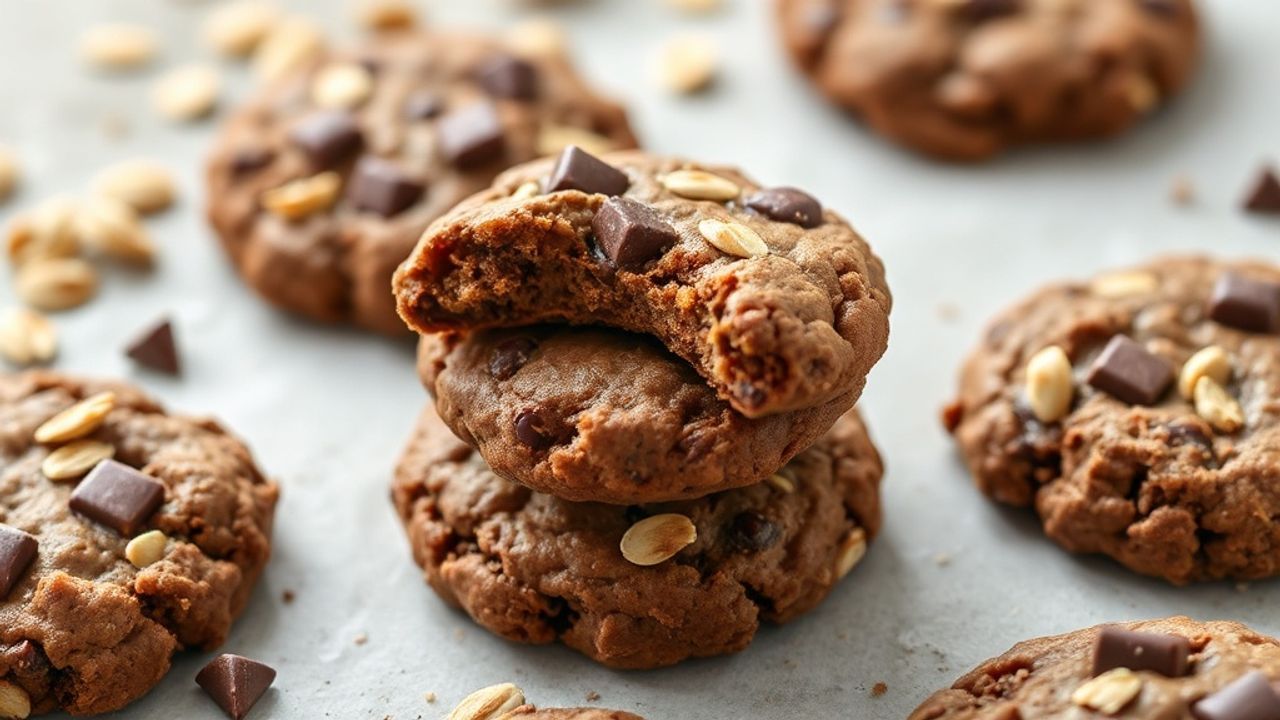
Chewy chocolate oatmeal cookies offer a satisfying balance of texture and nutrition that keeps home bakers returning to the recipe. This version focuses on controlling hydration, choosing the right oats and chocolate, and timing the bake for reliably soft centers and set edges.
- Why Chewy Chocolate Oatmeal Cookies Make a Smart Treat
- Chewy Chocolate Oatmeal Cookies: Prep, Timing, and Yield
- Chewy Chocolate Oatmeal Cookies Ingredients
- Step-by-Step Guide: Achieving Chewiness Every Time
- Customization and Superfood Add-Ins
- Chef’s Notes and Troubleshooting
- Serving Suggestions for Chewy Chocolate Oatmeal Cookies
- Nutrition Snapshot
- FAQ
- Key takeaway: Proper ingredient ratios create chewiness without sacrificing flavor.
- Key takeaway: Use rolled oats and a short bake to retain moisture in the center.
- Key takeaway: Dark chocolate improves antioxidant content and intensifies flavor.
Why Chewy Chocolate Oatmeal Cookies Make a Smart Treat
Chewy chocolate oatmeal cookies combine complex carbohydrates from oats with the satisfying fat and flavor of chocolate, creating a snack that fills and rewards. For bakers who want both nutrition and indulgence, this cookie format hits both goals without overreliance on refined sugar.
Oats supply soluble fiber that slows digestion and helps maintain fullness; you can read more about oats on Oat. Dark chocolate contributes flavonoids associated with antioxidant activity when used in moderate amounts; see Dark chocolate for details.
Chewy Chocolate Oatmeal Cookies: Prep, Timing, and Yield
Readiness: 15 minutes. Cooking: 10–12 minutes. Total: ~27 minutes. This timing prioritizes a slightly underbaked center for chewiness.
Yield: 24 cookies. For consistent size use a 1.5 tablespoon cookie scoop and space dough 2 inches apart on the sheet.
Chewy Chocolate Oatmeal Cookies Ingredients
Use high-quality components to control texture: old-fashioned rolled oats, whole wheat or oat flour for structure, and 70%+ dark chocolate for depth. Replace refined sugar with coconut sugar or maple syrup for lower glycemic impact while retaining chew.
Core ingredients below work together to create chewiness through moisture and binding. For related background on rolled oats, consult Rolled oats.
- 1 cup old-fashioned rolled oats
- 3/4 cup whole wheat flour or oat flour
- 1/2 tsp baking soda
- 1/4 tsp sea salt
- 1/2 cup coconut sugar
- 1/4 cup pure maple syrup
- 1/3 cup melted coconut oil (or melted unsalted butter)
- 1 large egg, at room temperature (or flax egg for vegan)
- 1 tsp vanilla extract
- 3/4 cup dark chocolate chunks (70% cocoa or higher)
- Optional: 1/4 cup chopped walnuts, 2 tbsp chia seeds, 2 tbsp dried fruit
Step-by-Step Guide: Achieving Chewiness Every Time
Preheat the oven to 350°F (175°C) and line a sheet with parchment for even heat. Use a cold baking sheet for the first batch to prevent excessive spread.
Combine the dry ingredients in one bowl and whisk thoroughly to distribute the leavening evenly. In a second bowl whisk the wet ingredients until homogeneous, then fold the dry into wet until just combined to avoid overdeveloping gluten.
- Preheat oven to 350°F (175°C). Line baking sheets.
- Whisk dry ingredients: oats, flour, baking soda, salt.
- Mix wet ingredients: egg, coconut sugar, maple syrup, oil, vanilla.
- Combine gently and fold in chocolate and add-ins.
- Scoop dough and bake 10–12 minutes until edges set but centers look soft.
- Cool on the sheet 5 minutes so cookies finish cooking and retain chew.
Customization and Superfood Add-Ins
You can boost nutrient density without harming texture. Add hemp or chia seeds for omega-3s, or swap walnuts for pecans for more buttery notes. Balance additions to avoid drying the dough.
Spices like 1/2 tsp cinnamon or a pinch of ground ginger add aromatic complexity. For a vegan version use a flax egg (1 tbsp ground flaxseed + 3 tbsp water) and slightly more syrup to compensate for moisture lost without egg.
Adjusting the bake by as little as 60–90 seconds changes the center from soft to fully set. Use visual cues: edges should be lightly golden while centers remain glossy.
Chef’s Notes and Troubleshooting
Ingredient swaps affect texture: almond or oat flour reduces gluten while adding tenderness; butter adds flavor and promotes a golden edge. If cookies turn out dry, reduce flour by 1–2 tablespoons or add a tablespoon of yogurt or milk to the dough.
If cookies spread too thin, refrigerate the scooped dough for 30 minutes before baking. For uniform results, weigh dough portions rather than eyeballing them.
Store cooled cookies in an airtight container at room temperature for up to five days, layering with parchment to prevent sticking. Freeze in single layers with parchment between for longer storage.
Serving Suggestions for Chewy Chocolate Oatmeal Cookies
These cookies shine warm when chocolate is slightly molten. Serve with a small glass of nut milk, a cup of espresso, or a mild herbal tea to balance sweetness.
For elevated presentation, dust with a pinch of cinnamon or flake salt. Crumble over plain yogurt or ice cream to add texture and make a quick dessert.
Explore other recipes and technique notes on our site: Healthy Banana Bread and Baking Tips for methods that translate directly to cookie baking.
Nutrition Snapshot
Per cookie (approximate): 130 kcal, 2.5 g protein, 18 g carbohydrates, 6 g fat. These values vary with ingredient swaps and portion size.
When you choose whole grains and dark chocolate, you increase fiber and polyphenol content compared with traditional drop cookies made only with refined flour and sugar.
| Nutrient | Per Cookie (approx.) |
|---|---|
| Calories | 130 kcal |
| Protein | 2.5 g |
| Carbohydrates | 18 g |
| Fat | 6 g |
FAQ
How do I make my oatmeal cookies chewier?
Use old-fashioned rolled oats rather than quick oats and avoid overmixing the dough. Maintain a slightly higher wet-to-dry ratio and remove cookies when centers still look soft; they firm up while cooling.
Can I make these cookies gluten-free?
Yes. Use certified gluten-free oats and swap wheat flour for almond or a measured gluten-free blend. Expect minor texture differences; adding 1–2 teaspoons of psyllium or xanthan gum can help structure.
What chocolate works best in chewy oatmeal cookies?
Choose 70% cocoa dark chocolate for flavor intensity and lower added sugar. Chop bars into chunks for pockets of melted chocolate rather than uniform chips for better texture contrasts.
How should I store leftover oatmeal cookies?
Keep cookies in an airtight container at room temperature for up to five days. For longer storage, freeze in a single layer separated by parchment, then thaw at room temperature.
Can I make the dough ahead?
Yes. Refrigerate scooped dough up to 48 hours or freeze scoops for up to 3 months. Baked time may increase slightly from frozen; add 1–2 minutes and monitor visually.
These techniques and ingredient choices make chewy chocolate oatmeal cookies consistent and adaptable. With a few small adjustments you can tune chewiness, sweetness, and nutrition to suit preferences while keeping bake times efficient.
For foundational context on baking science, consult Baking and explore flavor chemistry basics at the Chocolate overview. Happy baking and measure accurately for repeatable, chewy results.
See also: oatmeal cookies