
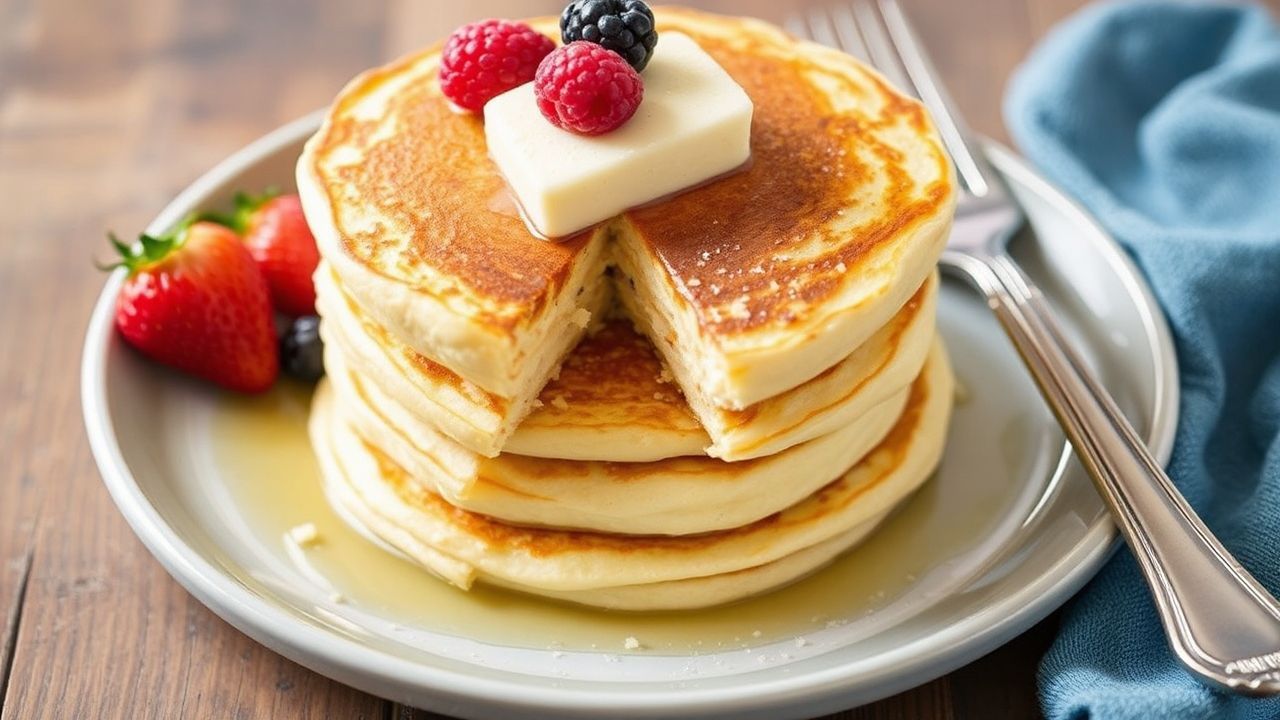
Imagine a breakfast that feels light, tender, and satisfying—without the heavy, dense texture you get from many pancake mixes. Fluffy cottage cheese pancakes deliver that “cream-forward” bite while still staying airy, thanks to gentle mixing and whipped egg whites. If you want a protein-boosted brunch favorite, this is the skillet recipe to master.
- The Secret to Achieving Perfectly Fluffy Texture Every Time
- Choosing the Creamiest Cottage Cheese for Maximum Flavor and Moisture
- Step by Step Guide to Mixing and Cooking Your Pancakes to Golden Perfection
- Dry Ingredients: Build Even Rise
- Whisk Egg Whites for Lift
- Combine Wet + Dry Gently
- Cook: Flip When Bubbles Appear
- Creative Toppings and Serving Suggestions to Elevate Your Cottage Cheese Pancakes
- Prep and Cook Time
- Yield
- Difficulty Level
- Ingredients
- Instructions
- Chef’s Notes & Tips for Success
- Serving Suggestions
- Q&A
- What makes cottage cheese pancakes different from regular pancakes?
- How do you achieve that perfect fluffy texture?
- Can I substitute cottage cheese if I don’t have it?
- What are the best ways to serve fluffy cottage cheese pancakes?
- How do I prevent pancakes from sticking?
- To Wrap It Up
At a Glance
- Fluff comes from whipped egg whites, folded in with care.
- Moisture comes from full-fat cottage cheese with small curds.
- Don’t overmix after adding flour to keep pancakes tender.
- Cook on medium heat for golden edges and a soft center.
With cottage cheese folded into the batter, these pancakes turn out creamy inside and slightly crisp around the edges. The result feels like a classic pancake, but with a richer mouthfeel and a tangy aroma. You can serve them sweet or savory, and they still hold their shape.
Whether you’re planning a cozy weekend brunch or just want an easy weekday breakfast, fluffy cottage cheese pancakes fit the bill. They’re quick to cook, flexible with toppings, and built for great leftovers.
The Secret to Achieving Perfectly Fluffy Texture Every Time
Fluffy cottage cheese pancakes rely on a simple idea: build lift with air, then protect that air during cooking. The batter uses baking powder plus egg-white structure to rise. After that, your job is to mix gently and cook with steady heat.
Start with the right cottage cheese. Choose creamy full-fat varieties with small curds for even moisture. For extra smoothness, blend the cottage cheese briefly so the batter stays cohesive without turning watery.
Moisture + Lift: The Two-Part Formula
First, moisture should come from dairy that stays tender. Cottage cheese contributes fat and water in a way that supports a soft crumb. If you use dry, low-fat, or very watery cottage cheese, you often lose that “melt-in-your-mouth” texture.
Next, lift comes from egg whites. Whipping egg whites creates trapped air pockets. When you fold them in carefully, those pockets expand on the griddle so your fluffy cottage cheese pancakes bake up tall and light.
If you want the science terms, egg whites are mainly structured proteins that foam when whisked. This general behavior is well described in egg biology references. The practical takeaway stays the same: whip well, then fold gently.
Heat Control for Golden Crust Without Drying Out
Cooking on medium heat helps the outside set while the inside stays tender. When the pan runs too hot, the surface browns before the center cooks, and the stack can feel rubbery. Medium heat gives you even rise and a clean golden color.
Also avoid pressing the pancakes with a spatula. Pressing squeezes out air and flattens the crumb. Let bubbles form on top, then flip once for a second set of golden edges.
For more background on baking reactions that affect rise, see baking powder. Your pancakes benefit when the leavening activates at the right time during batter cooking.
Choosing the Creamiest Cottage Cheese for Maximum Flavor and Moisture
To get fluffy cottage cheese pancakes, you need cottage cheese that blends into the batter without lumps that turn gummy. Full-fat usually tastes best and helps the texture stay creamy after cooking. Look for small curds and a fresh, mild flavor.
Skip very low-fat or dry curd styles. They often bake into pancakes that feel crumbly or rough. If your cottage cheese looks watery, drain it briefly so the batter holds its shape.
Small Curds Beat Dry Curds for a Soft Crumb
Small curds disperse more evenly and create consistent pockets of moisture. That even distribution supports a softer bite. In contrast, larger curds may remain more distinct, and the batter may cook unevenly.
If you prefer a smoother batter, pulse the cottage cheese in a blender for 10–15 seconds. You still keep the tang and richness, but you reduce curd clumps. This step helps the pancakes cook uniformly.
Cottage cheese is a fermented dairy product with curds formed during processing. For a clear overview of fermented dairy, review fermented milk. This helps explain why flavor and tang show up in the finished pancakes.
Easy Flavor Swaps Without Losing the “Fluffy” Texture
Some swaps work well, but you need to protect moisture and structure. Strained Greek yogurt can replace part of the cottage cheese for extra tang. Keep most of the dairy as cottage cheese so the pancakes retain that signature creamy crumb.
You can also add small amounts of vanilla or a pinch of cinnamon. Keep add-ins moderate so you don’t thin the batter. If you add liquid, thicken with a bit more flour only if needed.
If you want general guidance on yogurt types and fermentation, check yogurt. The key is the same: higher moisture changes batter behavior.
Step by Step Guide to Mixing and Cooking Your Pancakes to Golden Perfection
Mixing is where fluffy cottage cheese pancakes win or lose. Your goal is to combine ingredients without overdeveloping toughness. Once flour hits wet ingredients, stir only until you stop seeing dry streaks.
Before you start, set out equipment. You need a large bowl for dry mix, one bowl for wet mix, and a whisk or mixer for egg whites. Then heat a non-stick pan over medium heat.
Dry Ingredients: Build Even Rise
In a bowl, sift your flour and baking powder together with salt. Sifting removes lumps and spreads the leavening so each pancake rises evenly. This step supports consistent thickness across the griddle.
Use accurate measurements for baking powder. Too much can lead to a bitter or bready taste. Too little reduces lift, and you end up with flatter pancakes.
Leavening agents work by releasing gas during batter heating. For background, you can reference leavening agent. The practical result is simple: use the right amount and mix lightly.
Whisk Egg Whites for Lift
Separate the eggs and whip whites until they hold soft peaks. Soft peaks mean the surface looks foamy and thick, but still folds over gently. If you whip to dry, crumbly whites, you may lose smooth folding and tenderness.
Set egg whites aside before mixing the wet batter. This keeps you from overworking them and makes folding smoother.
Whipped egg whites behave as foam, which is a known physical structure. You can learn the basics by browsing foam. In pancakes, foam becomes lift.
Combine Wet + Dry Gently
Mix cottage cheese, egg yolks, melted butter, maple syrup, and milk until smooth. Then pour wet into dry. Fold with a spatula until just combined, and let a few small lumps remain.
Next, fold egg whites in three additions. Use a slow, gentle motion that lifts batter from the bottom to the top. Stop once you see no streaks—overmixing deflates the air.
[TIP]Expert Insight: For the lightest pancakes, chill the folded batter for 5 minutes before cooking. Cold batter often holds its foam structure longer on the griddle, which improves rise consistency.
Cook: Flip When Bubbles Appear
Brush the pan lightly with butter or neutral oil. Pour about 1/4 cup batter per pancake. Cook until you see bubbles on the surface and the edges look set, usually about 2–3 minutes.
Flip once and cook 1–2 minutes more. Keep the heat steady so the interior cooks through while the outside browns nicely. Transfer to a warm plate and repeat.
[WARNING]Pro-Caution: Avoid pressing or flattening the pancakes right after flipping. This squeezes air out of the crumb and reduces the “fluffy” texture you worked to create.
Creative Toppings and Serving Suggestions to Elevate Your Cottage Cheese Pancakes
Toppings make fluffy cottage cheese pancakes feel like a new dish every time. Because the pancakes taste creamy and lightly tangy, sweet toppings balance well. Meanwhile, savory toppings highlight their mild dairy flavor.
Choose toppings based on texture first: add crunch, add fruit, or add cream. Then balance sweet and tang so the pancakes taste bright instead of heavy.
Sweet Options That Match the Creamy Tang
Try powdered sugar plus fresh berries for a classic, bright finish. The fruit adds acidity that complements cottage cheese tang. If you want extra richness, add a spoon of Greek yogurt or mascarpone.
For warm and aromatic flavor, drizzle lemon curd or honey. You can also add a fruit compote—heat berries with a little sugar until glossy. Spoon it over pancakes right before serving.
For more on how sugar affects texture and browning, you can reference sugar. Practical reminder: warm syrup spreads better and tastes sweeter.
Savory Toppings for Brunch-Level Flavor
If you prefer savory, use sautéed mushrooms and spinach. Finish with chopped chives or dill for herbal aroma. Cottage cheese pancakes pair well with mild umami flavors without needing heavy sauces.
Smoked salmon also works beautifully. Add a squeeze of lemon and a pinch of black pepper to brighten the dish. This combo feels elevated, yet it still tastes balanced.
For general background on savory flavor compounds, review umami. Many savory toppings naturally deliver that satisfying depth.
Prep and Cook Time
Planning helps you serve hot pancakes faster. This recipe uses a quick batter and a medium-heat cook, so your kitchen stays active but not hectic. You can manage it during a relaxed morning routine.
As written, fluffy cottage cheese pancakes take under an hour total. If you prep ingredients in advance, cooking time goes smoothly with fewer interruptions.
- Preparation: 15 minutes
- Cooking: 15 minutes
- Total time: 30 minutes
Yield
This batch makes about 10 pancakes. The exact count depends on your pour size and pan diameter. If you like thicker pancakes, use slightly less batter per round.
These servings fit a small group. You can easily double the recipe for larger brunches and keep the cooking pace consistent.
- Makes: approx. 10 pancakes
- Serves: 3–4
Difficulty Level
The method is straightforward, but the folding step matters. If you can separate eggs and whip whites, you can make these pancakes. Focus on gentle mixing and one clean flip for best results.
If you’re new to cooking pancakes, start with one test pancake. You can adjust heat and batter thickness before you cook the full batch.
- Difficulty: Easy to medium
Ingredients
Use fresh ingredients for the best flavor and texture. Full-fat cottage cheese gives the creamy interior you want. Whole milk also supports a smooth batter.
For sweetness, maple syrup balances the tang. Keep the batter thick enough to hold bubbles but thin enough to spread slightly on the pan.
- 1 cup all-purpose flour, sifted
- 2 teaspoons baking powder
- 1/2 teaspoon salt
- 1 cup creamy full-fat cottage cheese
- 2 large eggs, separated
- 1/2 cup milk (whole or 2%)
- 2 tablespoons unsalted butter, melted
- 2 tablespoons pure maple syrup
- Butter or oil for cooking
Instructions
Follow these steps in order to protect the batter’s air and moisture. Each step builds on the previous one, so don’t rush through folding or cooking.
If your batter looks thicker than you expect, add milk one tablespoon at a time. If it looks too thin, let it rest 5 minutes before cooking.
- Sift the flour, baking powder, and salt into a bowl. This helps the leavening spread evenly.
- Mix wet ingredients: In a separate bowl, combine cottage cheese, egg yolks, melted butter, maple syrup, and milk. Stir until smooth.
- Whip egg whites until stiff but not dry peaks form. They should look glossy and hold shape.
- Fold flour into wet gently with a spatula. Stop when you see no dry streaks. A few lumps are fine.
- Fold in whipped egg whites in small batches. Use slow strokes to keep air in the batter.
- Heat a non-stick pan over medium heat and lightly grease with butter or oil.
- Cook: Drop about 1/4 cup batter per pancake. Cook until bubbles appear and edges set (about 2–3 minutes).
- Flip carefully and cook 1–2 minutes more until golden and cooked through.
- Serve warm or keep on a plate while you cook the rest of the batch.
Chef’s Notes & Tips for Success
These notes help you fix the most common issues: flat pancakes, dense texture, or uneven cooking. Most problems come from overmixing or heat that’s too high. Use these checks as you cook.
Also remember that cottage cheese brands vary. Your batter may need a small adjustment to milk amount for the day you’re cooking.
- Extra fluff: Separate eggs and whip whites separately to trap air in the batter.
- Choose the right cottage cheese: Full-fat with small curds gives the best moisture and softness.
- Adjust thickness: If batter feels too thick, add milk 1 tablespoon at a time.
- Avoid overmixing: Once flour is added, mix just until combined to prevent tough pancakes.
- Reheating: Rewarm in a skillet over low heat or microwave in short bursts. Keep pancakes covered to avoid drying.
- Make-ahead: Cool completely, layer with parchment, and refrigerate up to 2 days.
- Sweetener swaps: Substitute honey or agave if you want a different sweetness note.
Serving Suggestions
Presentation matters, especially when you serve pancakes for guests. A simple topping strategy makes every plate look intentional. Warm pancakes also taste better, so build plates right before serving.
Use color and contrast to make the stack appealing. Fresh berries, toasted nuts, and herbs add brightness and texture without extra work.
- Top with fresh seasonal berries, toasted nuts, and a dollop of Greek yogurt.
- Use warm fruit compote or spiced apple sauce for cozy, aromatic flavor.
- For savory: sautéed spinach, smoked salmon, black pepper, and a squeeze of lemon.
- Garnish with edible flowers or fresh herbs for a brunch-worthy look.
| Nutrition (Per Pancake) | Calories | Protein | Carbs | Fat |
|---|---|---|---|---|
| One Fluffy Cottage Cheese Pancake | 110 | 7g | 12g | 4g |
Q&A
Quick answers help you troubleshoot fast. Use these tips the next time you cook fluffy cottage cheese pancakes and want consistent results. Each response focuses on practical technique.
Before you store leftovers, cool pancakes fully. Heat and moisture retention affect texture, so cooling keeps pancakes from getting soggy.
What makes cottage cheese pancakes different from regular pancakes?
Cottage cheese adds a creamy tang and extra moisture that regular pancake batter doesn’t provide. The curds also change mouthfeel, so each bite feels softer. Fluffy cottage cheese pancakes typically taste richer while staying light when you fold egg whites carefully.
You can think of cottage cheese as a dairy curd product, which explains why it contributes both fat and moisture. For background, see cottage cheese.
How do you achieve that perfect fluffy texture?
Whip egg whites to soft peaks and fold them in gently. Then mix batter only until combined after adding flour. Overmixing collapses foam and builds gluten, which reduces fluff.
Egg whites form foam during whipping, which is why the “air + gentle folding” method works. The concept connects to foam structure described in foam.
Can I substitute cottage cheese if I don’t have it?
You can substitute part of the cottage cheese with strained Greek yogurt for similar moisture and tang. Ricotta can work too, but it tends to be smoother and may give a different curd texture. For best results, keep the substitution close in moisture level.
Since dairy fermentation and moisture vary by product, expect some texture changes. For more on how yogurt varies, review yogurt.
What are the best ways to serve fluffy cottage cheese pancakes?
Sweet: berries, lemon curd, honey, or powdered sugar. Savory: sautéed mushrooms, spinach, herbs, and smoked salmon. Choose toppings that match your mood, then add a balancing element—fruit acidity for sweet stacks or lemon for savory.
Pairing sweetness and tang improves overall flavor balance. For the role of umami in savory foods, see umami.
How do I prevent pancakes from sticking?
Use a non-stick skillet and preheat it over medium heat. Lightly grease before the first pancake, then re-grease only if the pan starts to look dry. Wait until bubbles appear and edges set before flipping.
Also avoid moving pancakes too early. Early flips can tear delicate foam structure. For more on cookware basics and heat behavior, you can reference nonstick cookware.
To Wrap It Up
Fluffy cottage cheese pancakes give you a breakfast that’s light, creamy, and deeply satisfying. When you combine whipped egg whites, gentle mixing, and steady medium heat, you get pancakes that rise beautifully and taste rich without feeling heavy.
Now you can cook with confidence. Keep your batter airy, choose creamy cottage cheese, and serve right away with the toppings you love. Your next brunch stack is already within reach.
See also: Fluffy cottage cheese pancakes