

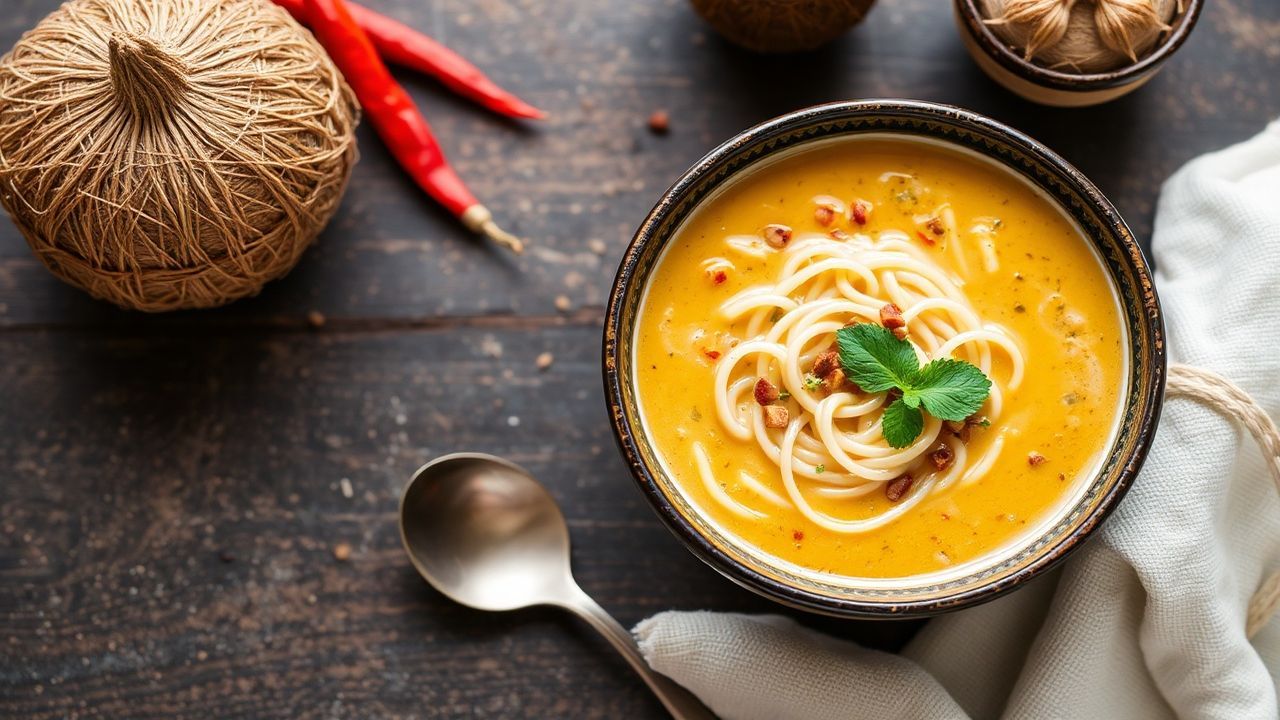
When the chill in the air nudges you indoors and comfort becomes a craving, few dishes answer the call like a steaming bowl of creamy coconut curry noodle soup. This vibrant, creamy bowl blends fragrant curry spices with silky coconut milk for a warm, soothing meal. It also works fast, so it fits busy weeknights without losing its “slow comfort” feel.
- Why Creaminess Matters in Coconut Curry Noodle Soup
- Choosing Noodles for Coconut Curry Noodle Soup
- Ingredients List for Creamy Coconut Curry Noodle Soup
- Step-by-Step Guide to Make Creamy Coconut Curry Noodle Soup
- Prep and Cook Time
- Yield and Difficulty
- Step 1: Cook the Noodles
- Step 2: Sauté Aromatics
- Step 3: Bloom the Curry Paste
- Step 4: Add Liquids
- Step 5: Simmer Vegetables
- Step 6: Season and Finish
- Step 7: Combine and Serve
- Tips to Customize Flavors in Coconut Curry Noodle Soup
- Adjust the Heat Level
- Add Protein Options
- Control Creaminess
- Herbal and Aromatic Twists
- Make-Ahead Strategy
- Serving Suggestions for a Cozy, Restaurant-Style Bowl
- Q&A
- 1) What makes creamy coconut curry noodle soup so comforting?
- 2) Can I make creamy coconut curry noodle soup less spicy?
- 3) Which noodles work best in this soup?
- 4) What vegetables pair best with coconut curry?
- 5) How do I keep the broth creamy without making it oily?
- Final Thoughts
At a Glance: Creamy Coconut Curry Noodle Soup
- Key flavor: curry paste + full-fat coconut milk for a balanced, creamy broth.
- Best noodles: rice noodles for tender bite, udon for extra chew.
- Fast workflow: cook noodles, build the curry base, simmer veggies, then combine.
- Pro finish: lime, herbs, and chili for bright aroma and lift.
This soup takes inspiration from Southeast Asian street-food flavors, where coconut and curry seasonings create deep warmth. You get a velvety texture, plus bold notes from aromatics and a clean, citrus finish. For the science of flavor, curry blends release fragrant oils when heated, and coconut milk softens spice edges while adding body.
Why Creaminess Matters in Coconut Curry Noodle Soup
Creminess in coconut curry noodle soup does more than taste rich. It also helps coat noodles, so each bite carries curry flavor from first slurp to last forkful. Full-fat coconut milk has higher fat content, which thickens the broth and supports a smoother mouthfeel.
To understand the base, coconut milk is an emulsion of coconut fat and water, which is why gentle heating works best. If you boil aggressively, the texture can shift and feel less creamy. For background on coconut products, see coconut milk.
The Perfect Balance of Spices and Creaminess
Start with curry paste as your flavor anchor. When you warm the paste in oil, you bloom spices and release aroma compounds, which builds a stronger base broth. Then the coconut milk smooths the spice and ties everything together.
Choose a curry profile you enjoy: red curry tends to taste fruitier and bolder, while yellow often feels milder and aromatic. If you want more context on curry style, browse curry on Wikipedia. For best results, keep simmering light and season near the end.
For your own serving, this soup shines when you pair creaminess with bright finishing touches. Lime juice adds acidity, which makes coconut feel lighter. Chili adds heat, and fresh herbs add a green aroma that cuts through richness.
Choosing Noodles for Coconut Curry Noodle Soup
Noodles decide your texture. Rice noodles absorb broth quickly and stay tender, while udon brings a chewy bite that holds up longer in simmering soup. Either way, cook noodles just until tender, then rinse and drain so they don’t over-soften in the pot.
If you want noodles that behave well in warm liquids, focus on their thickness. Thin rice noodles absorb fast and work best when added at the end. Thicker noodles need a slightly longer cook but still benefit from a quick rinse to stop cooking.
Rice Noodles vs. Udon Noodles
Rice noodles create a silky, slurp-friendly bowl. They also keep the soup feeling light because they don’t add extra chew. If you choose rice noodles, use medium heat and rinse after cooking for a clean, separated texture.
Udon noodles offer a bouncier mouthfeel. They pair well with chunky vegetables because the chew balances softer greens like spinach or bok choy. For general noodle context, you can read noodle on Wikipedia.
Whichever you pick, time matters. Add cooked noodles right before serving so they keep their shape and don’t drink up the broth too much.
Vegetable Choices for Texture and Freshness
Vegetables should bring contrast, not just color. Crisp veggies like snap peas and thin carrot match the creamy broth and keep each spoon interesting. Add delicate greens later so they stay fresh and vibrant.
For a balanced bowl, aim for one crunchy item, one tender item, and one aromatic garnish. Cilantro and Thai basil bring a distinct herbal top note. That finish makes the soup feel “complete,” not just creamy and spicy.
Ingredients List for Creamy Coconut Curry Noodle Soup
Use this list as a practical starting point. Many ingredients are flexible, but curry paste, coconut milk, and lime should stay consistent to preserve the core flavor. If you swap too many elements at once, the profile can drift.
For curry paste basics, you can also review curry paste on Wikipedia. For coconut milk fundamentals, use coconut milk again as a reference point while shopping for products.
Core Ingredients
- 200g rice noodles (soak or cook per package instructions)
- 1 tbsp vegetable oil or coconut oil
- 2 tbsp red or yellow curry paste (adjust to heat preference)
- 1 can (400ml) coconut milk (full-fat recommended for creaminess)
- 2 cups vegetable broth
- 1 medium onion, thinly sliced
- 3 cloves garlic, minced
- 1 tbsp freshly grated ginger
- 1 red bell pepper, thinly sliced
- 1 cup snap peas, trimmed
- 1 medium carrot, julienned
- 1 tbsp soy sauce or tamari for gluten-free
- 1 tbsp lime juice, plus wedges for serving
- Fresh cilantro and/or Thai basil for garnish
- 1 small red chili, thinly sliced (optional)
- Salt to taste
If you want a more protein-forward bowl, plan your add-ins in the customization section. Keep raw add-ins separate until you simmer the broth so timing stays controlled.
Step-by-Step Guide to Make Creamy Coconut Curry Noodle Soup
This method keeps the process simple and repeatable. You build flavor first, simmer vegetables next, then combine with noodles right before serving. That order protects noodle texture and keeps the broth fresh.
You can prep aromatics ahead to speed up the cook. When you follow the steps in order, you also control salt and heat more easily.
Prep and Cook Time
- Readiness: 15 minutes
- Cooking: 25 minutes
- Total Time: 40 minutes
Yield and Difficulty
Serves: 4 hearty bowls.
Difficulty: Medium—ideal for home cooks who want bold flavor with straightforward steps.
Step 1: Cook the Noodles
Cook rice noodles until just tender, following the package instructions. Then rinse under cold water and drain well. Set aside so the noodles stay springy.
If using udon, cook until chewy-tender and drain. The rinse step helps separate noodles and keeps the bowl from turning cloudy.
Step 2: Sauté Aromatics
Heat oil in a large pot over medium heat. Sauté onion until translucent, about 3–4 minutes. Then stir in garlic and ginger until fragrant, about 1 minute.
This step builds a savory base that carries through the entire broth. For general background on garlic’s culinary role, you can reference garlic.
Step 3: Bloom the Curry Paste
Add curry paste and stir for 2–3 minutes. You want a deeper aroma and a slightly darker look. Blooming activates spice oils so the soup tastes fuller without extra paste.
Cook at steady heat, not high. If the paste burns, the flavor can turn harsh and bitter.
Step 4: Add Liquids
Pour in coconut milk and vegetable broth. Stir until smooth and well combined. Keep heat moderate so the mixture warms evenly.
Vegetable broth adds a savory backbone, while coconut milk delivers cream. This combination supports both comfort and complexity.
Step 5: Simmer Vegetables
Bring the broth to a gentle boil, then add bell pepper, snap peas, and carrot. Simmer 5–7 minutes until veggies turn tender but still bright. Keep the lid slightly ajar if you need to reduce lightly.
Leafy greens should go in near the end. That timing keeps color and flavor fresh instead of dull.
Step 6: Season and Finish
Stir in soy sauce and lime juice. Taste, then adjust salt or curry paste if you want more depth. Lime should land at the end so it stays sharp and aromatic.
If you need extra acidity, add a small squeeze of lime. If you want more body, simmer 1–2 minutes longer—but keep it gentle after coconut milk is in.
Step 7: Combine and Serve
Divide noodles among bowls, then ladle the hot coconut curry broth over them. Serve immediately so noodles do not over-soften. Garnish with cilantro, Thai basil, and optional chili slices.
For extra fragrance, add lime wedges on the side. Guests can control acidity, which makes the soup feel custom to each bowl.
Tips to Customize Flavors in Coconut Curry Noodle Soup
Customization keeps this dish from getting repetitive. You can shift heat, change proteins, and adjust creaminess without losing the soup’s identity. Make one change at a time so you can taste what works.
Curry flavor also depends on ingredients in the paste, so your results can vary by brand. That’s normal, and tasting early helps you steer the soup toward your goal.
Adjust the Heat Level
For milder flavor, choose a yellow curry paste and reduce chili additions. For extra heat, use red curry paste and add thin sliced fresh chili or chili flakes after simmering.
To learn about chili pepper varieties and heat levels, you can read chili pepper on Wikipedia. Then taste as you go, because heat intensity differs by paste.
Add Protein Options
For a hearty meal, add tofu, chickpeas, or shredded chicken. If you use tofu, pan-sear first for texture, then add to the broth. Chickpeas can simmer directly if you like a firmer bite.
To keep the soup flavorful, season proteins lightly before they meet the broth. That small step prevents blandness in the final bowl.
Control Creaminess
Want a richer finish? Stir in an extra spoon of coconut cream near serving time. That method boosts creaminess without over-simmering the coconut base.
If the soup feels too thick, thin with a splash of broth or hot water. Balance matters, and a slightly thinner broth often tastes brighter.
Herbal and Aromatic Twists
Fresh herbs matter in this dish. Add cilantro for a classic green note, or try Thai basil for a more peppery aroma. Lime zest can also add a fragrant lift if you like stronger citrus.
For deeper understanding of ginger’s use in cuisines, review ginger. Then adjust your amount based on your taste and how bold you want the aromatics to feel.
Make-Ahead Strategy
You can prep the curry base ahead and refrigerate it. Reheat gently, then add vegetables and noodles when you plan to serve. This method keeps noodles from turning soft and keeps veggies bright.
Label containers and cool the soup quickly for food safety. When you store properly, leftovers stay tasty for later meals.
Serving Suggestions for a Cozy, Restaurant-Style Bowl
Serve creamy coconut curry noodle soup in wide bowls so noodles and vegetables spread out. That shape also helps heat disperse, so each bite feels equally hot. Add a final drizzle of coconut milk if you want a glossy top layer.
For crunch, sprinkle toasted sesame seeds or crushed peanuts. For a lighter meal, pair with a crisp cucumber salad or simple pickled vegetables. The contrast keeps the bowl from feeling heavy.
If you enjoy tea, choose something light and fragrant. Jasmine tea often pairs well because floral notes mirror aromatic herbs in the soup. For general tea background, you can reference jasmine tea.
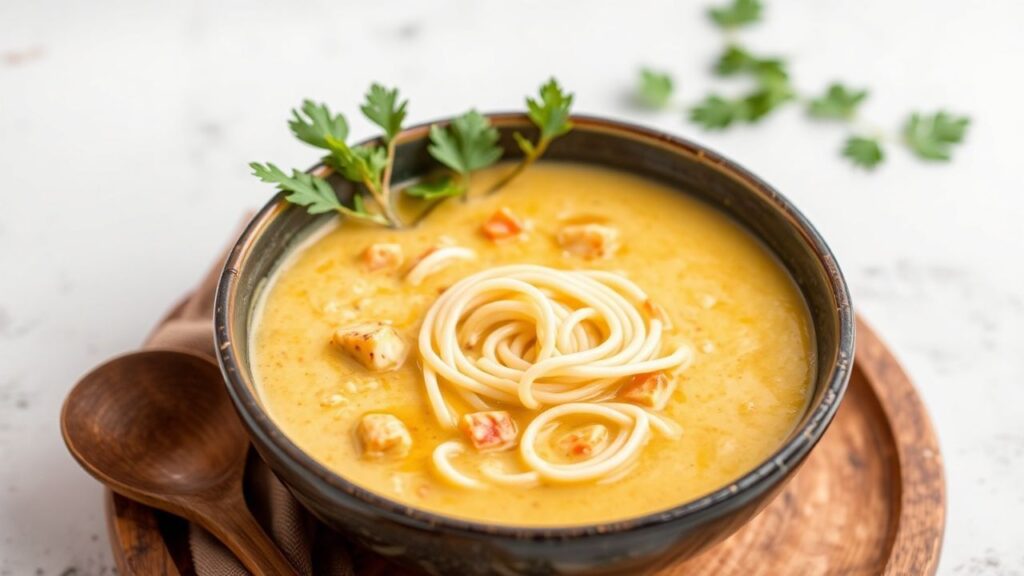
Nutritional Details (Approx.) Per Serving
| Calories | Protein | Carbs | Fat |
|---|---|---|---|
| 420 kcal | 9 g | 50 g | 18 g |
Nutrition varies by brand of curry paste, amount of coconut milk, and noodle type. If you swap noodles or add chicken, calories and macros will shift. Treat this as an estimate and adjust based on your ingredients.
For additional reading on how coconut products contribute to nutrition, consult coconut on Wikipedia. Then fine-tune the soup based on your dietary goals.
Q&A
1) What makes creamy coconut curry noodle soup so comforting?
The comfort comes from creamy coconut milk plus warm curry spices. Coconut fat coats noodles and softens spice, while aromatics create a layered, savory base. Together, these factors make the broth feel both rich and soothing.
2) Can I make creamy coconut curry noodle soup less spicy?
Yes. Choose yellow curry paste instead of red, and start with less curry paste than the recipe calls for. Add chili flakes gradually, then taste after simmering so you can control heat accurately.
3) Which noodles work best in this soup?
Rice noodles work great because they absorb broth fast and stay tender. Udon works too if you prefer a chewier bite. Either way, cook noodles until just done and add them right before serving.
4) What vegetables pair best with coconut curry?
Snap peas, bell pepper, carrot, mushrooms, and bok choy fit well. Crunchy vegetables keep texture, while tender ones soak up flavor. Add leafy greens late so they stay bright and not overcooked.
5) How do I keep the broth creamy without making it oily?
Use full-fat coconut milk and keep the soup at a gentle simmer after adding coconut. Stir occasionally and avoid long, hard boiling. If needed, balance thickness with broth or hot water rather than extra coconut oil.
Final Thoughts
When the steam rises from your bowl, the aroma of curry and coconut moves fast through the room. That first smell sets expectations for warmth, and the first spoon confirms it. This recipe gives you a creamy coconut curry noodle soup with bold spice depth and a clean lime lift.
Follow the method, add noodles at the right time, and finish with herbs and citrus. With those steps, you get a bowl that feels cozy, flavorful, and reliably delicious. Make a batch of the curry base, then tailor heat and protein for meals all week.
See also: creamy coconut curry noodle soup