


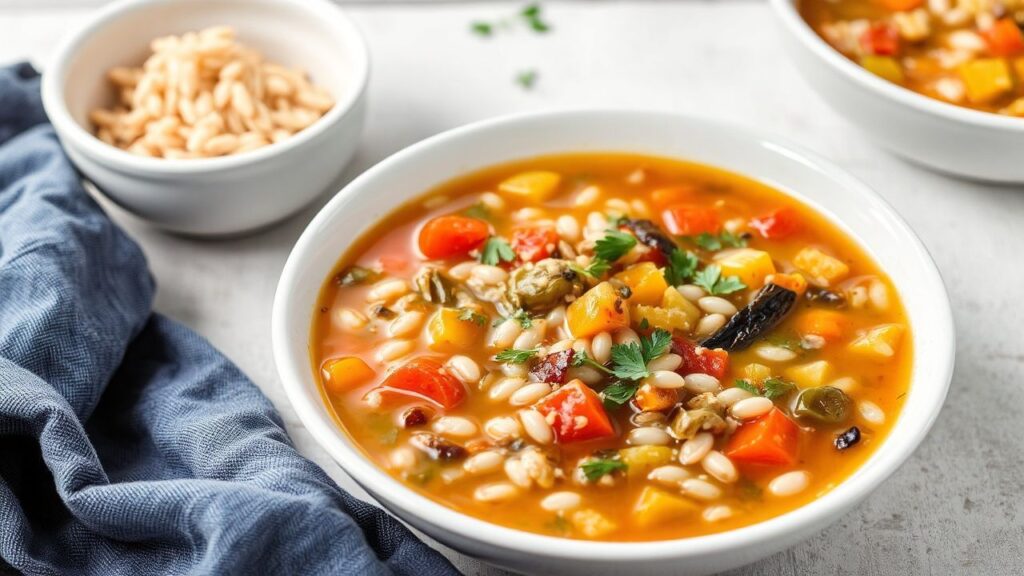
When the weather turns cool, hearty wholesome vegetable barley soup delivers steady warmth and real comfort. This thick, veggie-packed bowl blends tender barley with savory broth so each spoon feels filling and nourishing. It works for weeknights, meal prep, and cozy weekends.
- Prep and Cook Time
- Yield and Difficulty Level
- Ingredients
- Instructions
- Chef’s Notes
- Serving Suggestions
- Nutritional Information
- Unlocking the Benefits of Barley in Your Soup
- Crafting the Perfect Vegetable Blend to Boost Flavor & Nutrition
- Step by Step to the Ideal Hearty Consistency
- Enhancing Warmth and Comfort with Savory Herbs
- FAQ
- What makes vegetable barley soup both hearty and nutritious?
- Which vegetables work best in a hearty barley soup?
- How do I cook barley so the soup texture stays ideal?
- Can I make hearty wholesome vegetable barley soup in advance?
- Is this soup freezer friendly?
- To Conclude
- Hearty barley adds chew and sustained fullness.
- Vegetable-forward ingredients keep the flavor bright and balanced.
- Simple prep with a gentle simmer makes the texture reliable.
- Meal-prep friendly: flavors deepen after cooking.
Whether you eat it alone or share it with family, hearty wholesome vegetable barley soup supports everyday nutrition without heavy ingredients. Barley contributes complex carbohydrates and dietary fiber, which helps meals feel more satisfying. You’ll also get layers of flavor from aromatics, herbs, and slow-cooked vegetables.
To build a soup you’ll want to repeat, focus on two moments: toasting the barley for nuttiness and simmering just long enough for tenderness. Then finish with lemon and fresh herbs for lift. That mix of depth and brightness keeps the bowl from tasting flat.
Hearty Wholesome Vegetable Barley Soup: Comfort in 1 Hour (Nutritious Power Bowl)
Hearty wholesome vegetable barley soup turns humble pantry staples into a comfort-food meal. You’ll use pearled barley, a mix of diced vegetables, and a savory broth to create a warm, nutritious bowl. If you enjoy traditional peasant-style stews, this recipe fits that same “slow, simple, satisfying” idea.
Prep and Cook Time
Plan about 15 minutes for prep, including chopping vegetables and rinsing the barley. Cooking takes about 60 minutes, and the soup stays hands-off once it starts simmering. The total time lands near 1 hour 15 minutes, depending on how fast you work.
This timing works well for busy days because you can multitask while the pot simmers. Barley also benefits from gentle heat, which means you don’t need constant stirring. Use a timer so vegetables reach tenderness without going mushy.
Yield and Difficulty Level
This soup makes enough for 6 generous bowls. If you’re meal prepping, you can portion it into containers right after cooking. Refrigerated leftovers usually taste even better after the flavors meld.
The difficulty is Easy to Medium. You’ll mostly manage chopping and simmering steps, which makes it a strong choice for home cooks. If you’re new to barley, rinsing and simmering instructions below will guide you.
Ingredients
Gather everything before you start so the cooking flow stays smooth. This ingredient list focuses on classic soup structure: aromatics, vegetables, barley, and seasonings. You can swap seasonal vegetables, but keep the barley-to-liquid balance similar.
Barley is a member of the cereal family and grows well in cool seasons. For background, see barley. For broth and culinary techniques, the general approach aligns with classic soup methods.
- 1 cup pearled barley, rinsed and drained
- 2 tbsp extra virgin olive oil
- 1 large yellow onion, finely diced
- 3 cloves garlic, minced
- 2 medium carrots, peeled and diced
- 2 celery stalks, diced
- 1 small parsnip, diced (optional, for sweetness)
- 1 medium potato, peeled and cubed
- 1 cup green beans, trimmed and chopped
- 1 cup diced tomatoes (canned or fresh)
- 6 cups vegetable broth, low sodium preferred
- 1 bay leaf
- 1/2 tsp smoked paprika
- Salt and black pepper, to taste
- Fresh herbs: 1 tsp dried thyme, 1 tsp dried rosemary, 2 tbsp chopped fresh parsley
- Juice of half a lemon (optional, for brightness)
Instructions
Follow these steps in order for the best texture. Each phase builds flavor: aromatics first, then vegetables, then toasted barley, and finally simmering until tender. When you time it right, the grains stay chewy instead of soft.
For grain cooking basics, it helps to know that grains absorb liquid as they cook. See grain for general context. Now cook the soup with the method below.
- Prepare the barley: Rinse pearled barley under cold water to reduce surface starch, then drain.
- Sauté aromatics: Heat olive oil in a large stockpot over medium heat. Add onion and sauté until translucent, about 5–7 minutes.
- Add garlic and vegetables: Stir in garlic for 1 minute. Add carrots, celery, parsnip, and potato, then cook 5 minutes, stirring often.
- Toast the barley: Add rinsed barley and stir to coat in the vegetable mixture. Toast for about 2 minutes for a nutty aroma.
- Add liquids and seasoning: Pour in vegetable broth and diced tomatoes (including juices). Add bay leaf, smoked paprika, thyme, and rosemary. Bring to a gentle boil.
- Simmer gently: Reduce heat to low, cover, and simmer about 40 minutes, stirring occasionally, until barley and vegetables soften.
- Add green beans: Stir in green beans about 10 minutes before finishing so they keep color and slight bite.
- Finish and season: Remove bay leaf. Adjust salt and pepper. Stir in fresh parsley and lemon juice for lift.
- Serve warm: Ladle into bowls and top with extra herbs or a small drizzle of olive oil.
Chef’s Notes
Small adjustments can tailor this recipe to your pantry and taste. Keep the core method the same: toast barley, simmer gently, and add delicate vegetables near the end. That approach protects flavor and texture.
If you want alternatives, remember that barley varieties differ in texture and cook time. For a quick reference on grains, you can read cereal. Use your substitutions carefully and taste for doneness.
- For a gluten-free approach, you may need a true gluten-free grain base. Barley itself contains gluten, so choose certified gluten-free alternatives and adjust cook time.
- For a creamier finish, stir in 1/4 cup coconut milk or a swirl of cashew cream just before serving.
- Leftovers improve after cooking. Store in an airtight container in the fridge for up to 3–4 days and reheat gently.
- Swap vegetables based on season. Leeks, kale, or squash work well when added at the right time.
- For deeper flavor, warm dried herbs briefly with the aromatics before adding liquids.
Serving Suggestions
This hearty wholesome vegetable barley soup pairs beautifully with crusty whole-grain bread or oatcakes. The bread adds crunch, while the soup stays rich and warm. For extra comfort, add a light drizzle of olive oil on top.
You can also brighten each bowl with a fresh garnish. Try a handful of baby spinach leaves for mild greens, or add Greek yogurt for tang. If you prefer vegan, nutritional yeast can add savory depth.

Nutritional Information
Per serving (approximate), this recipe provides about 220 calories. It also includes 7 g protein and 39 g carbohydrates, with 7 g fiber to support satiety. Exact values can vary based on broth brand and vegetable sizes.
Fiber helps slow digestion and supports steady appetite. For general nutrition context, see dietary fiber. Use the numbers as guidance and adjust portions if you track macros.
| Nutrient | Per Serving |
|---|---|
| Calories | 220 kcal |
| Protein | 7 g |
| Carbohydrates | 39 g |
| Fat | 4.5 g |
| Fiber | 7 g |
Unlocking the Benefits of Barley in Your Soup
Barley brings hearty texture to this bowl and supports nutrition through fiber-rich grains. Its soluble fiber forms a gel-like texture during digestion, which can help promote steadier fullness after meals. You’ll feel the difference in how satisfying the soup tastes.
To understand where those benefits come from, review barley nutrition in general terms. The key takeaway for cooking is simple: barley needs liquid and time, and gentle simmering brings out a tender chew.
Crafting the Perfect Vegetable Blend to Boost Flavor & Nutrition
A strong soup tastes layered, not just salty. Use a mix of sweet and earthy vegetables so the broth feels complex. Carrots and parsnip add natural sweetness, while celery adds a savory backbone.
Herbs create warmth without extra calories. Thyme and rosemary add resinous, aromatic notes, and parsley adds fresh green flavor at the end. For general background on plants used in cooking, you can read herbs.
Step by Step to the Ideal Hearty Consistency
Thickness comes from two sources: the barley and the starches released as vegetables cook. Toasting the barley helps it release nutty character, while simmering helps it absorb broth. If you want a thicker bowl, simmer a few minutes longer.
If you want a looser soup, thin it with extra broth near the end. Then taste and adjust salt, since dilution can soften seasoning. For more general culinary principles, see simmering.
Enhancing Warmth and Comfort with Savory Herbs
Herbs and spices build the “cozy” feeling. Bay leaf infuses the pot gently, smoked paprika adds a warm depth, and thyme plus rosemary make the aroma feel rustic. Finish with lemon to keep the soup tasting fresh instead of heavy.
Spices work best when you add them with heat early, then let them mingle as the soup simmers. For a general reference on seasoning, you can read spices. Lemon adds acidity, which balances fat and sweetness in cooked vegetables.
FAQ
What makes vegetable barley soup both hearty and nutritious?
It’s hearty because barley holds chew and absorbs broth slowly. It’s nutritious because the soup includes multiple vegetables plus fiber from the grain. Together, they create a balanced bowl that feels filling without relying on heavy cream.
Which vegetables work best in a hearty barley soup?
Carrots, celery, and onions form a classic base. Add potato for body, then choose seasonal vegetables like green beans, peas, or kale. Keep quick-cooking vegetables for the last 10 minutes so they stay bright.
How do I cook barley so the soup texture stays ideal?
Rinse the barley and simmer gently for about 40 minutes. If it seems underdone, add 5–10 more minutes of low simmering. Avoid aggressive boiling, which can make the texture taste overly starchy.
Can I make hearty wholesome vegetable barley soup in advance?
Yes. The soup usually tastes better the next day as flavors meld and the broth thickens. Store it in the fridge and reheat with a splash of broth or water to restore the texture.
Is this soup freezer friendly?
It freezes well for meal prep. Freeze portions in airtight containers and thaw in the fridge overnight. Reheat gently and add a little liquid if the soup thickened too much in storage.
To Conclude
A bowl of hearty wholesome vegetable barley soup brings together comfort and everyday nutrition. You get tender grains, savory broth, and bright vegetable flavor in a format that holds up for leftovers. With gentle simmering and fresh finishing touches, it stays delicious from first ladle to last.
Serve it warm, pair it with bread or a simple side salad, and keep the method consistent. Then let the flavor deepen over time while you enjoy a meal that feels both nourishing and genuinely satisfying.
See also: vegetable barley soup