
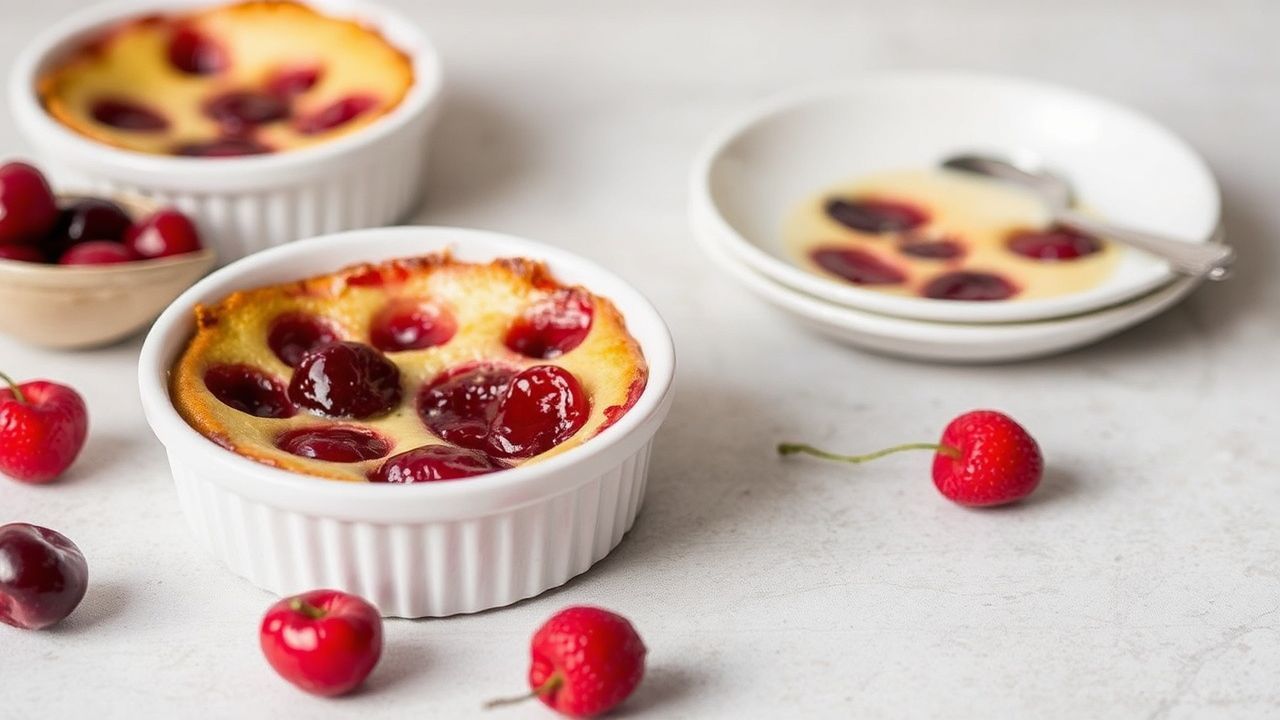
Nestled between rustic comfort and refined French patisserie, clafoutis delivers a baked cherry custard that feels both simple and special. This dessert pairs juicy cherries with a light, flan-like batter that sets into a tender slice with a gentle wobble.
- Origins and Evolution of Clafoutis in French Cuisine
- Selecting the Perfect Cherries and Ingredients for Authentic Flavor
- Mastering the Ideal Batter Consistency for Fluffy Custard Texture
- Baking Techniques and Serving Suggestions to Elevate Your Clafoutis Experience
- Prep and Cook time
- Yield
- Difficulty Level
- Ingredients
- Instructions
- Tips for Success
- Serving Suggestions
- FAQ
At a Glance
- Clafoutis is built from eggs, milk (or cream), flour, and fruit.
- Use quality cherries for the best sweet-tart balance and texture.
- Rest the batter briefly so the flour hydrates for a smoother custard.
- Serve warm or at room temperature for the creamiest bite.
Often overshadowed by flashier desserts, clafoutis still earns its place because it turns basic pantry ingredients into a deeply satisfying bake. In “Clafoutis Uncovered: The Art of Baked Cherry Custard,” we map the method so you can repeat the result with confidence.
Origins and Evolution of Clafoutis in French Cuisine
Clafoutis traces its roots to regional French home cooking, where cooks made desserts around what the garden and orchards provided. In Limousin, cherries became the classic choice because they ripened in season and baked well in a custardy batter.
Traditional recipes often bake the cherries whole, which affects flavor and aroma during roasting. That practice links to the wider French tradition of using fruit-forward preparations, similar to how French cuisine balances technique with seasonal ingredients.
Over time, chefs and home bakers spread the method beyond cherries. You can find versions with plums, berries, or other fruit, while the core idea stays the same: fruit meets a pourable custard batter that sets around it. For background on custard textures, see custard as a technique, not just a dessert category.
Selecting the Perfect Cherries and Ingredients for Authentic Flavor
Start with quality cherries, because clafoutis depends on fruit juice and structure. Choose ripe black cherries that feel firm, glossy, and heavy for their size. Their natural sweetness carries the custard, while tart notes keep the finish bright.
If fresh cherries aren’t available, frozen cherries work well when thawed and drained. Too much liquid can thin the batter and soften the set, so drain carefully before layering them into the dish. For general cherry types and seasonality context, you can reference cherries.
Then build a stable batter with eggs, milk or cream, flour, and vanilla. Whole milk makes a classic custard texture, while a bit of cream adds richness. Keep sugar in balance; enough granulated sugar helps browning and caramel-like aromas.
Mastering the Ideal Batter Consistency for Fluffy Custard Texture
The batter should flow like a thin pancake batter. It must pour easily over the cherries, yet it can’t be watery, or the bake turns pale and loose. When the mix looks smooth and lightly aerated, you’re on the right track.
Whisk eggs and sugar until pale and slightly voluminous. This step supports a tender crumb and a softer set. After that, sift flour and fold gently to reduce lumps without overworking the batter.
Gradually whisk in milk and cream until smooth. Let the batter rest for 15–20 minutes so the flour hydrates and the custard thickens slightly. You’ll notice the texture becomes calmer and easier to pour.
For a quick framework for food science behind thickening, review how emulsions behave in dairy-based mixtures. Clafoutis batter relies on smooth distribution of egg and dairy for an even set.
Baking Techniques and Serving Suggestions to Elevate Your Clafoutis Experience
Prepare the baking dish with butter, then dust sugar on the base and sides. This helps form a delicately caramelized crust where custard touches metal or ceramic surfaces. Pour batter over evenly spaced cherries so every bite includes fruit.
Bake at 180°C (350°F) until the custard puffs and the top turns golden. Expect about 35–40 minutes depending on your dish depth and oven heat. A gentle wobble in the center signals a custard that sets as it cools.
Avoid opening the oven early. Sudden temperature drops can cause uneven setting and a less graceful rise. When you remove it, let it rest briefly so the internal structure firms.
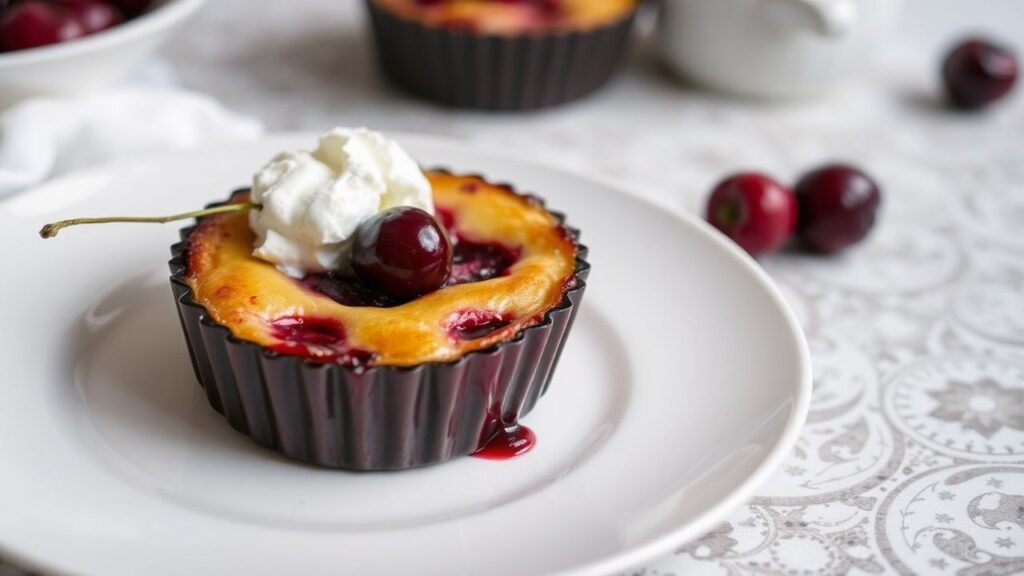
Serve warm or at room temperature with powdered sugar. Add a spoon of crème fraîche for tang, or a light vanilla whipped cream for sweetness. For a broader look at dessert serving styles, browse French desserts.
For extra aroma, try a pinch of vanilla extract or a small amount of lemon zest in the batter. Keep add-ins modest so they don’t overpower the cherry character that defines the dish.
Prep and Cook time
- Prep: 20 minutes
- Rest Batter: 15 minutes
- Cook: 35–40 minutes
Yield
Serves 6–8 generously sized portions. It slices well for brunch, dinner dessert, or bake-sale trays.
For smaller groups, reduce the dish size rather than compressing the same depth. A deeper pan needs a longer bake to set properly.
Difficulty Level
Medium—ideal for home cooks who want a repeatable baked custard result without complicated steps. Once you nail the batter consistency, the bake becomes almost routine.
Clafoutis rewards attention to whisking and baking time. Those two points influence texture more than fancy ingredients.
Ingredients
- 1 ½ cups fresh black cherries, pitted (or frozen, thawed and drained)
- 3 large eggs, at room temperature
- ¾ cup granulated sugar, plus extra for dusting
- 1 cup unbleached all-purpose flour, sifted
- 1 ¼ cups whole milk (or half-and-half for richer custard)
- ½ cup heavy cream (optional, for added silkiness)
- 2 teaspoons pure vanilla extract
- Pinch of fine sea salt
- Unsalted butter for greasing the dish
Instructions
- Preheat your oven to 180°C (350°F). Generously butter a 9-inch round or oval baking dish and sprinkle granulated sugar over the bottom and sides. Tap out excess to prevent a grainy crust.
- Prepare the batter: In a large bowl, whisk eggs and sugar vigorously until pale and slightly airy, about 3 minutes. You want a smooth, creamy mixture that pours easily.
- Sift flour and salt over the egg mixture. Gently fold until just combined and smooth. Stop as soon as you remove dry pockets to keep the custard tender.
- Gradually pour in milk and cream while whisking steadily to avoid lumps. Whisk until the batter looks glossy and uniform. Fold in vanilla extract at the end.
- Rest batter at room temperature for 15–20 minutes. During rest, flour hydrates and the batter thickens slightly for a better set.
- Arrange cherries in an even layer in the sugar-coated dish. Pour batter over the fruit so it disperses and fills gaps.
- Bake 35–40 minutes on the middle rack. The clafoutis should rise and turn golden, with a slight wobble in the center when you gently move the pan.
- Cool for 10 minutes before serving. The center sets further as it cools, so slicing too early can look underdone.
Tips for Success
For an authentic cherry flavor, you can leave pits in if you’re comfortable and serving adults. Classic French practice sometimes does this for subtle aroma, while many home cooks pit for safety and convenience.
If the batter seems too thick, add milk a tablespoon at a time until it flows like thin batter. If it’s too thin, check flour measurement and avoid over-draining fruit next time.
Use even baking heat. A baking dish that’s too small makes the clafoutis too thick, while a dish that’s too large spreads it thin and dries the custard edges.
Make-ahead also works. Bake a day ahead, cool completely, then rewarm gently at 150°C (300°F) for about 10 minutes. Don’t overheat, or the custard can tighten.
Serving Suggestions
Present clafoutis on a rustic board or a simple plate to highlight the contrast between golden crust and glossy fruit. Dust powdered sugar right before serving so it looks crisp on top.
Fresh mint or lemon balm adds color and light herbal notes. For extra indulgence, serve with softly whipped crème fraîche or a small scoop of vanilla bean ice cream.
Pair with tea or mild coffee to match the dessert’s sweet-tart character. The goal is a clean finish that lets the cherry flavor stay clear rather than competing.
To understand how flavor balance shapes dessert enjoyment, you can reference umami in a general sense, even though clafoutis isn’t built for “savory” notes. Dairy proteins and browned sugars can add depth that tastes “round” to many palates.
| Nutrient | Per Serving |
|---|---|
| Calories | 210 kcal |
| Protein | 6 g |
| Carbohydrates | 33 g |
| Fat | 6 g |
For more context on French dessert techniques, you can explore French pastry and how baked custards fit into broader traditions. For a general look at cooking temperatures and how ovens affect results, review ovens as a heat tool.
FAQ
What exactly is clafoutis?
Clafoutis is a French baked dessert that combines fruit and a custard-like batter. Cherries typically bake into a soft, flan-adjacent center with a golden top.
Its texture sits between a pancake batter set and a baked pudding, which is why the center often wobbles slightly before cooling.
Do I need to pit cherries for clafoutis?
Traditionally, whole cherries can stay unpitted in some French styles. Many cooks pit for practicality and safety, especially when serving children.
Either way works, but draining thawed cherries matters if you use frozen fruit.
Why did my baked cherry custard come out dense?
Denseness usually comes from overmixing, under-whisking eggs, or using too much flour. Make sure you whisk eggs and sugar until pale and smooth.
Also fold flour gently and bake until the center shows a slight wobble, then cool to finish setting.
Can I make clafoutis with other fruits?
Yes. Plums, blueberries, peaches, and figs work if the fruit holds shape and doesn’t flood the batter with excess juice.
Choose fruit that bakes well and keep wet fruits drained to protect custard texture.
How should I store clafoutis?
Cool the clafoutis completely, then cover and refrigerate. Eat within 2–3 days for best texture and flavor.
Rewarm gently at 150°C (300°F) for about 10 minutes to restore softness without drying the custard.
See also: Clafoutis