
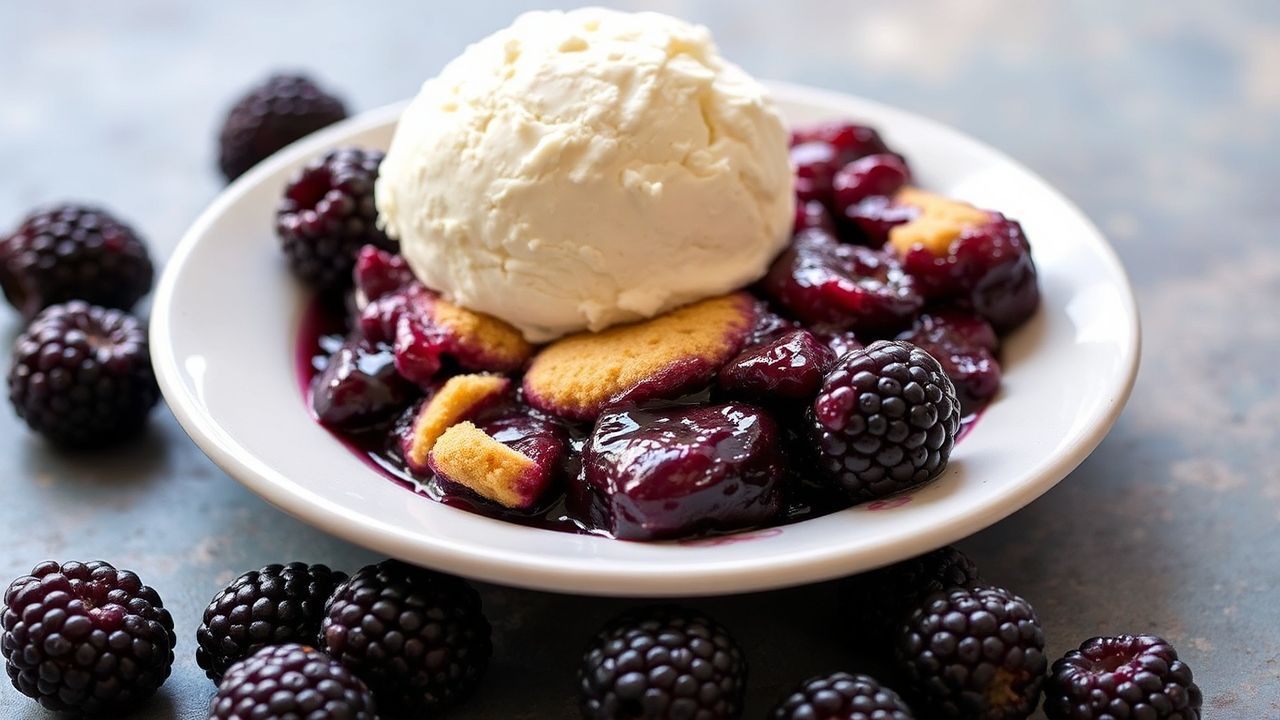
Blackberry cobbler is a sweet slice of summer’s best fruit, and it earns that spot for one simple reason: juicy berries turn silky under heat, while the topping bakes into a tender, golden crust. When you use ripe blackberries and a balanced filling, the dessert tastes bright, not harsh—sweet first, then pleasantly tart.
At a Glance
- Use peak-ripe blackberries so the filling turns jammy, not watery.
- Toss with cornstarch to thicken berry juices while baking.
- Keep butter cold for a flaky, biscuit-like texture.
- Rest before serving so the filling sets and slices cleanly.
Blackberry cobbler also fits busy home kitchens. It follows a straightforward method: macerate the fruit, spoon on a simple batter or biscuit topping, then bake until the berries bubble and the crust browns.
Why Blackberry Cobbler Tastes Like Summer
Summer flavor comes from both fruit and technique. Blackberries peak when they look deep and glossy and when they give slightly to gentle pressure, which signals more balanced sugars and acids for baking.
Then heat does the rest. Fruit pectin and starch-thickening work together so the filling turns spoonable and glossy, while the topping sets as moisture rises and evaporates.
If you want a fuller berry profile, pay attention to acidity. You can lean sweet by adjusting sugar, but you should keep enough tartness so the cobbler tastes lively instead of flat.
For background on how fruits change in cooking, see fruit and cooking.
The flavor balance: sweet, tart, and buttery
Blackberries naturally deliver a mix of sugar and acid. That mix matters because the topping bakes with its own sweetness, and the pairing should feel rounded—never cloying.
A small amount of lemon juice sharpens the berry taste and helps the filling pop. Lemon also supports the perception of freshness even when the berries turn darker during baking.
What makes a cobbler different from a pie
People often compare cobbler and pie because both use fruit and bake in a dish. The key difference is structure: cobbler relies on a drop batter or biscuit-like topping rather than a fully rolled crust.
That’s why cobbler feels casual and spoonable. You get a hearty filling plus a soft, custard-adjacent topping that still browns at the edges.
Prep and Cook Time
Planning ahead keeps results consistent. Preheating the oven correctly helps the topping set fast, so it bakes through before the berries lose too much body.
Use a timer and check visual cues, not guesswork. Blackberry bubbling should look active, and the topping should show an even golden color.
- Preparation: 20 minutes
- Cooking: 40 minutes
- Total Time: 1 hour
Yield
This blackberry cobbler recipe makes a generous pan that feeds a crowd. It holds up well for dinner parties because it serves warm and stays flavorful for leftovers.
If you want smaller portions, bake in individual dishes. Smaller ramekins brown faster and set quicker, which can improve texture for groups.
- Serves 8 generous portions
Difficulty Level
You don’t need advanced pastry skills for blackberry cobbler. The topping comes together with common pantry items, and the assembly step is forgiving.
Focus on two details—cold butter and gentle mixing—and you’ll avoid a tough, dense crust.
- Easy to Medium – perfect for bakers of all skill levels eager to impress
Ingredients
Quality ingredients matter most for fruit desserts. Pick blackberries that smell sweet, not grassy, and use fresh lemon for bright flavor.
For best texture, measure flour correctly. Spoon flour into the measuring cup and level it off to prevent a dry topping.
For the Blackberry Filling
- 5 cups fresh blackberries, washed and drained
- 3/4 cup granulated sugar
- 2 tablespoons cornstarch
- 1 tablespoon freshly squeezed lemon juice
- 1 teaspoon pure vanilla extract
- 1/4 teaspoon ground cinnamon
For the Cobbler Crust
- 1 1/2 cups all-purpose flour, sifted
- 1/2 cup granulated sugar
- 1 1/2 teaspoons baking powder
- 1/4 teaspoon fine sea salt
- 6 tablespoons cold unsalted butter, cubed
- 1 large egg, beaten
- 1/2 cup whole milk
- Optional: turbinado sugar for sprinkling
Step-by-step Guide to Baking the Ideal Blackberry Cobbler
Start by organizing your tools. Set out a mixing bowl for the fruit, a second bowl for the crust, and a baking dish sized to spread the filling evenly.
When you follow the order below, the topping bakes through while the berries thicken into a jammy layer.
- Preheat your oven to 375°F (190°C) and lightly grease a 9-inch (23 cm) square baking dish or equivalent.
- Prepare the blackberry filling: In a large bowl, gently toss blackberries with sugar, cornstarch, lemon juice, vanilla extract, and cinnamon. Set aside to macerate while making the crust.
- Mix dry ingredients for the crust: In a separate bowl, combine flour, sugar, baking powder, and salt.
- Cut in the cold butter: Use a pastry blender or clean fingers to work butter into the dry ingredients until the mixture resembles coarse crumbs with some pea-sized pieces.
- Incorporate wet ingredients: Whisk beaten egg and milk, then stir into the flour mixture until just combined. The batter should look thick but still spoonable.
- Assemble the cobbler: Pour the blackberry filling into the baking dish and spread evenly. Spoon dollops of the crust batter over the berries, leaving gaps so steam can vent and juices can bubble.
- Optional: Sprinkle turbinado sugar over the topping for a lightly crunchy, golden finish.
- Bake for 35-40 minutes until the crust is golden and the filling bubbles through the gaps.
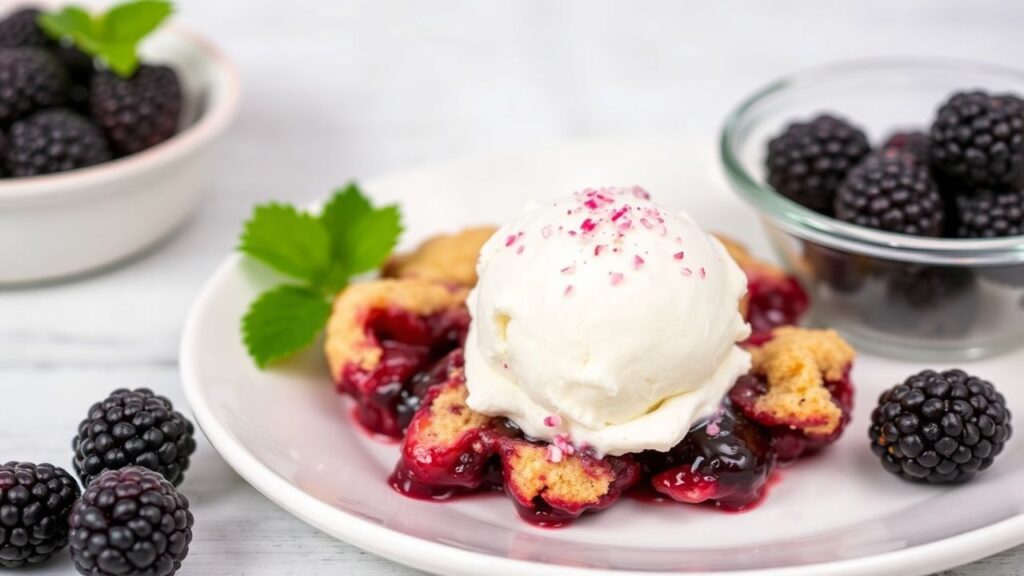
- Cool for at least 15 minutes so the juices thicken. Serve warm for best flavor and texture.
For more on starch thickening, reference starch. For baking science basics, see baking.
Expert Tips for Serving and Storing Your Blackberry Cobbler
Serve blackberry cobbler warm so the topping tastes tender and the filling stays glossy. Warm cobbler also blends best with dairy toppings because heat softens the contrast.
When you store leftovers, cover them quickly. Cooling too slowly can dull texture because steam keeps moving inside the dish.
- Serving: Spoon into bowls and top with vanilla ice cream or whipped cream. Add a small pinch of cinnamon for extra aroma.
- Storing: Cover and refrigerate for up to 3 days. Reheat at 325°F (160°C) until warm.
- Make-ahead: Assemble and refrigerate unbaked up to the night before, then bake fresh.
- Variation: Add a few teaspoons of finely chopped rosemary or swap lemon for a touch of orange zest.
💡 Expert Insight
Expert Insight:
[TIP]Expert Insight: For a thicker, sliceable filling, aim for visible bubble coverage near the center. If the center stays quiet, bake 5 more minutes and check again.
⚠️ Pro-Caution
Pro-Caution:
[WARNING]Pro-Caution: Don’t overmix the batter. Overmixing develops gluten and can turn the topping dense instead of tender.
[TIP]Expert Insight: For a thicker, sliceable filling, aim for visible bubble coverage near the center. If the center stays quiet, bake 5 more minutes and check again.
⚠️ Pro-Caution
Pro-Caution:
[WARNING]Pro-Caution: Don’t overmix the batter. Overmixing develops gluten and can turn the topping dense instead of tender.
[WARNING]Pro-Caution: Don’t overmix the batter. Overmixing develops gluten and can turn the topping dense instead of tender.
For fruit handling guidance, use blackberry to understand the fruit type and how it behaves when cooked.
Tips for Success
Small choices improve the final bake. Treat blackberries gently before baking because bruised fruit releases extra liquid and can thin the filling.
Also, keep butter cold right up to mixing. Cold fat creates pockets that steam and set, giving the cobbler topping a better crumb.
- Choose fully ripe blackberries—plump, deep black with a glossy sheen.
- Do not overmix the crust batter to keep it light and tender.
- If berries taste very tart, add 1-2 tablespoons more sugar.
- Keep butter cold until you cut it into the dry ingredients.
- Use a shallow dish for more even browning and caramelization.
If you want a quick read on why fruit thickens in heat, see fruit preservation.
Nutritional Snapshot (Per Serving)
Nutrition can vary based on portion size and ingredient brands. This estimate helps you plan dessert servings without surprises.
Keep in mind that adding ice cream or whipped cream changes totals quickly, so adjust if you track calories.
| Nutrient | Per Serving |
|---|---|
| Calories | 320 kcal |
| Protein | 4 g |
| Carbohydrates | 52 g |
| Fat | 9 g |
FAQ
Here are quick, practical answers for common blackberry cobbler questions. Use these notes to troubleshoot texture and flavor before your next bake.
If you make changes, adjust one variable at a time so you can tell what improved (or what didn’t).
Why is my blackberry cobbler watery?
Watery cobbler usually comes from underbaking or insufficient thickening. Make sure you bake until the filling bubbles throughout, and double-check that you measured cornstarch correctly. Also drain blackberries well before mixing.
Can I use frozen blackberries?
Yes, but treat them the right way. Thaw first and drain excess liquid, then follow the same filling steps. Frozen berries can release more juice, so bubbling for 5 extra minutes can help set the filling.
How do I prevent a dense crust topping?
A dense topping comes from overmixing or warm butter. Mix until just combined, and keep the butter cold when cutting it into the flour. If your topping looks tough, mix less next time rather than adding extra liquid.
What’s the best way to serve blackberry cobbler?
Serve it warm after a short rest of about 15 minutes. Warm cobbler tastes best with vanilla ice cream, whipped cream, or plain yogurt for a lighter tang.
Can I make blackberry cobbler ahead?
You can assemble it ahead and refrigerate it unbaked overnight. Bake fresh the next day for the best topping texture. If you bake ahead, reheat gently at 325°F (160°C) to refresh the crust.
Enjoying a blackberry cobbler feels like capturing summer in a spoon. With ripe berries, a thickened filling, and a golden topping, you get a dessert that’s comforting, bright, and always worth sharing.
See also: blackberry cobbler