
There is something magical about the first spoonful of cold, sweet dessert that still tastes bright and light. Raspberry sherbet delivers that exact feeling with a tangy berry flavor and a creamy finish that sits between sorbet and ice cream.
- Unlocking the Health Benefits Behind This Fruity Delight
- Prep and Cook Time
- Yield
- Difficulty Level
- Ingredients
- Instructions: Crafting Perfectly Tangy Raspberry Sherbet
- Expert Tips for Making Raspberry Sherbet at Home Like a Pro
- Creative Pairings and Serving Suggestions to Elevate Your Enjoyment
- Q&A
- Q1: What makes raspberry sherbet different from regular raspberry sorbet or ice cream?
- Q2: Why choose raspberries for sherbet?
- Q3: Can raspberry sherbet be made at home without fancy equipment?
- Q4: How can I prevent icy texture in my sherbet?
- Q5: Can raspberry sherbet be made vegan or dairy-free?
- Final Thoughts
Raspberries bring natural tartness, color, and a fruit-forward aroma. Meanwhile, the dairy base helps the mixture freeze smoothly and melt evenly, so every scoop feels velvety, not icy. If you want a cool treat that tastes like summer and stays easy to make, this raspberry sherbet guide gives you clear steps and smart results.
- Texture matters: Chill well, then churn for a scoopable finish.
- Flavor balance: Adjust lemon and sugar to keep the berry tang.
- Best berries: Ripe raspberries give the deepest aroma and color.
- Make-ahead wins: A rest in the fridge improves flavor blending.
Unlocking the Health Benefits Behind This Fruity Delight
Raspberry sherbet can taste indulgent without feeling heavy, especially when you use fruit flavor as the main driver. Raspberries contain natural polyphenols and vitamin C, which supports a healthy diet pattern and adds a lively taste profile.
Raspberries also contribute dietary fiber, which can help you feel more satisfied after a sweet course. For background on the fruit itself, see raspberries on Wikipedia.
Because sherbet includes a dairy component, it tends to deliver a smoother mouthfeel than fruit-only ice desserts. That blend also helps your palate notice the berry notes more clearly, since fat and proteins carry flavor compounds.
To understand how antioxidants in fruits connect with plant compounds, review antioxidants on Wikipedia. This does not turn dessert into medicine, but it supports why fruit-forward treats can fit well in balanced eating.
Prep and Cook Time
Prep stays quick because you only puree fruit, whisk the dairy base, and chill. The main waiting time happens while the mixture rests for smoother freezing.
- Readiness Time: 15 minutes
- Churn/Freeze Time: 4 hours (or overnight)
- Total Time: Approximately 4 hours 15 minutes
Yield
This recipe makes about 6 generous portions. You can scale it up, but keep the same dairy-to-fruit ratio so texture stays consistent.
Plan portioning in advance for easier serving at gatherings. For general guidance on dessert serving sizes and portion control, see serving size on Wikipedia.
Difficulty Level
Difficulty stays easy to medium. You do not need complicated cooking skills, but you must follow chilling and churning steps.
If you use an ice cream maker, follow its manual timing for best results. For the science of frozen textures, you can also review ice cream basics on Wikipedia.
Ingredients
Use fresh berries when possible, and rinse them gently. Frozen raspberries also work well because the flavor stays strong after thawing.
- 3 cups fresh raspberries, gently washed
- 1 cup granulated sugar
- 1 cup whole milk
- 1/2 cup heavy cream
- 2 tbsp freshly squeezed lemon juice
- 1 tsp finely grated lemon zest
- 1/4 tsp salt
- 1 tsp pure vanilla extract
Instructions: Crafting Perfectly Tangy Raspberry Sherbet
Start by blending fruit and sugar into a smooth puree. Then build the dairy base, combine them, and chill long enough for a stable freeze.
- Blend the Berries: In a blender or food processor, combine raspberries and sugar. Pulse until smooth, then press through a fine mesh sieve for seed removal if you want a silkier texture.
- Mix the Dairy Base: In a bowl, whisk whole milk, heavy cream, lemon juice, lemon zest, salt, and vanilla until fully combined. The mixture should look creamy and evenly tinted.
- Combine & chill: Stir the raspberry puree into the dairy blend. Cover and refrigerate for at least 2 hours, ideally longer, so flavors blend and the base stays cold.
- Churn to Perfection: Pour the chilled mixture into an ice cream maker and churn as directed (often 20 to 25 minutes). Aim for a soft-serve consistency.
- Freeze Until Set: Transfer to an airtight container and smooth the top. Freeze at least 2 hours for clean scoops.
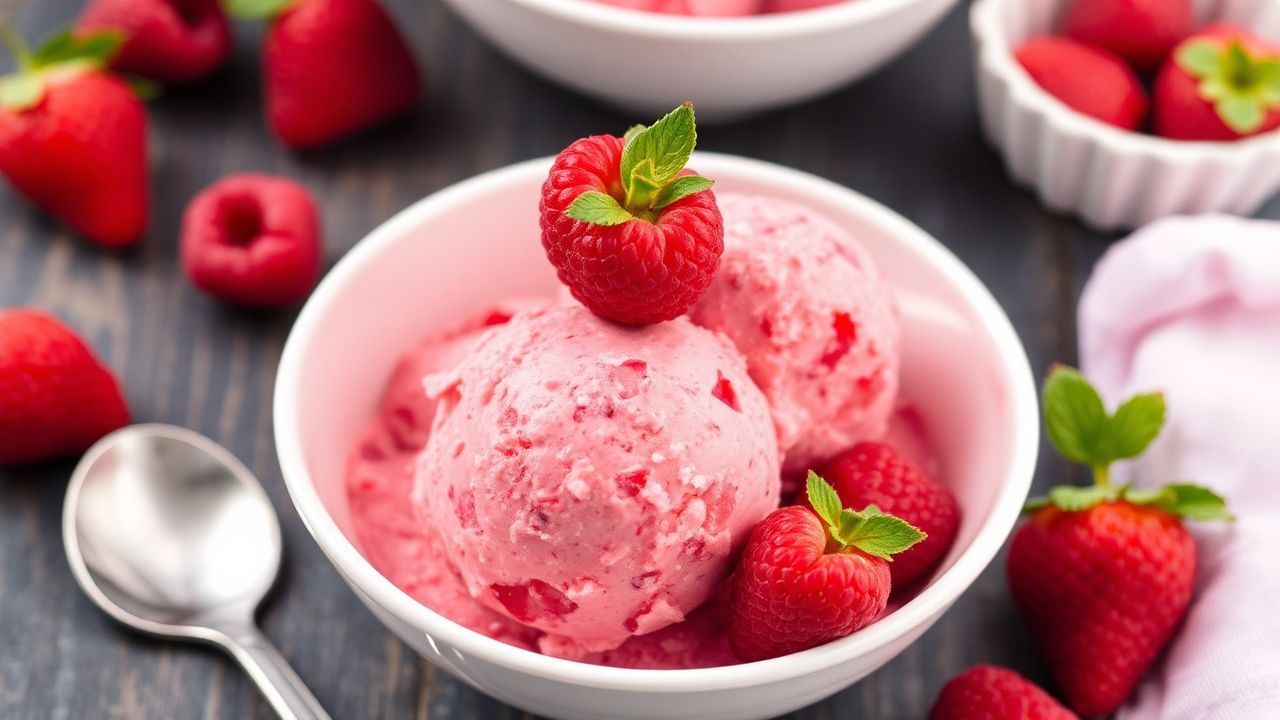
- Serve & Enjoy: Scoop into chilled bowls. Garnish with fresh raspberries or mint for a bright finish.
Serve right away or store properly. If you freeze longer, let it sit 2 to 5 minutes at room temperature before scooping for easier serving.
Expert Tips for Making Raspberry Sherbet at Home Like a Pro
Small choices change taste and texture, especially with high-water fruit like raspberries. Use these tips to control sweetness, tang, and freeze quality.
- Select Ripe Raspberries: Choose fruit that smells sweet and looks plump. Riper berries bring stronger aroma and natural sweetness.
- Seed removal enhances texture: Straining reduces seed speckle and keeps the sherbet smooth. This also improves the way it melts on the tongue.
- Balance sweetness and tang: Taste the puree-dairy blend before chilling. Add a little more lemon juice for extra brightness or a touch more sugar if berries taste sharp.
- Churn cold: A cold machine bowl helps the mix freeze faster. Faster freezing usually helps texture stay creamy.
- Make-ahead magic: Chill the base overnight if you can. Resting helps flavors merge and can reduce harsh raw berry notes.
Also keep portion sizes in mind when freezing. Airtight storage limits ice buildup and protects aroma, so the next scoop tastes fresh.
Creative Pairings and Serving Suggestions to Elevate Your Enjoyment
Raspberry sherbet pairs well with flavors that either echo berry brightness or add rich contrast. Think crunchy, creamy, and slightly bitter notes to make the tang stand out.
For a crisp pairing, serve it with almond biscotti or a pistachio tuile. The crunch adds structure, and the nut notes complement the berry’s fruit aroma.
If you want a deeper contrast, try a spoonful over a dark chocolate dessert. The berry tang cuts through cocoa richness and keeps the finish from feeling heavy.
You can also use herbs to lift aroma. Try fresh mint or basil, then add a honey drizzle for gentle sweetness. For more food science around sweeteners and flavor balance, see honey on Wikipedia.
For a visual boost, scoop into chilled glasses. Add edible flowers only if they are food-grade and pesticide-free, and keep the garnish light so the sherbet stays the star.
| Nutritional Info (per serving) | Amount |
|---|---|
| Calories | 150 kcal |
| Protein | 2 g |
| Carbohydrates | 28 g |
| Fat | 4 g |
Nutrition values vary by brand of dairy and berry sweetness. If you want more detail on how nutrients like fiber and fat differ across foods, use dietary fiber on Wikipedia as a reference point.
For more frozen dessert inspiration, consider exploring other fruit-based classics such as granita and sorbet styles. You can compare techniques and textures in sorbet on Wikipedia.
Q&A
Q1: What makes raspberry sherbet different from regular raspberry sorbet or ice cream?
Raspberry sherbet blends fruit flavor with a dairy component. That dairy adds creaminess, while sorbet stays fruit-and-sugar based with no dairy.
It ends up lighter than many ice creams, yet smoother than many sorbets. For a broader comparison of frozen desserts, see ice cream on Wikipedia.
Q2: Why choose raspberries for sherbet?
Raspberries carry natural tartness and sweetness, so the flavor stays lively even after freezing. They also produce a vivid pink-red color that looks inviting in any bowl.
Raspberries also contain plant compounds and vitamin C. For fruit background, review raspberry on Wikipedia.
Q3: Can raspberry sherbet be made at home without fancy equipment?
An ice cream maker makes texture smoother, but it is not the only path. You can still freeze and stir the mixture every 30 to 45 minutes to break up ice crystals.
Expect a slightly denser texture with less airy softness. For general freezing concepts, see freezing on Wikipedia.
Q4: How can I prevent icy texture in my sherbet?
Chill the base fully before churning, and store the finished sherbet in an airtight container. Cold starting temperature and good coverage reduce large ice crystal formation.
Also avoid frequent thaw-and-refreeze cycles. Even a small temperature swing can change texture over time.
Q5: Can raspberry sherbet be made vegan or dairy-free?
Yes, you can swap dairy for a plant-based alternative such as coconut milk or cashew cream. The key is to choose a product that thickens slightly and helps the mixture freeze with a creamy mouthfeel.
Texture will differ from traditional sherbet, but you can still keep a bright raspberry flavor. For general background on coconut products, see coconut on Wikipedia.
Final Thoughts
Raspberry sherbet turns a classic frozen dessert idea into a bright, tangy treat you can make at home. When you balance lemon, sugar, and dairy, the result feels light yet satisfying.
Prepare the base ahead, churn when cold, and freeze until scoopable. Then serve it with simple garnishes that highlight the berry color and fresh aroma.
If you want a dependable summer dessert with real fruit taste, this raspberry sherbet recipe delivers. Each spoonful brings a cool pop of tang, a smooth finish, and a familiar classic you can revisit anytime.[/content]
See also: raspberry sherbet