

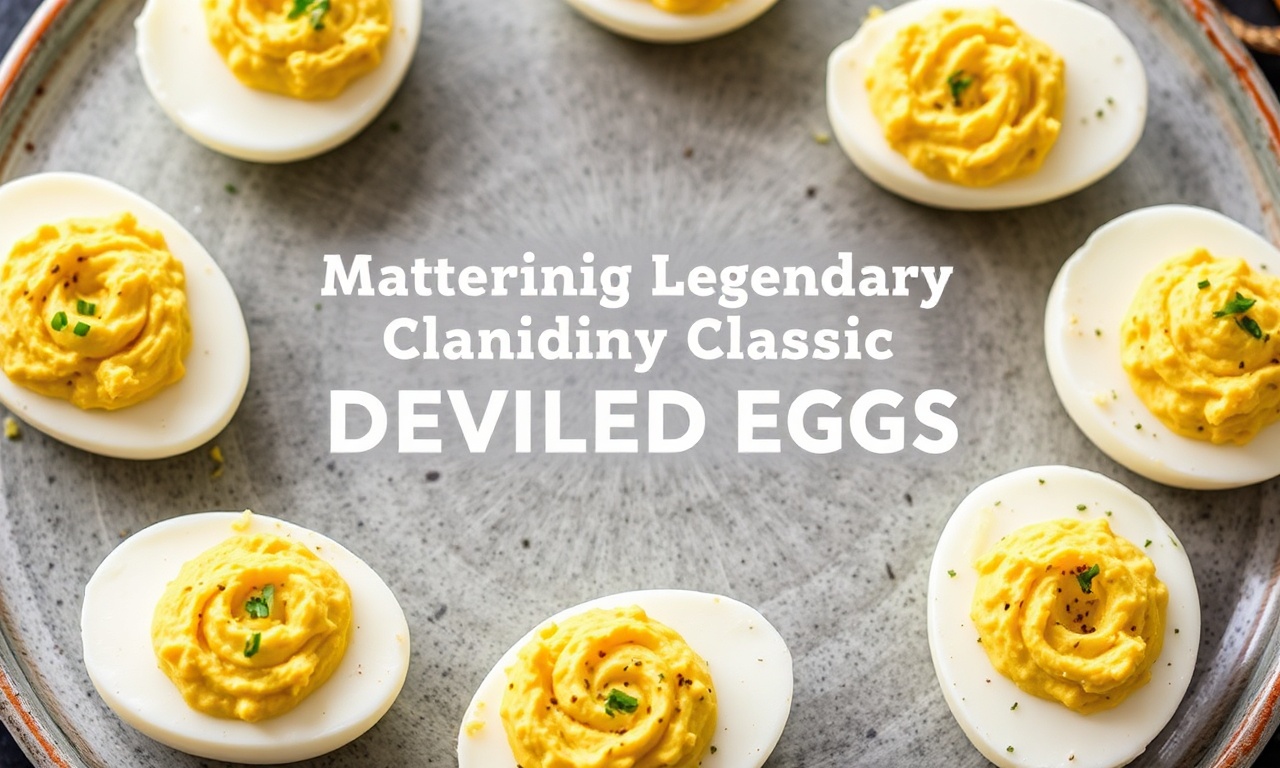
Mastering Legendary: The Proven Art of Deviled Eggs
- Mastering Legendary: The Genesis of a Timeless Classic: A Culinary History
- Mastering Legendary in The Foundation of Flavor: Selecting and Cooking the Perfect Egg
- Crafting the Creamy Core: The Art of the Yolk Filling
- Elevating the Classic: Signature Twists and Flavor Enhancements
- Presentation is Paramount: Garnish and Serving Suggestions
- Make-Ahead Strategies and Storage Secrets
- Frequently Asked Questions
- What is the ideal ratio of ingredients for a classic deviled egg filling?
- How can I ensure my deviled eggs don’t have a watery or slimy texture?
- Are there any dietary restrictions I should consider when making deviled eggs?
- What is the best way to transport deviled eggs to a party?
- Can I use flavored mayonnaise or mustard for deviled eggs?
- The Enduring Allure of the Deviled Egg
When it comes to Mastering Legendary, Could a simple appetizer, born from humble beginnings, truly hold the key to culinary elegance and nostalgic delight? For generations, the deviled egg has graced tables from casual backyard barbecues to sophisticated soirées, proof of its enduring appeal. It’s more than just a snack; it’s a comforting echo of shared meals and joyous occasions. But what separates a good deviled egg from a truly legendary one? It’s a blend of technique, ingredient quality, and a touch of personal flair. This guide will unlock the secrets to elevating this classic dish, ensuring your deviled eggs are not just remembered, but craved.
Mastering Legendary deviled eggs is about transforming the familiar into the unforgettable, proving that simple ingredients, handled with care and creativity, can achieve culinary artistry.
Our journey begins with the very foundation: the egg itself. While seemingly straightforward, the process of selecting, cooking, and preparing eggs for deviled perfection is an art form. The ideal hard-boiled egg for deviled eggs possesses a firm, yet tender yolk, free from the tell-tale greenish sulfur ring, encased in a whites that are perfectly cooked and easy to handle. Achieving this requires precision in timing and temperature. Many home cooks struggle with overcooked yolks or eggs that are difficult to peel, leading to imperfect halves that detract from the final presentation. Understanding the subtle science behind perfect hard-boiling is the first, crucial step in Mastering Legendary deviled eggs.
Mastering Legendary: The Genesis of a Timeless Classic: A Culinary History
In the context of Mastering Legendary, The deviled egg, as we know it today, has roots stretching back centuries. While its exact origin is debated, early forms of preserving and serving eggs can be traced to ancient Rome. The term “deviled” itself likely emerged in the 18th century, referring to dishes spiced with mustard and other “devilish” ingredients, implying a certain heat or zest. Over time, this concept evolved, and by the early 20th century, the classic deviled egg recipe, featuring a creamy yolk filling, became a staple. Its popularity surged due to its affordability, ease of preparation, and versatility.
Around Mastering Legendary, It’s a dish that has been passed down through generations, each family often adding its own unique twist, further solidifying its status as a comforting, timeless classic. According to historical culinary texts, early recipes often involved elaborate preparations, but the modern iteration emphasizes a balance of simplicity and flavor that resonates universally.
Why Mastering Legendary Matters: From Ancient Rome to Modern Tables
Regarding Mastering Legendary, The concept of “deviled” foods, characterized by piquant seasonings, was popular in 18th-century England. Early American recipes for deviled eggs appeared in the late 19th and early 20th centuries, often appearing in household cookbooks. The advent of mayonnaise in the early 20th century provided a creamy binder that revolutionized the texture and richness of the deviled egg filling, solidifying its place in American culinary tradition.
Mastering Legendary in The Foundation of Flavor: Selecting and Cooking the Perfect Egg
Achieving the perfect hard-boiled egg is paramount to Mastering Legendary deviled eggs. The goal is a yolk that is fully cooked but still moist and vibrant, and whites that are firm but not rubbery. The trick lies in controlling the cooking process precisely.
The Science of the Perfect Boil
When it comes to Mastering Legendary, The greenish ring often found around hard-boiled egg yolks is a result of a chemical reaction between sulfur in the egg white and iron in the yolk when overcooked. To prevent this, a swift cooking and chilling process is essential.
- Egg Selection: While fresh eggs are ideal for most culinary applications, slightly older eggs (about a week old) tend to peel more easily. This is because the air cell within the egg enlarges with age, and the membrane detaches more readily from the shell. Opt for large eggs, and if possible, free-range for superior flavor and color.
- The Gentle Boil Method: Place eggs in a single layer at the bottom of a saucepan. Cover them with cold water by about an inch. Bring the water to a rolling boil over medium-high heat. As soon as the water reaches a full boil, immediately remove the pan from the heat, cover it tightly with a lid, and let the eggs sit undisturbed.
- Precise Timing for Perfection: For a firm yolk that is still creamy and free of the dreaded green ring, let the eggs sit in the hot water for 10-12 minutes. This duration ensures the yolks are cooked through without becoming dry or chalky.
- The Ice Bath Shock: After the steeping time, promptly transfer the eggs to a bowl filled with ice and water. This ice bath is crucial for two reasons: it stops the cooking process immediately, preventing further overcooking and the formation of the sulfur ring, and it causes the egg to contract slightly, pulling away from the shell and making peeling significantly easier. Allow them to chill for at least 5-10 minutes.
In the context of Mastering Legendary, [IMAGE_PROMPT: A close-up overhead shot of perfectly hard-boiled eggs in an ice bath, showing condensation on the shells, with vibrant yellow yolks visible through slightly cracked shells.]
Crafting the Creamy Core: The Art of the Yolk Filling
Around Mastering Legendary, Once your eggs are perfectly cooked and cooled, the magic truly begins with the filling. This is where the “deviled” aspect comes to life, transforming plain yolks into a rich, flavorful emulsion. The classic ratio is a delicate balance, but the true artistry lies in how you refine it.
The Quintessential Deviled Egg Formula
Regarding Mastering Legendary, The heart of any great deviled egg is the creamy mixture of mashed yolks, emulsified with fat and acid. The quality of your mayonnaise and mustard will significantly impact the final taste.
- Scoop and Mash: Carefully slice the cooled hard-boiled eggs in half lengthwise using a sharp knife. Gently scoop out the yolks into a medium-sized bowl. Set the egg white halves aside on a serving platter. Mash the yolks thoroughly with a fork or a potato masher until they are as smooth as possible, breaking down all lumps.
- The Emulsification Base: To the mashed yolks, add your primary binding agent: high-quality mayonnaise. A good quality, full-fat mayonnaise provides the essential creaminess and richness. Start with about 1.5 to 2 tablespoons per 6 eggs.
- The Tangy Counterpoint: Introduce Dijon mustard for its sharp, complex flavor. A teaspoon is usually sufficient for a classic profile, but adjust to your preference. Some recipes also call for a touch of dry mustard powder for a more pungent kick.
- Acidity for Brightness: A small amount of acid is crucial to cut through the richness and brighten the flavors. Apple cider vinegar or a squeeze of fresh lemon juice works wonderfully, adding a subtle tang without being overpowering. About half a teaspoon is a good starting point.
- Seasoning and Spice: Salt and freshly ground black pepper are non-negotiable. Taste and adjust as you go. For that signature “deviled” flavor, smoked paprika is a must, both for its subtle smoky notes and its beautiful color. A pinch of cayenne pepper can add a gentle warmth for those who like a little heat.
- Achieving Silky Smoothness: For an ultra-smooth filling, you can pass the mixture through a fine-mesh sieve after mashing and mixing. This is an optional step that elevates the texture to a truly professional level.
Elevating the Classic: Signature Twists and Flavor Enhancements
While the classic deviled egg is a masterpiece in its own right, there’s always room for innovation. Mastering Legendary means understanding the core recipe and then playfully experimenting with additions that complement, rather than overwhelm, the familiar flavors.
Beyond the Basics: Creative Additions
When it comes to Mastering Legendary, The beauty of the deviled egg is its adaptability. These additions can transform a simple appetizer into a gourmet bite.
- Textural Intrigue: For a delightful crunch and burst of flavor, finely mince ingredients like cornichons (gherkins), capers, or crisp pickles and mix them into the yolk filling. A tablespoon of finely chopped pimento can also add a sweet, piquant note.
- Herbal Freshness: Fresh herbs are a breakthrough. Finely chopped chives, dill, parsley, or tarragon can be mixed into the filling or used as a vibrant garnish. Their bright, aromatic qualities cut through the richness beautifully.
- A Touch of Umami: For a deeper, more savory profile, consider adding a small amount of finely minced sautéed mushrooms, a dash of Worcestershire sauce, or even a tiny amount of Dijon mustard powder for an extra punch.
- Spicy Innovations: Beyond cayenne, experiment with finely minced jalapeños, chipotle peppers in adobo sauce (use sparingly for a smoky heat), or a drizzle of your favorite hot sauce mixed directly into the filling.
- Creamy Alternatives: For a healthier twist, substitute some or all of the mayonnaise with plain Greek yogurt (full-fat for best texture) or mashed avocado. Avocado provides an incredible creaminess and a beautiful green hue.
A Case Study in Innovation: The “Smoked Salmon Delight”
In the context of Mastering Legendary, Consider the “Smoked Salmon Delight” deviled egg. The base filling is prepared classically, but then a small amount of finely chopped smoked salmon and a whisper of fresh dill are folded in. The paprika garnish is replaced with a tiny sprig of dill and a single caper. This simple substitution transforms the familiar into something elegant and sophisticated, perfect for a brunch or a more upscale gathering. It demonstrates how subtle additions can create entirely new flavor profiles while retaining the essence of the deviled egg.
Presentation is Paramount: Garnish and Serving Suggestions
The final flourish in Mastering Legendary deviled eggs lies in their presentation. How you arrange and garnish them can elevate the dish from homemade to haute cuisine.
The Art of the Garnish
Around Mastering Legendary, Garnishes are not just for decoration; they can add complementary flavors and textures.
- The Classic Dusting: A light dusting of smoked paprika is the quintessential garnish, providing a warm color and subtle smoky aroma.
- Herbaceous Accents: A tiny sprinkle of finely chopped chives, parsley, or dill adds a pop of green and fresh flavor.
- Color and Crunch: Consider using microgreens, edible flowers, or a sprinkle of sesame seeds for visual appeal. A sliver of radish can offer a peppery crunch.
- Piping Perfection: For a truly elegant presentation, use a piping bag fitted with a star tip to pipe the yolk mixture back into the egg white halves. This creates beautiful, uniform swirls that look professionally made.
Pairing for Perfection
Regarding Mastering Legendary, What you serve alongside your deviled eggs can enhance the entire culinary experience.
- Refreshing Companions: Offer crisp crudités like cucumber slices, bell pepper strips, or celery sticks. A light arugula salad with a lemon vinaigrette provides a peppery contrast.
- Beverage Pairings: For non-alcoholic options, sparkling elderflower lemonade or a zesty citrus mocktail are excellent palate cleansers. If serving cocktails, a ginger-infused gin fizz or a cucumber-mint cooler complements the creamy richness without overpowering it.
Make-Ahead Strategies and Storage Secrets
Mastering Legendary deviled eggs also means mastering the logistics of entertaining. Knowing how to prepare them in advance without sacrificing quality is a true skill.
The Art of Advance Preparation
When it comes to Mastering Legendary, The key to making deviled eggs ahead of time is to keep the components separate until just before serving.
- Separate and Conquer: Hard-boil and peel your eggs. Slice them in half and carefully scoop out the yolks. Store the egg white halves in an airtight container lined with a damp paper towel in the refrigerator. This prevents them from drying out.
- The Filling Sanctuary: Prepare the yolk filling and store it in a separate airtight container. If you plan to pipe the filling, transfer it to a piping bag fitted with your desired tip and seal the end tightly. Store both in the refrigerator.
- Assembly Time: Assemble the deviled eggs no more than 4-6 hours before serving. Piping the filling tends to hold up better than spooning for make-ahead scenarios.
- Chilling for Flavor Meld: Once assembled, cover the deviled eggs loosely with plastic wrap and refrigerate them for at least 30 minutes before serving. This allows the flavors to meld beautifully.
Storage Best Practices
Proper storage is crucial for maintaining freshness and preventing spoilage.
- Refrigeration is Key: Deviled eggs are a perishable food and must be kept refrigerated at all times.
- Airtight Protection: Always store deviled eggs in an airtight container to prevent them from absorbing other odors in the refrigerator and to keep them from drying out.
- Shelf Life: Properly stored, deviled eggs are best consumed within 2-3 days. Beyond this, the texture of the egg whites can begin to degrade, becoming watery or slimy.
Frequently Asked Questions
What is the ideal ratio of ingredients for a classic deviled egg filling?
In the context of Mastering Legendary, A classic starting ratio for 6 large eggs is typically 3 tablespoons of mayonnaise, 1 teaspoon of Dijon mustard, and salt and pepper to taste. Adjustments are then made for acidity (like a splash of vinegar) and spices (like paprika and cayenne). The key is to achieve a creamy, well-emulsified mixture that coats the back of a spoon.
How can I ensure my deviled eggs don’t have a watery or slimy texture?
Around Mastering Legendary, Overcooking the eggs is the primary culprit for a rubbery texture. Ensuring you use the ice bath method immediately after boiling stops the cooking process and tightens the egg whites. For make-ahead, assembling closer to serving time and storing the whites with a slightly damp paper towel also prevents them from drying out or becoming slimy.
Are there any dietary restrictions I should consider when making deviled eggs?
Deviled eggs are naturally low in carbohydrates. For dairy-free diets, ensure you use a high-quality vegan mayonnaise made from oils like avocado or soy. For those avoiding eggs, unfortunately, there isn’t a direct substitute that replicates the texture and flavor of a deviled egg.
What is the best way to transport deviled eggs to a party?
Use a specialized deviled egg carrier or a sturdy container with a lid. You can also place them on a baking sheet lined with paper towels and then carefully place them into a larger container. If assembling ahead, keep the filling separate and pipe or spoon it in just before serving to prevent the filling from sliding.
Can I use flavored mayonnaise or mustard for deviled eggs?
Absolutely! Flavored mayonnaises (like sriracha or garlic aioli) or mustards (like honey mustard or horseradish mustard) can introduce exciting new flavor dimensions. However, be mindful of their inherent sweetness or spiciness and adjust other seasonings accordingly.
The Enduring Allure of the Deviled Egg
Mastering Legendary deviled eggs is not about complex culinary acrobatics; it’s about attention to detail, respect for ingredients, and a willingness to refine a classic. From the perfectly boiled egg to the artful swirl of filling and the final, thoughtful garnish, each step contributes to a dish that consistently delights. Whether you stick to the time-honored traditions or venture into creative flavor combinations, the humble deviled egg remains proof of the power of simple food, expertly prepared, to bring people together and create lasting memories. It’s a dish that proves true legend isn’t always about reinventing the wheel, but about perfecting it.
RELATED TOPICS: Appetizer Recipes, Egg Dishes, Party Food Ideas, Classic Comfort Food, Culinary Techniques
See also: Mastering Legendary