
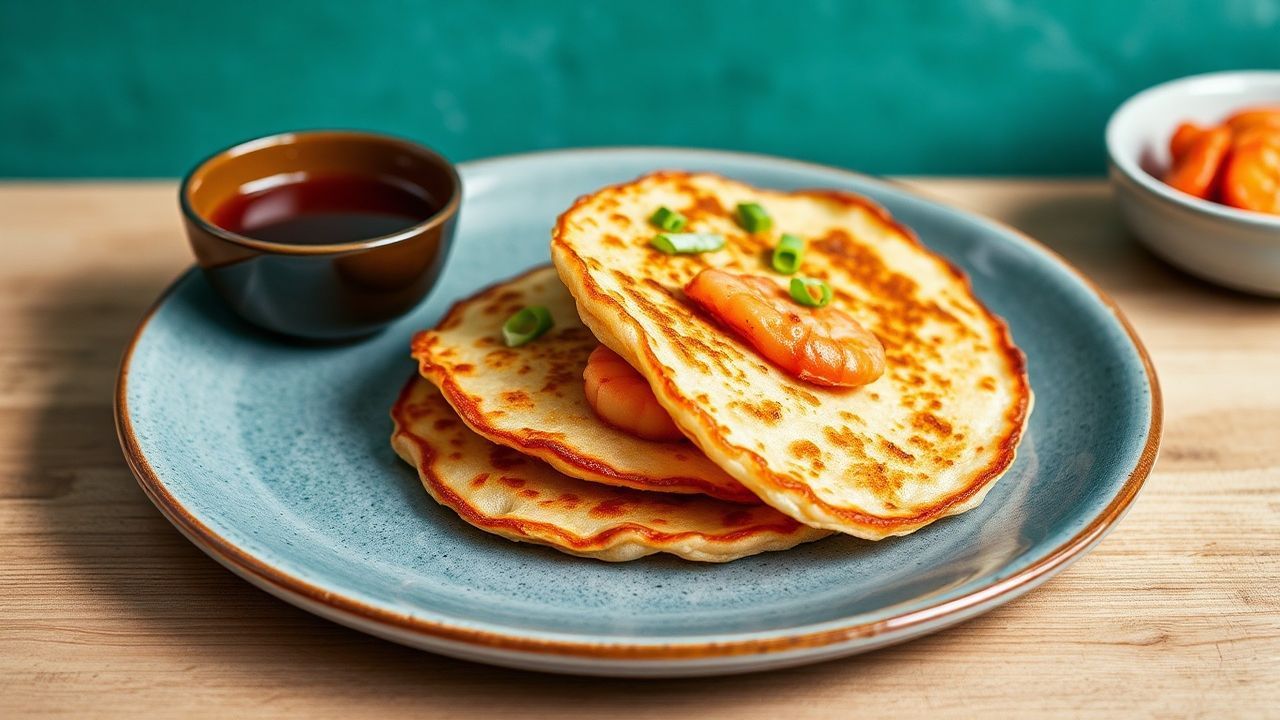
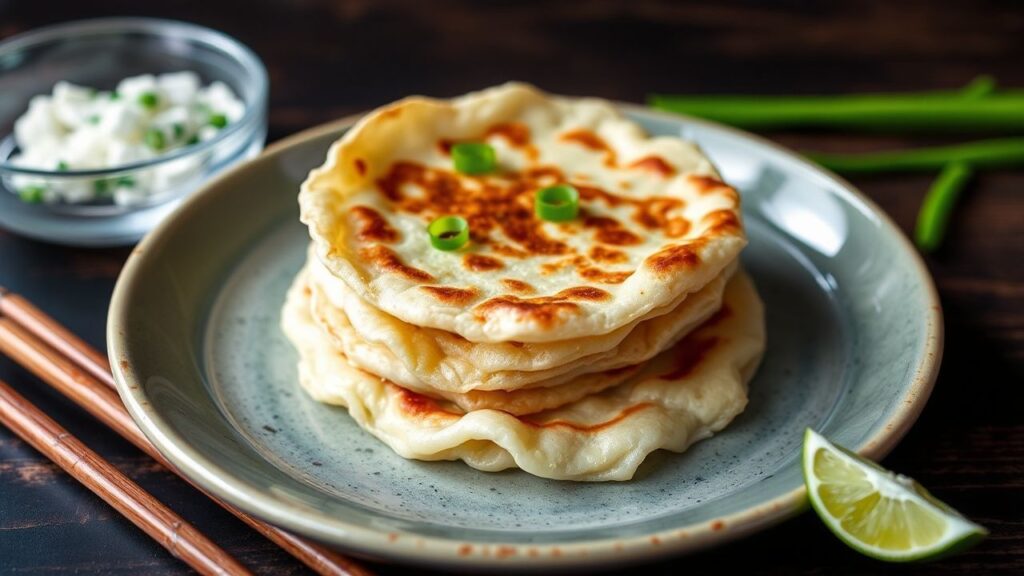
Crispy Seafood & scallion pancakes deliver a bold mix of crunchy pan-fried layers and a savory seafood filling. You get the ocean’s sweetness from shrimp and scallops, plus the clean bite of scallions. Serve them hot and you’ll see why this dish feels both comforting and exciting.
- Prep and Cook Time
- Yield and Difficulty
- Ingredients for Crispy Seafood & Scallion Pancakes
- Instructions (9 Steps for Maximum Crunch)
- Tips for Success
- Serving Suggestions
- Q&A
- What makes crispy seafood and scallion pancakes taste so balanced?
- Which seafood works best for this filling?
- Why do pancakes sometimes turn soggy even if they look browned?
- How can I keep the pancakes crisp while cooking the next batch?
- Can I make the dough and filling ahead of time?
- Final Thoughts
These are not just “good snacks.” With the right dough hydration and pan heat, you can create crisp edges, tender layers, and a filling that stays juicy instead of watery. If you’re aiming for restaurant-style texture at home, focus on technique first: dough rest, even rolling, and controlled frying.
- Crunch comes from heat control: medium-high frying and careful spacing in the pan.
- Flavor needs balance: umami seasoning in the seafood plus fresh scallion aroma.
- Structure prevents sogginess: cornstarch coating helps the filling stay set.
- Rest improves layers: kneading plus a 30-minute rest makes dough elastic.
At a glance: You’re building a thin dough base, then adding a seasoned seafood mixture, and finally frying until the outside turns crisp and golden. The scallions inside and on the surface add moisture control and fragrance as they caramelize.
This recipe centers on shrimp and sea scallops, but you can adapt with crab or firm white fish. For background on scallion flavor compounds, see scallion. For general seafood handling and freshness basics, review seafood.
Prep and Cook Time
Plan about 45 minutes for total active work, plus dough resting time. Your hands-on time stays manageable because each step focuses on one task: dough, filling, rolling, and frying.
Once you start pan-frying, work in batches so each pancake gets even contact with the skillet. Uneven crowding lowers surface temperature, which reduces crisping.
- Preparation: 25 minutes
- Cooking: 20 minutes
- Total Time: 45 minutes
Yield and Difficulty
This recipe makes about 4 generous servings, depending on how thick you roll each pancake. If you slice them into wedges, they also work well for sharing.
The difficulty level is Medium. The main challenge is rolling thin without tearing, then frying long enough for crisp edges without overcooking the seafood filling.
Ingredients for Crispy Seafood & Scallion Pancakes
Use fresh, firm seafood and cleanly chopped scallions. The dough needs simple ingredients, but your technique decides texture.
If you want a quick reference on why cornstarch thickens and sets, read cornstarch. It helps the filling hold its shape during frying.
- 1 cup all-purpose flour, sifted
- ½ cup boiling water
- 3 tablespoons vegetable oil, divided
- 4 scallions, finely sliced (separate white and green parts)
- 6 oz fresh shrimp, peeled, deveined, and finely chopped
- 4 oz sea scallops, finely chopped (optional: substitute with crab meat)
- 1 teaspoon kosher salt
- ½ teaspoon freshly ground white pepper
- 1 tablespoon soy sauce (low sodium preferred)
- 1 teaspoon toasted sesame oil
- 2 tablespoons cornstarch (for seafood coating)
- Fresh cilantro leaves, for garnish
- Chili oil or hoisin sauce, for serving
Instructions (9 Steps for Maximum Crunch)
Follow these steps in order. Each one supports the next: dough rest creates elasticity, coating stabilizes the filling, and frying sets the crisp shell.
If you’ve ever had scallion pancakes go soft, the cause is usually heat control or filling moisture. This method reduces both.
- Make the dough: Combine sifted flour with boiling water. Stir until it forms a shaggy mass. Let it cool, then knead 8–10 minutes until smooth and elastic. Cover and rest for 30 minutes.
- Prepare the seafood filling: Mix shrimp and scallops with cornstarch, soy sauce, sesame oil, salt, and white pepper. Keep the mixture cold if your kitchen runs warm.
- Roll out the dough rounds: Divide rested dough into four balls. Roll each into a thin 8-inch circle. Keep the surface lightly floured to avoid sticking.
- Season with scallions: Brush each circle lightly with vegetable oil. Scatter the white scallion parts over the surface for deeper caramelized flavor.
- Layer and fill: Spread the seafood mixture evenly across each dough round. Roll into a tight log, coil into a spiral, then flatten gently.
- Roll into pancakes: Roll each spiral into a 7-inch pancake. Try to keep the spiral layers intact so each bite shows defined strata.
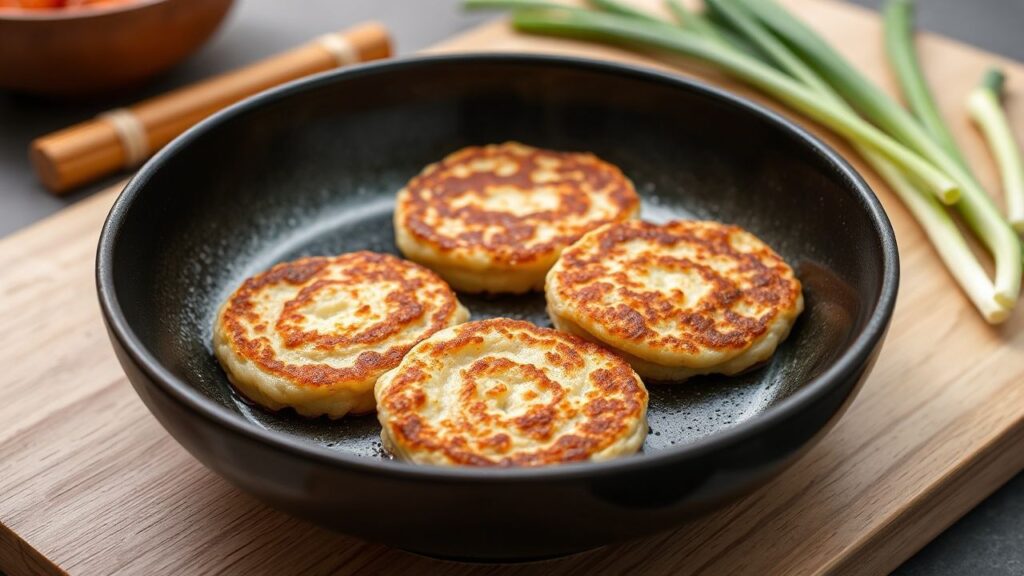
- Heat the skillet: Add 2 tablespoons vegetable oil. Heat over medium-high until the oil shimmers but does not smoke.
- Fry until crisp: Fry 3–4 minutes per side until golden brown and firm. Flip once you see clear browning; then cook the second side until crisp.
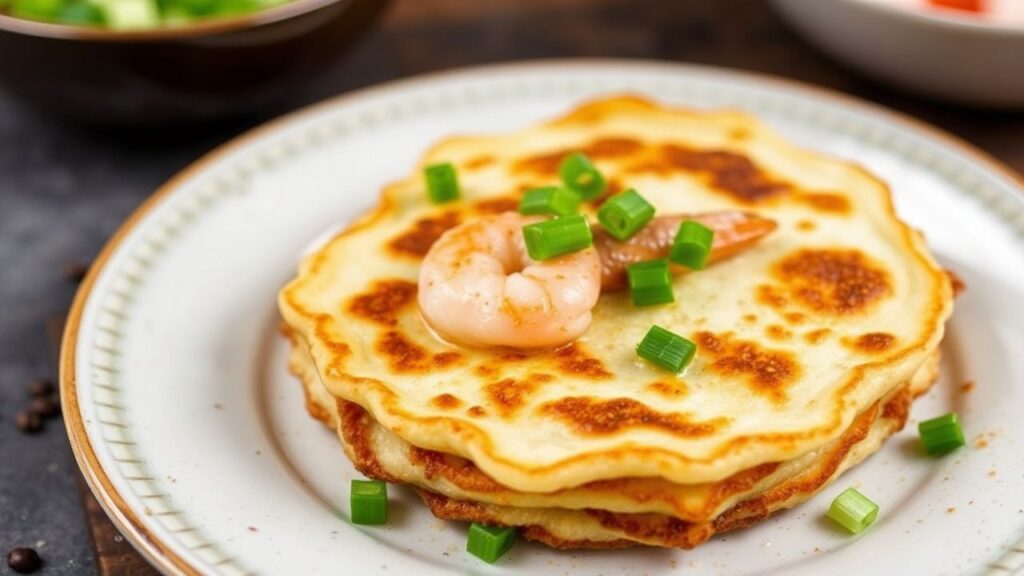
- Drain and finish: Remove pancakes and drain on paper towels. Garnish with green scallions and cilantro. Serve with chili oil or hoisin.
For general cooking science around browning, you can reference Maillard reaction. Crisp color forms when proteins and sugars react at the right surface temperature.
Tips for Success
Small adjustments make a big difference. Keep your dough elastic, your filling set, and your frying steady.
For moisture control ideas, note that scallions contain water and sugars that can affect tenderness as they cook. See onion for general allium behavior and flavor notes.
- Dough texture: Knead until smooth. If the dough feels stiff, rest it a few extra minutes before rolling.
- Seafood: Chop evenly so the filling cooks at the same rate. Avoid watery seafood mixtures.
- Crisping: Do not overcrowd the pan. Fry 1–2 pancakes at a time depending on skillet size.
- Make-ahead: Prepare dough and filling up to 3 hours ahead. Refrigerate filling; bring dough to room temperature before rolling.
- Flavor variations: Add a small amount of minced garlic or grated ginger to the filling for extra aroma.
After frying, let the pancakes rest for 2–3 minutes before slicing. That short wait helps steam settle and keeps the interior from turning gummy.
Also, keep an eye on seafood size. Large shrimp pieces can slow cooking and add texture that feels uneven. Aim for small, consistent chop sizes.
Serving Suggestions
Serve these crispy seafood and scallion pancakes as wedges. The spiral layers look best when you cut through the strata.
Pair them with a dip that matches the flavor intensity. Chili oil adds heat, while hoisin brings sweetness that balances salty seafood and scallion tang.
For a fresh contrast, add a simple cucumber salad or quick pickled vegetables. The acidity cuts through fried richness and helps keep the meal feeling light.
If you want to broaden your knowledge of soy-based sauces, browse soy sauce. It helps explain why soy contributes salt, umami, and browning potential.
| Nutrient | Per Serving |
|---|---|
| Calories | 320 kcal |
| Protein | 22 g |
| Carbohydrates | 28 g |
| Fat | 12 g |
Q&A
Here are common questions that help you nail texture, flavor, and timing. If you want crisp pancakes, pay special attention to heat and filling moisture.
What makes crispy seafood and scallion pancakes taste so balanced?
They combine a savory seafood filling with the bright, mildly peppery flavor of scallions. Frying creates browned, aromatic crust notes that make the whole bite taste deeper without needing heavy sauces.
When you season the seafood correctly and use cornstarch, the filling sets instead of leaking. That balance keeps the crunch intact.
Which seafood works best for this filling?
Shrimp and scallops work well because they cook quickly and hold a tender bite when chopped small. Crab meat also works, but choose a type that stays cohesive when mixed.
Firm white fish can work too, as long as you chop it fine and avoid watery cuts. For seafood handling and general freshness context, see seafood.
Why do pancakes sometimes turn soggy even if they look browned?
Sogginess usually comes from moisture inside the filling or insufficient surface contact with the pan. If the skillet runs too cool, the dough doesn’t crisp fast enough to seal steam.
Coating the seafood with cornstarch helps set the mix. Also, fry in batches so each pancake keeps a hot oil environment.
How can I keep the pancakes crisp while cooking the next batch?
Place finished pancakes on a wire rack in a warm oven (about 200°F/95°C) instead of stacking them on a plate. A rack lets steam escape so the crust stays firm.
Only stack once the pancakes cool slightly. If you must reheat, use a hot skillet for 30–60 seconds per side.
Can I make the dough and filling ahead of time?
Yes. Prepare dough and filling up to 3 hours ahead. Refrigerate the filling and cover the dough so it doesn’t dry out.
Bring dough to room temperature before rolling, then fry right after shaping for best crunch.
Final Thoughts
Crispy seafood and scallion pancakes offer a satisfying contrast: crisp browned layers outside, savory seafood inside, and fragrant scallion notes throughout. With careful dough rest and medium-high frying, you can control both texture and moisture.
Once you master the basics—thin rolling, tight spiral layering, and steady pan heat—you’ll have a repeatable method for impressive pan-fried results. This dish fits casual dinners and party platters alike because it slices neatly and tastes great hot.
If you keep your pieces small, season well, and fry without overcrowding, you’ll consistently get that crunchy shell that makes these pancakes memorable.
See also: Crispy seafood