

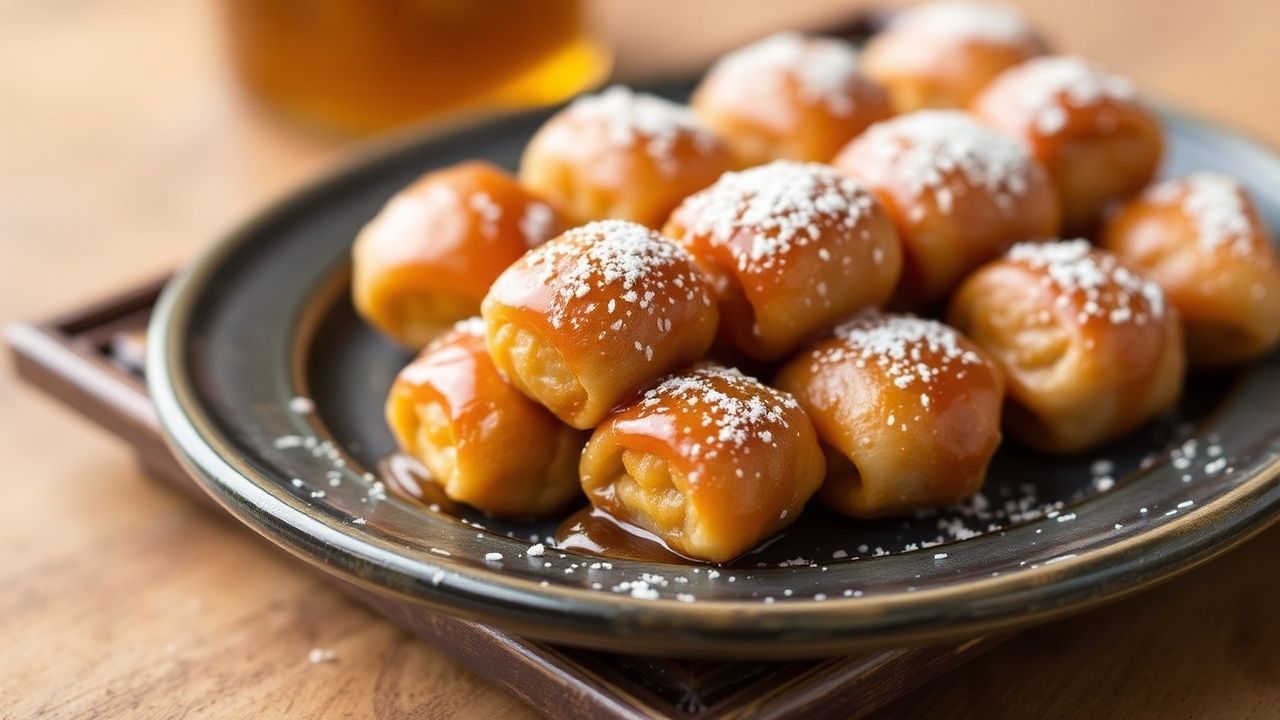
Neapolitan honey-glazed struffoli are bite-size fried dough balls from Naples, coated in warm honey and crowned with bright sprinkles. Their charm comes from contrast: a crisp exterior, tender interior, and a glossy honey glaze that clings to every piece.
- What Neapolitan Honey-Glazed Struffoli Are
- Prep and Cook Time, Yield, and Difficulty
- Ingredients for Neapolitan Honey-Glazed Struffoli
- Step-by-Step Instructions (Neapolitan Method)
- Expert Insight, Pro-Caution, and Troubleshooting
- Chef’s Notes and Tips for Success
- Serving Suggestions to Elevate Your Golden Bites
- Fast Nutritional Overview
- Q&A: Neapolitan Honey-Glazed Struffoli
- Q1: What makes struffoli “Neapolitan”?
- Q2: How do I keep struffoli crispy after glazing?
- Q3: Can I make the dough ahead of time?
- Q4: What honey works best for the glaze?
- Q5: Why did my honey glaze turn thick or grainy?
- Closing Remarks
- Best texture: Fry at a steady 350°F (175°C) and drain well before glazing.
- Best flavor: Use mild wildflower or orange blossom honey plus citrus zest.
- Best look: Build a ring or mound right after coating, then garnish quickly.
- Best timing: Let struffoli rest before serving so honey sets.
These golden bites belong to the holiday table because they taste rich and feel festive. The tradition also links closely to local sweets-making, where eggs, citrus, and honey show up often in Southern Italian flavors.
Today, you can make them for Christmas, New Year’s, or any family gathering. If you follow the shaping, frying, and glaze steps in order, you’ll get a shiny coating without turning the dough soggy. For background on the regional pastry tradition, see Italian cuisine and how holiday sweets vary by region.
What Neapolitan Honey-Glazed Struffoli Are
Struffoli are tiny pieces of dough that get fried until golden, then tossed in warm honey. Many versions use lemon and orange zest to lift the flavor, which helps the sweetness taste bright instead of flat.
In Naples, struffoli often show up as a mound of “golden bites,” meant for sharing. The honey glaze gives that signature shine, so the dessert looks like edible confetti. To understand why honey matters in many food traditions, read Honey on its role as a sweetener and flavor carrier.
Why the honey glaze clings
Honey bonds well to warm fried dough because the glaze cools while still fluid. As it sets, it forms a tacky surface that holds sprinkles and candied fruit.
To keep the glaze glossy, you want gentle heat—enough to melt and blend, not enough to scorch. For a quick reference on heat effects in cooking, you can also review Maillard reaction (useful when you want golden color without burning).
Prep and Cook Time, Yield, and Difficulty
You can finish this recipe in under an hour, but frying needs focus. Plan for a calm kitchen pace so each batch fries evenly and drains properly.
Preparation time: 30 minutes. Cooking time: 15 minutes. Total time: about 45 minutes.
Yield: serves 6–8 people, depending on how generous you are with garnishes. This makes it easy to bring to parties or to gift in a decorative box.
Difficulty level: Medium. The dough process stays straightforward, but oil temperature and batch control decide whether your struffoli turn crisp or greasy.
Chef-friendly workflow
Set up a draining station with paper towels before you start frying. Also, pre-measure honey ingredients so the glaze step stays smooth.
Work in batches. Crowding the fryer drops oil temperature and causes uneven frying. For general safety and oil-handling principles, refer to Frying.
Ingredients for Neapolitan Honey-Glazed Struffoli
Use this ingredient list as written for a classic balance of citrus, egg richness, and honey aroma. If you swap ingredients, do it knowingly—small changes can affect dough texture.
For the dough, you’ll need flour, eggs, sugar, butter, vanilla, citrus zest, and salt. For the glaze, you’ll use honey (and optionally a touch of sugar) plus a small amount of butter for silkiness.
- 1 cup all-purpose flour, sifted
- 2 large eggs, at room temperature
- 2 tablespoons granulated sugar
- 2 tablespoons unsalted butter, softened
- 1 teaspoon vanilla extract
- Zest of 1 lemon and 1 orange, finely grated
- Pinch of fine sea salt
- Vegetable oil, for deep frying (about 4 cups)
- 1 cup honey (preferably Italian wildflower honey)
- 1/4 cup sugar (optional, for glaze enhancement)
- 2 tablespoons unsalted butter, for glaze
- Colored nonpareil sprinkles or chopped candied fruit, for garnish
If you prefer a more floral sweetness, stick with mild honey rather than very dark blends. Honey’s flavor shifts a lot by floral source, so wildflower honey works well for a balanced taste.
Step-by-Step Instructions (Neapolitan Method)
Follow these steps in order for the best crunch and the best sheen. Keep your hands dusted lightly with flour when shaping, but avoid over-flouring.
Also, keep a timer. When fried dough goes from pale to golden fast, timing helps you prevent bitterness from over-browning.
- Mix the dough: Whisk eggs with sugar, softened butter, vanilla, lemon zest, and orange zest until smooth. Add flour and salt gradually, mixing until a soft dough forms. If it feels too sticky, add flour one tablespoon at a time.
- Shape the struffoli: Roll dough into ropes about 1/2 inch thick. Cut into 1/2-inch pieces, then roll each piece into a small ball between your palms.
- Heat the oil: Pour oil into a heavy-bottomed pot or deep fryer. Heat to 350°F (175°C) and use a thermometer for accuracy.
- Fry the dough balls: Fry in batches so you don’t crowd the pot. Fry 2–3 minutes, until golden and puffed. Remove with a slotted spoon and drain on paper towels.
- Prepare the honey glaze: In a saucepan on low heat, combine honey, optional sugar, and butter. Stir until smooth and slightly thickened, about 5 minutes. Do not boil hard.
- Coat the struffoli: Transfer hot, drained dough balls into the warm honey glaze. Toss gently so the honey coats every piece.
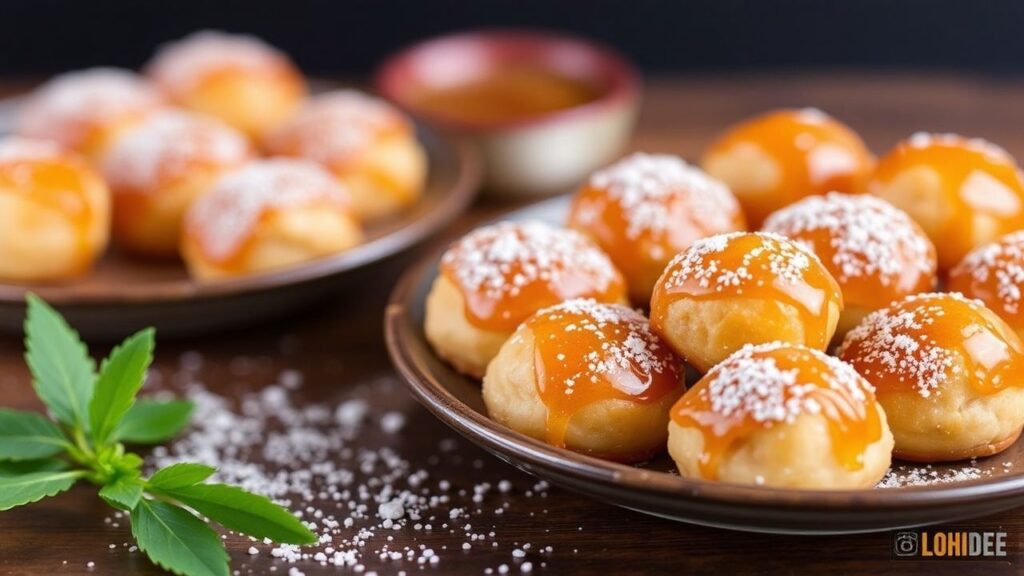
- Shape and garnish: Move honey-glazed struffoli to a serving plate. Build a ring or pyramid, then scatter sprinkles or candied fruit quickly.
- Rest before serving: Let them rest at least 30 minutes. This sets the glaze and keeps the crunch-to-chew ratio balanced.
For a broader note on why deep-frying changes food texture, you can review deep frying. It’s a useful context for understanding the crisp exterior you’re aiming for.
Expert Insight, Pro-Caution, and Troubleshooting
Most struffoli problems come from one of three points: oil temperature, draining time, or glaze heat. Solve those, and your golden bites usually turn out glossy and crisp.
Use the cues below to diagnose quickly. If your dough balls look pale after frying, your oil runs cool. If they taste oily, they needed more draining or you overloaded the pot.
When you glaze, work fast. The honey thickens as it cools, and thick honey coats differently than warm honey. If the glaze thickens in the pan, warm it back gently before tossing.
If your dough feels dry or crumbly, it may need one more egg spoonful or a slightly longer mix. Conversely, if it feels overly wet, add flour sparingly so the ropes roll cleanly.
Chef’s Notes and Tips for Success
Small adjustments can protect your crunch and improve flavor. These tips focus on dough consistency, frying control, and honey quality.
Keep in mind that honey varies by source and age. Some honeys are thinner, others thicker, and that changes how the glaze behaves in the final toss.
- Dough consistency: You want pliable dough, not dough that clings to your hands. Add flour sparingly to avoid tough struffoli.
- Oil temperature: 350°F (175°C) is your target. Too hot burns the outside; too cool absorbs oil.
- Honey glaze: Choose a mild, floral honey for shine and aroma. Orange blossom honey also pairs well with citrus zest.
- Gluten-free variation: Substitute a gluten-free flour blend designed for baking, and adjust as needed for a workable dough.
- Make ahead: You can prep shaped dough balls ahead, then fry the day you serve. Glaze right before serving for best shine.
- Modern twist: Add 1 tablespoon finely chopped candied lemon peel to boost citrus fragrance.
For dough texture basics and how gluten affects stretch and structure, see Gluten. Even if you use a gluten-free blend, understanding the role of structure helps you troubleshoot.
Serving Suggestions to Elevate Your Golden Bites
Present struffoli as a centerpiece. A ring shape works well because it holds the mound together, and it helps guests scoop without flattening the dessert.
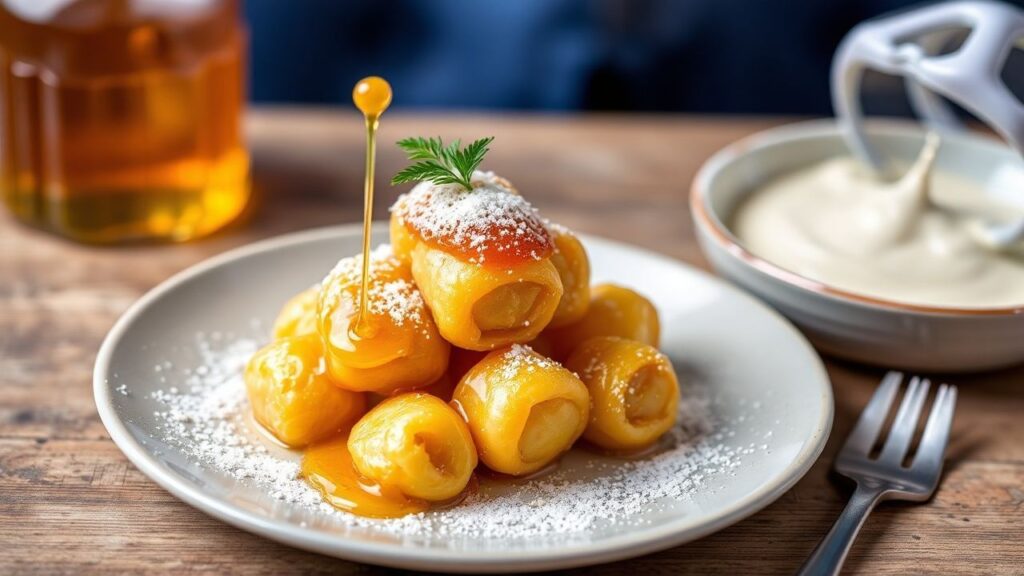
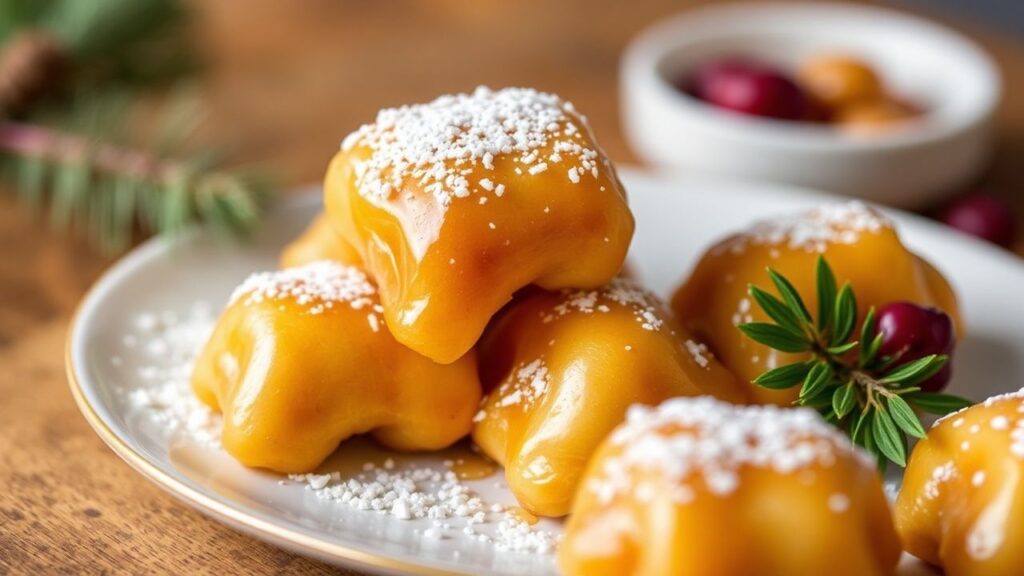
Finish with bold garnish. Nonpareil sprinkles add color fast, while candied fruit gives chewy bursts. If you want extra elegance, dust lightly with powdered sugar right before serving.
Pairing matters with honey desserts. Try a cup of espresso or a spiced hot chocolate so the bitterness balances the sweetness. For additional flavor harmony ideas, you can read about espresso and how roast strength changes perceived sweetness.
Also consider serving a small side dip. A mild sweet ricotta with citrus zest creates a creamy contrast to the crisp, honey-coated bites. Keep the dip chilled and offer it in a separate bowl so the struffoli stay crisp.
If you plan for parties, keep struffoli at room temperature. Warm honey can soften the crust, so avoid holding them in a hot spot.
Fast Nutritional Overview
Nutritional values vary by portion size, oil absorption, and honey coating thickness. The numbers below give a practical estimate per serving.
Use this as a planning guide, not a strict medical measure. For more on general nutrition labeling concepts, see nutrition label.
| Nutrient | per serving (approx.) |
|---|---|
| Calories | 310 kcal |
| Protein | 5 g |
| Carbohydrates | 45 g |
| Fat | 11 g |
Q&A: Neapolitan Honey-Glazed Struffoli
Struffoli are simple, but a few questions come up every time people try them. Here are clear answers that focus on texture, glazing, and timing.
Use these notes to avoid common mistakes and to choose the best garnish style for your event.
Q1: What makes struffoli “Neapolitan”?
Neapolitan struffoli typically rely on citrus zest, egg-rich dough, and a warm honey coating. The final presentation—often a ring or mound—also matches the Naples-style holiday look.
Regional sweets in Italy often reflect local ingredients and traditions. For more context on regional food diversity, see Naples.
Q2: How do I keep struffoli crispy after glazing?
Drain fried dough well and coat while the glaze stays warm but not boiling. Then rest at least 30 minutes so the honey sets and forms a firm, glossy layer.
Also, store at room temperature and avoid refrigerating. Cold conditions can change the texture of fried dough.
Q3: Can I make the dough ahead of time?
Yes. You can shape the dough balls ahead and keep them covered. Fry them close to serving time so the crust stays crisp and the glaze looks bright.
If you plan to coat, wait until you’re ready to build the mound. Warm honey thickens as it sits.
Q4: What honey works best for the glaze?
Choose a mild, aromatic honey such as wildflower or orange blossom. These honeys support the citrus zest and keep the sweetness balanced.
For a general guide to honey types, refer to Honey and consider how floral notes affect flavor.
Q5: Why did my honey glaze turn thick or grainy?
High heat or a hard boil can cause honey to change texture. Keep the glaze on low heat and stir constantly until smooth and slightly thickened.
If the glaze gets too thick, warm it gently again. Avoid boiling hard, and toss the dough balls promptly once the glaze reaches the right consistency.
Closing Remarks
Neapolitan honey-glazed struffoli deliver the kind of holiday dessert energy that also fits everyday celebrations. They look showy, but the method stays approachable if you control frying temperature and glaze heat.
As the golden bites rest, the honey firms into a lacquer that makes each scoop feel cohesive. Serve them at room temperature, garnish boldly, and enjoy the crunch-to-chew contrast that makes struffoli unforgettable.
See also: Neapolitan honey-glazed