
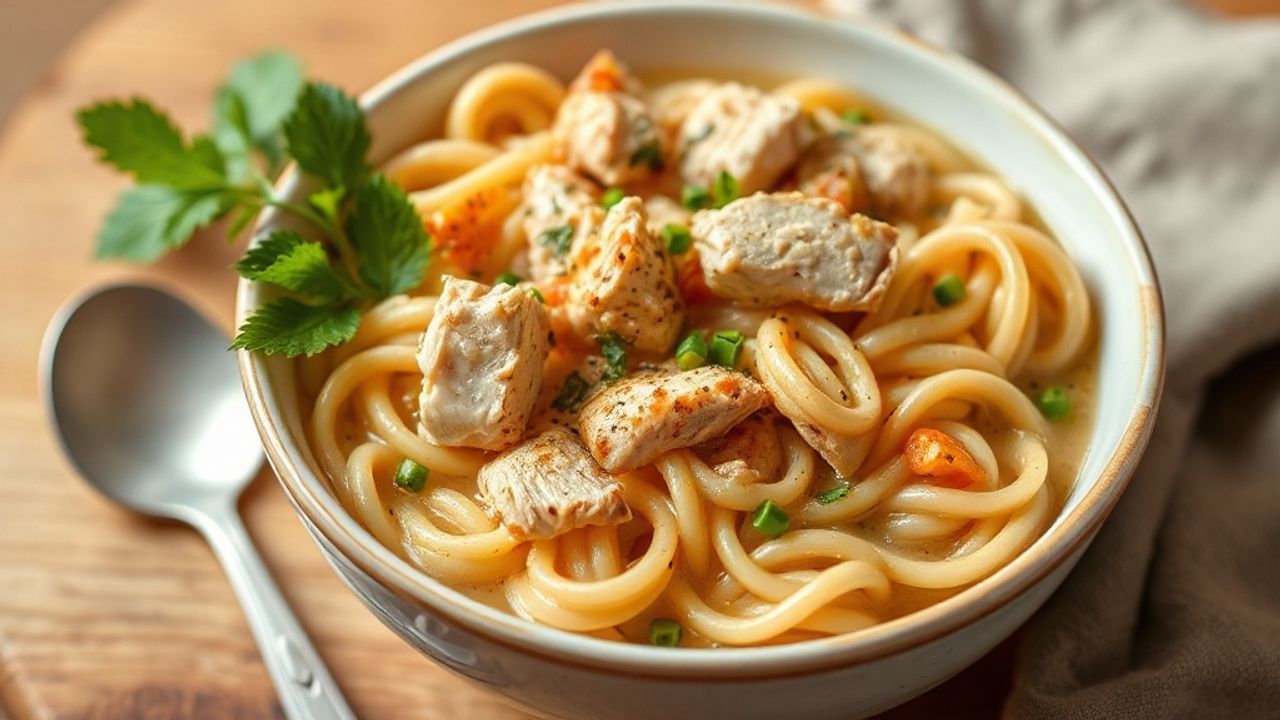
Hearty chicken noodles deliver comforting warmth and deep flavor in every spoonful. This recipe focuses on a rich homemade broth, tender poultry, and hand-cut noodles to produce a bowl that comforts and satisfies.
- Prep and Cook Time for Chicken Noodles
- Yield and Difficulty for Chicken Noodles
- Ingredients for Chicken Noodles
- Instructions: Make Chicken Noodles
- Technique Notes and Pro Tips for Chicken Noodles
- Common Pitfalls and How to Avoid Them
- Serving Suggestions for Chicken Noodles
- Nutritional Information and Storage for Chicken Noodles
- Why This Recipe Works
- FAQ
- How long will homemade chicken noodles keep in the fridge?
- Can I use store-bought noodles instead of homemade?
- What is the best cut of chicken for this recipe?
- How do I keep the broth clear and not cloudy?
- Can I make this recipe gluten-free or dairy-free?
- Final Thoughts
- Key takeaway: Homemade broth builds depth; use bones and gentle simmering.
- Key takeaway: Proper dough hydration yields silky, tender chicken noodles.
- Key takeaway: Shred chicken off the bone for maximum mouthfeel and protein distribution.
- Key takeaway: Cook noodles in the broth for best starch-thickened texture.
Prep and Cook Time for Chicken Noodles
Prep: Estimate 30 minutes of active work to chop, mix dough, and set the pot. Preparing the dough and mise en place early speeds the cooking flow.
Cook: Plan about 1 hour to 1 hour 15 minutes of gentle simmering for a clear, gelatinous broth. Final assembly with noodles and shredded meat requires another 10–15 minutes.
Yield and Difficulty for Chicken Noodles
This recipe yields about 6 generous servings—perfect for family service or meal prep containers. You will achieve consistent results with basic equipment: a heavy-bottom pot, fine sieve, rolling pin, and a sharp knife.
Difficulty rates as medium because of dough handling and timing. With the step-by-step approach below, the process stays approachable for any competent home cook.
Ingredients for Chicken Noodles
For the broth, use a whole chicken or bone-in pieces, root vegetables, and aromatics to build collagen and flavor. Collagen extraction improves mouthfeel and yields the rich texture expected in classic chicken noodles.
For the noodles, combine all-purpose flour, egg, salt, olive oil, and warm water; knead to a smooth, elastic dough. Adjust water gradually to achieve the proper hydration for supple ribbons.
- Broth: 1 whole chicken (~4 lb), 2 carrots, 2 celery stalks, 1 onion, 4 garlic cloves, 8 cups water, 2 bay leaves, 1 tsp peppercorns, salt to taste.
- Noodles: 2 cups all-purpose flour, 1 egg, ½ tsp salt, ~½ cup warm water, 1 tbsp olive oil.
- Finishes: 2 tbsp unsalted butter, ¼ cup chopped parsley, fresh cracked pepper, lemon wedges optional.
Understanding each ingredient’s functional role improves results: bones and skin give body, aromatics add depth, and butter and acid finish balance the soup. For reference on chicken composition and common cuts, consult chicken anatomy and cuts.
Instructions: Make Chicken Noodles
1. Build the broth. Place the chicken, carrots, celery, onion, garlic, bay leaves, and peppercorns in a heavy pot. Cover with filtered water and bring to a gentle boil, then reduce to a low simmer.
Skim foam in the first 10 minutes to maintain clarity. Simmer uncovered for about one hour so collagen dissolves and flavors concentrate into a golden broth.
2. Prepare the noodle dough. While the broth cooks, mix flour and salt, create a well, add the egg and oil, then incorporate warm water gradually. Knead until smooth; rest the dough 20 minutes under plastic to relax gluten for easier rolling.
3. Strain and shred. Remove chicken, cool slightly, and shred meat off bones; discard skin if you prefer lower fat. Strain the broth through a fine sieve and keep it at a gentle simmer for later cooking.
4. Roll and cook noodles. Roll dough thin (approximately 1/16 inch) and cut into ¼-inch ribbons; toss lightly with flour to prevent sticking. Bring broth to a gentle boil and add noodles in batches, cooking 3–4 minutes until al dente.
5. Finish the pot. Return shredded chicken to the pot with butter and chopped parsley; season with salt and freshly cracked pepper. Warm through for two minutes, taste, and add a squeeze of lemon if you want brightness.
For technique details on noodle types and regional variations, see the historical overview of noodle varieties.
Technique Notes and Pro Tips for Chicken Noodles
Use low, sustained heat to extract collagen without emulsifying fat into the broth. This approach yields a clean, glossy broth that clings to noodles and enhances mouthfeel.
Knead dough until elastic but not overworked to avoid tough noodles. Rest the dough at room temperature; relaxed gluten makes rolling easier and promotes tender texture.
Allow at least one hour for simmering to convert collagen into gelatin; this increases viscosity and gives the soup body. Reserve some cooked broth to thin the pot if it reduces too aggressively.
Common Pitfalls and How to Avoid Them
Overcooking noodles in the broth produces a mushy texture; add them late and monitor cooking time closely. Batch-cooking prevents clumping and ensures even doneness.
Under-seasoning is a frequent error because the long simmer can mute salt perception. Season incrementally: start modestly during cooking and finish to taste just before serving.
After the warning block, remember to cool stocks quickly and refrigerate within two hours to comply with food-safety best practices.
Serving Suggestions for Chicken Noodles
Serve piping hot in deep bowls and garnish with chopped parsley and a grind of black pepper. Offer lemon wedges on the side so diners can brighten the bowl as desired.
Pair the bowl with crusty bread or a light green salad to cut richness and add textural contrast. For beverage pairing, a crisp white wine or herbal tea complements the savory broth.
Nutritional Information and Storage for Chicken Noodles
Per serving estimates: ~410 kcal, 38 g protein, 38 g carbohydrates, 8 g fat when prepared with a whole chicken and moderate fat removal. Adjustments such as removing skin or substituting gluten-free noodles alter macronutrient totals.
Cool leftovers quickly and refrigerate for 3–4 days; freeze broth and shredded chicken separately for up to three months. Reheat gently and add freshly cooked noodles after thawing to maintain texture.
| Nutritional Info (per serving) | Calories | Protein | Carbs | Fat |
|---|---|---|---|---|
| Chicken Noodles | 410 kcal | 38g | 38g | 8g |
Why This Recipe Works
This method balances extraction and freshness: long, gentle simmer for depth, and fresh noodles added at the end for texture. The result is a bowl with layered savory notes and satisfying mouthfeel.
Balancing fat, acid, and aromatics at the end brings harmony to the pot. A small knob of butter and a squeeze of lemon complete the flavor profile without masking the broth’s clarity.
For context on soup traditions and cultural roles of broths, consult soup culinary history.
FAQ
How long will homemade chicken noodles keep in the fridge?
Store chicken and broth in sealed containers for 3–4 days. Freeze portions separately and add freshly cooked noodles at serving to maintain texture.
Can I use store-bought noodles instead of homemade?
Yes. Store-bought egg noodles save time and perform well when cooked just until al dente in the hot broth. Reduce cooking time since pre-made noodles will be faster to tenderize.
What is the best cut of chicken for this recipe?
Bone-in, skin-on thighs or a whole chicken give the best flavor and body due to bones and connective tissue. Use breasts only if you prefer leaner meat; watch cooking time closely to prevent dryness.
How do I keep the broth clear and not cloudy?
Skim foam in the first 10 minutes and avoid rapid boiling. Gentle simmering and limited agitation keep the broth clear while still extracting flavor.
Can I make this recipe gluten-free or dairy-free?
Substitute gluten-free pasta or spiralized vegetables for noodles to go gluten-free. Skip the butter for dairy-free; finish with extra parsley and lemon for balanced taste.
Final Thoughts
Hearty chicken noodles reward the cook who invests time into broth and dough. The technique emphasizes gentle extraction, careful dough hydration, and thoughtful finishing touches.
Follow the steps above, apply the pro tips, and you will produce a bowl that warms the body and satisfies the palate. For herb resources and common culinary botanicals, see parsley and other fresh herb references.
See also: chicken noodles