
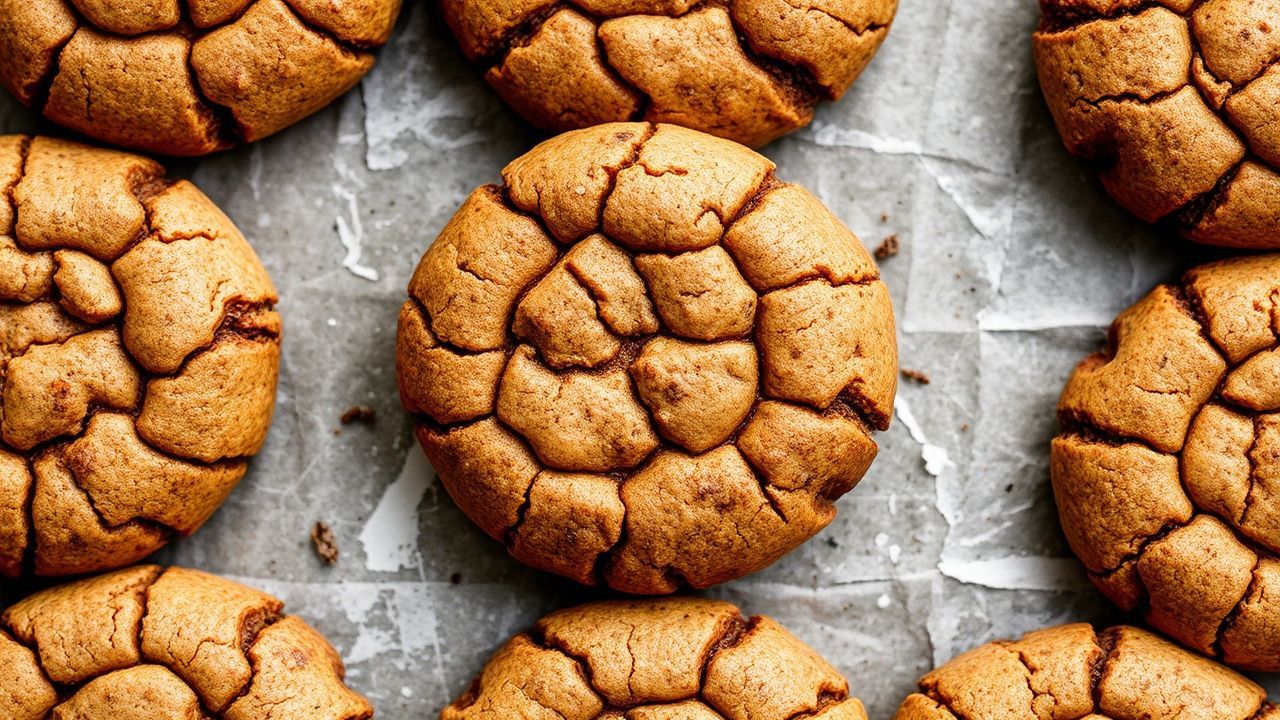
Hermit cookies hide a lot more than a crackled top. Under that slightly rustic surface, you get chewy centers, deep molasses character, and a warm spice blend that feels made for cool weather.
- The History and Heritage Behind Hermit Cookies
- A Symphony of Spices That Elevate Molasses Flavor
- Expert Tips for Perfectly Chewy and Flavorful Hermit Cookies
- Creative Variations to Customize Your Molasses Treats
- Prep and Cook Time
- Yield
- Difficulty Level
- Ingredients
- Instructions
- Tips for Success
- Serving Suggestions
- FAQ
At a Glance
- Focus on the molasses: choose a robust, unsulphured option for a richer flavor.
- Chill for texture: firm dough controls spread and boosts chew.
- Mind the bake time: underbake slightly so centers stay soft.
- Balance spices: cinnamon, cloves, ginger, and nutmeg should support—not overpower.
Hermit cookies also deliver something practical: they hold up well for gifting and storage because their flavor comes from sturdy ingredients—molasses, spices, and dried fruit. That matters when you want a cookie that tastes great even a few days later.
In the sections below, you’ll learn the heritage behind Hermit cookies, the spice-to-molasses method that makes them taste balanced, and a set of tested steps for chewy results. You’ll also find variations, a full ingredient list, and a reliable bake process you can repeat.
The History and Heritage Behind Hermit Cookies
Hermit cookies connect to a long tradition of spiced, shelf-stable sweets made with pantry ingredients. Molasses-based cookies fit well into that history because molasses brings moisture and a bold flavor profile that stays noticeable over time.
Many home bakers link the “hermit” name to the idea of cookies that stay good for a while and travel well. That naming style appears across older food culture, where practical traits often shaped how people labeled recipes. If you want background on the ingredient roots, see molasses for historical context.
A Symphony of Spices That Elevate Molasses Flavor
What makes Hermit cookies taste memorable comes from spice balance. Cinnamon adds obvious warmth, while cloves, ginger, and nutmeg create layered aroma—some notes hit quickly, and others show up as the cookie cools.
The best approach uses small measurements and treats spices like a blend, not separate flavors. Cloves and nutmeg act as depth builders, and ginger brings brightness that keeps molasses from tasting flat. For general spice taxonomy, you can review spices and how spice families get used in baking.
When you grind spices fresh, you often increase aroma intensity because volatile compounds degrade with time. That doesn’t mean pre-ground spices never work—just plan to measure carefully. If you want the science behind flavor chemistry, browse flavor compounds.
Expert Tips for Perfectly Chewy and Flavorful Hermit Cookies
Chew starts with structure. Creaming butter and brown sugar creates a light batter framework, but the cookie’s final texture depends on molasses moisture, flour amount, and how long the dough bakes. Keep your goal clear: soft center when they come out of the oven.
Choose a robust molasses and treat it as a wet flavor base. If your molasses tastes mild, the whole cookie tastes mild. For more context on sweeteners used in baking, use brown sugar and how it differs from white sugar in flavor and moisture behavior.
Then manage bake time. Underbake slightly so the centers set as they cool. Overbaking dries the interior, and molasses can’t “re-soften” a cookie once the structure has fully set.
To tighten flavor further, consider dough rest. A longer rest lets spices distribute and can deepen perceived aroma. If you prefer a more even texture, keep your scoops uniform in size so each cookie finishes at the same time.
Creative Variations to Customize Your Molasses Treats
Hermit cookies welcome upgrades because their spice base supports many additions. Nuts add crunch and fat that rounds molasses flavor, while dried fruit adds chew and bursts of concentrated sweetness.
For a nutty variant, fold in chopped walnuts or pecans. For a fruit-forward version, use raisins, currants, or chopped dates. The dried fruit ratio matters: too much can make centers gummy, while too little reduces the chew you expect.
If you like a slightly brighter profile, add a touch of orange zest. Citrus oils pair well with warm spices because the fragrance “lifts” molasses rather than fighting it. For broader citrus background, consult citrus.
You can also explore vanilla extract for a smooth sweetness layer. Vanilla doesn’t replace spices; it supports them by softening sharp edges in cloves and ginger. For more on how vanillin shows up in food, see vanillin.
Prep and Cook Time
Plan ahead so the dough has time to firm up. Chilling helps both texture and shaping, and it reduces the risk of wide, thin cookies.
- Prep time: 20 minutes
- Chill time: 60 minutes
- Cook time: 12–14 minutes
Yield
This batch makes about 24 cookies. Exact yield depends on how large you scoop and how thick you bake.
If you want fewer, portion bigger scoops; if you want more, use a slightly smaller scoop. Either way, keep the pieces consistent so you can pull the tray at the same time.
Difficulty Level
Easy to Medium—these cookies reward patience more than advanced technique. As long as you chill the dough and bake until edges set, you’ll get a dependable result.
First-time bakers do best when they measure spices carefully. Cloves can overpower quickly, so stick to the listed amounts and adjust only after you taste one test cookie.
Ingredients
Use quality ingredients for the best flavor. Since molasses is the star, its taste will show up clearly in the finished cookies.
- 1 cup unsalted butter, softened
- 1 cup dark brown sugar, packed
- 1/2 cup molasses (unsulphured)
- 2 large eggs, room temperature
- 3 cups all-purpose flour, sifted
- 1 1/2 teaspoons baking soda
- 1 teaspoon ground cinnamon
- 1/2 teaspoon ground nutmeg
- 1/2 teaspoon ground ginger
- 1/4 teaspoon ground cloves
- 1/2 teaspoon salt
- 1 cup chopped walnuts or pecans (optional)
- 1 cup raisins, currants, or chopped dried dates (optional)
- Coarse sugar for sprinkling (optional)
Instructions
Follow these steps in order for the best dough texture and even baking. Keep your oven at temperature before you load the first tray.
- Preheat your oven to 350°F (175°C). Line baking sheets with parchment paper or silicone mats.
- Cream the softened butter and dark brown sugar until light and fluffy, about 3–4 minutes (stand mixer or hand beaters).
- Add molasses and eggs one at a time. Mix well after each addition until the batter looks cohesive.
- Whisk together sifted flour, baking soda, salt, cinnamon, nutmeg, ginger, and cloves in a separate bowl.
- Gradually add the dry mixture to the wet mixture. Fold gently until no dry flour remains. The dough will be thick.
- Stir in nuts and dried fruit, if using, and distribute evenly.
- Chill the dough for at least 1 hour, wrapped tightly, so it firms up and flavors blend.
- Scoop tablespoon-sized rounds onto prepared baking sheets, leaving about 2 inches between cookies.
- Optional: Sprinkle tops with coarse sugar for extra crunch and sparkle.
- Bake 12–14 minutes, until edges look set and centers remain slightly soft.
- Cool on the baking sheet for 5 minutes, then transfer to a wire rack to cool completely.
Tips for Success
Small adjustments make a big difference with hermit cookies. Use the guidance below as your troubleshooting checklist.
- Use unsulphured molasses for a fuller, less harsh sweetness.
- Do not overbake if you want chewy centers; they finish setting as they cool.
- Resting the dough longer (even overnight) improves spice distribution and flavor depth.
- For gluten-free, use a 1:1 gluten-free baking blend designed for cookies.
- Store in an airtight container at room temperature for up to 1 week, or freeze for longer storage.
Serving Suggestions
Serve hermit cookies slightly warm for the best spice aroma. Warmth also helps the molasses flavor feel richer.
Pair them with chai or black tea to match the spice profile. If you want a dessert-style plate, add a small scoop of vanilla ice cream and let the cold contrast the cookie’s warm spices. For broader guidance on tea pairings and flavor matching, review tea.
You can also dust with powdered sugar for a simple finish, or drizzle with a light glaze if you want extra sweetness. Keep the serving method consistent so the cookie’s chewy texture stays the main attraction.
FAQ
What are Hermit cookies, and why are they called “hermit”?
Hermit cookies are chewy, molasses-spiced cookies often made with dried fruit. The “hermit” name typically points to their practical, old-school appeal: they keep well and travel without losing character.
What molasses works best for Hermit cookies?
Use a robust, unsulphured molasses for a deeper flavor. Lighter molasses can work, but it often reduces the cookie’s signature depth.
How do you keep Hermit cookies chewy?
Chill the dough to control spread and bake until the centers still look slightly soft. Cool the cookies fully on a rack so the texture sets without drying out.
Can you freeze Hermit cookies?
Yes. Freeze baked cookies in a sealed bag or container. Thaw at room temperature, and the cookies should regain their chewy bite.
Can Hermit cookies be made gluten-free or vegan?
Gluten-free baking blends designed for cookies can substitute for all-purpose flour. For vegan swaps, use plant-based butter and select a vegan-friendly egg substitute, then ensure the dough still chills and bakes to the same thickness.
See also: Hermit cookies