
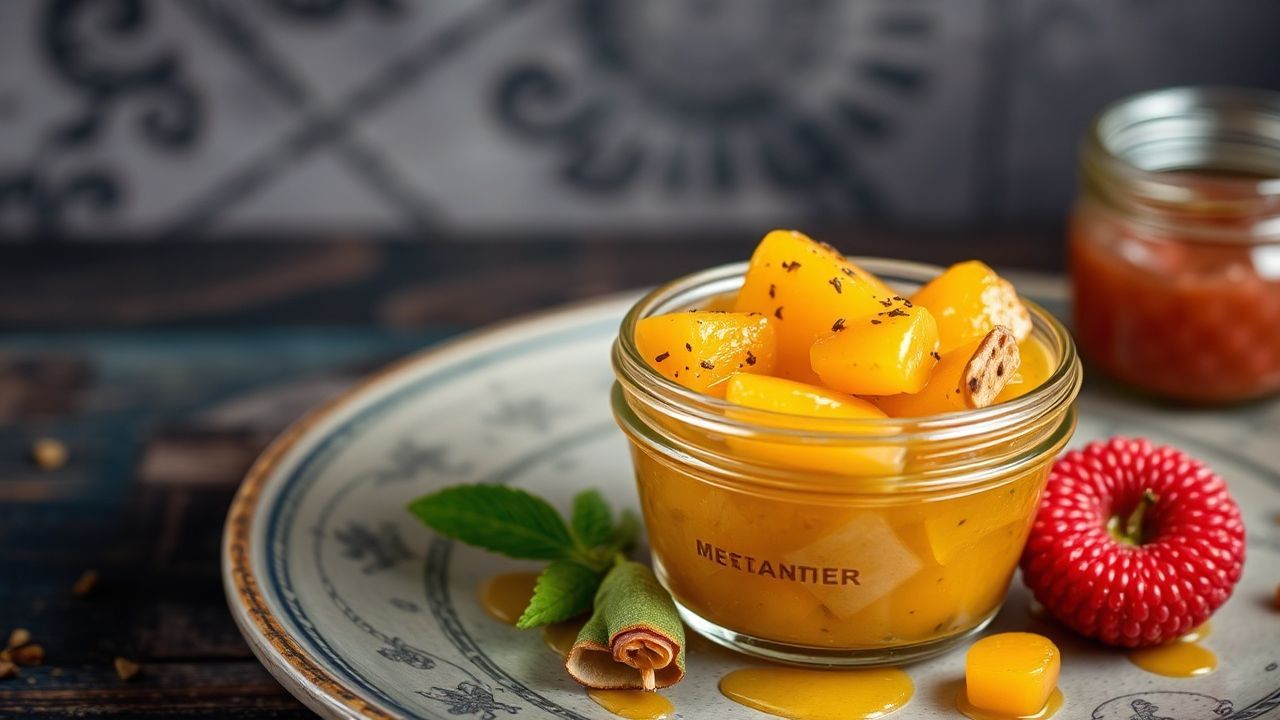
Mustard candied fruit turns a familiar sweet into something bold and memorable. In Italian kitchens, the idea fits right in: people preserve fruit for long seasons, then balance it with sharp, aromatic elements. Here, mustard adds tang, depth, and a warm spicy edge.
- What Is Mustard Candied Fruit (and Why It Works)
- Flavor Profile: Sweet Meets Spice
- Prep and Cook Time
- Yield and Difficulty
- Ingredients for Mustard Candied Fruit
- Instructions (Step-by-Step)
- Tips for Success (Avoid Common Mistakes)
- Serving Suggestions (Pair Like an Italian)
- Storage and Food Safety Notes
- Nutritional Snapshot (Approximate)
- Q&A: Mustard Candied Fruit
At a Glance — Key Takeaways
- Balance matters: start mild with mustard and build flavor gradually.
- Toast first: mustard seeds release aroma when you dry-toast them.
- Cook low and steady: gentle simmering thickens syrup without burning sugar.
- Rest improves taste: the glaze tastes better after overnight refrigeration.
Sweet meets spice in a way that feels unmistakably Italian. Candied fruit already depends on sugar chemistry, which draws out moisture and helps fruit hold its shape. Add mustard and you get a tangy contrast that lifts the sweetness instead of hiding it.
To understand why this works, it helps to look at two building blocks: preservation and flavor contrast. Sugar preserves fruit by lowering water activity, so microbes grow more slowly. For the mustard note, you rely on aromatic compounds that become stronger when seeds toast and when mustard disperses through a warm syrup.
What Is Mustard Candied Fruit (and Why It Works)
Mustard candied fruit is chopped candied fruit simmered in a syrup infused with mustard seeds and mustard paste. The result tastes sweet first, then tangy, then gently warming. You can serve it as a snack, pair it with cheese, or use it as a topping.
Italian cuisine often celebrates contrast—bright, salty, sweet, and warm notes together. Mustard fits that pattern because it brings both tang and aroma. If you want a reference point for how fermentation, preservation, and spice traditions shaped European flavors, see mustard and food preservation.
Flavor Profile: Sweet Meets Spice
The first bite delivers sugary fruit chew and glossy syrup. After a few seconds, mustard adds a sharper edge, similar to how mustard enhances a vinaigrette. Optional chili flakes bring a gentle heat trail without turning the dish into a hot candy.
Sweetness and acidity guide your final taste. Lemon zest and lemon juice add brightness and help the syrup feel lighter. For background on citrus chemistry and why zest works well in cooking, explore citrus.
What mustard form gives the best result?
Yellow mustard seeds give you crunchy spice bursts and a toasted aroma. Dijon adds smooth tang because it blends well into warm syrup. Using both gives complexity: seeds for texture and Dijon for even flavor distribution.
If you only use Dijon, the heat can feel flatter. If you only use seeds, the flavor may stay more scattered. This dual approach gives more consistent results across every fruit piece.
Prep and Cook Time
You can make this recipe in under two hours, including cooking and cooling. Plan time for resting, because the flavor develops as the candied fruit chills.
- Preparation Time: 20 minutes
- Cooking Time: 60 minutes
Yield and Difficulty
This recipe makes about 6 servings. It yields roughly 400 g of candied fruit, depending on how finely you chop your fruit.
Difficulty stays at Medium. You control most variables with timing, heat level, and syrup thickness.
Ingredients for Mustard Candied Fruit
Choose candied fruit pieces that stay intact after chopping. Uniform sizes cook more evenly and look better in jars.
For mustard and candying basics, it helps to understand how sugar behaves in cooking. If you want general science context, review sugar and how it thickens in syrup.
- 300 g assorted candied fruit (citrus peel, cherries, apricots), chopped into uniform pieces
- 150 g granulated sugar
- 120 ml water
- 2 tbsp yellow mustard seeds
- 1 tbsp Dijon mustard
- 1 tsp freshly grated lemon zest
- 1 tsp pure vanilla extract
- 1 tbsp freshly squeezed lemon juice
- Pinch of fine sea salt
- Optional: 1/2 tsp mild chili flakes for added warmth
Instructions (Step-by-Step)
Read the steps once before you start. This recipe rewards steady heat and simple mixing, not speed.
Work in a clean, dry pan for toasting and a medium saucepan for the syrup. When you keep tools dry, sugar dissolves more predictably.
- Toast the mustard seeds: In a dry skillet over medium heat, toast the mustard seeds. Stir often until fragrant and lightly popping, about 2–3 minutes. Transfer to a small bowl.
- Make the sugar syrup: In a medium saucepan, combine sugar and water. Stir until the sugar dissolves, then bring to a gentle boil.
- Infuse with lemon and vanilla: Stir in lemon zest, vanilla extract, lemon juice, and sea salt. Simmer for 3–4 minutes so the syrup smells bright.
- Add Dijon and part of the toasted seeds: Whisk in Dijon mustard and about half the toasted seeds. Keep heat at low simmer to avoid scorching.
- Simmer with candied fruit: Fold in chopped candied fruit. Reduce heat to low and simmer, stirring every few minutes. Cook until syrup thickens into a glossy glaze, about 25–30 minutes.
- Optional chili: Add chili flakes in the last 3–5 minutes if you want extra warmth.
- Cool and store: Turn off heat and let the mixture cool slightly. Pack into clean jars and refrigerate once completely cool. For best flavor, rest overnight.
To understand why resting matters, think of syrup distribution. As it cools, viscosity increases and flavors settle evenly through the fruit pieces. That’s also when mustard tang smooths out and tastes more integrated.
For people who want a slightly firmer chew, cook until the syrup coats the back of a spoon. Then stop. Overcooking can make the fruit taste hard and the syrup feel too dry.
Tips for Success (Avoid Common Mistakes)
Small changes make big differences in mustard candied fruit. Start by keeping your fruit pieces consistent so they cook at the same rate.
- Uniform fruit size helps even coating and a clean bite.
- Toast mustard seeds right before adding them for maximum aroma.
- Use a sturdy, thick-bottom pan to prevent hot spots.
- If you like a thicker spread, mash a small portion of the fruit during simmering.
- Make ahead and refrigerate for up to two weeks; flavor deepens over time.
- If Dijon isn’t available, use a mild yellow mustard and reduce slightly, then taste as it simmers.
Serving Suggestions (Pair Like an Italian)
Mustard candied fruit shines with mild cheeses. Try it with fresh ricotta, creamy burrata, or soft goat cheese for a balanced sweet-tang contrast.
It also pairs well with toasted nuts and rustic honeycomb. The crunch of nuts mirrors the syrup glaze, while honey echoes the fruity sweetness.
Easy ways to serve for guests
Set it on a cheese board with a few spreadable options. Spoon it beside ricotta and let guests combine flavors at the table.
For a quick dessert idea, serve a small portion over warm polenta. The warm base softens the chew and turns the glaze into a creamy-sweet sauce.
Storage and Food Safety Notes
Refrigeration keeps this recipe safe and flavorful. Store in airtight jars to protect the glaze from absorbing fridge odors.
Use clean utensils every time you scoop. Sugar syrup plus fruit can still support microbial growth if it gets contaminated, especially after multiple room-temperature exposures. For general guidance on safe storage, see food safety.
Nutritional Snapshot (Approximate)
Nutrition depends on the exact candied fruit mix and how much syrup you keep on the fruit. Treat the numbers below as an estimate, not a medical value.
| Nutrient | Per Serving (approx.) |
|---|---|
| Calories | 180 kcal |
| Protein | 1.2 g |
| Carbohydrates | 45 g |
| Fat | 0.5 g |
Q&A: Mustard Candied Fruit
People ask the same practical questions when they try this recipe for the first time. Below are clear answers so you can cook with confidence.
If you want more context on mustard ingredients, check mustard seed and how it differs from prepared mustards. This helps you adjust the recipe when you substitute.
1) What exactly is mustard candied fruit?
It is candied fruit simmered in a syrup flavored with mustard seeds and Dijon mustard. The mixture becomes glossy as sugar thickens, then sets slightly in the fridge. The key is flavor balance: sweet fruit plus tangy mustard without harshness.
2) Is it spicy like mustard with heat?
It can be mildly spicy, but most of the impact comes from tang and aroma. Dijon adds sharpness, while toasted seeds provide warm notes. If you want more heat, you can add chili flakes near the end, but keep the quantity small.
3) Which candied fruits work best?
Use candied fruit that holds texture after cooking. Citrus peel, cherries, and dried-fruit based candied mixes work well because their flavors already match sugar preservation. Chop into uniform pieces so each bite has fruit and glaze.
4) Can I make it ahead and still taste fresh?
Yes. Refrigeration for at least overnight improves the flavor because mustard tang distributes through the fruit. It also lets the syrup thicken and coat more evenly. Keep it in airtight jars for best taste.
5) Where can I find similar flavors in Italy?
Italy uses mustard in many regional ways, often in savory preparations and cured or preserved foods. Sweet-spice combinations show up around festivals and specialty markets where preserving fruit matters. If you want general background on Italy’s regional foods, visit Italian cuisine for an overview of how regional ingredients shape flavor.
See also: mustard candied fruit