

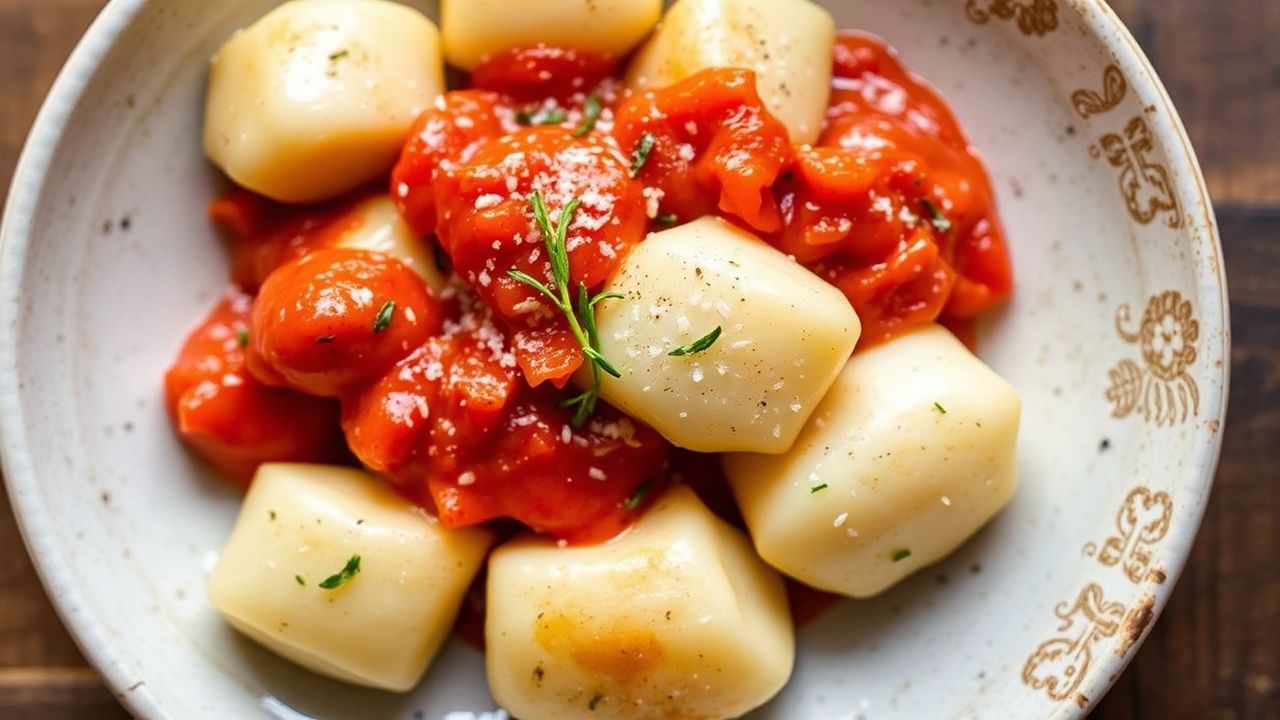
Classic American potato gnocchi earns its reputation for a reason: it tastes rich, feels light, and turns simple pantry items into a comforting meal. This recipe builds classic texture the right way—dry, starchy potatoes plus controlled dough handling.
- Timeless Taste: Crafting Classic American Potato Gnocchi
- Prep and Cook Time
- Yield
- Difficulty Level
- Ingredients
- Instructions
- Chef’s Notes
- Sauce Pairings That Celebrate Classic American Flavors
- Nutritional Details (Per Serving)
- FAQ
- What makes classic American potato gnocchi a timeless classic?
- Why should I bake potatoes instead of boiling them?
- How do I prevent my gnocchi from turning gummy or tough?
- What’s the best way to shape gnocchi for sauce cling?
- Can I freeze classic American potato gnocchi?
- The Conclusion
- Focus: Starchy potatoes create tender, cohesive gnocchi dough.
- Texture: Bake potatoes to remove moisture before mixing.
- Technique: Shape gently, cook in batches, and finish with butter.
- Sauce-ready: Fork ridges help cling to browned butter or tomato sauce.
Join us as you learn how to make classic American potato gnocchi from scratch, step by step. You’ll see why flour amount, cooling time, and boiling method matter just as much as ingredients.
Before you start, decide your sauce direction. Browned butter and sage suits a classic, nutty profile, while tomato-based sauce highlights the potato flavor with bright acidity.
Timeless Taste: Crafting Classic American Potato Gnocchi
Classic American potato gnocchi begins with one goal: remove excess water from the potatoes. Starch drives structure, but moisture creates stickiness, and sticky dough usually leads to tough dumplings.
Traditionally, gnocchi relies on mashed potato and flour as the binding system. In the American kitchen, cooks often fine-tune the feel by using very dry potatoes (like Russet) and working the dough with restraint. For background on the dish’s broader family, see gnocchi.
Use a potato ricer when possible. It produces smaller, more uniform strands than a basic mash, which helps the dough stay smooth and cooks more evenly.
Another small detail improves results fast: cool the mashed potato briefly before adding flour and egg. Heat speeds gluten development in flour, which can make gnocchi chewy instead of tender.
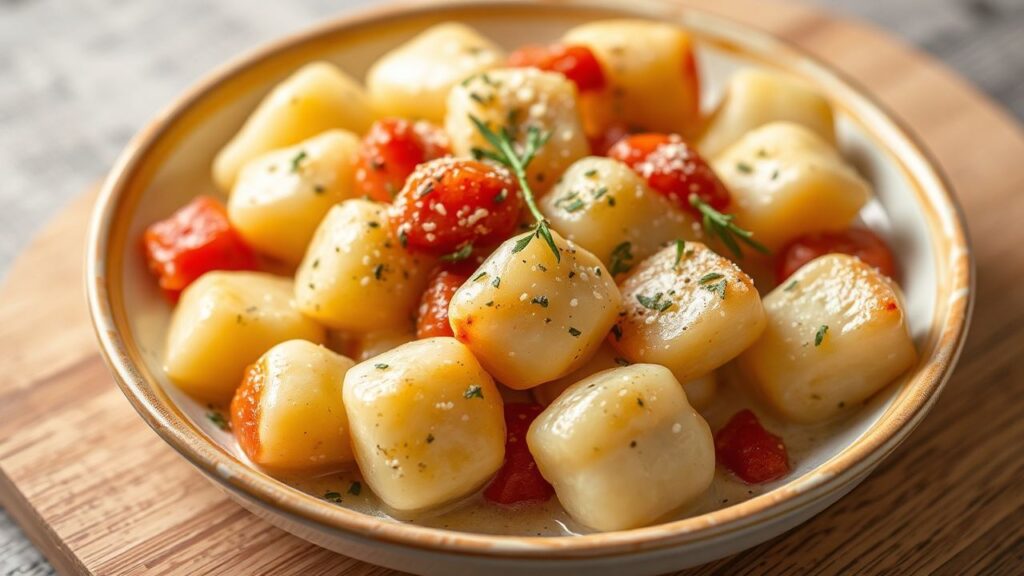
If you want ridges for sauce adhesion, shape consistently. Ridges also help the dumplings hold sauce without turning mushy.
Prep and Cook Time
Readiness: 40 minutes
Cooking: 8 minutes
Total Time: 48 minutes
Gnocchi cooks quickly once the dough is ready. Most time goes into baking, peeling, and cooling potatoes so the dough stays manageable.
Plan to boil in batches. Crowding the pot drops water temperature and can cause uneven texture or sticking.
Yield
This recipe makes about 4 generous servings (around 36 gnocchi pieces, depending on cut size). Adjust the rope thickness to control final size.
If you serve hungry guests, consider extra sauce. Gnocchi absorbs flavors well, so a slightly saucier plan usually prevents dry bites.
Difficulty Level
Medium—this recipe suits confident home cooks who like hands-on technique. The method rewards careful cooling and gentle shaping more than advanced equipment.
You can still make it successfully on the first try. Follow the timing cues for baking, boiling, and finishing so you don’t overcook or overwork the dough.
Ingredients
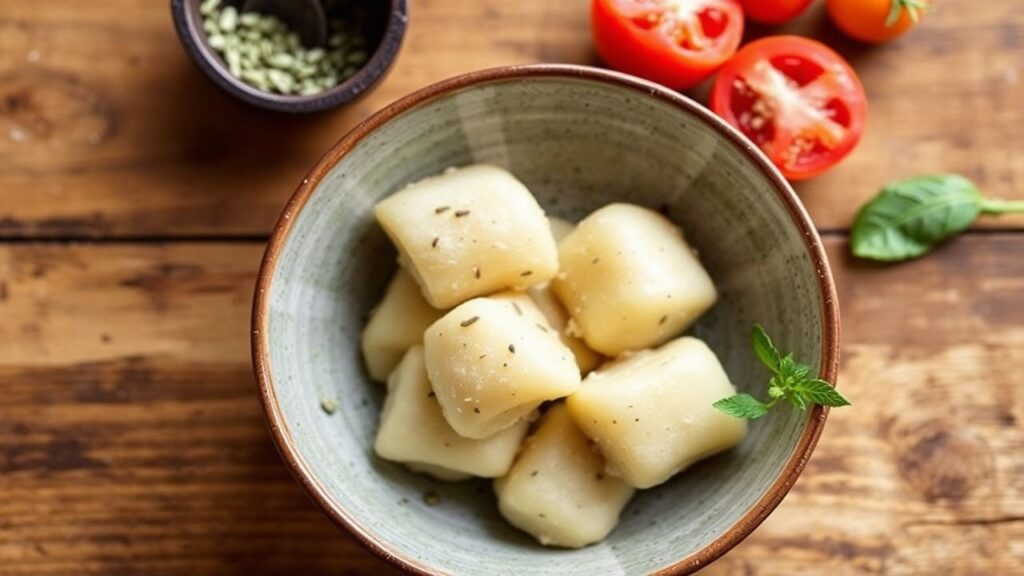
- 2 pounds Russet potatoes (or Idaho), peeled after baking
- 1 1/2 cups all-purpose flour, sifted (plus extra for dusting)
- 1 large egg, lightly beaten
- 1 teaspoon kosher salt
- Freshly ground black pepper, to taste
- 1 tablespoon unsalted butter (for finishing)
Flour amount controls firmness. Start with sifted flour and add only a little extra if the dough feels overly sticky.
Egg adds binding and helps the dumplings hold shape. Some cooks skip egg entirely for a lighter feel, but including it helps consistency for American-style home kitchens.
Instructions
- Select and Bake the Potatoes: Preheat oven to 425°F (220°C). Pierce potatoes and bake on a rack for 45–60 minutes until fully tender. Baking removes water, which helps the dough stay dry and pliable.
- Prepare the Potato Dough: Peel potatoes while warm. Rice them or mash very thoroughly to remove lumps. Spread on a clean surface and cool for 10 minutes so steam escapes and the dough won’t melt your flour.
- Combine Ingredients: Sprinkle flour and salt over the warm (not hot) potatoes. Add the beaten egg in the center. Mix gently until you form a smooth dough, then stop—over-kneading activates flour strength and can toughen gnocchi.
- Shape the Gnocchi: Divide dough into 4 parts. Roll each into a 3/4-inch rope, then cut into 1-inch pieces. For ridges, roll pieces over a fork or a gnocchi board.
- Cook the Gnocchi: Bring a large pot of salted water to a gentle boil. Add gnocchi in batches and stir once at the start. When they float (about 2–3 minutes), cook 30 seconds more, then remove with a slotted spoon.
- Finish with Butter: Melt butter in a skillet over medium heat. Toss cooked gnocchi gently until lightly golden, about 3 minutes. Serve immediately so the texture stays tender inside and lightly crisp outside.
When you boil, keep the water at a steady simmer. A hard boil can break delicate dumplings, while low heat can delay cooking and increase starchy gumminess.
If you test one piece first, you can adjust. Cook a single dumpling; if it falls apart, the dough likely needs a little more structure (a small flour increase). If it feels dense, you likely used too much flour or worked too long.
Consistency matters during shaping. Keep ropes the same thickness so cooking time stays uniform. Uniform gnocchi also browns evenly at the butter finish.
If you want a historical grounding for potato use in Italian-American cooking, read potato. It helps explain why starchy varieties became common for dumplings and side dishes.
Chef’s Notes
- Potato Choice: Russet/Idaho potatoes usually deliver ideal starch-to-moisture levels. Avoid waxy varieties that hold water and produce denser dough.
- Dough Handling: Keep kneading brief. Dough should feel pliable, not elastic. If it sticks, dust lightly with flour instead of forcing extra mixing.
- Make-Ahead Tips: Freeze shaped gnocchi on a floured tray until solid, then bag. Boil from frozen and add about 1 extra minute.
- Variations: Fold in 1/4 cup finely grated aged cheddar for a mild, savory twist—still keep dough handling gentle.
Cheese changes moisture balance. If you add cheddar, keep an eye on dough feel. Too much cheese can release fat and slightly soften the dough during shaping.
For sauce durability, ridges help. They create more surface area, so browned butter or thicker sauces cling without sliding off.
Sauce Pairings That Celebrate Classic American Flavors
After cooking, match your gnocchi with a sauce that complements potato richness. Browned butter adds nutty depth and pairs well with herbs like sage.
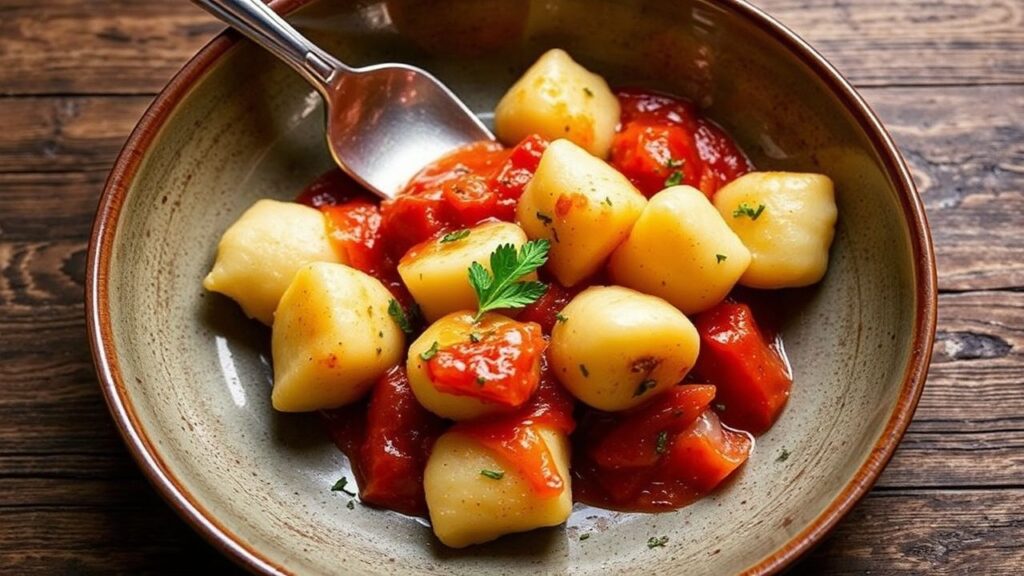
Tomato-based sauces also work beautifully because acidity cuts through starchy sweetness. If you prefer creamier plates, choose sauces that coat each dumpling lightly rather than drown it.
For more on classic comfort flavors, explore sauce. It helps you think in terms of viscosity and flavor balance—two factors that decide whether gnocchi tastes balanced or heavy.
If you’re using sage or roasted garlic, cook them briefly in butter so they perfume the fat. This approach keeps flavors aromatic instead of bitter.
Want a quick pairing guide? Use browned butter + sage for a nutty classic, tomato + basil for bright comfort, and smoked-cheddar-forward sauces for regional-style richness. Serve hot and plate immediately for best texture.
Nutritional Details (Per Serving)
| Calories | Protein | Carbs | Fat |
|---|---|---|---|
| 350 kcal | 8 g | 70 g | 2.5 g |
Nutrient values vary by potato size, exact flour amount, and butter used. Use this chart as a baseline for planning meals and portion sizes.
If you portion gnocchi and sauce carefully, you can keep calories steady. Also note that adding cheese or cream can raise fat and calories quickly.
For more potato-based comfort ideas, you can explore Italian cuisine and adapt techniques to American pantry staples. Gnocchi works as a flexible base for many flavor directions.
FAQ
What makes classic American potato gnocchi a timeless classic?
It combines simple ingredients with a pillowy bite. Starchy potatoes create tenderness, while careful flour control keeps the dumplings light enough to pair with many sauces.
Why should I bake potatoes instead of boiling them?
Baking helps remove surface moisture and reduces water in the potato flesh. Less water means less sticky dough, which leads to better shaping and a firmer structure after boiling.
How do I prevent my gnocchi from turning gummy or tough?
Cool the potato mash briefly before mixing. Then mix only until the dough forms; stop early to avoid excess dough strength that can make gnocchi chewy.
What’s the best way to shape gnocchi for sauce cling?
Cut consistent pieces and roll them over a fork or gnocchi board. Those ridges create tiny grooves that hold sauce while the dumpling cooks evenly.
Can I freeze classic American potato gnocchi?
Yes. Freeze shaped gnocchi on a floured tray first, then store in a sealed bag. Boil directly from frozen for best results, with a short extra cooking time.
The Conclusion
Classic American potato gnocchi rewards careful technique. Bake dry potatoes, cool them before mixing, shape gently, and finish with a quick butter toss for the best texture.
Once you master the basics, you can build your own sauce pairings with confidence. Every batch becomes easier, and the flavor stays timeless—soft, comforting, and ready for the table.
See also: potato gnocchi