
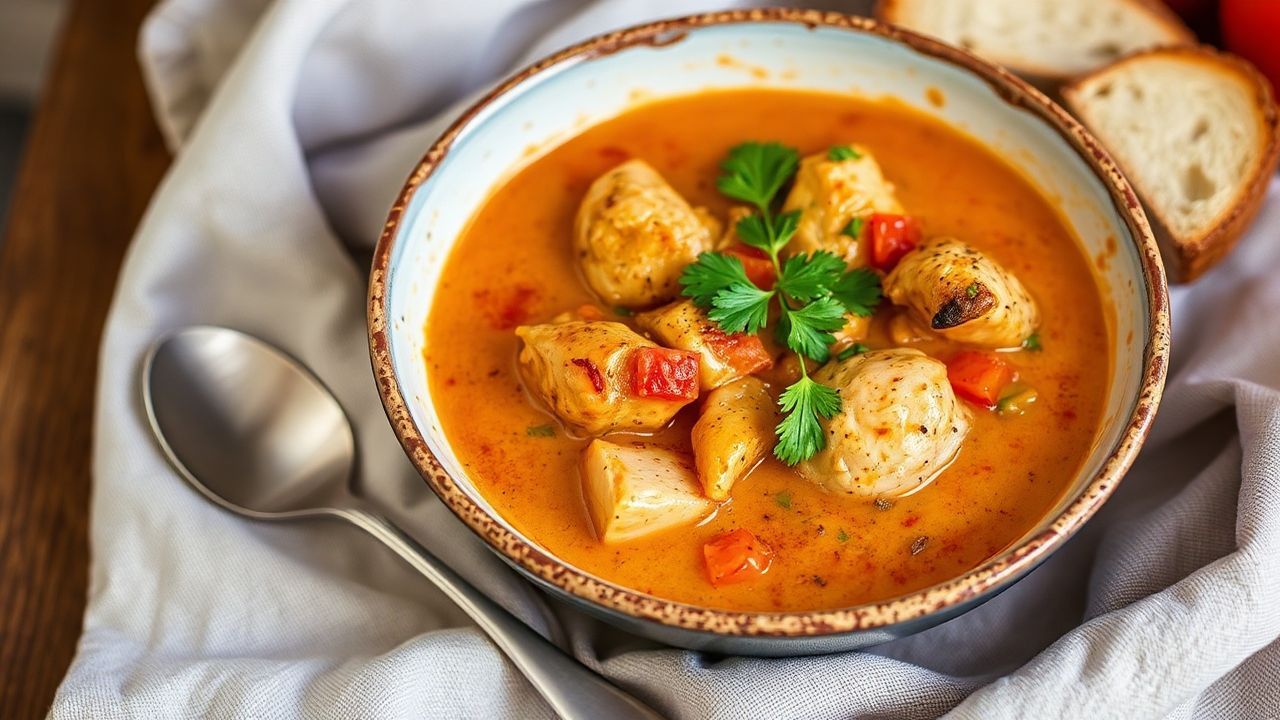
Imagine a dish that wraps you in warmth with every spoonful: tender chicken, smoky paprika, and a creamy sauce that clings to every bite. Velvety chicken paprika stew turns simple pantry ingredients into a slow-cooked comfort classic, with flavor built through browning, gentle simmering, and careful dairy tempering.
- Origins of Velvety Chicken Paprika Stew and Why It Tastes This Way
- Choosing the Perfect Cut for Ultimate Tenderness
- Mastering the Balance of Paprika for Deep Flavor
- Creating the Creamy Base for Velvety Smoothness
- Step-by-Step: How to Cook Velvety Chicken Paprika Stew
- Serving Suggestions to Elevate Your Chicken Stew Experience
- Prep and Cook Time, Yield, and Difficulty
- Ingredients for Velvety Chicken Paprika Stew
- Instructions
- Tips for Success
- Nutrition Snapshot (Estimated)
- FAQ
At a Glance: Key Takeaways
- Thighs win for melt-tender texture in creamy stews.
- Paprika needs toasting to release fragrance and depth.
- Temper dairy to prevent curdling and keep the sauce smooth.
- Simmer, don’t boil after cream goes in for a velvety finish.
Use this guide to build a rich, creamy paprika sauce from scratch, then serve it with sides that soak it up. You will also find practical timing, ingredient swaps, and troubleshooting so the stew tastes great and stays silky.
Origins of Velvety Chicken Paprika Stew and Why It Tastes This Way
This style of chicken and paprika stew draws from Central and Eastern European cooking, where paprika stands at the center of flavor. Hungarian kitchens popularized paprika-forward braises, often with creamy or roux-thickened sauces that coat meat and vegetables.
In culinary terms, the “velvety” texture usually comes from two sources: a starch-thickened base (like a roux) plus tempered dairy (like sour cream or crème fraîche). Paprika also benefits from heat, which helps fat-soluble aroma compounds bloom in the cooking process.
To understand the seasoning profile, it helps to know what paprika really is: ground peppers with varying heat levels and flavor notes depending on variety. Sweet and smoked paprika create different depth, and pairing them lets you control warmth without pushing the stew into “spicy.”
Choosing the Perfect Cut for Ultimate Tenderness
When you build a creamy stew, the chicken cut decides your texture. For velvety chicken paprika stew, choose bone-in, skin-on chicken thighs or drumsticks because they stay juicy through long, gentle cooking.
Thighs carry more fat, and that fat renders during braising. As connective tissue breaks down over time, you get that fork-tender bite that holds up in a thick sauce.
If you prefer chicken breast, use it carefully. Breast dries faster because it has less intramuscular fat, so adding it later or cutting it smaller can help you keep moisture. Either way, season well and brown the surface so you start with real flavor, not just tenderness.
Mastering the Balance of Paprika for Deep Flavor
Paprika is the heart of this stew, and you should treat it like a spice that needs technique, not a powder you dump in. A short toast in hot fat wakes up aroma and rounds out flavor.
Start with sweet paprika for warm, slightly sweet pepper notes. Add a small amount of smoked paprika for smoky depth, then adjust to taste once the stew tastes cooked.
Toasted spices work because oils and aromatic compounds disperse better when heated. You can see the general idea behind this with toasting, which describes how heat changes flavor through aromatic release and mild browning reactions.
Creating the Creamy Base for Velvety Smoothness
The velvety texture comes from a controlled thickening method. In most home kitchens, a roux gives you consistent body, then tempered dairy provides richness without turning grainy.
Make a roux with flour cooked briefly in olive oil or another fat, then whisk in warm chicken stock slowly. Warm liquid reduces lump risk and keeps your base stable before you add dairy.
For the dairy portion, sour cream or crème fraîche both work. Tempering means you mix a small amount of hot stew into the dairy first, so the dairy warms gradually. That approach limits curdling and supports a smooth finish.
If you want extra guidance on dairy behavior, you can refer to sour cream for basics on its acidity and texture, which matters when you add it to hot liquids.
Step-by-Step: How to Cook Velvety Chicken Paprika Stew
Build the stew in stages so each step supports the next. Brown the chicken first, then build the onion-garlic base, toast the paprika, and only then add stock and vegetables.
Cook on low heat to tenderize the meat, then temper and add the dairy near the end. This timing keeps vegetables tender, meat succulent, and sauce silky.
For cooking fundamentals, it helps to know the role of braising. Your stew follows braising logic: sear for flavor, then simmer with moisture so tough fibers soften while sauce elements deepen.
Serving Suggestions to Elevate Your Chicken Stew Experience
Serve velvety chicken paprika stew hot in rustic bowls. Add fresh herbs like parsley or dill for contrast, and finish with a light dusting of paprika for visual warmth.
Choose sides that absorb the sauce. Crusty bread, buttered noodles, or soft spaetzle all help you scoop more flavor per bite. If you want a lighter balance, serve the stew with a cucumber salad dressed in lemon and herbs.
To keep the experience steady from first spoon to last, taste before serving and adjust salt and black pepper. You can also thin the stew slightly with warm stock if it thickened more than you expected during simmering.
Prep and Cook Time, Yield, and Difficulty
Planning matters because this dish rewards patience. Set aside time for browning and low, steady simmering so the chicken becomes tender without drying out.
Use the totals below as a practical guide. Your exact timing depends on chicken thickness and how low your simmer runs.
Prep and Cook Time
- Preparation: 20 minutes
- Cooking: 1 hour 10 minutes
- Total Time: 1 hour 30 minutes
Yield
Serves 4 generous portions.
This amount works well for a hearty dinner with bread or noodles.
Difficulty Level
Medium — ideal for home cooks who want a classic technique with reliable results.
You mainly need to brown well and temper dairy carefully.
Ingredients for Velvety Chicken Paprika Stew
Use these amounts for a rich, creamy stew with balanced paprika flavor. Keep the dairy at room temperature for smoother tempering.
If you adjust spice levels, taste after the stew simmers before you add dairy so you can correct seasoning early.
Ingredients
- 1.5 lbs bone-in, skin-on chicken thighs, trimmed
- 2 tablespoons sweet paprika
- ½ teaspoon smoked paprika
- 1 medium onion, finely chopped
- 3 garlic cloves, minced
- 2 tablespoons olive oil
- 2 tablespoons all-purpose flour
- 3 cups warm chicken stock
- 1 cup sour cream, at room temperature
- 2 medium carrots, sliced
- 1 red bell pepper, diced
- Salt and freshly ground black pepper, to taste
- Fresh parsley, chopped, for garnish
Instructions
Follow these steps in order to protect texture and flavor. Each action builds the base for a creamy sauce rather than a thin soup.
If at any point the stew looks too thick before adding dairy, loosen with a little warm stock. If it looks too thin after dairy, simmer gently a few minutes longer.
Instructions
- Prepare the chicken: Pat the chicken thighs dry and season generously with salt and black pepper.
- Sear the chicken: Heat olive oil over medium heat in a large heavy-bottomed pot. Add chicken skin-side down and brown until golden, about 5 minutes per side. Remove and set aside.
- Sauté aromatics: In the same pot, add onions and garlic. Sauté until soft and translucent, about 5 minutes, stirring regularly to prevent burning.
- Toast the paprika: Lower the heat and sprinkle in sweet paprika and smoked paprika. Stir for 30 seconds to toast and bloom the spices.
- Create the roux: Sprinkle the flour evenly and stir continuously for 2 minutes until the mixture turns slightly golden and smells nutty.
- Add liquids and veggies: Gradually whisk in warm chicken stock to avoid lumps. Add carrots and bell pepper. Bring to a gentle simmer.
- Return chicken to pot: Nestle the browned chicken into the stew. Cover and cook on low heat for 40 minutes, until chicken is tender and vegetables soften.
- Temper the sour cream: In a small bowl, whisk sour cream with a few spoonfuls of hot stew liquid. Slowly stir it back into the pot while whisking.
- Final simmer: Cook uncovered for another 10 minutes on a gentle heat, stirring occasionally until the sauce looks glossy and cohesive.
- Adjust seasoning and serve: Taste and adjust salt and pepper. Garnish with freshly chopped parsley before ladling into bowls.
Tips for Success
Small technique choices decide whether the stew tastes flat or layered. Use these points to keep the sauce smooth and the flavor balanced.
If something goes off, you can usually recover with heat control, careful mixing, and a small seasoning adjustment.
Tips for Success
- Use bone-in pieces for deeper flavor and moist, tender chicken.
- Toast paprika briefly and gently so it blooms without turning bitter.
- Temper sour cream slowly to avoid curdling.
- Make-ahead tip: The stew tastes even better the next day as flavors round out. Reheat gently and add a splash of warm stock if needed.
- For a dairy-free option, replace sour cream with a thick plant-based cream. Start with less smoked paprika because some substitutes taste sweeter or milder.
Nutrition Snapshot (Estimated)
Nutrition varies by portion size and how much skin you keep on the chicken. The table below uses the provided ingredient amounts and standard nutrition assumptions.
Consider it a helpful estimate rather than a medical value.
| nutrient | Per Serving |
|---|---|
| Calories | 420 kcal |
| Protein | 38 g |
| Carbohydrates | 16 g |
| Fat | 22 g |
If you want to fine-tune the stew to your diet, focus on portion control and pairing choices (bread vs. noodles vs. potatoes). Also remember that fat and dairy heavily influence both calorie count and mouthfeel.
FAQ
Quick answers help you avoid common texture problems and improve flavor on the first try. Use these notes while cooking, especially if you are tempering dairy for the first time.
For deeper background on ingredients, you can also review cooking references like chicken thigh and stock.
What makes chicken paprika stew “velvety”?
The texture comes from a starch-thickened base (roux) plus tempered dairy. When you add dairy gradually and keep heat gentle, the sauce stays smooth and glossy.
Boiling after dairy can cause separation, so simmering on low heat protects the velvety finish.
Can I use chicken breast instead of thighs?
Yes, but you must reduce drying risk. Cut the breast into larger chunks or add it later so it cooks through without overcooking.
Even with breast, browning still matters because it improves flavor through the Maillard effect.
How do I stop sour cream from curdling?
Temper it. Mix sour cream with hot stew liquid first, then add it slowly while whisking. This warms the dairy evenly.
After adding dairy, avoid rapid boiling. Gentle heat keeps the sauce silky.
What paprika works best for creamy stew?
Sweet paprika creates the classic warm pepper flavor. Smoked paprika adds depth, but keep it measured so the sauce tastes balanced rather than harsh.
For reference on pepper heat levels and styles, see paprika.
Can I make this stew ahead or freeze it?
Yes. Many cooks like making it a day ahead because flavors meld as it rests. Reheat gently and adjust thickness with warm stock.
For freezing, consider holding the dairy until reheating if you want maximum smoothness, since dairy can change texture after thawing.
See also: velvety chicken paprika