

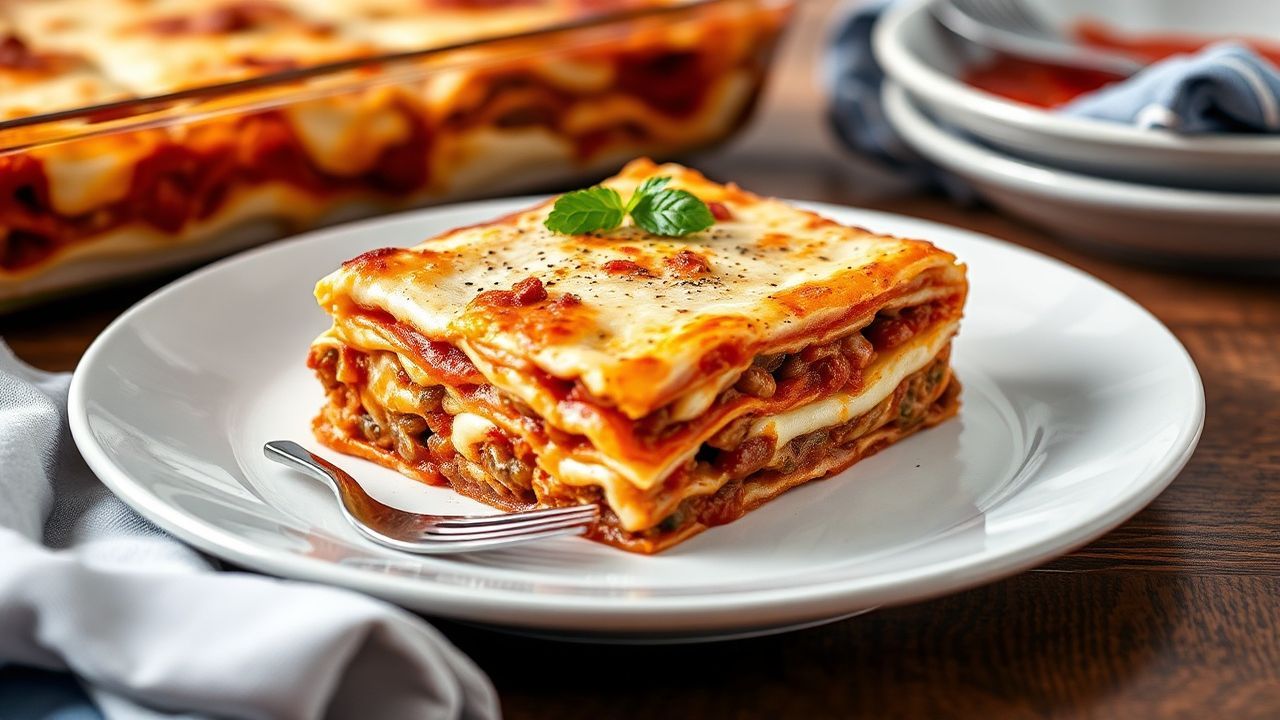
Nothing beats a steaming classic lasagna with ricotta & meat sauce when you want true comfort food. The magic comes from layered texture: tender pasta, creamy ricotta, and a slow-simmered meat sauce that clings to every bite.
- Why This Classic Lasagna Recipe Works
- Prep and Cook Time + Yield
- Ingredients for Classic Lasagna with Ricotta & Meat Sauce
- Instructions: Step-by-Step Classic Lasagna Build
- 1) Prepare the Meat Sauce
- 2) Mix the Ricotta Layer
- 3) Preheat and Assemble Layers
- 4) Bake, Uncover, and Rest
- Tips for Success (Texture, Sauce, and Slicing)
- Serving Suggestions and Pairing Ideas
- Calories and Nutrition Snapshot (Per Serving)
- FAQ: Classic Lasagna with Ricotta & Meat Sauce
- Layer smart: sauce, pasta, ricotta, then mozzarella—repeat for clean slices.
- Simmer longer: thick meat sauce improves flavor and prevents watery layers.
- Rest before cutting: 15 minutes helps the lasagna set.
- Use the right pasta: no-boil sheets work best with enough sauce moisture.
In this recipe, you build the dish from scratch with clear steps and dependable timing. Whether you cook for family night or meal-prep for the week, you’ll get layers that hold their shape and taste rich.
For background, lasagna is a baked pasta dish built in stacked layers, a tradition often linked to Italian home cooking and regional styles. If you want a wider view of the dish’s roots, see lasagna.
Classic Lasagna with Ricotta & Meat Sauce
Why This Classic Lasagna Recipe Works
This version succeeds because each layer plays a specific job. The meat sauce adds deep savory flavor and moisture, while ricotta brings a creamy, slightly tangy structure that contrasts the tomatoes. When you melt mozzarella on top, you seal the layers with a flavorful crust.
Also, this method follows standard baking logic: you cook the pasta indirectly by using enough sauce moisture and time. That’s how lasagna avoids dryness and turns into a cohesive slice instead of a loose casserole. For sauce fundamentals, check tomato sauce.
Balance of Texture: Pasta, Ricotta, and Meat
Start with a thin base of meat sauce so the first pasta layer doesn’t stick. Then spread ricotta evenly so each bite tastes creamy, not streaky. Finally, add mozzarella for melt and browning.
If you want a classic Italian cheese approach, ricotta is traditionally used for its light texture. Learn more about its dairy profile in ricotta. That knowledge helps you drain watery ricotta and keep layers firm.
Prep and Cook Time + Yield
Plan your day around two phases: sauce building and assembly/bake. The sauce simmers while you prep the ricotta mixture, which keeps the workflow efficient.
When you finish, this lasagna serves about 8 people. It also reheats well because the pasta absorbs sauce as it rests. For general baking science around moisture control, see baking.
- Preparation: 35 minutes
- Cook time: 1 hour 15 minutes
- Total: 1 hour 50 minutes
Yield: Serves 8 hearty portions
Difficulty Level: medium — a rewarding project for home cooks comfortable with multi-step meals
Ingredients for Classic Lasagna with Ricotta & Meat Sauce
Use fresh aromatics for the best meat sauce flavor. If you can, choose lean ground beef for a cleaner taste, then simmer until the sauce thickens.
For pasta, pick no-boil lasagna sheets to simplify assembly. No-boil sheets rely on sauce moisture, so you must spread enough meat sauce and avoid watery simmering. For an overview of pasta forms and drying, see pasta.
Meat Sauce
- 2 tablespoons olive oil
- 1 large onion, finely chopped
- 3 garlic cloves, minced
- 1 lb (450g) ground beef (lean, no pork)
- 1 can (28 oz) crushed tomatoes
- 2 tablespoons tomato paste
- 1 teaspoon dried oregano
- 1 teaspoon dried basil
- ½ teaspoon red pepper flakes (optional)
- Salt and freshly ground black pepper, to taste
Ricotta Mixture
- 15 oz (425g) ricotta cheese
- 1 large egg
- ½ cup grated Parmesan cheese
- 2 tablespoons chopped fresh parsley
- Pinch of nutmeg
- Salt and pepper, to taste
Pasta Sheets and Cheeses
- 12 no-boil lasagna sheets (or fresh pasta sheets if preferred)
- 3 cups shredded mozzarella cheese
- Butter or olive oil for greasing
Instructions: Step-by-Step Classic Lasagna Build
Follow this sequence to keep timing tight and texture consistent. You’ll make the sauce first, mix ricotta while it simmers, then assemble and bake.
Keep your oven preheated and your baking dish ready. When you cover and uncover at the right times, you prevent cheese from drying out while still achieving browning. For general cooking control, see oven.
1) Prepare the Meat Sauce
- Sauté aromatics: Heat olive oil in a large skillet over medium heat. Add onion and cook until translucent, about 5 minutes. Stir in garlic and cook 1 minute until fragrant.
- Brown the meat: Add ground beef and brown thoroughly, breaking it apart. Season with salt, pepper, oregano, basil, and red pepper flakes. Cook until evenly browned, about 8 minutes.
- Simmer to thicken: Stir in tomato paste, then pour in crushed tomatoes. Simmer gently, partially covered, for 30 minutes, stirring occasionally, until the sauce thickens.
2) Mix the Ricotta Layer
- Combine: In a medium bowl, mix ricotta, egg, Parmesan, parsley, nutmeg, salt, and pepper. Stir until smooth and creamy.
- Texture check: If the ricotta looks watery, drain it first. A firm ricotta layer helps the lasagna slice cleanly.
3) Preheat and Assemble Layers
- Preheat: Set oven to 375°F (190°C). Lightly grease a 9×13 inch baking dish with butter or olive oil.
- Build: Spread a thin layer of meat sauce on the bottom. Arrange 3 lasagna sheets evenly over the sauce.
- Add ricotta and sauce: Spread 1/3 ricotta mixture, then add 1/3 meat sauce. Sprinkle about 1 cup mozzarella. Repeat two more times, finishing with a generous mozzarella topping.
4) Bake, Uncover, and Rest
- Cover and bake: Loosely cover with aluminum foil and bake 45 minutes.
- Uncover to brown: Remove foil and bake uncovered 15 minutes, until bubbly and golden with some crisp edges.
- Rest: Let lasagna rest 15 minutes before slicing. This step helps layers set and keeps each cut neat.
Tips for Success (Texture, Sauce, and Slicing)
Small details drive big results in classic lasagna with ricotta & meat sauce. If you address moisture control, you’ll prevent both dryness and soupiness. You’ll also get a slice that holds its shape on the plate.
Use these checks during cooking. They take minutes, but they improve every bite. For food texture science at a high level, you can also review cooking.
- Sauce consistency matters: Thick sauce binds layers. If it feels watery, simmer uncovered until it thickens.
- Ricotta texture: Drain watery ricotta using a fine mesh to avoid soggy layers.
- Pasta choice: No-boil sheets need enough sauce moisture. If using regular dried noodles, boil to al dente first.
- Make it ahead: Assemble up to 24 hours in advance. Refrigerate covered. Bake when ready.
- Customize herbs: Fresh basil and oregano work well in both the sauce and ricotta mixture.
- Cheese quality: High-quality mozzarella melts smoothly for better coverage and browning.
Serving Suggestions and Pairing Ideas
Serve this lasagna with a bright, crisp side to balance the richness. A simple salad with lemon vinaigrette cuts through the creamy ricotta and deep meat sauce.
For more flavor contrast, add garlic bread or roasted vegetables. You can also offer a sparkling beverage to keep the meal feeling light between bites. If you want to understand what makes wine and food pair well, review food pairing.
Quick plate idea: Lasagna slice + arugula salad + roasted zucchini. Garnish with chopped parsley for color and fresh aroma.
Calories and Nutrition Snapshot (Per Serving)
This estimate helps you plan portions. Exact numbers vary based on brands, fat levels, and how much cheese you use.
Use the table below as a practical reference for typical servings of classic baked lasagna.
| Nutrient | Per Serving |
|---|---|
| Calories | 480 kcal |
| Protein | 32 g |
| Carbohydrates | 38 g |
| Fat | 22 g |
For a deeper look at why portion size matters in high-energy baked dishes, see nutrition.
FAQ: Classic Lasagna with Ricotta & Meat Sauce
Here are quick answers to the questions cooks ask most often. Each response focuses on results you can taste: better texture, better flavor, and easier slicing.
What makes classic lasagna with ricotta & meat sauce stand out from other pasta dishes?
The standout feature is the layered structure. Ricotta creates creamy contrast to the savory meat sauce, while mozzarella adds melt and browning. Together, they turn separate ingredients into one cohesive slice.
Why is ricotta essential in this classic lasagna?
Ricotta brings a light, creamy texture that balances the tomato sauce’s acidity. It also helps create soft, spoonable layers when mixed with egg and Parmesan. If ricotta is watery, it can weaken structure, so draining helps.
Can I use ground lamb instead of ground beef?
Yes. Ground lamb gives a richer, more robust flavor, especially after simmering with tomatoes and herbs. Keep the same browning and simmer steps so the sauce thickens and tastes well-balanced.
Do I need to boil lasagna noodles?
If you use no-boil lasagna sheets, you typically skip boiling. Those sheets cook during baking as they absorb sauce moisture. If you use regular dried noodles, boil to al dente first to prevent dryness.
How do I prevent lasagna from being too watery or too dry?
To avoid watery lasagna, thicken the meat sauce during simmering and drain watery ricotta. To avoid dryness, spread enough sauce between layers and cover for the first bake period. Finally, rest before cutting so moisture redistributes.
See also: classic lasagna