

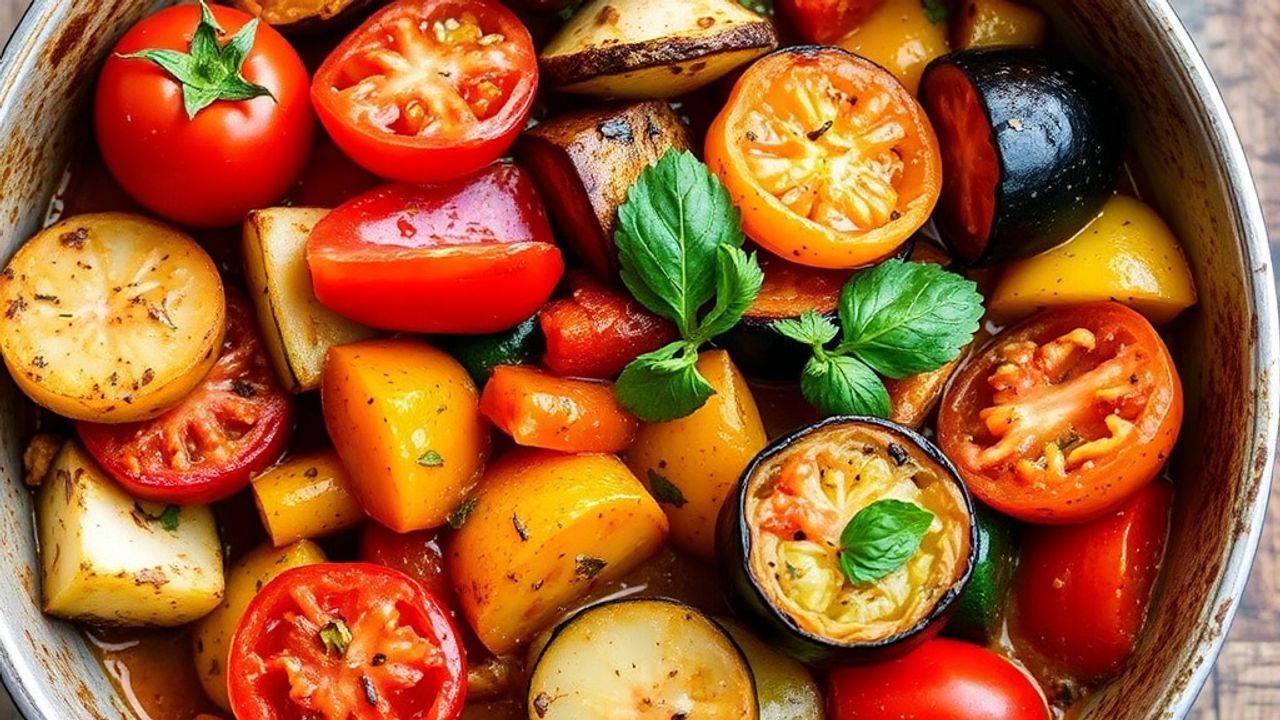
Ratatouille captures summer’s peak produce in a humble, layered vegetable stew from Provence. This classic ratatouille recipe focuses on technique: separate sautéing, slow simmering, and careful seasoning to preserve texture and build depth.
At a Glance
- Classic method: sauté vegetables separately, then simmer together.
- Key produce: eggplant, zucchini, tomatoes, peppers, onions, garlic.
- Make ahead: flavors deepen overnight — excellent for meal prep.
Ratatouille: Why the Classic Method Matters
Classic ratatouille relies on preserving each vegetable’s texture and flavor. By sautéing components separately, you prevent excess moisture and maintain distinct layers in the final stew.
Provençal herbs and quality olive oil unify the dish while allowing the vegetables to remain bright. For context on the region and culinary tradition, consult Provence.
Ingredients for Classic Ratatouille
Choose ripe, firm vegetables to get the best texture: medium zucchini, yellow squash, ripe tomatoes, eggplant, red and yellow bell peppers, onion, and garlic. Use extra-virgin olive oil and a modest amount of dried herbes de Provence or fresh thyme.
Fresh basil added at the end brightens the dish. For ingredient context and varieties, see zucchini and eggplant.
Shopping list (serves 6)
Buy quality produce and pantry staples. When possible, select tomatoes that are full-flavored rather than watery; plum or vine-ripened types work well.
- 2 medium zucchinis, sliced 1/4-inch
- 2 medium yellow squashes, sliced
- 2 large ripe tomatoes, peeled and chopped
- 1 large eggplant, cubed
- 1 red and 1 yellow bell pepper, diced
- 1 large onion, finely chopped
- 4 cloves garlic, minced
- 4 tbsp extra-virgin olive oil
- 1 tsp herbes de Provence or fresh thyme sprigs
- Salt and freshly ground black pepper, to taste
- Handful fresh basil leaves, torn for garnish
- 2 tbsp tomato paste (optional)
Step-by-Step Ratatouille Instructions
Follow a clear sequence: prepare vegetables, brown denser items first, then build the tomato base and finish by combining. This controlled process preserves texture while allowing flavors to meld.
Keep heat moderate and monitor moisture. A heavy-bottomed pan or Dutch oven prevents scorching and promotes even cooking.
- Prepare vegetables: Wash and dry all produce. Peel tomatoes by blanching for 30 seconds then plunging into ice water; remove skins and chop.
- Sauté eggplant: Heat 2 tablespoons olive oil over medium-high heat. Cook eggplant until golden and slightly softened, about 6-8 minutes; remove and drain briefly.
- Sauté peppers and onions: Add 1 tablespoon oil, sweat onions and bell peppers until softened, about 6-8 minutes.
- Add garlic and tomato paste: Stir in garlic and tomato paste and cook 1-2 minutes until aromatic; avoid browning the garlic.
- Build the tomato base: Add chopped tomatoes, herbes de Provence, and thyme; reduce heat and simmer 10 minutes to concentrate flavor.
- Layer squash and zucchini: Add sliced zucchini and yellow squash, cover, and steam in the tomato base for 15 minutes to soften while preserving shape.
- Return eggplant: Fold the eggplant back in, cover, and simmer gently another 15-20 minutes until all vegetables are tender but distinct.
- Finish and garnish: Remove thyme sprigs, season with salt and pepper, drizzle with olive oil, and top with torn basil before serving.
Technique notes
Control moisture by cooking each vegetable separately and draining if needed. This prevents a watery stew and intensifies flavor.
When simmering, keep heat low and stir occasionally to avoid breaking down the vegetables. Aim for tender but intact pieces.
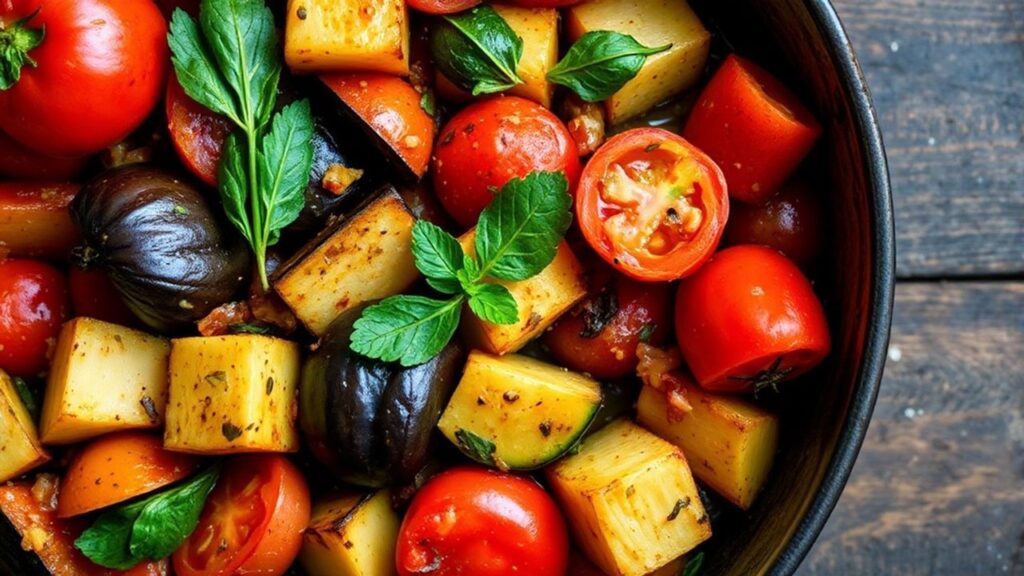
For a different presentation, layer thin slices in a baking dish (a tian) and roast. The baked version concentrates sugars and yields a caramelized finish.
Ratatouille: Tips for Success
Choose firm vegetables that are not overripe. Overripe produce releases too much water and undermines texture in a layered vegetable stew.
Use fresh herbs at the end to preserve aroma. Dried herbs can flavor the simmering base, but add fresh basil at plating for brightness.
- Peeling: Peel tomatoes for silkier texture; leave eggplant skin on for rustic versions.
- Heat control: Moderate heat prevents vegetables from turning mushy.
- Make ahead: Refrigerate overnight to let flavors marry; gently reheat.
Ratatouille: Serving Suggestions and Pairings
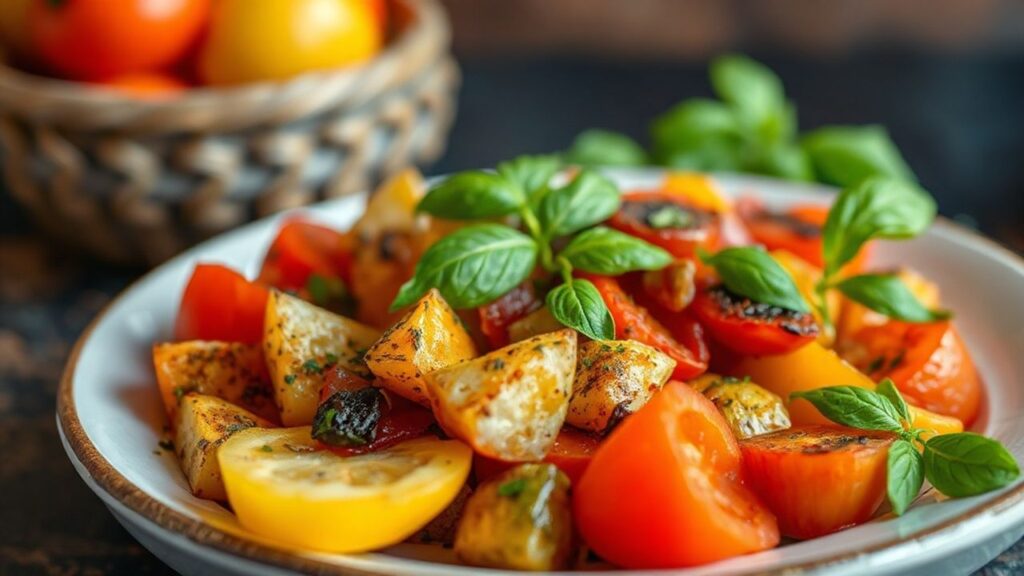
Serve ratatouille warm or at room temperature. It pairs well with crusty bread, creamy cheeses, grilled proteins, or as a vegetable-forward main.
Try a light rosé or a chilled Provence white to complement the vegetable brightness. For non-alcoholic options, sparkling water with citrus works equally well.
Presentation tip: Finish with a drizzle of fruity olive oil, flaky sea salt, and toasted pine nuts for texture contrast and visual appeal.
Nutritional Snapshot
Ratatouille is vegetable-forward and moderate in calories, with fiber, vitamins, and healthy fats from olive oil. It works well within balanced meal plans and various dietary needs.
Per serving values vary by oil and portion size. For a typical home-cooked portion, expect roughly 150 kcal, low protein, moderate carbs, and healthy fats from olive oil.
| Nutritional Info (Per Serving) | Calories | Protein | Carbs | Fat |
|---|---|---|---|---|
| Ratatouille | 150 kcal | 3 g | 18 g | 8 g |
Ratatouille: History and Context
Ratatouille evolved as a peasant dish in southern France, making use of inexpensive summer vegetables and olive oil. Its name and preparations reflect Provençal cooking techniques.
For background on the dish and variants across France, consult the general overview at Ratatouille.
FAQ
What is ratatouille and where did it originate?
Ratatouille is a vegetable stew from the Provence region of France. It traditionally combines eggplant, zucchini, peppers, tomatoes, onions, and herbs into a layered, simmered dish.
Can I make ratatouille vegan and gluten-free?
Yes. Ratatouille is naturally vegan and gluten-free when you avoid animal-derived garnishes. It relies on vegetables and olive oil, making it suitable for many dietary needs.
How should I store leftover ratatouille?
Store in an airtight container in the refrigerator for up to four days. Flavors often improve after resting overnight; gently reheat on low to preserve texture.
What wine pairs best with ratatouille?
Light, crisp rosé from Provence or a light red like Pinot Noir pairs well. These wines complement tomato acidity and herbaceous notes without overwhelming the vegetables.
Are there common variations I should try?
Yes. Try a baked tian presentation or add a splash of balsamic vinegar, smoked paprika, or grated Parmesan for added depth. Each tweak alters texture and savory balance.
Dive into the technique-focused approach above and you will consistently produce ratatouille that highlights summer produce and Provençal flavor. Bon appétit.
See also: ratatouille