

The best pizza dough begins with precise flour choice, controlled fermentation, and confident handling. This recipe and method show you how to get a crisp exterior and an airy, chewy crumb every time.
- Prep and Cook Time for pizza dough
- Yield & Difficulty for pizza dough
- Ingredients for pizza dough
- Instructions: Make pizza dough
- Tips for pizza dough success
- Serving suggestions for pizza dough pies
- Nutrition and storage notes
- FAQ
- What makes the best pizza dough?
- Which flour should I use for pizza dough?
- How long should I ferment pizza dough?
- Can I bake pizza without a stone or steel?
- How do I fix sticky pizza dough?
- Insights and conclusions
- Key takeaway: High-protein flour and correct hydration build structure and chew.
- Key takeaway: Short room-temperature rise or long cold ferment both work; flavor changes with time.
- Key takeaway: Very hot baking surfaces (stone or steel) produce the classic blistered crust.
Prep and Cook Time for pizza dough
Prep Time: 20 minutes active. Fermentation: 1 to 24 hours depending on approach. Bake at 500°F (260°C) for 8–12 minutes.
Plan for bench resting and shaping time. Allow the dough to warm if you use a cold ferment so it relaxes before shaping.
Yield & Difficulty for pizza dough
This recipe yields two 12-inch crusts, enough for two large pizzas or four small personal pies. Difficulty sits at a practical intermediate level.
You’ll handle simple technique work: measuring, kneading, and timing. A stand mixer speeds the process, but hand-kneading develops valuable tactile feedback.
Ingredients for pizza dough
Use precise, measured ingredients for repeatable results. The list below gives a classic high-protein base that supports open crumb and chew.
High-protein flour builds gluten; read more about gluten on Gluten for the science behind structure.
- 3 1/2 cups high-protein bread flour (11–13% protein)
- 1 packet (2 1/4 tsp) active dry yeast
- 1 1/2 cups warm water (105–110°F / 40–43°C)
- 2 tbsp olive oil, plus extra for greasing
- 1 1/2 tsp fine sea salt
- 1 tsp granulated sugar (optional, to speed activation)
Instructions: Make pizza dough
Follow the steps below in order. Keep each stage disciplined: mixing, gluten development, and fermentation determine final texture and flavor.
For background on biological leavening, see Yeast and its role in dough rise.
- Activate the yeast: Combine warm water, sugar, and active dry yeast. Let sit 5–10 minutes until foamy. Proper activation confirms viable yeast.
- Mix the dough: Whisk flour and salt, make a well, then add the yeast liquid and olive oil. Stir until a shaggy mass forms.
- Knead: Turn onto a floured surface and knead 8–10 minutes by hand, or 5–7 minutes in a stand mixer with a dough hook, until smooth and elastic.
- First fermentation: Lightly oil a bowl, place the dough inside, cover, and let rise 1–2 hours at room temperature or refrigerate for 12–24 hours for cold fermentation.
- Divide and rest: Punch down, divide into two balls, and rest 15 minutes to relax gluten before shaping.
- Shape and top: Stretch each ball to a 12-inch round, leaving a thicker rim. Add toppings sparingly to avoid soggy centers.
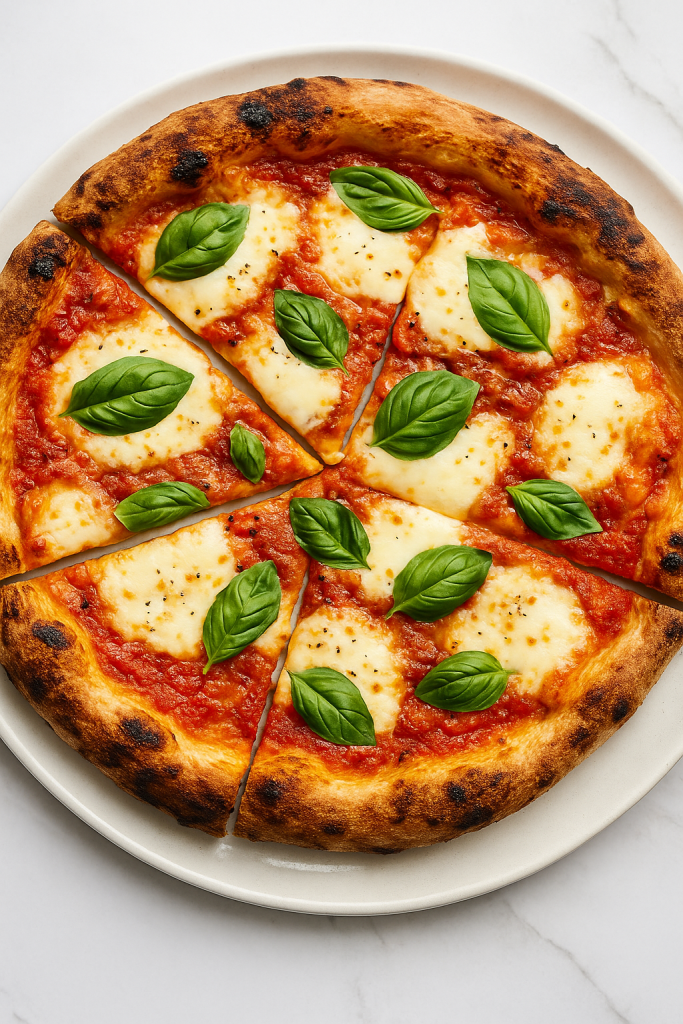
- Bake: Preheat a pizza stone or steel and oven to 500°F (260°C). Slide pizza onto the hot surface and bake 8–12 minutes until blistered and golden.
Tips for pizza dough success
Small adjustments change outcomes dramatically. Control hydration, flour, and fermentation to match your oven and preferred crust style.
For protein and grind differences, compare bread flour and finer Italian “00” flour; the difference affects chew and crispness.
Fermentation and flavor
Cold, slow fermentation (12–72 hours) yields more nuanced flavor as yeast and natural enzymes act on sugars. Short, warm fermentations give quicker, milder results.
Read more about fermentation principles on Fermentation in food processing to understand how time alters aroma and texture.
When handling high-hydration dough, use a bench scraper and work on a barely floured surface to preserve tack without over-flouring.
Allow at least one rest after the TIP block before the WARNING block; this helps you implement one change at a time. Practice shaping technique to protect internal bubbles that create a light crumb.
Serving suggestions for pizza dough pies
After baking, brush the crust edge with olive oil and add fresh herbs for aroma. A simple topping set—sauce, mozzarella, and basil—shows dough quality best.
For context on the cultural dish you’ll craft, see Pizza. Traditional toppings and baking methods vary by region and oven type.
Nutrition and storage notes
A single half-dough serving contains roughly 450 kcal, 14 g protein, 90 g carbohydrates, and 5 g fat depending on flour and topping choices. Adjust portions to match dietary needs.
Store shaped dough in the fridge up to 72 hours for improved flavor. Freeze dough balls for longer storage; thaw overnight in the refrigerator before shaping and baking.
| Nutrient | Per Serving (1/2 dough) |
|---|---|
| Calories | 450 kcal |
| Protein | 14 g |
| Carbohydrates | 90 g |
| Fat | 5 g |
FAQ
What makes the best pizza dough?
The best pizza dough balances hydration, gluten strength, and fermentation time. Use high-protein flour for chew, correct water temperature for yeast activity, and controlled fermentation for flavor.
Which flour should I use for pizza dough?
Bread flour gives structure and chew due to its higher protein. For a silkier crust, blend in some finely milled Italian “00” flour. For science on bread structure, consult Bread.
How long should I ferment pizza dough?
Fermentation ranges from 1–2 hours at room temperature to 24–72 hours in the refrigerator. Longer cold ferments develop more complex flavors and better digestibility.
Can I bake pizza without a stone or steel?
Yes. Use a preheated heavy baking sheet or cast-iron skillet placed in a very hot oven. However, stones and steels store more heat and produce a crisper, more blistered crust.
How do I fix sticky pizza dough?
Let the dough rest 10–15 minutes; the gluten will hydrate and become easier to handle. Use minimal extra flour to avoid a dense crust. Practice and slight hydration adjustments yield consistent results.
Insights and conclusions
Mastering pizza dough is a practical craft keyed to three levers: flour selection, hydration, and fermentation. Control those, and the rest becomes a matter of style and oven limits.
Experiment with one variable at a time—hydration, flour blend, or fermentation length—so you learn cause and effect. With disciplined technique, you’ll turn this dough recipe into a repeatable, reliable base for great pizza.
See also: pizza dough