

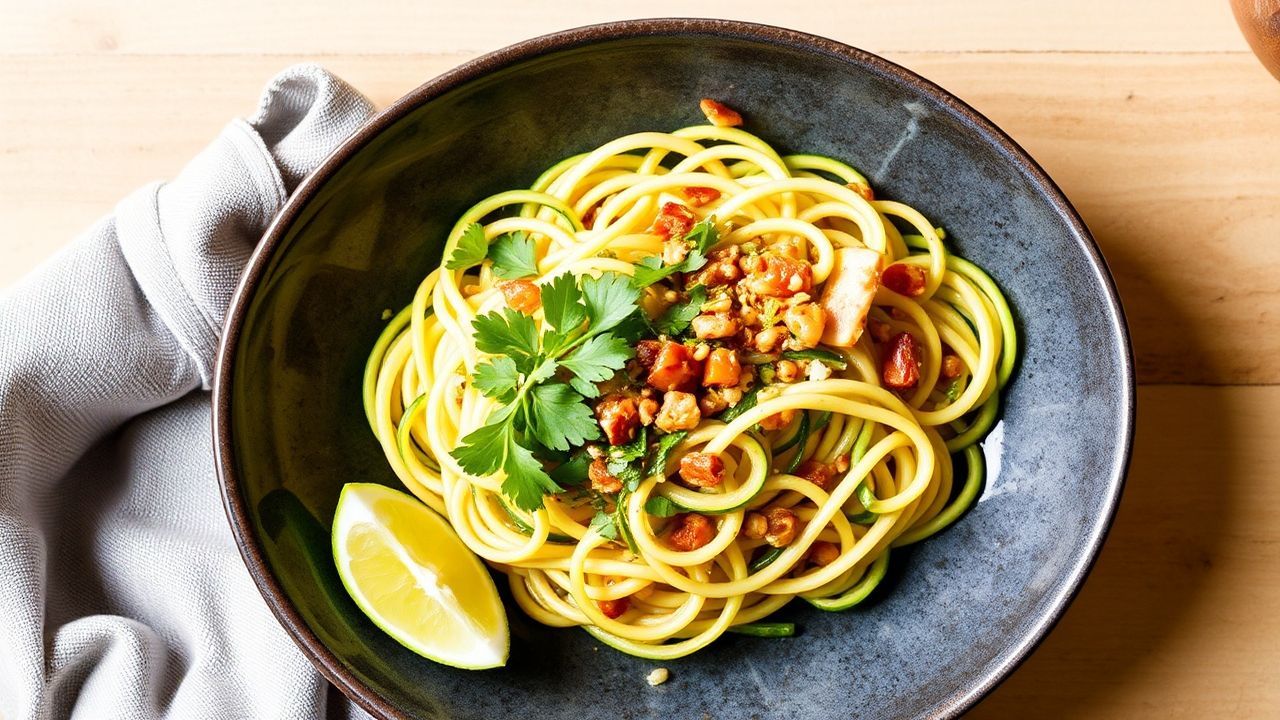
In a culinary world constantly buzzing with innovation, some classics invite reinvention without losing their soul. This Zesty Zucchini Noodle Pad Thai brings a fresh, healthful spin to Thai street-food flavor. Instead of rice noodles, it uses crisp zucchini spirals and still delivers the signature sweet-tangy-umami balance people expect.
- Why Zucchini Noodles Work in Pad Thai
- Prep and Cook Time
- Yield and Difficulty
- Essential Ingredients (Zesty Flavor Core)
- Instructions: Build Flavor, Then Protect Texture
- Tips for Success (Texture, Taste, and Timing)
- Serving Suggestions (Make It Look and Taste Like Pad Thai)
- Nutrition Snapshot
- Variations: Make It Yours While Staying True to the Flavor
- Storage and Reheating (Keep Texture Intact)
- FAQ
- Can I use pre-spiralized zucchini?
- What if my sauce tastes too sour?
- Is Zesty Zucchini Noodle Pad Thai gluten-free?
- How do I keep the noodles from turning watery?
- What can I use instead of tamarind paste?
- Future Outlook: Keep the Pad Thai Flavor, Upgrade the Noodle
At a Glance
- Swap noodles: Spiralized zucchini replaces traditional rice noodles for a lighter base.
- Keep the profile: Tamarind, lime, and chili build classic Pad Thai complexity.
- Protect texture: Salt briefly, then pat dry to reduce watery noodles.
- Serve fast: Toss at the end for tender-crisp bite.
The sauce drives this dish. It combines tamarind for tang, a savory salty component, and a gentle sweetness that rounds out every mouthful. When you coat zucchini noodles at the last step, the noodles stay lively instead of turning limp.
You also get a plate that feels modern without becoming unfamiliar. The combination of aromatics, eggs (or tofu), peanuts, and lime matches how Pad Thai usually reads on the palate. If you want a gluten-free, lower-carb alternative, this approach fits naturally.
Zesty Zucchini Noodle Pad Thai reinvents the beloved Thai street-food classic by swapping traditional rice noodles with crisp, vibrant zucchini spirals. This low-carb choice keeps the bright flavor, while the balanced sauce stays sweet, tangy, and umami-rich. The result gives you a tender-crisp bite that still tastes like Pad Thai.
Why Zucchini Noodles Work in Pad Thai
Zucchini noodles bring a different texture than rice noodles, but the method can still mimic the same dining experience. Zucchini has high water content, so you need a quick moisture-control step. When you salt and pat dry, you reduce release during cooking.
Flavor remains the priority. Classic Pad Thai relies on a tight blend of sour, sweet, and salty elements, plus heat. That flavor map stays intact even when noodles change, as long as your sauce stays balanced and you time the toss correctly.
For sauce logic, it helps to understand how tamarind contributes sourness and depth. Lime adds brightness, and chili brings the warming finish that makes Pad Thai feel “alive.” Together, they keep the flavor profile recognizable.
Texture control also matters. Zucchini can soften fast, so you only warm the noodles briefly. Think “coat and serve,” not “cook through.” That timing prevents mush and protects a clean bite.
Prep and Cook Time
This recipe moves quickly once your ingredients sit ready. You can prep the zucchini while aromatics heat up, which keeps the workflow smooth.
- Preparation: 15 minutes
- Cooking: 12 minutes
- Total: 27 minutes
Most home cooks feel the biggest timing win comes from two steps: spiralize early and mix the sauce before you start stir-frying. When the sauce is ready, the final toss happens fast, and that protects the noodle texture.
Yield and Difficulty
This dish serves 4 generous portions. It works well for weeknight dinner, and you can scale it up for meal prep if you keep the sauce separate.
Difficulty stays Easy. You need basic stir-fry technique, plus one moisture-control step for zucchini. Even if you skip advanced gadgets, a simple spiralizer gets the job done.
Essential Ingredients (Zesty Flavor Core)
Use fresh zucchini for best crunch. Choose firm extra-firm tofu if you want browning, because it holds shape during sautéing.
Peanuts and lime create the finishing signature. Peanuts add fat and crunch, while lime adds a fresh citrus snap right before eating.
Zucchini Noodle Base
- 4 medium zucchinis, spiralized into noodles
- 1 tablespoon coconut oil (or avocado oil)
- 3 cloves garlic, minced
- 2 large eggs, lightly beaten (or see tofu option below)
- 1 cup extra-firm tofu, diced and pan-fried until golden
- 1/2 cup scallions, thinly sliced
- 1/4 cup roasted peanuts, chopped
- 1 red bell pepper, julienned
- 1/4 cup fresh cilantro, chopped
- 1 lime, cut into wedges
Classic Pad Thai-Style Sauce
- 3 tablespoons tamarind paste
- 2 tablespoons coconut aminos (or low-sodium soy sauce)
- 1 tablespoon fresh lime juice
- 1 tablespoon coconut sugar (or maple syrup)
- 1 teaspoon chili garlic sauce (adjust to taste)
To understand how souring agents behave, review tamarind paste and why it stays stable in hot sauce. It blends smoothly and keeps tang consistent.
If you prefer a vegan route, tofu already supports the protein base. You can omit eggs or replace them with extra tofu and a little more oil for richness.
Instructions: Build Flavor, Then Protect Texture
Follow the sequence closely. First, control zucchini moisture. Next, cook aromatics and aromatize the pan. Then, add sauce at the right moment and serve immediately.
If you cook the noodles too long, they lose bite. This step-by-step plan keeps the zucchini “tender-crisp,” which is the whole point of the noodle swap.
- Salt and dry the zucchini noodles: Spiralize zucchini. Place noodles in a colander, sprinkle lightly with salt, and rest for about 10 minutes. Pat dry thoroughly with paper towels to reduce water.
- Mix the sauce: In a bowl, whisk tamarind paste, coconut aminos, lime juice, coconut sugar, and chili garlic sauce until smooth. Taste and adjust sweetness or tang.
- Sauté aromatics: Heat coconut oil in a large non-stick skillet or wok over medium heat. Add minced garlic and cook until fragrant, about 30–60 seconds.
- Cook eggs (optional): Push garlic to one side. Pour in beaten eggs and scramble gently until just set. Then mix eggs back into the aromatics.
- Sear tofu and add vegetables: Stir in golden tofu cubes and julienned bell pepper. Toss 2–3 minutes to warm through and add light caramelization.
- Toss zucchini noodles last: Add prepped zucchini noodles. Pour sauce evenly over noodles and toss quickly for about 2–3 minutes. Aim for tender-crisp texture, not fully soft noodles.
- Finish with brightness: Remove from heat. Stir in scallions and cilantro. Serve right away with lime wedges and chopped roasted peanuts.
[TIP]Expert Insight: Sauce first, toss last
Mixing your tamarind-lime sauce before heat prevents overcooking. When the noodles hit the pan, time becomes your main ingredient. If your sauce waits, your zucchini waits, and the texture drops fast.
Also, use quick, firm tossing. Spreading sauce across noodles improves coating without extra cooking time.
[WARNING]Pro-Caution: Don’t skip zucchini drying
If you skip the salt-and-pat-dry step, the pan releases extra water from the zucchini. That water dilutes sauce and can turn the noodles watery.
For the cleanest bite, pat until the noodles feel less slick. If you see pooling liquid in the pan, let it reduce briefly before adding sauce.
Tips for Success (Texture, Taste, and Timing)
Small adjustments keep this dish consistent every time. Focus on noodle texture, sauce balance, and quick finishing.
When you nail those three, the swap tastes intentional instead of experimental.
- Keep zucchini crisp: Overcooking softens noodles quickly. Toss for only 2–3 minutes after adding sauce.
- Respect sauce balance: Tamarind brings sour depth, lime adds fresh brightness, and sugar rounds sharp edges. Adjust in small steps.
- Boost savory depth: If you want more umami, use low-sodium soy or coconut aminos and add a tiny pinch more chili garlic sauce.
- Protein browning helps: Pan-fry tofu until golden for contrast against tender noodles.
- Optional add-ins: You can add shrimp or grilled chicken, but keep cooking time short to protect zucchini texture.
For seasoning science, see umami. Your sauce needs savory depth to stand up to fresh lime and tangy tamarind.
Serving Suggestions (Make It Look and Taste Like Pad Thai)
Serve in shallow bowls so sauce coats evenly across the noodle bed. Add lime wedges on the side so each diner can tune brightness.
Finish with a crunchy top. Peanuts deliver texture and also help the dish feel “complete,” like restaurant-style Pad Thai.
For a clean plate, garnish with scallions and cilantro right at the end. If you add herbs too early, heat dulls their aroma.
You can pair the dish with a crisp side salad. A light cucumber salad or simple lettuce crunch balances the sauce richness.
Nutrition Snapshot
This recipe keeps carbs lower than traditional rice noodle Pad Thai because zucchini replaces a starchy base. Exact numbers vary by zucchini size and sauce amounts.
Below is a practical per-serving estimate for planning. Use your preferred brands for coconut aminos, tofu, and oil to refine accuracy.
| Nutritional Info (per serving) | Calories | Protein | Carbs | Fat |
|---|---|---|---|---|
| Zesty Zucchini Noodle Pad Thai | 280 kcal | 18 g | 15 g | 14 g |
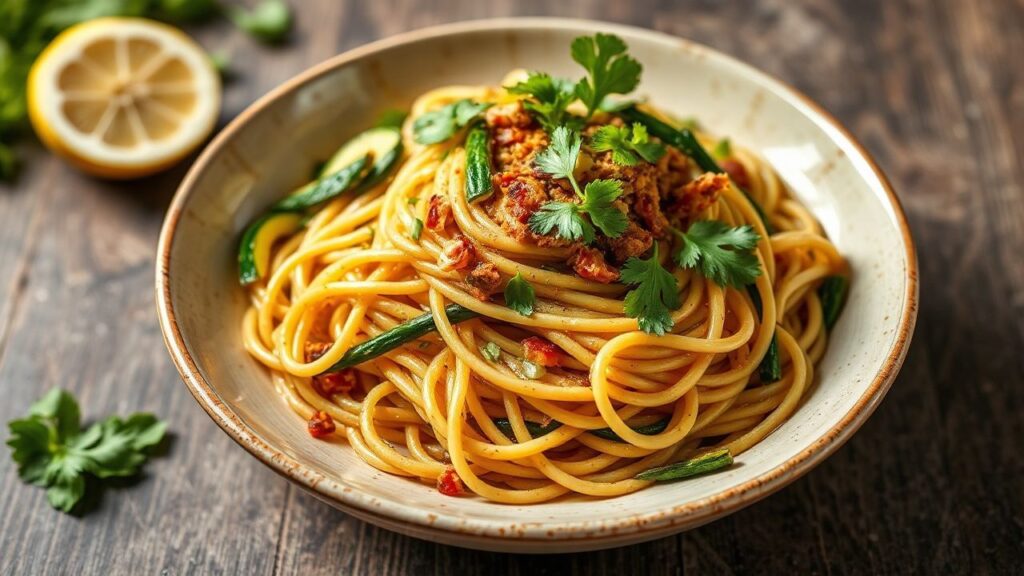
Variations: Make It Yours While Staying True to the Flavor
You can adjust the dish to match your dietary needs without losing the core Pad Thai profile. Keep sour, sweet, and savory in the same ratio, and the swap stays believable.
Choose variations that you can execute within a short cooking window. That keeps zucchini texture intact.
Vegetarian or Vegan Version
For vegan consistency, skip eggs and use extra tofu or stir-fried mushrooms for body. Add a little extra oil if you want the same savory mouthfeel.
For the salty backbone, use tamari or a soy-based alternative. Check that your chosen sauce tastes balanced with tamarind and lime.
Spice and Sweetness Control
Dial heat by adjusting chili garlic sauce. If you want a milder profile, reduce it and add a small pinch of chili flakes after cooking for aroma.
Sweetness should feel supportive, not dessert-like. Coconut sugar and palm sugar behave similarly, but start with the lower amount and adjust.
For a deeper look at how chili heat works, read chili pepper. Understanding capsaicin helps you scale heat without guessing.
Storage and Reheating (Keep Texture Intact)
Zucchini noodles lose bite if you store them mixed with sauce. For best results, store sauce separately and combine at reheat time.
Let leftovers cool quickly, then place in airtight containers. Refrigerate promptly and keep the zucchini protected from extra moisture.
- Fridge: Up to 2 days in sealed containers.
- Best practice: Store noodles and sauce separately.
- Reheat: Warm gently in a skillet over medium heat for 1–2 minutes.
When reheating, avoid high heat. High heat can soften zucchini fast and make sauce taste flatter.
FAQ
Common questions help you nail the method and avoid watery noodles. Here are practical answers that match real cooking results.
Can I use pre-spiralized zucchini?
Yes, but check dryness. Pat pre-spiralized noodles with paper towels and salt for a shorter rest if they seem wet. Then toss quickly to avoid softening.
What if my sauce tastes too sour?
Add a small amount of sweetener like coconut sugar. Stir well, then taste again. Tamarind varies by brand, so small tweaks keep flavor consistent.
Is Zesty Zucchini Noodle Pad Thai gluten-free?
It can be, if you use tamari or certified gluten-free soy sauce and check chili paste ingredients. Zucchini noodles themselves are naturally gluten-free.
How do I keep the noodles from turning watery?
Salt the zucchini and pat dry. Also, toss with sauce at the end and cook briefly. If you see pooling water, let it reduce before serving.
What can I use instead of tamarind paste?
Lime adds brightness, but tamarind adds a deeper sour note. If you must substitute, add extra lime and a small savory component. Then taste and adjust sweetness until the profile matches Pad Thai.
For background on souring ingredients, see lime (fruit) and how citrus brightness lifts sauces.
Future Outlook: Keep the Pad Thai Flavor, Upgrade the Noodle
The Zesty Zucchini Noodle Pad Thai approach reflects a clear cooking trend: lower-carb bases paired with bold classic sauces. This dish keeps the recognizable Pad Thai flavor map while updating the texture strategy.
As home cooks experiment with vegetable “noodles,” the winning pattern stays the same. Build a layered sauce, control moisture, and finish quickly so the bite stays crisp.
For more context on Thai cuisine ingredients and technique, review Thai cuisine. It helps connect why aromatics, herbs, and balanced sauces show up across many dishes.
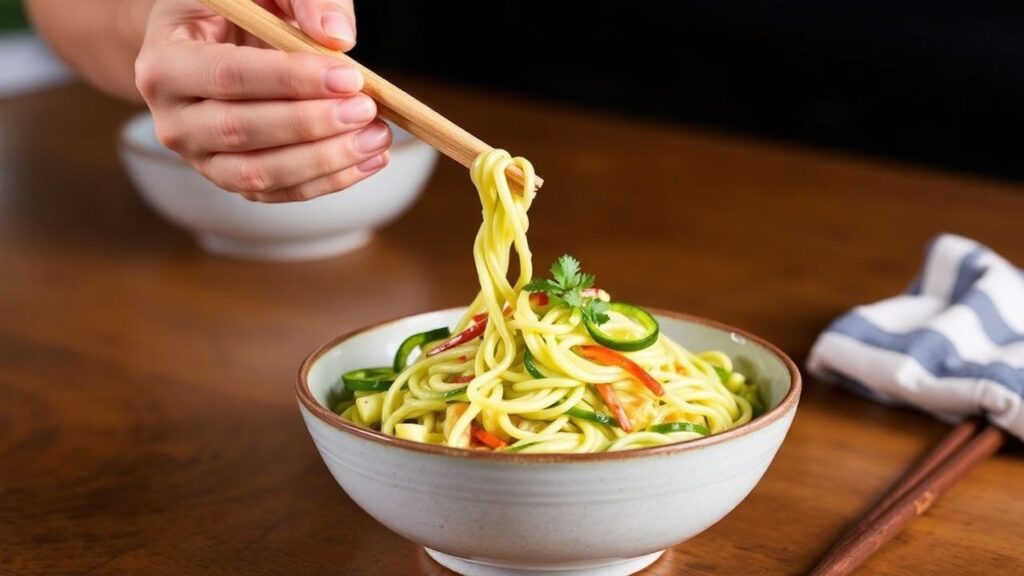
When you serve it hot and garnish right at the end, this version tastes fresh, bright, and satisfying. Next time you crave Pad Thai, let zucchini noodles lead—then keep your sauce bold and your timing tight for a result that feels both timeless and new.
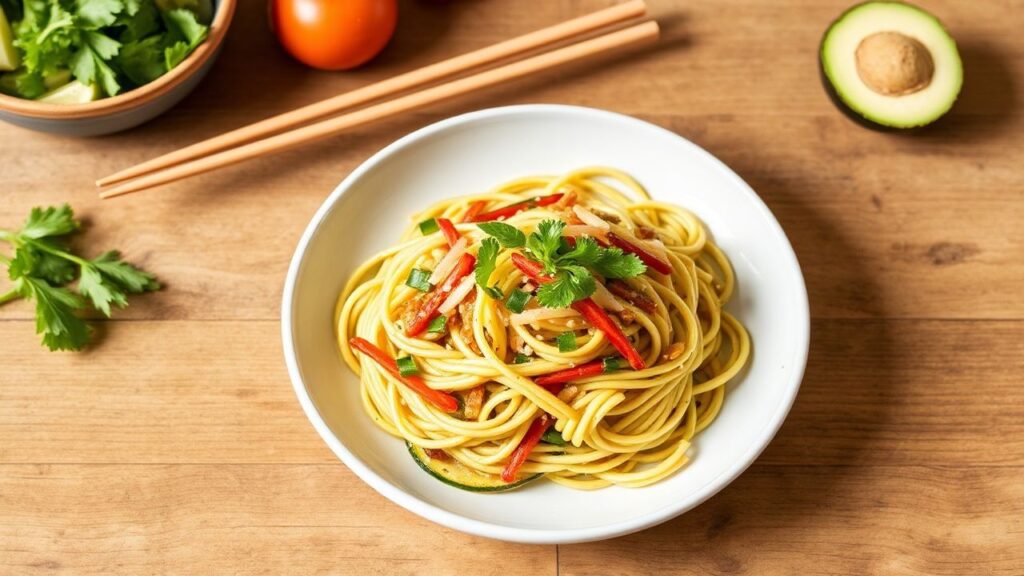
See also: Zesty Zucchini Noodle Pad Thai