

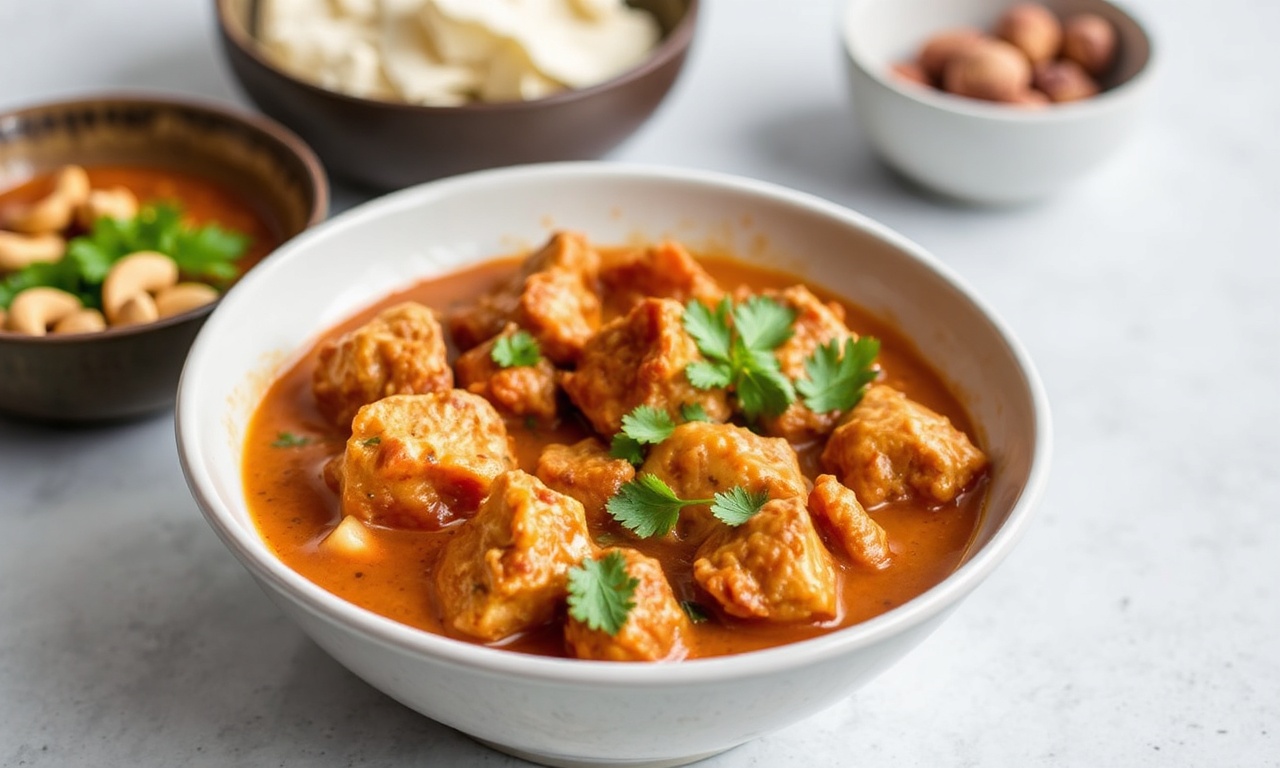
Imagine a curry where velvety tomato meets the nutty warmth of cashews, then wraps tender chicken in a smooth, tikka-style sauce. Velvety Tomato Cashew Chicken Curry gives you that classic Indian comfort you expect, plus a creamy, nut-infused twist that tastes rich without feeling heavy.
- What Makes This Tikka Masala Twist “Velvety”
- Ingredients for Velvety Tomato Cashew Chicken Curry
- Prep and Cook Time
- Yield and Difficulty Level
- Step-by-Step Instructions
- Tips for Success (Texture, Flavor, and Heat)
- Serving Suggestions That Match the Sauce
- Variations You Can Make Without Losing the Velvety Finish
- FAQ
At a Glance
- Creamy texture comes from blended cashews emulsified into the tomato base.
- Tikka masala twist comes from layered aromatics and toasted spices.
- Balanced flavor uses tomato tang plus lemon brightness at the end.
- Make-ahead friendly—flavors improve after resting.
This recipe reimagines tikka masala with a nutty, velvety finish. You build a tomato-onion spice base first, then stir in cashew cream for a glossy sauce that clings to every piece of chicken. The result tastes bold, smooth, and deeply comforting.
Velvety Tomato Cashew Chicken Curry invites you into rich aromas and luscious textures. A smooth cashew paste and a slow-simmered crushed tomato sauce work together to coat chicken in luxurious warmth. If you already love tikka masala, this version delivers the same sense of spice depth, but with a noticeably silkier mouthfeel.
What Makes This Tikka Masala Twist “Velvety”
The “velvety” texture depends on two cooking moves: blending soaked cashews until fully smooth, and simmering the sauce long enough to emulsify. Cashews behave like a natural thickener because their fat and starch help bind tomato juices into a creamy suspension. That is why the sauce looks glossy instead of watery.
To get that tikka-style flavor profile, you toast whole spices and build a fragrant base with onion, garlic, and ginger. Then you layer ground spices briefly so they bloom without burning. This approach matches how many Indian curry bases develop flavor—aromatics plus spice toast, then liquid addition and gentle simmer.
If you want to understand the spice system behind the flavor, study garam masala and how toasted blends change aroma. Then focus on cashews as the texture driver. Together, they explain why this curry tastes indulgent even with a straightforward ingredient list.
Cashew Paste vs. Dairy Cream
Cashew paste adds creaminess through fat and emulsification. You do not rely on dairy, so the flavor stays warm and nutty rather than purely buttery. If you want dairy-free creaminess, cashews make the difference.
Dairy cream can still work, but it often creates a different flavor shape. Cashews also help round tomato acidity, so the sauce tastes balanced instead of sharp. For the nutty profile, keep cashews soaked long enough to blend smooth.
Ingredients for Velvety Tomato Cashew Chicken Curry
Use this ingredient list as your baseline. You can adjust heat with chili powder, but keep the ratio of tomato to cashew paste for the right thickness. For best results, choose boneless chicken thighs—they stay juicy during simmering.
You will build the curry base with onions, garlic, and ginger, then season with cumin, coriander powder, and garam masala. After that, you simmer in crushed tomatoes, then add cashew paste and coconut milk for extra silkiness.
For spice background, review cumin and turmeric. These spices provide the earthy warmth and color that define the profile of many Indian-style curries.
- 500g boneless chicken thighs, cut into bite-sized pieces
- 1 cup raw cashews, soaked in warm water for 30 minutes (longer for extra smoothness)
- 400g canned crushed tomatoes
- 1 large onion, finely chopped
- 3 garlic cloves, minced
- 1 tbsp ginger, freshly grated
- 2 tbsp vegetable oil or ghee
- 1 tbsp cumin seeds
- 1 tbsp coriander powder
- 1 tbsp garam masala
- 1 tsp turmeric powder
- 1 tsp smoked paprika
- 1/2 tsp ground cinnamon
- 1/2 tsp red chili powder (adjust to taste)
- 1 cup coconut milk (optional but adds extra creaminess)
- Salt to taste
- Fresh cilantro for garnish
- Juice of half a lemon
Prep and Cook Time
- Preparation: 20 minutes
- Cooking: 35 minutes
- Total time: 55 minutes
This schedule works because you can soak cashews while you prep aromatics and cut chicken. Then you cook in one main pot, so cleanup stays simple. If you want even smoother paste, soak cashews up to 1–2 hours.
Yield and Difficulty Level
Yield: Serves 4 comfortably.
Difficulty Level: Medium. You need patience during simmering and attention while toasting spices. Once you follow the steps, the sauce texture becomes predictable.
Step-by-Step Instructions
- Prepare cashew paste: Drain soaked cashews and blend with 1/4 cup fresh water until completely smooth. If needed, add water 1 tablespoon at a time.
- Sauté cumin and onions: Heat oil in a heavy-bottomed pan over medium heat. Add cumin seeds and let them sizzle for about 30 seconds. Add chopped onions and sauté until golden, about 8–10 minutes.
- Add garlic and ginger: Stir in minced garlic and grated ginger. Cook for about 2 minutes until fragrant.
- Toast spices: Lower heat slightly. Add coriander powder, turmeric, smoked paprika, cinnamon, chili powder, and salt. Stir for 1–2 minutes to bloom the spices.
- Build tomato base: Pour in crushed tomatoes and stir well. Simmer uncovered for 10 minutes to thicken slightly.
- Emulsify cashew cream: Stir in cashew paste and coconut milk slowly. Simmer gently for 2–3 minutes to smooth the texture. Add a splash of water only if the sauce becomes too thick.
- Cook the chicken: Add chicken pieces and coat them in sauce. Cover and simmer on low for 20–25 minutes, stirring occasionally, until cooked through.
- Brighten and finish: Turn off heat. Squeeze lemon juice into the curry and stir.
- Garnish and serve: Top with chopped cilantro. Serve hot with rice or naan.
If you want to verify the flavor logic, map it to common curry building blocks: aromatics first, spice toast next, tomato simmer, then finishing acid. For more context on curry foundations, see curry as a broad category of dishes.
[TIP]Expert Insight: Blend your cashews until truly smooth, then add them slowly while the sauce simmers. This helps the cashew paste emulsify instead of clumping. If your blender is strong, the texture often becomes silky on the first pass.
After blending, keep an eye on heat. Very high heat can split an emulsified sauce. Gentle simmering keeps the curry thick and glossy.
[WARNING]Pro-Caution: Don’t rush the onion stage. Under-sautéed onions leave a sharp raw note that tomato cannot fully fix. Cook until golden to get sweetness and a deeper base flavor.
Tips for Success (Texture, Flavor, and Heat)
Texture comes from two levers: smooth cashew paste and proper simmer time. If your sauce feels grainy, it usually means the cashews need longer blending or more soaking. Fix it by adding a small splash of water and blending again, or by simmering longer to further soften.
Flavor comes from balanced layers. Toasting spices wakes them up, but you must keep heat moderate. If the curry tastes bitter, the most likely cause is over-toasted spices or burnt onion edges.
- For ultra-smooth base: Blend onion, garlic, and ginger into a paste, then sauté that paste until fragrant.
- Boost creaminess: Add coconut milk gradually and keep simmer gentle.
- If it thickens too much: Stir in warm water or broth a tablespoon at a time.
- Toast whole spice flavors: Cumin seeds release aroma quickly—watch closely so they don’t darken.
- Make ahead: Cool and refrigerate. Reheat slowly, then stir in a splash of water or coconut milk to restore silkiness.
To sharpen your spice approach, check spices for a general overview of how aroma and volatile compounds change with heat. This aligns with what you taste when you toast, simmer, and finish with lemon.
Serving Suggestions That Match the Sauce
This curry works best with foods that soak up sauce. Basmati rice gives a light, aromatic base that keeps the meal balanced. Naan also performs well because its soft texture grabs the creamy coating.
For contrast, add something cool and crisp. A simple cucumber raita adds cooling dairy-style relief, even if you keep it light. You can also serve the curry with roasted cauliflower or lightly steamed green beans to add fiber and crunch.
If you want a classic pairing with a warm tomato curry, review basmati rice to understand why its aroma stays clean. That aroma helps the nutty tomato sauce feel even more fragrant.
| Nutrient | Per Serving |
|---|---|
| Calories | 420 kcal |
| Protein | 35 g |
| Carbohydrates | 15 g |
| Fat | 23 g |
If you want to keep portions consistent, weigh chicken before cutting. Then portion out sauce evenly by volume. That simple step makes servings more predictable for family meals.
Variations You Can Make Without Losing the Velvety Finish
Want a different protein? This sauce adapts well. Replace chicken with paneer for a vegetarian option, or use chickpeas for a hearty bite. Keep simmering time shorter for tender proteins to prevent texture breakdown.
If you prefer a richer, restaurant-like finish, you can add a small amount of extra cashew paste. Add it near the end of simmering so you keep the sauce bright and creamy rather than dull.
For a vegetarian angle on curry proteins, explore paneer. For legumes that work well in curry, see chickpeas.
FAQ
Can I make Velvety Tomato Cashew Chicken Curry ahead of time?
Yes. Cool it, cover it, and refrigerate for up to 3–4 days. Reheat gently over low heat, then add a splash of water or coconut milk to restore the silky texture.
Why does my curry taste sharp or too tangy?
Sharpness usually comes from under-simmered tomatoes or uneven seasoning. Simmer the tomato base a full 10 minutes, then adjust salt and add lemon only at the end to control brightness.
How do I fix a grainy cashew sauce?
Graininess usually means the cashews were not blended smooth enough. Blend again with a small splash of warm water, then simmer 2–3 minutes so the sauce tightens into a velvety finish.
Is this curry truly dairy-free?
It can be. The recipe uses cashews and coconut milk for creaminess, so you can skip any dairy. Just confirm any substitute you use and keep the final sauce consistent.
What side dish pairs best with the sauce?
Basmati rice and naan both work well because they soak up the thick, creamy tomato layer. For cooling contrast, serve cucumber raita or a simple yogurt-free cucumber salad.
See also: Velvety Tomato