
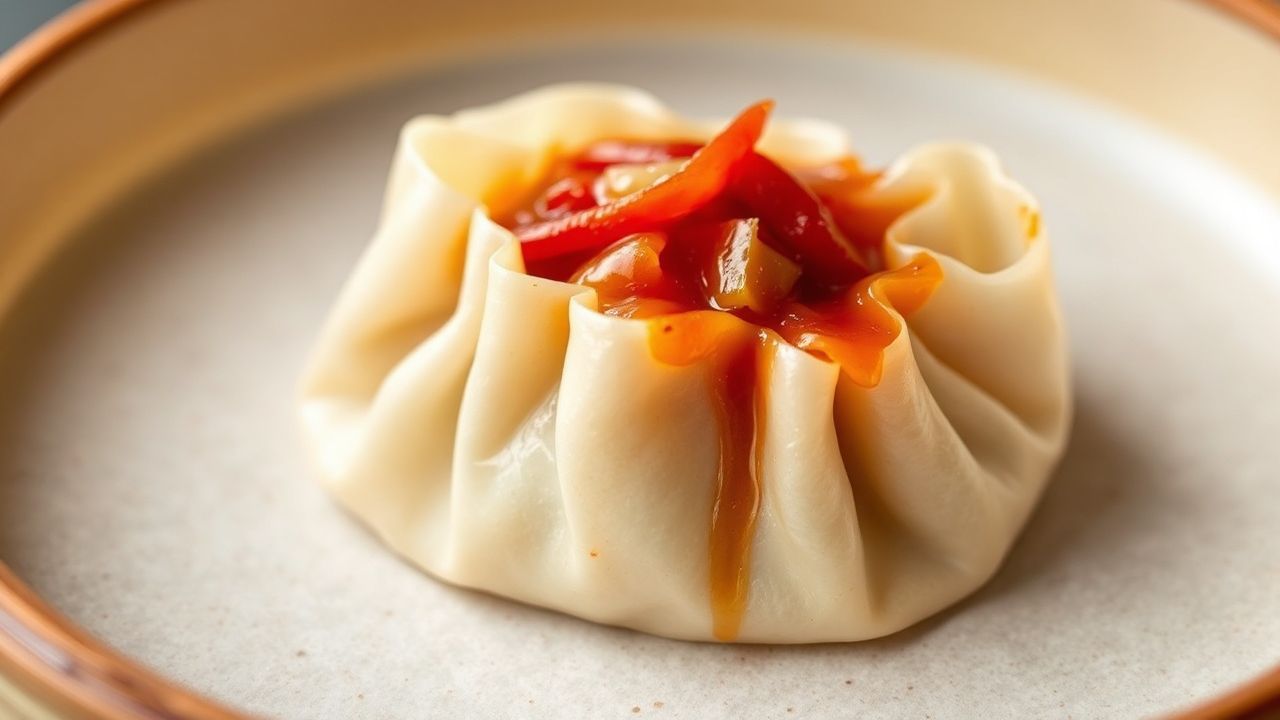
In every Xiao Long Bao, the real magic sits between the thin wrapper and the hot filling: a gelatin-based broth that melts on the first bite. When you master that balance, you stop “making dumplings” and start making a signature Jiangnan-style experience at home.
- What Are Xiao Long Bao?
- Prep and Cook Time
- Yield and Difficulty Level
- Ingredients for Xiao Long Bao
- Instructions: How to Make Juicy Xiao Long Bao
- 1) Prepare the Aspic (Broth Jelly)
- 2) Make the Dough
- 3) Prepare the Filling
- 4) Incorporate the Aspic
- 5) Shape the Wrappers
- 6) Fill and Pleat
- 7) Steam the Dumplings
- 8) Serve Immediately
- Tips for Success
- Serving Suggestions
- FAQ
- Q1: Why does my Xiao Long Bao leak soup during steaming?
- Q2: How do I get a clear “soup burst” instead of cloudy broth?
- Q3: Can I substitute pork for chicken in the filling?
- Q4: What steaming time should I use for Xiao Long Bao?
- Q5: How should I eat Xiao Long Bao safely?
- The Conclusion
- Soup comes from aspic (broth jelly) that melts during steaming.
- Wrappers need elasticity so they stay thin yet seal well.
- Pleats prevent leaks—aim for 18–20 folds.
- Steam time matters for translucent skin and safe, cooked filling.
The classic Xiao Long Bao style uses a simple wheat dough and a rich filling that includes diced aspic. After refrigeration, the aspic turns firm; during steaming, it liquefies and turns into that unmistakable soup burst. If your dumplings taste good but don’t “sling soup,” the issue is usually technique in aspic, wrapper tension, or sealing.
This recipe stays focused on the core method: make broth jelly, fold it into meat, shape thin wrappers, then steam until the skin turns translucent. You can customize the meat and aromatics, but the broth-and-dough logic must stay consistent. For background, note that dumpling traditions differ across China, yet the “soup-filled dumpling” idea depends on gelatin set and melt behavior (see dumpling).
What Are Xiao Long Bao?
Xiao Long Bao (often translated as “small steamed soup dumplings”) are steamed dumplings with a meat filling and an enclosed broth made from gelatin set into aspic. That aspic is the reason you can get a hot, flavorful soup pocket instead of plain juices.
Most homes do not steam through a preset “chef’s schedule,” so success comes from controlling temperature and texture. The wrapper should be thin enough to look delicate, yet strong enough to hold aspic cubes without tearing. If you want cultural context on the region, Jiangnan cuisine is often linked with refined wheat-based dumpling craft.
Real-world expectation: you should see translucent dough after steaming, and you should hear no “burst” chaos when you bite. The soup should pour gently from the cut you make with your spoon.
For the gelatin concept, the simplest anchor is how proteins and gels behave under heat. Gelatin is widely used as a food gelling agent, so aspic becomes firm when chilled and melts when heated (see gelatin).
To keep your expectations grounded, always taste-test components: the aspic should taste like broth, not like plain water. The filling should taste seasoned even before steaming. When both are correct, the dumpling becomes predictable.
Finally, compare “soup dumpling” vs “wontons” at a practical level. Wontons usually hold sauces or less gel-like broth, while Xiao Long Bao intentionally uses set broth for controlled soup release (see wonton).
Prep and Cook Time
Time divides into three blocks: aspic set, dough rest, and the final steaming. If you rush refrigeration, you usually get weak soup pockets or early melting.
- Readiness: 1 hour 30 minutes (including dough resting and gelatin cooling)
- Cooking: 15 minutes (steaming)
- Total Time: Approximately 1 hour 45 minutes
Note: chilling for the aspic’s firmness drives the “juicy center.” Many cooks use longer refrigeration overnight to get cleaner dice and better distribution.
When you plan, steam in batches so you maintain wrapper temperature control. Cold dough tends to pleat better, but once shaped, dumplings need a steady workflow.
Yield and Difficulty Level
Expect consistent results if you keep wrapper thickness uniform and keep the aspic diced rather than mashed.
- Yield: Approximately 24 Xiao Long Bao (serves 4–6)
- Difficulty Level: Advanced (practice improves dough elasticity and soup retention)
The “advanced” label matters because small errors compound. A slightly thick wrapper can trap heat and reduce translucency. A looser pleat can leak broth during steaming.
Still, the core process stays teachable. You only need repeatable measurements and a clean cold-handling routine.
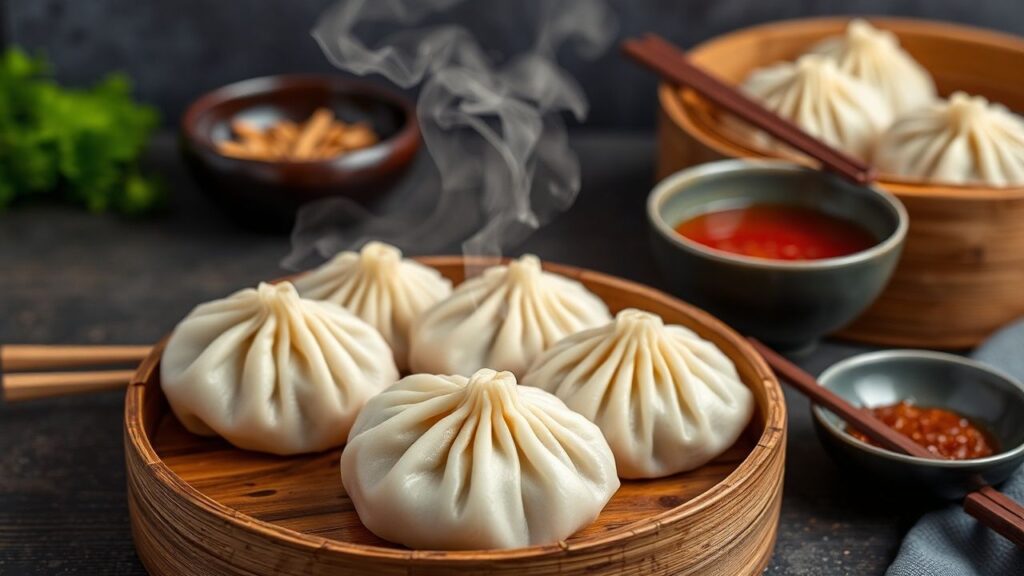
Ingredients for Xiao Long Bao
Use clear, simple components. Aspic needs a clean broth base so the final soup tastes fresh. For best texture, measure flour by volume carefully and keep the dough slightly firm at the start.
Below are the ingredient lists organized by function. Each block supports the final soup pocket and wrapper seal.
For the Aspic (Soup Gelatin)
- 3 cups chicken broth (clear and rich)
- 4 sheets unflavored gelatin (about 1 tablespoon gelatin powder as substitute)
- 1 slice ginger (about 1 inch), smashed
- 1 green onion, cut into 2-inch pieces
For the Dough
- 2 cups all-purpose flour, sifted
- ¾ cup boiling water
- 1 tablespoon vegetable oil
For the Filling
- 1 lb lean ground chicken (or turkey; pork-free option)
- 2 tablespoons soy sauce
- 1 tablespoon Shaoxing cooking wine (optional)
- 1 teaspoon finely grated fresh ginger
- 2 teaspoons sesame oil
- 1 teaspoon sugar
- ½ teaspoon white pepper
- 1 tablespoon finely chopped green onion
- 1 teaspoon cornstarch
If you want to read the broader science behind dumpling wrappers, gluten development matters. Flour hydrates and forms structure when kneaded, which affects stretch and tear resistance (see gluten).
For steaming hardware, bamboo steamers work because they distribute heat and help moisture flow. They also create a traditional presentation (see bamboo steamers).
Instructions: How to Make Juicy Xiao Long Bao
Follow the steps in order. Aspic sets first, then dough rests, then you mix filling and assemble. When the sequence stays tight, the pleats seal better and the soup stays trapped until steaming.
For accuracy, keep your kitchen workflow cold during assembly. The goal is simple: prevent aspic from melting into the meat before the dumplings go into the steamer.
1) Prepare the Aspic (Broth Jelly)
In a saucepan, combine chicken broth, ginger, and green onion. Simmer gently for about 20 minutes to infuse flavor. Strain out solids, then stir in gelatin until fully dissolved.
Pour into a shallow dish and refrigerate until firm, at least 3 hours (overnight works best). Once set, dice into small ¼-inch cubes for even soup pockets.
2) Make the Dough
Place sifted flour in a bowl. Slowly pour boiling water into the flour while stirring with chopsticks until a rough dough forms. Rest 10 minutes so the dough cools enough to knead safely.
Knead vigorously on a floured surface until smooth and elastic (about 8–10 minutes). Cover and rest for 30 minutes to improve stretch for pleating.
3) Prepare the Filling
Combine ground chicken, soy sauce, ginger, sesame oil, sugar, white pepper, chopped green onion, cornstarch, and Shaoxing wine if using. Mix until cohesive and slightly sticky.
This stickiness helps the filling grip the wrapper and supports sealed pleats. Once mixed, refrigerate the bowl to keep everything cold.
4) Incorporate the Aspic
Gently fold diced aspic cubes into the meat mixture. Distribute evenly so every dumpling carries soup in the center and not just at the edges.
Handle quickly and keep the mixture cold. If aspic softens too much, it can smear and reduce the “melted soup burst” effect.
5) Shape the Wrappers
Divide dough into small 1-inch portions. Roll each into thin circles about 3 inches wide, and keep the edges slightly thinner than the center.
That edge thinning improves pleating grip and helps the skin steam into a more translucent look. If wrappers tear, you likely need a shorter roll time and a more rested dough.
6) Fill and Pleat
Place about 1 tablespoon filling in the center of each wrapper. Keep the filling low and compact so you can seal without stretching the wrapper too thin.
Pleat the edge around using your thumb and index finger, targeting 18–20 folds. Press firmly at the final seal to prevent broth from leaking during steaming.
7) Steam the Dumplings
Line a bamboo steamer with parchment paper or Napa cabbage leaves. Arrange dumplings about an inch apart so steam circulation stays even.
Bring water to a boil, set the steamer over the wok or pot, cover, and steam 8–10 minutes. Steam until the wrappers look translucent and the filling cooks through.
8) Serve Immediately
Transfer dumplings to individual soup spoons. Serve right away so the aspic has just melted into hot broth.
Garnish with thinly sliced ginger and a drizzle of black vinegar for a classic balance. Sip and taste slowly; the soup pocket can burn.
When you taste, check for three signals: a tender wrapper, a seasoned filling, and a broth pocket that turns liquid on cue. If one signal fails, fix that step first rather than changing everything at once.
Tips for Success
Small adjustments improve outcomes quickly. Focus on dough elasticity, cold handling, and steam consistency. That trio controls the final “soupy center” experience.
Use this troubleshooting list as your mental checklist while you cook. Each tip maps to a common failure point in Xiao Long Bao.
- Master dough elasticity: Boiling water partially gelatinizes flour, which softens the dough while still allowing structure. Knead until smooth and elastic.
- Keep the filling cold: Chill mixture before assembling. Cold aspic holds its shape longer during folding.
- Perfect pleats: Aim for 18–20 folds. Well-distributed pleats seal the dumpling dome and reduce leaks.
- Steaming tricks: Start with a rolling boil. Do not uncover during cooking, because sudden temperature change can affect wrapper texture.
- Make ahead: Freeze assembled dumplings on trays, then bag once firm. Steam from frozen and add a few extra minutes.
If you want a helpful reference on food safety concepts around cooked fillings and steam temperatures, you can review general guidance on food safety. Use a thermometer for large batches if you need extra confidence.
Serving Suggestions
Presentation affects how guests experience the first bite. Serve dumplings on a warm board or steamer lid so the soup stays hot. Place a small dish of black vinegar with julienned ginger next to the steamer.
For dipping, keep it simple: vinegar for acidity, ginger for bite. The dumpling’s broth already carries aroma from the aspic, so heavy sauces can mask the signature flavor.
To keep the meal cohesive, add a light beverage such as jasmine tea. Tea supports palate refresh between bites. For a general overview of tea types, see jasmine tea.
If you cook for a group, plan timing. Steam in waves so every serving lands hot. Cold dumplings taste less “soupy” even when the soup pocket was correct at steaming.
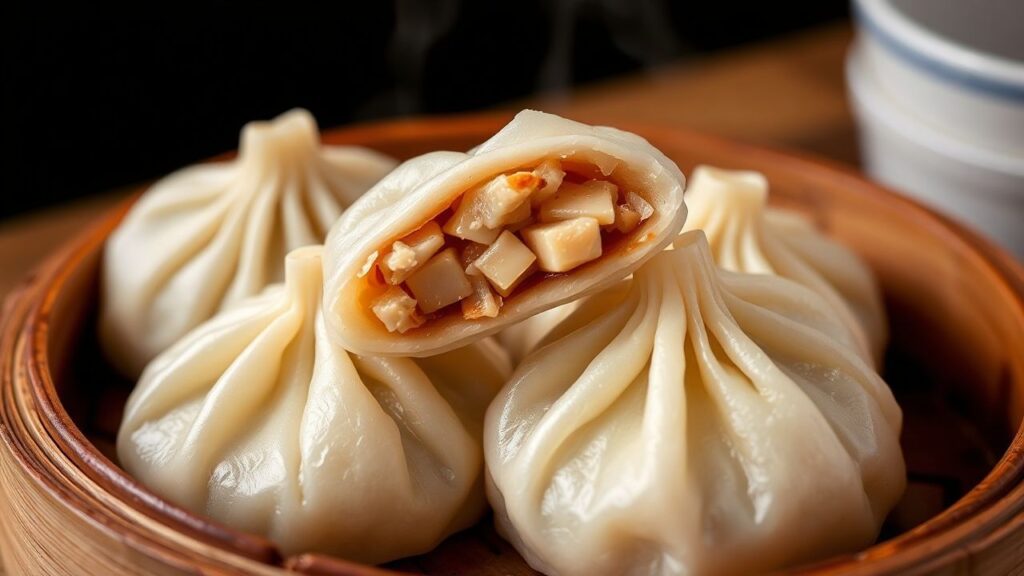
| Nutrient | Per Serving (4 dumplings) |
|---|---|
| Calories | 220 kcal |
| Protein | 15 g |
| Carbohydrates | 22 g |
| Fat | 7 g |
Nutrition varies by filling fat level and wrapper thickness. Use the table as a planning estimate, then adjust portion size based on your ingredients. If you want to understand how nutrition changes with cooking methods, review general concepts in nutrition.
Now that you have the full method, your next goal is consistency. Make one batch, note what went wrong, then correct that one variable in the next round.
FAQ
Common Xiao Long Bao questions usually come down to aspic behavior, wrapper sealing, or steaming control. Use the answers below to troubleshoot quickly.
Q1: Why does my Xiao Long Bao leak soup during steaming?
Leakage usually comes from weak seals, overfilled dumplings, or wrappers that tear during pleating. Target 18–20 folds, press the final seam firmly, and avoid stretching the wrapper edges too much.
Q2: How do I get a clear “soup burst” instead of cloudy broth?
Use a clean, well-simmered broth and strain solids before adding gelatin. Dice fully set aspic cubes, and keep the filling cold during assembly so the soup stays contained until steaming.
Q3: Can I substitute pork for chicken in the filling?
Yes. Pork often delivers richer fat for a more traditional taste, but chicken or turkey works well if you season correctly. Keep the filling cohesive and cold so aspic cubes distribute evenly.
Q4: What steaming time should I use for Xiao Long Bao?
Most batches steam for about 8–10 minutes once the water reaches a rolling boil. If wrappers stay opaque, steam a few minutes more. If you see over-bubbling seams, reduce steam time next batch.
Q5: How should I eat Xiao Long Bao safely?
Place the dumpling on a spoon, then nibble a small hole to let hot broth cool slightly before sipping. After that, eat the dumpling in one or two bites with your dipping sauce.
The Conclusion
Mastering Xiao Long Bao is not just about following a recipe. It’s about controlling gelatin set-and-melt, building elastic wrappers, and sealing pleats so broth stays trapped until the steamer does its job.
Once you repeat the process a few times, the technique becomes steady. The result tastes refined and deeply satisfying—thin, tender skin with a warm soup pocket that feels made on purpose.
Keep your kitchen workflow cold, steam with patience, and treat aspic like the heart of the dish. When those pieces align, you get that signature Jiangnan-style bite every time.
See also: Xiao Long Bao