
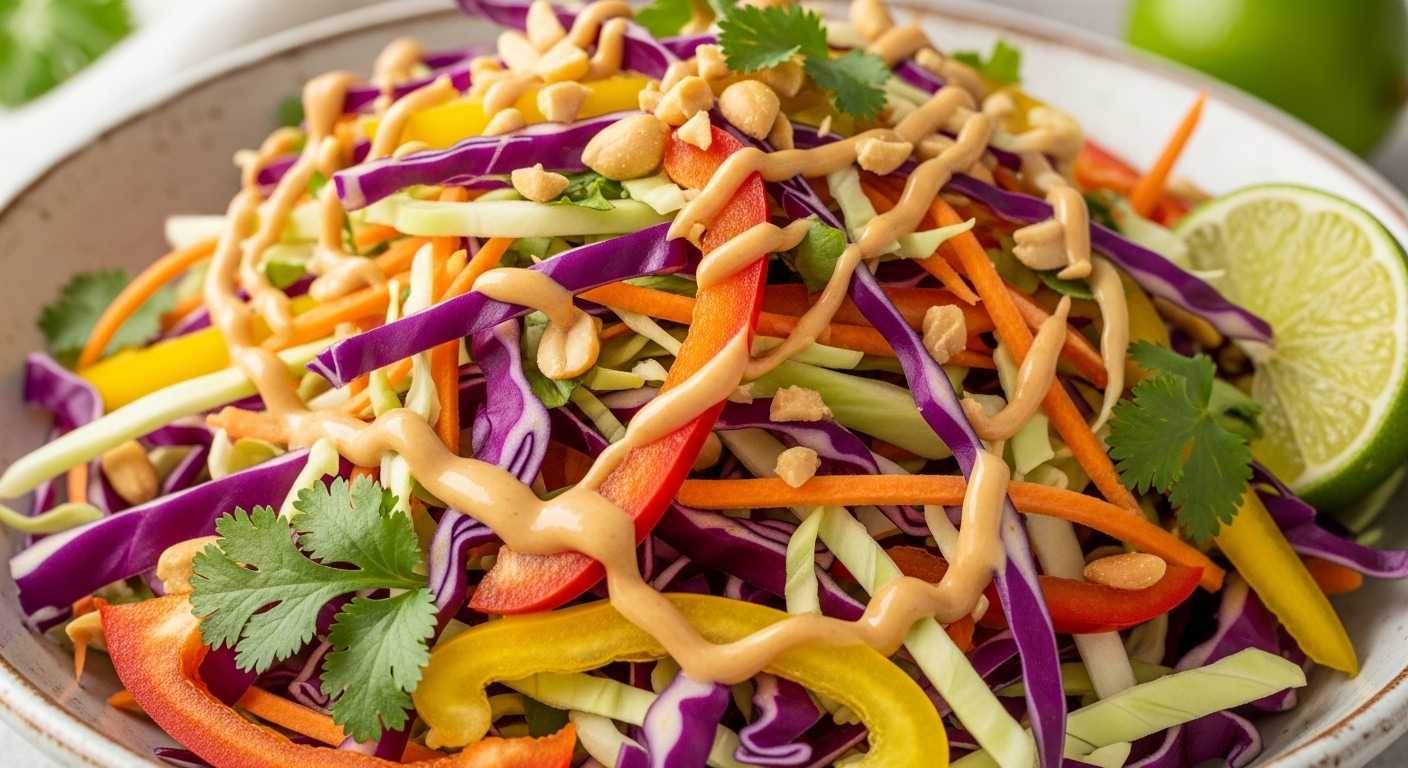
Zesty Asian Slaw with Creamy Peanut Lime Dressing brings bold, fresh flavor to the table in a fraction of the time it takes to cook a main course. You get crisp cabbage, bright herbs, and a tangy peanut-lime dressing that clings to every strand.
Use this recipe when you want a light meal that still feels satisfying. The slaw works as a side, a topping for bowls, or a quick lunch on its own. For background on the flavor profile, you can explore the role of Asian cuisine techniques that balance sweet, sour, salty, and nutty notes.
At a Glance
- Crunch-first prep: shred and slice for even texture.
- Peanut-lime balance: adjust lime for tang without thinning flavor.
- Make-ahead option: prep components separately to keep cabbage crisp.
- Serve chilled: flavors set fast and taste sharper cold.
Bright, bold, and bursting with vibrant flavors, Zesty Asian Slaw with Creamy Peanut Lime Dressing is a refreshing twist on a classic salad favorite. This colorful medley combines crisp, crunchy vegetables with a luscious, tangy dressing that balances nutty richness and zesty citrus notes.
If you want to elevate weeknight meals or impress guests with something light, this Asian-inspired slaw delivers. You’ll feel the texture contrast in every bite, from the snap of cabbage to the smooth, creamy dressing. Pair it with grilled proteins for a complete plate, or keep it simple for a clean, satisfying bowl.
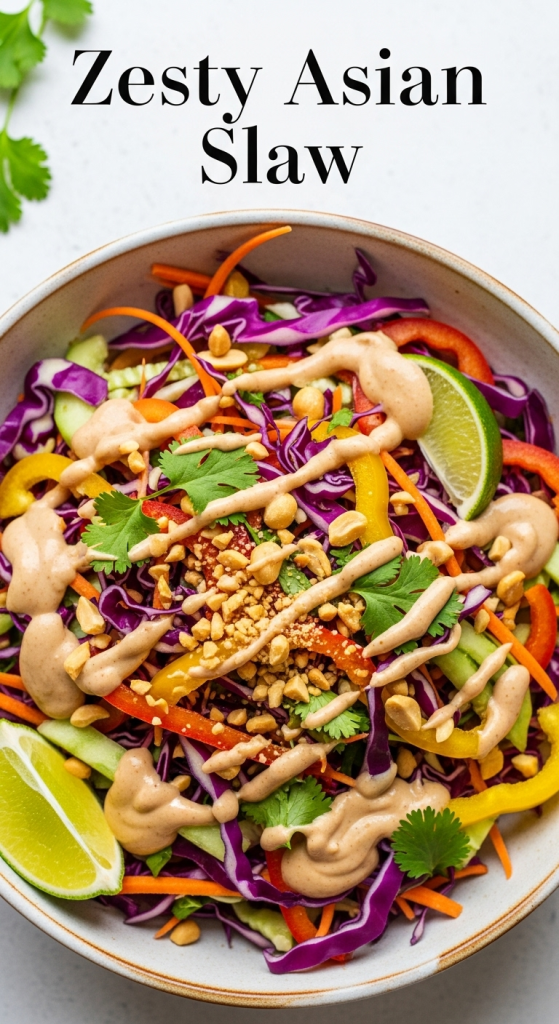
Zesty Asian Slaw: Crunch That Stays Fresh
Zesty Asian Slaw with Creamy Peanut Lime Dressing bursts with vibrant colors and crisp textures. Shredded cabbage forms the base, while carrots and bell peppers add steady crunch. Green onions and herbs add aroma, so each forkful feels lively.
Start with firm vegetables. Soft cabbage loses bite after dressing, and watery peppers dilute flavor. If you need guidance on ingredient freshness and storage logic, review basics around vegetables and how texture changes with moisture.
The dressing coats the vegetables, but it shouldn’t make them soggy. Toss lightly at first, then rest briefly so the flavor spreads. Taste after 5 to 10 minutes and adjust before serving.
For a deeper look at why acid brightens dishes, explore acid and how sour notes lift fats. In this recipe, lime juice cuts through peanut richness for a clean, zesty finish.
Vegetable Prep for Even Texture
Slice and shred the vegetables the same size for a consistent bite. Thin julienne carrots blend quickly, and crisp bell pepper slices pop in contrast. Keep pieces small enough to hold dressing, but not so small that they turn limp.
Use green and purple cabbage for both flavor and visual appeal. The purple adds color depth, while green keeps the base mild. If you like a more peppery taste, use more green onion and a little extra cilantro.
Herbs and Aromatics That Make It Taste “Street Fresh”
Fresh cilantro and green onions give a clean, herb-forward aroma. This matters because the dressing is rich, and herbs prevent the flavor from feeling heavy. A little chopped mint also works well if you enjoy cool herbal notes.
For a structured flavor approach, remember that many Southeast Asian-style salads rely on balanced components. You can read general background on Southeast Asian food and common sweet-sour-nutty combinations that show up in dressings.
Creamy Peanut Lime Dressing: The Flavor Engine
The creamy peanut lime dressing is the core of this recipe. It combines nutty fat, tangy lime acid, and savory umami so the slaw tastes complete. When you balance those elements, the vegetables taste brighter instead of bland.
Begin with smooth or chunky natural peanut butter. Then whisk in fresh lime juice and soy sauce (or tamari for gluten-free). Honey or maple adds a gentle sweetness that rounds off sharp lime.
Add grated fresh ginger and minced garlic for warmth. These aromatics don’t need much to show up, because the lime keeps the overall flavor crisp. For reference on the role of ginger and garlic in culinary flavor, see ginger and garlic.
Finish with toasted sesame oil for a nutty, toasted aroma. Then thin the dressing with warm water until it pours easily. That step matters because thick dressing won’t coat evenly.
How to Balance Tanginess Without Losing Creaminess
Adjust lime juice in small steps. If the dressing feels too sharp, add a little more honey and re-taste. If it feels flat, add lime a teaspoon at a time and whisk again.
Peanut butter brands vary in thickness and sweetness. That’s why thinning with warm water is part of the process, not an optional step. Aim for a creamy sauce that drips slowly, then coats cabbage.
Optional Heat and Texture Boosters
If you like spice, add thin-sliced red chili after tossing or fold it into the dressing. Keep heat separate from herbs if you want cilantro to stay bright and fragrant. For crunch, reserve some chopped roasted peanuts to sprinkle on top right before serving.
Peanuts add both flavor and body. If you want background on peanuts as a crop and nutrition basics, review peanuts. This helps you understand why natural peanut butter can taste nutty and thick.
Choosing Ingredients for a Better Zesty Asian Slaw
For the best results, choose vegetables that feel crisp and dense. Cabbage should feel tight and springy. Carrots should be firm, and bell peppers should feel heavy for their size.
Fresh herbs matter too. Cilantro leaves should look green, not dull or wilted. If your herbs are tired, the dressing can’t fully fix aroma loss.
To guide ingredient selection, use general freshness logic tied to produce biology. Review food spoilage concepts: moisture loss and microbial activity drive texture and aroma changes. That’s why fresh slaw ingredients taste “cleaner.”
Best Cabbage and Carrot Combinations
Green cabbage gives a mild base that lets lime and peanut flavors shine. Purple cabbage adds a slightly earthy depth and a stronger color contrast. Carrots bring natural sweetness, which balances lime acidity.
If you want more bite, shred carrots with a finer grater. If you want a steadier crunch, julienne them thicker. Either way, keep pieces consistent so every bite tastes balanced.
Bell Pepper, Peanuts, and Sesame Seeds
Bell pepper adds sweetness and crunch, which helps the dressing feel layered rather than one-note. Toasted sesame seeds add a subtle nutty finish that complements peanut butter without overwhelming lime.
Sprinkle peanuts right before serving for maximum crunch. If you add them too early, they soften as they absorb moisture from the slaw and dressing.
Serving and Pairing Ideas
This slaw shines as a light side. It also works as a topping that adds texture to rice, noodles, and wraps. Serve it chilled for the cleanest bite and most vibrant flavor.
When you plate, keep a little extra dressing on the side. Guests can add more if they like it louder and creamier. This simple move improves satisfaction because taste preferences vary.
Pair it with grilled chicken skewers, crispy tofu bites, or jasmine rice. The slaw’s acid cuts through rich proteins, so the whole meal feels balanced. If you want a plant-forward pairing, add roasted chickpeas or edamame for extra protein.
For meal planning, think in contrast: warm and savory main dishes pair well with cold, tangy slaw. This approach keeps dinner interesting even on busy nights. You can learn more about rice varieties and typical pairings in jasmine rice.
Picnic and Potluck Strategy
Pack the slaw and dressing separately for the crispest texture. When you arrive, toss right before serving. That timing prevents sogginess and keeps herbs aromatic.
Store assembled leftovers in an airtight container. Eat within a day for best crunch. If you expect leftovers to sit longer, keep peanuts and herbs separate until reheating or re-tossing.
Prep and Cook Time
- Planning: 20 minutes
- Marinating Time: 10 minutes (optional)
- Total Time: 30 minutes
Yield
Serves 4 as a side dish.
If you’re serving guests, this scales easily. Double the slaw and dressing for a larger bowl with the same crunch.
Difficulty Level
Easy. You only need basic chopping, whisking, and a short rest before serving.
You can also adapt it to your taste with small ingredient swaps. The dressing keeps the recipe stable even when you change vegetable mix.
Ingredients
For the Slaw
- 2 cups green cabbage, shredded
- 1 cup purple cabbage, shredded
- 1 cup carrots, julienned or shredded
- 1 medium red bell pepper, thinly sliced
- ½ cup green onions, thinly sliced
- ¼ cup fresh cilantro, roughly chopped
- 2 tbsp toasted sesame seeds
- ¼ cup roasted peanuts, roughly chopped
- Optional: 1 small red chili, thinly sliced (for heat)
For the Creamy Peanut Lime Dressing
- ¼ cup natural peanut butter (unsweetened)
- 3 tbsp fresh lime juice
- 1 tbsp soy sauce or tamari for gluten-free
- 1 tbsp honey or maple syrup
- 1 tsp grated fresh ginger
- 1 small clove garlic, minced
- 1 tsp toasted sesame oil
- 2–4 tbsp warm water, to thin dressing as needed
Instructions
Read through the steps once before you start. It helps you time the dressing rest and keep vegetables crisp.
Then work in two stages: first build the slaw, then whisk the peanut lime dressing, then combine right before serving.
- Prepare the slaw vegetables: In a large bowl, combine shredded green and purple cabbage, carrots, bell pepper, green onions, cilantro, and toasted sesame seeds. Toss gently to mix.
- Make the dressing: In a medium bowl, whisk peanut butter, lime juice, soy sauce, honey, grated ginger, minced garlic, and toasted sesame oil. Add warm water gradually, 1 tablespoon at a time, whisking until creamy and pourable.
- Toss slaw with dressing: Pour the dressing over the vegetable mixture and toss thoroughly until strands coat. Let the salad rest for 10 minutes so flavors blend.
- Add crunch: Just before serving, sprinkle chopped roasted peanuts on top for extra crunch and nutty flavor.
- Serve and enjoy: Serve chilled or at room temperature. Add extra cilantro or lime wedges if you like.
Chef’s Notes
Small choices change the final texture. Use these notes to hit the exact style you want—extra tangy, more creamy, or crunchier.
Also, taste as you go. Lime and peanut butter act like variables, so your final balance should match your palate.
- Variation: Substitute peanut butter with sunflower seed butter for a nut-free option.
- Make-ahead: Prepare vegetables a day in advance and store covered in the refrigerator. Keep the dressing separate; combine just before serving.
- Texture tip: Avoid over-mixing cabbage to preserve its crispness.
- Adjust acidity: Add more lime juice for a tangier punch, or add a pinch of brown sugar if peanuts taste bitter.
- Storage: Leftovers keep well for 1–2 days, but crunch drops after the first day due to moisture absorption.
FAQ
Quick answers help you get great results the first time. If you want a different flavor direction, use the dressing adjustment guidance below.
This FAQ focuses on common questions about Zesty Asian Slaw with Creamy Peanut Lime Dressing and how to keep it fresh and flavorful.
1) How do I keep my slaw crunchy?
Shred vegetables evenly and toss with dressing right before serving. Also reserve peanuts and herbs to add at the end. Chilling helps, but dressing should not sit on cabbage for too long.
2) Can I make the peanut lime dressing ahead?
Yes. Whisk the dressing and store it in the refrigerator in a sealed container for up to 3 days. Stir or whisk again before using, then thin with a small splash of warm water if it thickens.
3) What if my dressing tastes too thick?
Thin it with warm water, one tablespoon at a time. Warm water dissolves peanut butter smoothly so the dressing stays creamy. Taste after each addition so you don’t lose tang.
4) Is this recipe gluten-free?
Use tamari instead of soy sauce. Also check any ingredient labels you use for added flavor. This small swap keeps the dressing gluten-free.
5) What proteins pair best with this slaw?
Grilled chicken, tofu, and shrimp work well because the lime acid cuts through richness. For plant-forward meals, add edamame or roasted chickpeas and keep the slaw chilled for the best contrast.
See also: Zesty Asian Slaw