
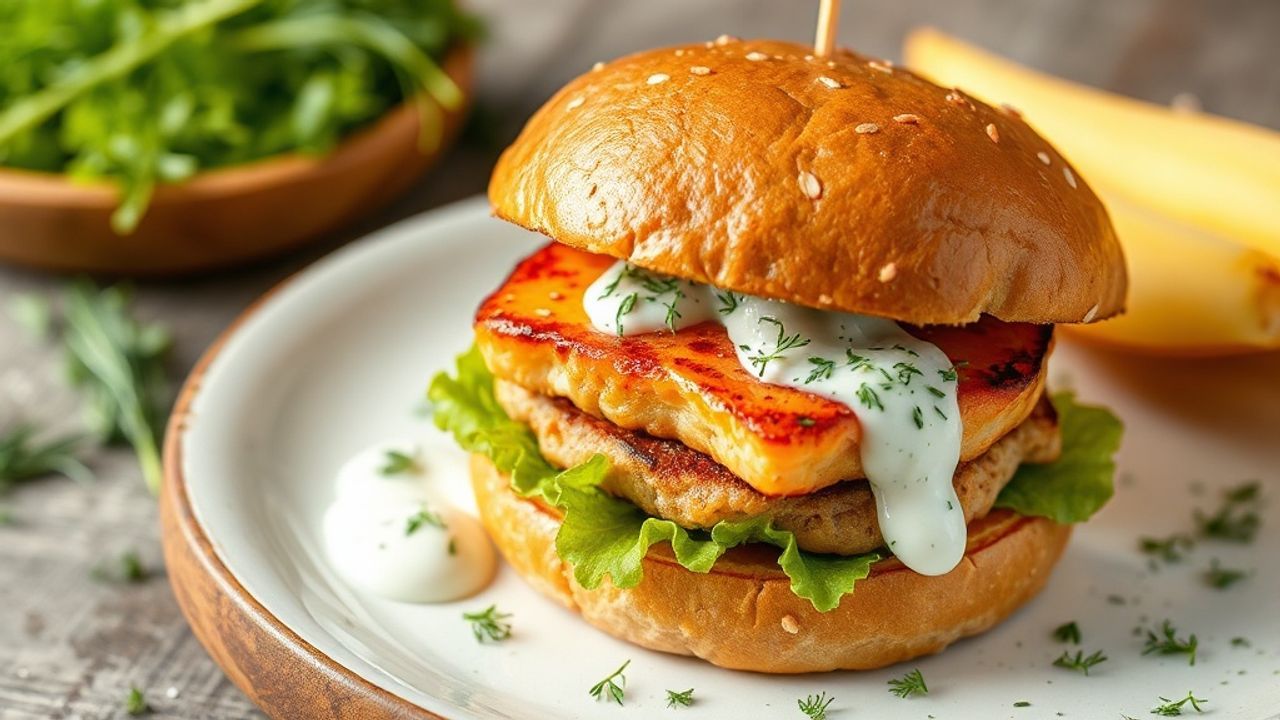
These salmon burgers deliver a crisp exterior and a tender, flaky interior, accented by a bright dill-yogurt sauce. The recipe balances texture and seasoning so home cooks can reproduce restaurant-quality patties in about 35 minutes.
- Prep and Cook Time for Salmon Burgers
- Yield and Difficulty for Salmon Burgers
- Ingredients for Salmon Burgers
- Instructions for Salmon Burgers
- Tips for Success with Salmon Burgers
- Serving Suggestions and Pairing Ideas for Salmon Burgers
- Nutrition and Ingredient Notes
- Practical Variations for Salmon Burgers
- FAQ
- Are salmon burgers healthy compared to beef burgers?
- How do I prevent salmon burgers from falling apart?
- Can I make the sauce dairy-free?
- Can I prepare patties ahead of time?
- What is the best cut of salmon to use?
- Closing Remarks
- Quick cook: Ready in 35 minutes with simple ingredients.
- Heart-healthy: Uses omega-3 rich salmon for protein and healthy fats.
- Flexible: Easy to adapt for gluten-free or dairy-free diets.
Prep and Cook Time for Salmon Burgers
Preparation: 20 minutes. Cooking: 15 minutes. The timing assumes the salmon is already thawed and you have basic mise en place completed.
Short active work and a brief chilling step make these salmon burgers reliable. Use that downtime to mix the yogurt sauce and toast your buns or prepare lettuce wraps.
Yield and Difficulty for Salmon Burgers
This recipe yields 4 hearty salmon burgers, suitable for a family meal or a small gathering. Each burger is designed to be roughly 3 to 4 ounces of salmon-based patty per serving.
Difficulty is medium; the main technique is gentle mixing and proper searing. With clear steps, cooks with intermediate skills can expect consistent results.
Ingredients for Salmon Burgers
Ingredients split into patties and sauce keep the prep organized and efficient. All ingredients are common; substitute mindfully for dietary needs.
Use fresh salmon when possible, or fully thaw frozen fillets and pat them dry. Fresh herbs make a measurable difference in aroma and flavor.
For the Salmon Patties
1 lb fresh salmon fillet, skin removed and finely chopped; 1/3 cup panko breadcrumbs (or almond meal for gluten-free); 1 large egg, beaten. Add 2 tablespoons chopped parsley, 1 tablespoon chopped dill, 1 teaspoon smoked paprika, 1/2 teaspoon ground cumin, 1/4 cup finely diced red onion, 1 minced garlic clove, 1 tablespoon Dijon mustard, salt and freshly ground pepper, and 2 tablespoons olive oil for frying.
Panko helps bind without weighing the patties down and produces a light texture; if you use a substitute, reduce quantity slightly. For more on salmon as an ingredient and species considerations, see salmon.
For the Zesty Dill Yogurt Sauce
1/2 cup Greek yogurt (or full-fat plain yogurt alternative), 2 tablespoons fresh chopped dill, 1 tablespoon fresh lemon juice, 1 teaspoon lemon zest, 1 teaspoon honey (or maple syrup), 1 small minced garlic clove, and salt and pepper to taste.
Dill pairs classically with fish and contributes aromatic, citrus-like top notes. Learn more about dill and its culinary uses at dill.
Instructions for Salmon Burgers
Follow the steps in order to build structure and flavor while preventing overmixing. Treat the salmon gently to preserve a flaky texture in the finished patties.
Keep the patties chilled briefly before cooking; this ensures they hold together on the pan. Use moderate heat and a non-stick skillet for best crust development.
- Prepare the Mix: Finely chop the salmon and combine it with panko, beaten egg, parsley, dill, smoked paprika, cumin, red onion, garlic, Dijon, salt, and pepper. Mix gently until evenly combined; avoid turning the mixture into a paste.
- Form Patties: Divide into four equal portions and shape into compact patties about 3/4-inch thick. Seal the edges to reduce crumbling during cooking.
- Chill: Place patties on parchment and refrigerate for at least 15 minutes. Chilling firms the mix and helps the patties hold their shape under heat.
- Sear: Heat 2 tablespoons olive oil over medium heat in a skillet. Sear each patty 4–6 minutes per side, until golden and cooked through to desired doneness. Flip only once to preserve juiciness.
- Make Sauce: While patties cook, whisk yogurt, dill, lemon juice, lemon zest, honey, and garlic. Season and chill until serving.
- Assemble: Place each warm patty on a toasted bun or lettuce leaf and top with generous sauce. Garnish with extra dill or thin cucumber slices for crunch.
Tips for Success with Salmon Burgers
Small technique choices yield big improvements in texture and flavor. Maintain gentle handling and correct heat to prevent dryness or collapse.
Season early so flavors meld, and taste a small cooked test piece if you need to adjust salt and spice levels. This step keeps the final product balanced.
- Choosing Salmon: Wild-caught often offers firmer texture and deeper flavor; domestic farmed salmon still works well when fresh.
- Binder Options: Panko offers light structure; use almond meal for gluten-free and reduce quantity to avoid dense patties.
- Heat Control: Medium to medium-high heat develops color while preserving interior moisture. Avoid high heat that chars before cooking through.
- Resting: Let cooked patties rest 2 minutes off the pan to redistribute juices before assembly.
Serving Suggestions and Pairing Ideas for Salmon Burgers
Pairings enhance the main flavors and add complementary textures. Choose sides that contrast richness and provide freshness.
Consider salads with acid and crunch or roasted vegetables to round out the meal. Citrus-forward sides echo the lemon notes in the sauce.
- Arugula and fennel salad with lemon vinaigrette for peppery brightness.
- Quinoa tabbouleh or cucumber-tomato salad for a cooling contrast.
- Sweet potato fries or oven-roasted asparagus for heartier accompaniments.
- Serve on toasted brioche or whole-grain rolls; for lighter options, use butter lettuce leaves.
Nutrition and Ingredient Notes
These salmon burgers deliver lean protein and healthy fats, primarily omega-3 fatty acids. For a concise primer on omega-3s and health effects, see omega-3 fatty acid.
Greek yogurt increases protein and reduces added fat compared with mayonnaise-based sauces. If you want to use other breadcrumbs, note the textural changes that follow.
| Nutrient | Per Serving (1 Burger with Sauce) |
|---|---|
| Calories | 380 |
| Protein | 35g |
| Carbohydrates | 18g |
| Fat | 18g |
Practical Variations for Salmon Burgers
Small swaps let you tailor these salmon burgers to dietary needs and flavor preferences. Each variation keeps the core technique while changing structure or taste.
For gluten-free, substitute panko with almond meal or crushed gluten-free crackers. For dairy-free sauce, use unsweetened coconut yogurt and increase lemon for brightness.
Spice and Herb Variations
Add cayenne or crushed red pepper for heat, or fold in chopped chives for sharper onion notes. Smoked paprika adds a subtle smokiness without changing cooking technique.
Fresh herbs matter: parsley brightens, dill complements the fish, and mint or cilantro can shift the profile toward a different cuisine.
FAQ
Are salmon burgers healthy compared to beef burgers?
Salmon burgers generally provide more omega-3 fatty acids and lean protein than typical beef burgers. They are lower in saturated fat when prepared without heavy breading or oil.
Choose preparation methods such as pan-searing or grilling and pair with whole-grain buns or salads for a balanced plate.
How do I prevent salmon burgers from falling apart?
Use a proper binder like beaten egg and panko, and chill patties before cooking. Shape the patties firmly but avoid overworking the mix to preserve flake structure.
Also, ensure the pan oil is hot enough and resist pressing the patties while cooking; turning once produces the best results.
Can I make the sauce dairy-free?
Yes. Substitute Greek yogurt with full-fat coconut yogurt or a soy-based plain yogurt. Adjust lemon and salt to compensate for differences in tang and texture.
Dill remains an excellent herbal match even in dairy-free versions and retains the sauce’s bright character.
Can I prepare patties ahead of time?
Yes. Formed patties keep in the refrigerator up to 24 hours or may be frozen uncooked for up to one month, separated by parchment. Thaw in the fridge before cooking.
Mixing patties a few hours ahead improves flavor melding; however, avoid long storage after cooking to maintain texture and safety.
What is the best cut of salmon to use?
Use firm, fleshy portions such as center-cut fillets from Atlantic or Pacific salmon. Avoid oily, soft pieces near the belly if you want consistent texture.
For wild vs. farmed considerations, flavor and fat content vary; choose what fits taste and budget while confirming freshness.
Closing Remarks
These salmon burgers combine practical technique with bright, herb-forward flavor to create a repeatable, weeknight-friendly dish. The dill yogurt sauce complements the fish while keeping the overall profile light and fresh.
Use the tips and variations to adapt the recipe to your pantry and dietary needs. With modest effort, you can serve a dish that is both nutritious and satisfying.
For more background on common ingredients, consult reliable references such as yogurt and panko.
See also: salmon burgers