

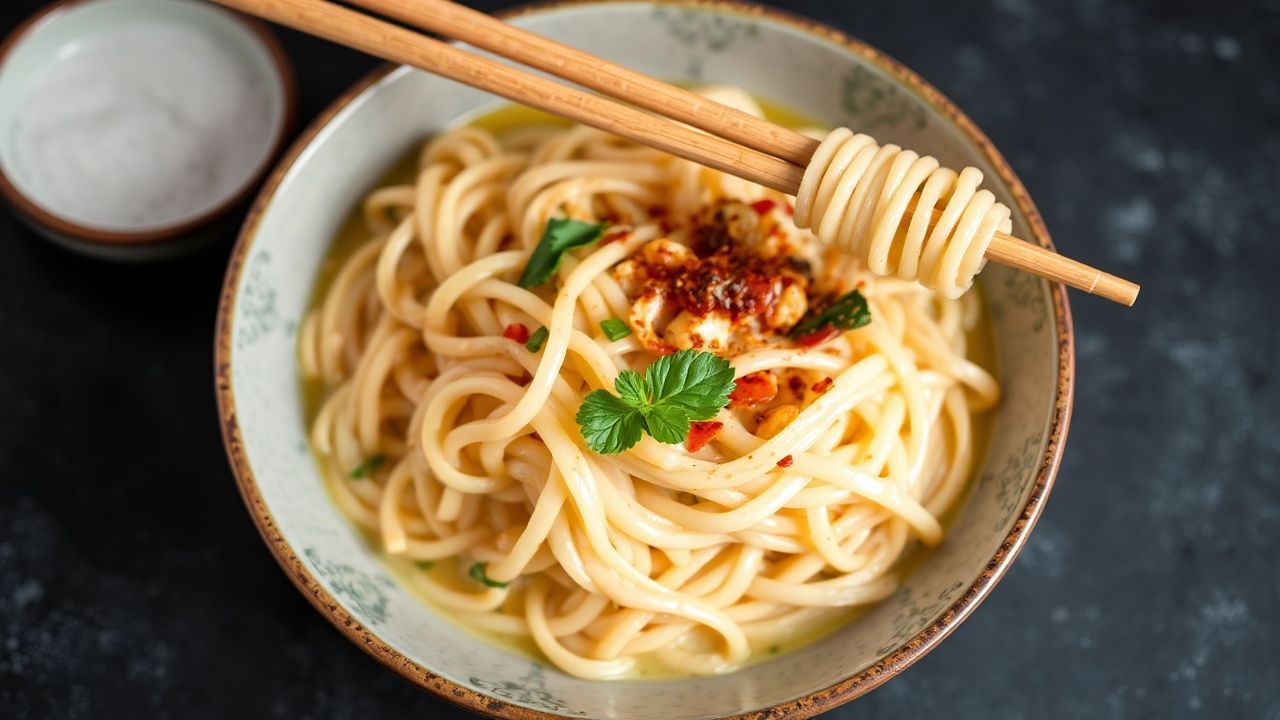
Imagine stir-fried rice noodles in a creamy coconut curry sauce—silky, aromatic, and balanced. The noodles soak up the curry just enough to feel tender without turning mushy.
- Why This Creamy Coconut Curry Noodle Combination Works
- Prep and Cook Time, Yield, and Difficulty
- Ingredients for Creamy Coconut Curry Bliss Rice Noodles
- Instructions: Make Stir-Fried Rice Noodles in Creamy Coconut Curry
- Step 1: Soak the noodles
- Step 2: Heat the pan and bloom flavor
- Step 3: Toast the curry paste
- Step 4: Simmer coconut milk to the right thickness
- Step 5: Season and build balance
- Step 6: Cook vegetables and protein
- Step 7: Add noodles and finish
- Tips for Success (Texture, Heat, and Make-Ahead)
- Serving Suggestions: Build a Complete Meal Around Coconut Curry Noodles
- At a Glance: What You’ll Taste in Every Bite
- FAQ
Our goal is simple: build a rich curry base, toss in vegetables and protein, and coat every strand. The result tastes like a warm bowl you’d find in Southeast Asia, with flavors that feel both comforting and bright.
- Best texture: soak, drain, and fold noodles gently to avoid breakage.
- Best flavor: toast curry paste briefly, then simmer coconut milk until it thickens.
- Best balance: use lime for lift and a small amount of sugar to round spice.
- Best flexibility: swap tofu or chickpeas and still keep the sauce creamy.
Let savor stir-fried rice noodles in creamy coconut curry bliss take you from pantry basics to a fragrant, weeknight-friendly dish. You’ll start with rice noodles that stay springy, then build a coconut curry that clings to every bite.
To understand why this works, think about coconut milk as the creamy carrier. It helps round sharp curry notes, especially when you bloom the paste first and add lime at the end.
Why This Creamy Coconut Curry Noodle Combination Works
Rice noodles cook fast and absorb flavor quickly. When you stir them into the simmering curry at the right moment, the sauce thickens around the noodles instead of pooling at the bottom.
Coconut milk adds fat, which carries aromas and creates a smooth mouthfeel. For background on coconut products and how they’re used in cooking, see coconut milk.
Next, curry paste brings concentrated spice and depth. Many pastes include aromatics like garlic and ginger, plus chili heat and fermented or roasted notes that help the sauce taste complex even with a short cook time.
If you want to refine your flavor tuning, learn how chili and spices are used in curry style cooking. Start with curry to connect technique with flavor expectations.
Prep and Cook Time, Yield, and Difficulty
Time and portion planning
Preparation: 15 minutes. Cooking: 20 minutes. Total: 35 minutes.
Yield: Serves 4 generous portions. This amount feeds family-style, with leftovers that reheat well if you add a splash of coconut milk.
Skill level
Difficulty Level: medium. You’ll mainly focus on fast stir-frying and timing the noodle addition.
If you’ve cooked with a wok before, you’ll feel comfortable. If you’re new, you can still succeed by keeping heat steady and stirring often.
Ingredients for Creamy Coconut Curry Bliss Rice Noodles
Use these ingredients as a flexible base. Keep the curry paste, coconut milk, and rice noodles consistent, then customize vegetables and protein to match your pantry.
For guidance on common noodle types and cooking behavior, review noodles. It helps explain why soaking and timing matter for this style of stir-fry.
- 8 oz (225g) dried rice noodles (wide or medium width)
- 1 tbsp vegetable or coconut oil
- 1 small onion, thinly sliced
- 3 cloves garlic, finely minced
- 1 tbsp freshly grated ginger
- 2 tbsp red or yellow Thai curry paste
- 1 1/2 cups (360ml) full-fat coconut milk
- 1 tbsp soy sauce (or tamari for gluten-free)
- 1 tsp brown sugar
- 1 cup mixed vegetables (bell pepper strips, snap peas, julienned carrots)
- 1 cup cooked chickpeas or firm tofu, cubed (optional protein)
- Fresh lime wedges, for serving
- Fresh cilantro or Thai basil leaves, for garnish
- Chopped roasted peanuts, for crunchy topping
- 1 green chili, thinly sliced (optional for heat)
Optional add-ins can help you use leftovers. Mushrooms, shredded cabbage, or leftover rotisserie chicken all work, as long as you keep cooking time short.
Instructions: Make Stir-Fried Rice Noodles in Creamy Coconut Curry
Step 1: Soak the noodles
Soak dried rice noodles in warm water for about 15 minutes. Drain them, then set aside while you cook the curry base.
This step prevents overcooking. Rice noodles continue to soften when you coat and warm them in the sauce.
Step 2: Heat the pan and bloom flavor
Warm a large wok or non-stick skillet over medium-high heat. Add the oil and swirl to coat the surface.
Stir-fry the onions for 2 minutes until translucent. Add garlic and ginger, then stir for 1 more minute until fragrant.
Step 3: Toast the curry paste
Spoon in the curry paste and stir vigorously for 1 to 2 minutes. This toasts the spices and helps the sauce taste deeper.
For spice basics, including why toasting changes flavor impact, see spice. It connects heat exposure to aroma release.
Step 4: Simmer coconut milk to the right thickness
Gradually pour in the coconut milk while stirring. Raise heat slightly, then simmer gently for 3 to 4 minutes.
You want a sauce that coats the spoon. If it looks thin, simmer a bit longer; if it looks too thick, loosen with a small splash of water.
Step 5: Season and build balance
Add soy sauce and brown sugar, then taste. Soy sauce adds savory depth, while sugar rounds sharp chili notes.
Keep salt controlled. Curry paste and soy sauce both carry salt, so adjust slowly.
Step 6: Cook vegetables and protein
Toss in vegetables and chickpeas or tofu. Stir-fry for 3 to 5 minutes until vegetables turn tender-crisp.
Vegetables keep best when you don’t overcook them. Their crunch also makes the sauce feel lighter.
Step 7: Add noodles and finish
Gently fold drained noodles into the curry sauce. Stir intermittently for 2 to 3 minutes until noodles absorb sauce and heat through.
Turn off heat, then squeeze lime and garnish. Lime brightens creamy coconut and keeps the curry from tasting flat.
For a quick reference on citrus’s role in flavor, see lime (fruit). It’s the easiest way to lift a rich sauce.
Tips for Success (Texture, Heat, and Make-Ahead)
Small process choices decide whether noodles feel silky or sticky. Use these notes like a checklist as you cook.
Stir-frying relies on heat control and timing. For general stir-fry principles, review stir-fry.
- Choose the right rice noodles: medium or wide noodles hold curry well without falling apart.
- Control coconut milk richness: full-fat coconut milk creates the best cling and creaminess.
- Heat management: medium to medium-high heat prevents sauce splitting and noodles sticking.
- Prep ingredients ahead: slice and mince before you start. Stir-frying moves fast.
- Make ahead option: cook curry and noodles separately, then reheat gently and toss together.
- Customize protein: chickpeas and tofu work especially well with creamy curry sauce.
After you add coconut milk, avoid aggressive boiling. A gentle simmer keeps the sauce smooth and helps it thicken evenly.
Also, drain noodles well. Excess water can dilute the curry and prevent the sauce from clinging to the strands.
Serving Suggestions: Build a Complete Meal Around Coconut Curry Noodles
Serve immediately for the best texture. This dish tastes best when noodles are coated and still springy, not when they sit too long.
For a simple pairing, add crunchy Thai spring rolls. You also can serve a cucumber salad with lime and chili flakes for cooling contrast.
Garnish matters. Fresh cilantro or Thai basil adds green aroma, while roasted peanuts add crunch and salt-balanced richness.
If you want a side that soaks up extra sauce, jasmine rice works well. For more on rice varieties used in Asian cooking, see jasmine rice.
| Nutrient | Per serving |
|---|---|
| Calories | 420 kcal |
| Protein | 12 g |
| Carbohydrates | 58 g |
| Fat | 15 g |
| Fiber | 6 g |
One bowl can feel both indulgent and lively. Creamy coconut gives comfort, curry paste brings warmth, and lime keeps the finish clean.
At a Glance: What You’ll Taste in Every Bite
You’ll notice the sauce clings to the noodles first, then you’ll taste curry depth, coconut creaminess, and fresh citrus at the end. That sequence makes the flavor feel layered instead of flat.
Follow the timing closely, and you’ll get a silky texture that doesn’t turn gummy. With small tweaks, the dish can stay mild or become pleasantly spicy.
- Silky curry coat: coconut milk thickens after a short simmer.
- Fresh heat control: add green chili only if you want extra kick.
- Bright finish: lime at the end keeps flavors vivid.
- Texture balance: vegetables stay tender-crisp, not mushy.
Explore the rich textures as creamy coconut curry lovingly embraces each tender rice noodle strand. The aroma arrives early, then the taste lands as warm spice plus smooth cream.
If you want to understand curry ingredients at a deeper level, you can also review garlic and ginger since both support the curry base through aroma chemistry. That knowledge helps you adjust your own seasoning confidently.
FAQ
Can I use different rice noodles for this curry?
Yes. Medium-width and wide dried rice noodles work best because they stay firm after soaking. If you use thinner noodles, shorten the final stir-fry time to avoid over-softening.
Why does my coconut curry taste separated or oily?
Separation usually happens when coconut milk boils too hard or gets cooked too long. Simmer gently after adding coconut milk, and avoid high rolling boils. Also stir often during the first minutes.
How do I keep noodles from sticking together?
Drain noodles well and fold them gently into the sauce. Stir intermittently rather than constantly scraping. If you notice clumps, loosen with a spoon of water or an extra splash of coconut milk.
Can I make this recipe vegan and gluten-free?
For vegan, use tofu or chickpeas and double-check that your curry paste contains no fish-based ingredients. For gluten-free, use tamari instead of soy sauce and confirm the curry paste label. Rice noodles are naturally gluten-free.
What can I serve with creamy coconut curry rice noodles?
Serve with Thai spring rolls or a cucumber salad with lime and chili. For a fuller meal, add jasmine rice on the side. Garnish with herbs, peanuts, and extra lime wedges so each person can fine-tune flavor.
See also: stir-fried rice noodles