

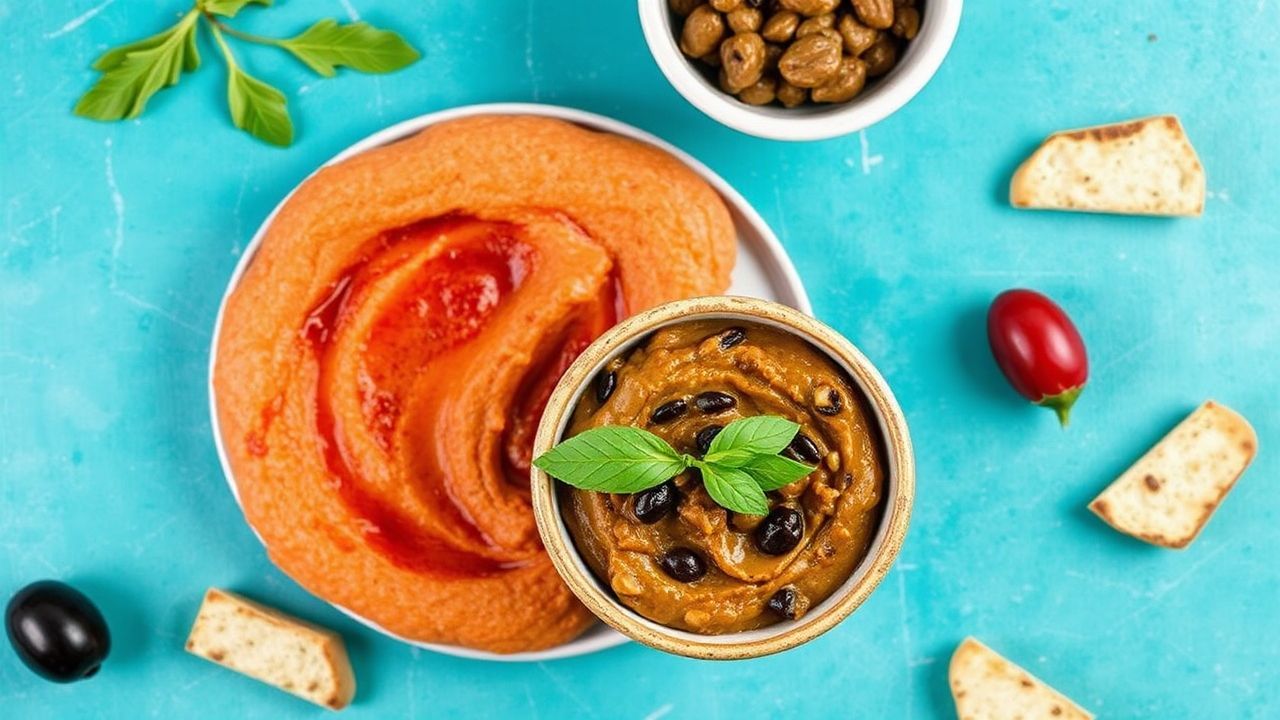
Roasted red pepper hummus and olive tapenade turn simple snacking into a bold, Mediterranean-style experience. They pair creamy chickpeas with smoky-sweet peppers and a briny olive punch. Together, they create a balanced board that tastes rich yet feels fresh.
- Roasted Red Pepper Hummus & Olive Tapenade: Prep Time, Yield, and Difficulty
- Ingredients for Roasted Red Pepper Hummus
- Ingredients for Olive Tapenade
- Step-by-Step Instructions
- Tips for Success & Variations
- Serving Suggestions for Roasted Red Pepper Hummus & Olive Tapenade
- Tips for Creating the Perfect Charcuterie Board Featuring Both Spreads
- Q&A: Roasted Red Pepper Hummus & Olive Tapenade
- What makes roasted red pepper hummus a standout snack?
- How does olive tapenade complement roasted red pepper hummus?
- How can I serve roasted red pepper hummus and olive tapenade for a party?
- Can these spreads be made ahead of time?
- Are these spreads vegan and gluten-free?
- In Summary
- FAQ
At a Glance
- Roasted red pepper hummus delivers smoky sweetness and smooth texture.
- Olive tapenade brings salt, acidity, and a hearty bite.
- Both spreads use simple pantry staples with minimal prep.
- Make ahead improves flavor after a short rest in the fridge.
In this recipe guide, you’ll build both spreads step by step. You’ll also learn how to serve them for maximum flavor and visual appeal. If you want a snack board that feels “special” without extra effort, this duo fits perfectly.
Elevate Your Snack with roasted red pepper hummus and olive tapenade. These two Mediterranean spreads work like a flavor team. The hummus stays creamy and mild, while tapenade adds salty depth and bright tang.
Think of the flavor contrast: smoky-sweet peppers against briny olives. Then add the finishing notes—lemon for lift and paprika for warmth. For a snack table, that contrast keeps each bite interesting.
Why This Duo Works
Roasted red pepper hummus uses hummus as the base, then swaps in fire-roasted peppers for a sweeter, more aromatic profile. Olive tapenade draws on olives, capers, and lemon to create a concentrated, savory spread. When you combine them, you balance creaminess with briny intensity.
Also, both spreads hold well in the fridge. That means you can prep ahead and still serve them at peak taste. You’ll also get a board that looks colorful without complicated plating.
Roasted Red Pepper Hummus & Olive Tapenade: Prep Time, Yield, and Difficulty
You can complete both spreads in under an hour. Most of the time involves roasting and blending. After that, it’s mostly seasoning and taste adjustments.
- Preparation: 15 minutes
- Roasting & Blending: 20 minutes
- Total Time: 35 minutes
This recipe makes enough to serve as an appetizer, snack board, or party starter. Plan for scooping and dipping when you estimate portions.
- Approximately 2 cups roasted red pepper hummus
- Approximately 1 ½ cups olive tapenade
- Serves 6-8 as snack accompaniments
Difficulty stays low because no special equipment is required beyond a food processor. Beginners can pull this off with confidence by following the steps and tasting as you go.
- Difficulty Level: Easy
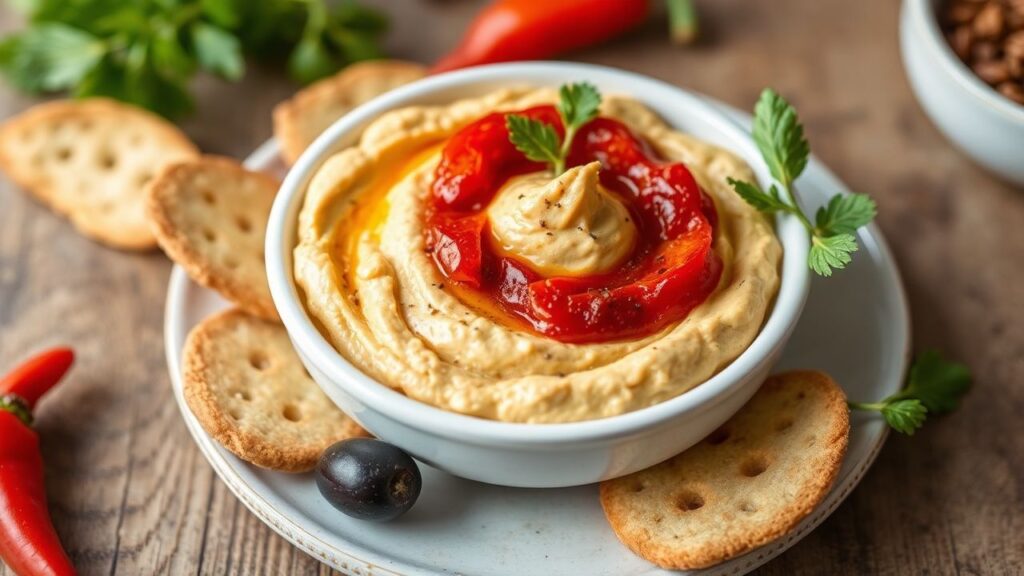
Ingredients for Roasted Red Pepper Hummus
Your hummus starts with roasted red bell peppers. Peppers give sweetness and a smoky edge, then chickpeas add body. Tahini brings nutty richness and a classic hummus feel.
Core Hummus Ingredients
- 2 large red bell peppers, seeded and quartered
- 1 can (15 oz) chickpeas, drained and rinsed
- 3 tablespoons tahini
- 2 cloves garlic, minced
- 3 tablespoons lemon juice
- 1 teaspoon smoked paprika
- 1/4 teaspoon ground cumin
- 1/4 cup extra virgin olive oil, plus more for drizzling
- Salt to taste
- Freshly ground black pepper, to taste
If you want a more traditional approach to texture, you can blend longer for extra smoothness. For a thicker dip, blend less and keep the mixture slightly chunky. Either way, taste for lemon, salt, and smoke before serving.
Flavor Notes to Watch
Peppers vary in sweetness. If your peppers taste mild, add a bit more lemon and paprika to bring the flavors forward. If they taste already sweet, keep lemon steady so the dip stays bright.
Garlic also varies by strength. Start with the suggested amount, then adjust after blending. This prevents an overpowering bite while keeping a savory backbone.
Ingredients for Olive Tapenade
Olive tapenade focuses on depth and balance. Olives deliver salt and fat, capers add sharpness, and lemon keeps everything lively. The goal is a spread that tastes bold on a cracker, not bland in a bowl.
Tapenade Ingredients
- 1 cup kalamata olives, pitted
- 1/2 cup green olives, pitted
- 2 tablespoons capers, drained
- 2 cloves garlic, minced
- 2 tablespoons fresh lemon juice
- 1/4 cup extra virgin olive oil
- 1 teaspoon fresh thyme leaves
- Freshly ground black pepper, to taste
For extra accuracy, remember that olives come in brined forms. Their salt level can differ by brand. That’s why lemon and black pepper matter, and why you should taste after pulsing.
If you want more botanical context, thyme belongs to the thyme family and works well with Mediterranean flavors. It adds aroma without overpowering the olives.
Step-by-Step Instructions
Follow these steps in order to keep flavors strong and textures right. Roasting first builds the pepper sweetness. Then you blend hummus and tapenade separately so each stays true to its texture.
- Preheat your oven to 450°F (230°C). Arrange the red bell peppers on a baking sheet, skin side up. Roast for 20 minutes or until charred and blistered, turning once halfway.
- Steam for easier peeling. Transfer the peppers to a sealed container or cover with a kitchen towel. Let them steam for 15 minutes.
- Peel and prep the pepper flesh. Remove skins, stems, and seeds. Add the pepper flesh to a food processor.
- Blend the roasted red pepper hummus. Add chickpeas, tahini, garlic, lemon juice, smoked paprika, cumin, and 1/4 cup olive oil. Blend until creamy and smooth. Scrape the bowl as needed.
- Season and adjust thickness. Add salt and black pepper to taste. If it feels too thick, add a splash of water or more olive oil.
- Pulse the olive tapenade. Add kalamata olives, green olives, capers, garlic, and lemon juice. Pulse gently to keep a chunky texture.
- Bring it together with olive oil. Slowly drizzle in olive oil while pulsing. Stop when it looks cohesive but still rustic.
- Finish with thyme and final seasoning. Stir in thyme, then add black pepper. Taste and adjust lemon or salt. Chill if you’re serving later.
For an extra flavor check, taste each spread after chilling for 10–15 minutes. Cold food can mute lemon brightness slightly, so you may need a tiny adjustment before serving.
For background on chickpeas, see chickpea. They’re a stable base for spreads because they blend well and hold structure.
Emulsification helps explain hummus texture. Olive oil and tahini form a creamy mouthfeel when blended properly. That’s why blending long enough matters for a smooth, scoopable finish.
If you prefer less char, aim for blistering plus dark edges, not burning. Burning can turn roasted peppers bitter, which conflicts with the lemony brightness of the tapenade.
Next, keep tapenade chunky. A paste can taste one-note. Pulse in short bursts so olives stay textured and keep a pleasant bite against crackers.
Tips for Success & Variations
Small choices change flavor fast in both spreads. Use these tips to fine-tune smoke, salt, and acidity. Then adjust based on your serving style.
- Use direct flame for extra smoke if you have a grill or broiler with close control. Rotate peppers for even charring.
- Add fresh herbs like parsley for tapenade or dill for hummus if you want a fresher aroma.
- Make it vegan and gluten-free naturally; both spreads rely on plant ingredients and contain no wheat.
- Rest for better flavor—chill both spreads for at least 2 hours. Overnight is even better for melding.
Olives can be surprisingly salty. If you taste salt first, balance with extra lemon juice. If you taste too tart, add a small drizzle more olive oil to round the finish.
To learn about olive processing and types, check olive oil. The oil you use affects aroma and peppery finish in both tapenade and hummus.
Serving Suggestions for Roasted Red Pepper Hummus & Olive Tapenade
Serve these spreads like part of a curated board, not just a bowl. Put each spread in a shallow dish so guests can scoop easily. Add drizzles and garnishes to make the colors pop.
Drizzle the hummus with extra virgin olive oil. Then sprinkle smoked paprika and chopped parsley for a clean, bold look. Garnish the tapenade with a thyme sprig and a few whole olives for visual texture.
Pair with crisp pita chips, toasted baguette slices, cucumber ribbons, carrot batons, and pickled vegetables. The crunch plus tang offsets the creamy spreads and keeps bites light.
If you want an elevated twist, add a small portion of creamy cheese on the side. That gives guests the option of a richer route while keeping the Mediterranean focus.
For a more structured pairing, you can also serve the spreads with warm flatbreads or roasted vegetables. Heat can deepen pepper aroma and make hummus taste even more inviting.
Tips for Creating the Perfect Charcuterie Board Featuring Both Spreads
Charcuterie boards work best when you build around contrast. Balance creamy dips with crunchy crackers and bright produce. Also, include one or two sweet or tangy elements to refresh the palate.
- Balance textures and colors: Use seeded crackers, whole-grain options, fresh vegetables, and dried fruits that match the red and olive palette.
- Add protein-rich accompaniments: Include marinated artichoke hearts, roasted chickpeas, or smoked almonds for staying power.
- Serve in shallow bowls: Small spoons and spreaders reduce mess and speed up serving.
- Don’t overcrowd: Leave breathing room between items so guests can navigate the board.
- Use herbs for garnish: Edible flowers or fresh microgreens add a “chef-made” look.
When boards look busy, flavors blend in guests’ minds. When boards feel intentional, people taste more carefully. That increases dwell time and makes your setup feel like an experience, not a snack.
| Spread | Calories (per 2 tbsp) | Protein | Carbs | Fat |
|---|---|---|---|---|
| Roasted Red Pepper Hummus | 70 | 2 g | 6 g | 5 g |
| Olive Tapenade | 90 | 1 g | 1 g | 9 g |
If you want to track nutrition more precisely, check the labels of your olive and chickpea products. Calories shift based on how ingredients are packed and drained.
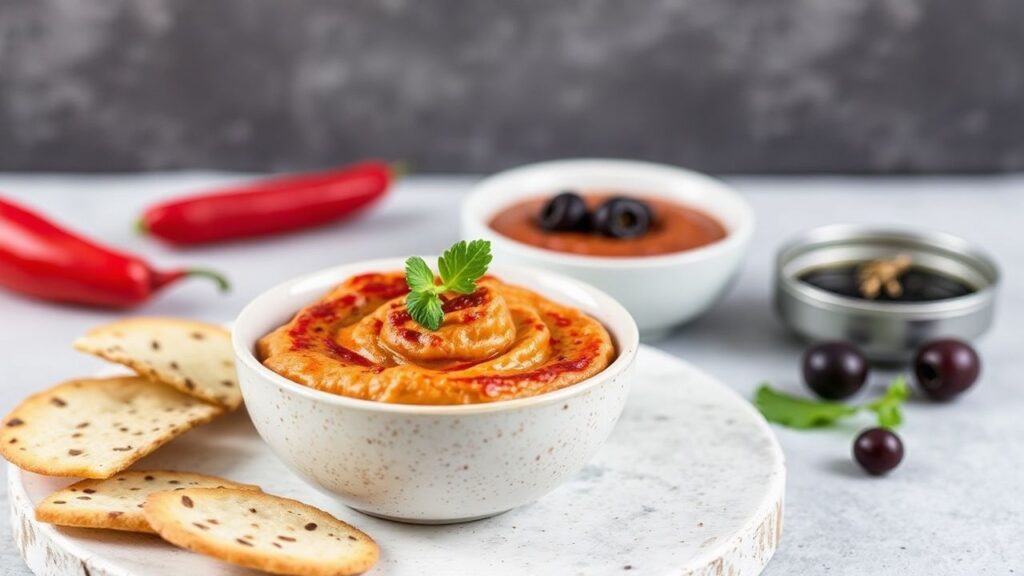
Q&A: Roasted Red Pepper Hummus & Olive Tapenade
Q&A helps you avoid common texture and flavor issues. Use these answers to refine your board before guests arrive or before you store leftovers.
What makes roasted red pepper hummus a standout snack?
It brings smoky-sweet peppers into a creamy chickpea base. That combo tastes rich and bright at the same time. Plus, blending roasted peppers adds aroma without requiring complicated ingredients.
How does olive tapenade complement roasted red pepper hummus?
Tapenade adds briny salt and acidity, which contrast hummus creaminess. You get a smooth dip and a textured spread side by side. Together, they keep every bite balanced.
How can I serve roasted red pepper hummus and olive tapenade for a party?
Use shallow bowls with small spoons or spreaders. Place them in the center of the board with crackers and vegetables around them. Then add garnishes—paprika and thyme—right before serving.
Can these spreads be made ahead of time?
Yes. Both spreads hold well in airtight containers in the fridge. Flavor often improves after a short rest because lemon and smoke distribute more evenly through the mixture.
Are these spreads vegan and gluten-free?
Roasted red pepper hummus and olive tapenade are naturally vegan and gluten-free when made with the ingredients listed. Always check labels on canned goods and any store-bought crackers you serve alongside.
In Summary
Roasted red pepper hummus and olive tapenade give you a snack duo with real flavor contrast. The hummus delivers creamy chickpeas and smoky sweetness. The tapenade brings briny olives, capers, and lemon for a bold finish.
Make both spreads once, then serve them for snack time, parties, or quick weeknight boards. With smart roasting, careful blending, and simple garnishes, your board will look impressive and taste even better.
FAQ
How long can I store roasted red pepper hummus?
Store it in an airtight container in the fridge for up to 3–5 days for best freshness. Stir before serving if separation occurs.
How long can I store olive tapenade?
Keep olive tapenade in an airtight container and refrigerate for about 3–5 days. The oil helps it hold, but flavor stays best within the first few days.
Do I need to peel roasted red peppers every time?
Yes for the smoothest hummus texture and a cleaner flavor. Steaming makes peeling easier, and it reduces any bitter skin notes.
Can I make the tapenade smoother?
You can blend longer for a finer texture. However, a chunky tapenade tastes more complex because you keep pieces of olive and caper.
What should I do if my hummus tastes too bitter?
Bitterness often comes from over-roasted peppers or too much garlic. Add extra lemon juice and a pinch of salt, then blend again to smooth the flavor.
See also: roasted pepper